

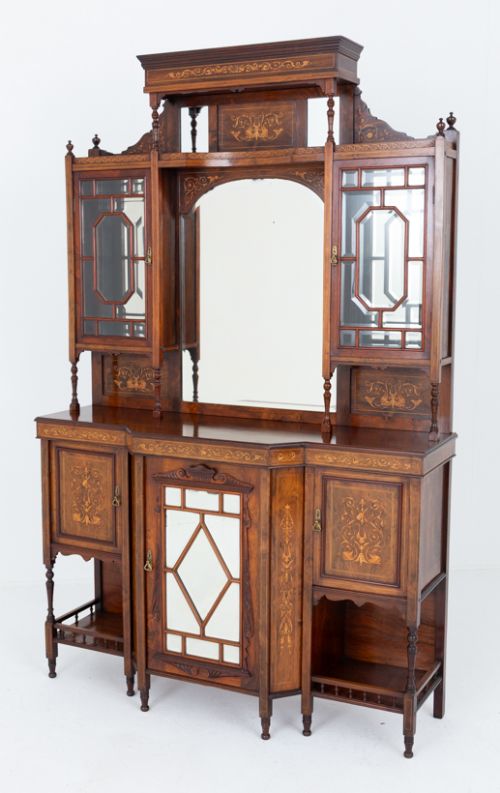


Victorian Rosewood Mirror
A victorian rosewood mirror brings deep reddish-brown grain and bright glass together, offering the reflective depth and rich warmth that defined nineteenth-century interiors.
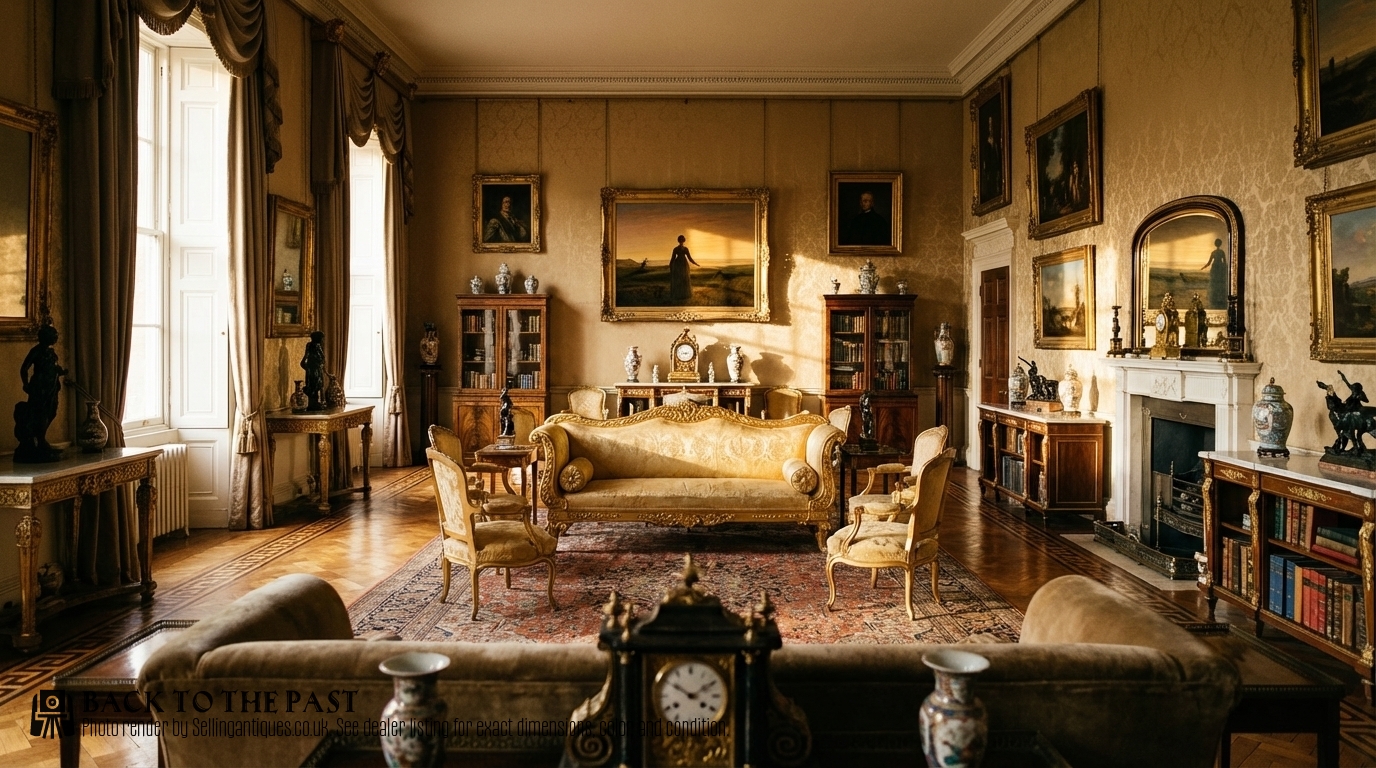
Victorian Rosewood Mirror
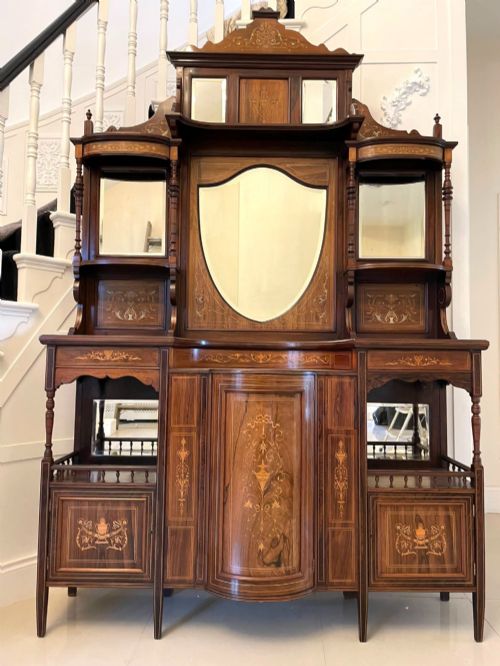
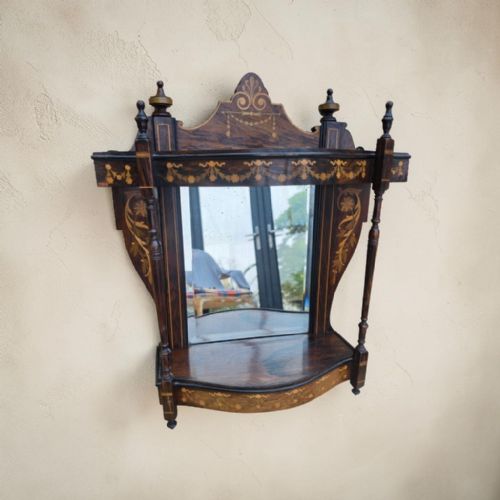
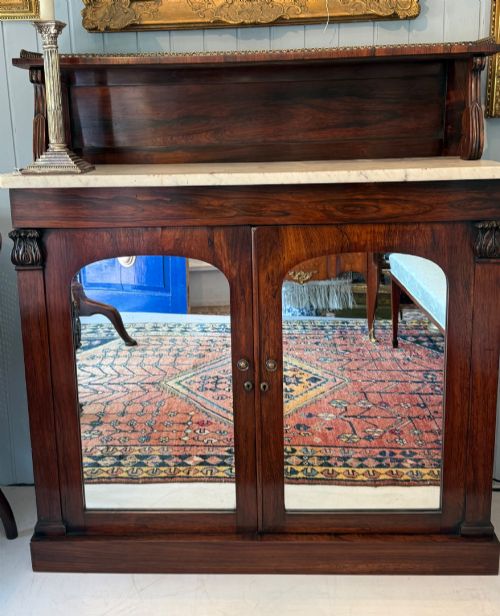
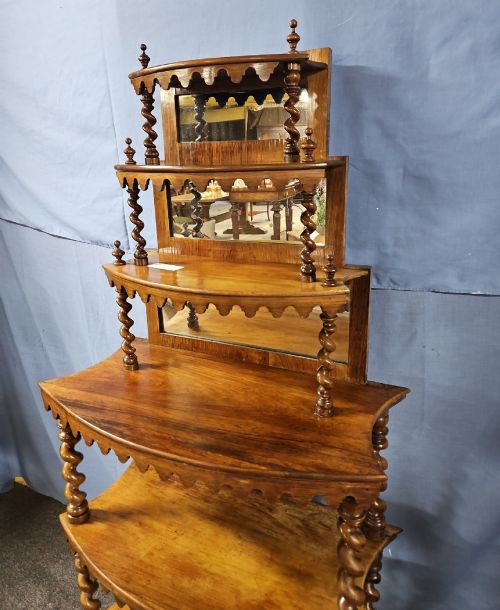
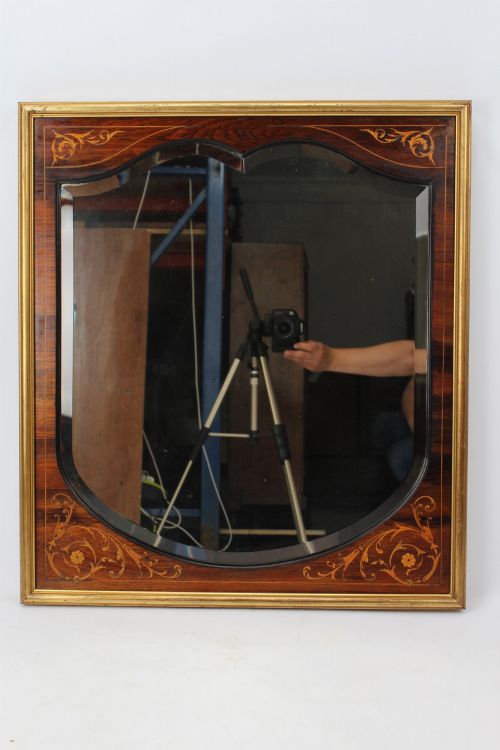
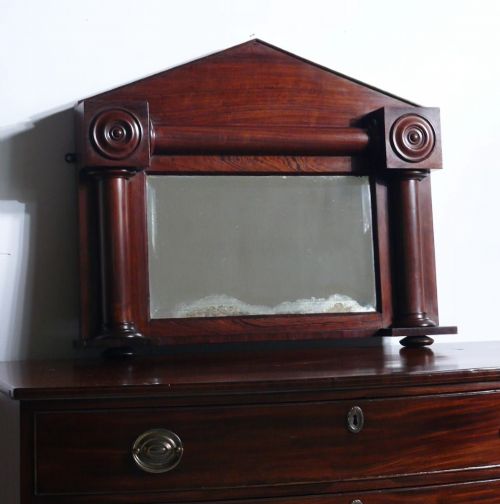
A victorian rosewood mirror appears most frequently as a wall-hanging glass or an overmantle piece designed to sit above a fireplace. These furnishings span the nineteenth century, encompassing early revival forms, mid-century frames, and late period marquetry designs.
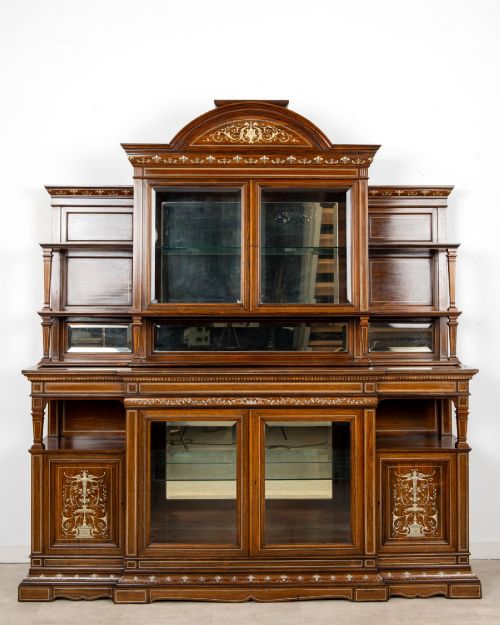
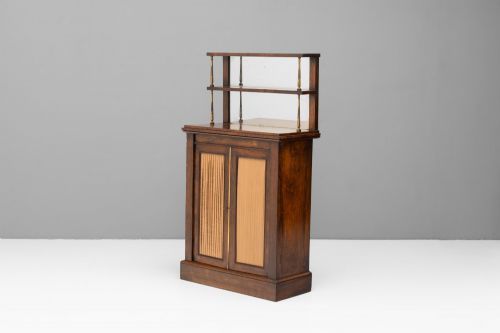
The selection extends from simple domestic looking glasses to substantial architectural overmantles and fitted display cabinets incorporating mirror glass. Wall mirrors and console or dressing table glasses dominate the surviving pieces found on this page.
How they were made
Cabinet makers utilised dense, oily rosewood timber, often selecting veneers laid over secondary structural woods to create stable and figured surfaces. Workshops integrated boxwood, satinwood, and brass inlay directly into the wooden frames, using marquetry techniques for floral and classical motifs.
Glass plates of the period were secured into rebated frames, sometimes featuring bevelled edges produced by hand-grinding. Gilding and parcel-gilding details were applied alongside carved wooden mouldings to accent the architectural proportions of larger overmantle pieces.
Listings feature rosewood, brass, satinwood, and boxwood inlay applied across wall mirrors, overmantles, and display cabinets spanning the nineteenth century.
What varies in quality
The standard of a victorian rosewood mirror rests upon the crispness of its marquetry and the depth of figure in the rosewood veneer. Master workshops employed finely cut contrasting woods and precise brass stringing, whereas simpler pieces relied on plain polished surfaces.
Construction methods also separate standard production from superior cabinet work, visible in the joinery of the frame corners and the retention of original mercury or silvered glass plates. The integration of structural carved elements and balanced proportions distinguishes pieces produced by prominent cabinet makers.
Collinson & Lock·Holland & Sons·Jas Shoolbred
The Victorian Rosewood Mirror Glossary
- Rosewood
- A dense, heavy timber prized for its dark purple-brown grain and natural oily lustre. It forms the primary structural and decorative surface for these nineteenth-century mirrors.
- Marquetry
- The art of applying fitted pieces of veneer to a structure to form decorative patterns. Craftsmen utilised light woods like boxwood against the dark rosewood background.
- Overmantle
- A large mirror designed specifically to hang on the wall directly above a fireplace mantelpiece. These frames often reflect the architectural style of the room.
- Palisander
- A historical trade term frequently applied to heavy tropical rosewoods. Nineteenth-century makers and merchants used this designation interchangeably with rosewood.
- Bevelled edge
- A sloping angle cut and polished around the perimeter of the mirror glass. This treatment catches the light and adds a refined decorative dimension to the piece.
Victorian Rosewood Mirror: Frequently Asked Questions
How do I hang a heavy overmantle mirror safely?
Substantial overmantle frames require secure wall fixings anchored directly into masonry or heavy studwork to support their considerable weight.
Professional mirror hangers utilise split battens or heavy-duty D-rings screwed into the structural frame rather than relying on decorative wire.
Did these mirrors originally have silvered glass?
Earlier nineteenth-century examples often utilised mercury silvering, which produces a characteristic mottled grey reflection and heavy backing.
Later Victorian production shifted towards chemical silvering processes that provided a clearer and more uniform reflective surface.
How should I clean a rosewood frame?
Maintain the timber by dusting with a dry, soft cloth and occasionally applying traditional beeswax to nourish the dry grain.
Avoid using modern liquid polishes or silicone sprays, as these can penetrate old finishes and degrade the delicate inlaid veneers.
How do I distinguish early from late Victorian styles?
Early Victorian and William IV pieces often display restrained classical lines, heavy mouldings, and simple architectural framing.
Late Victorian and Aesthetic Movement examples lean towards elaborate marquetry, complex inlay, and Japonisme or revival influences.