


Carved Rosewood Wall Mirror
These carved rosewood wall mirrors bring dark, dense timber and rich grain into a room, offering both practical reflection and deep period character.
Carved Rosewood Wall Mirror
A carved rosewood wall mirror brings together rich timber and functional glass, appearing across periods from Regency through to the Edwardian era. These pieces range from substantial overmantel mirrors designed to sit above a fireplace to smaller hanging frames intended for halls and bedrooms.
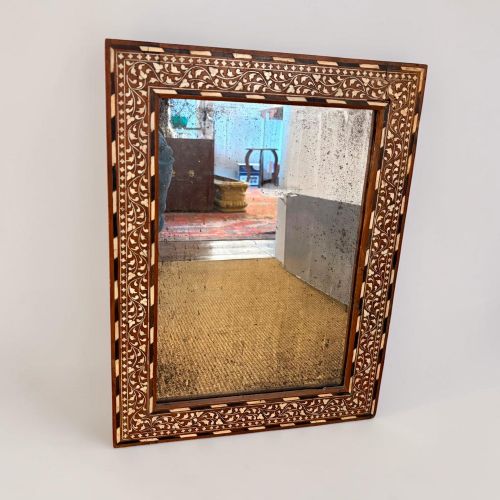
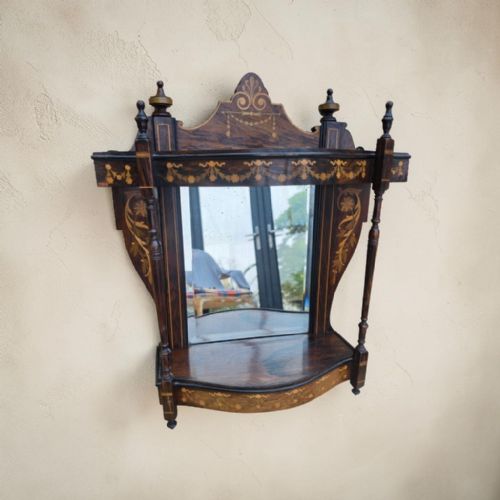
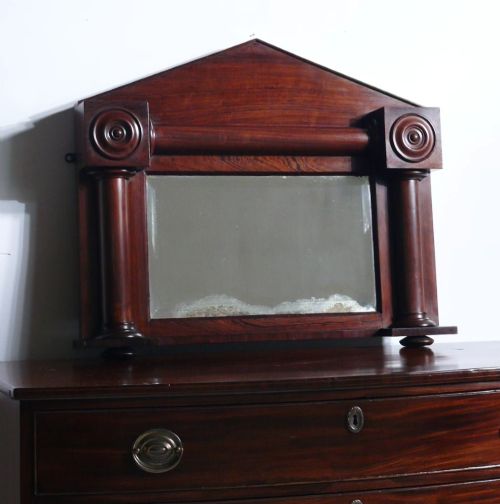
The selection on this page shows domestic wall mirrors alongside larger overmantels and side cabinet combinations. Victorian and Edwardian examples frequently incorporate inlaid boxwood or marquetry details, while specific pieces reflect influences such as Egyptian Revival and Anglo-Indian craftsmanship.
Buyers seeking a carved rosewood wall mirror will encounter formats that vary from simple moulded frames to elaborate architectural overmantels. The materials recorded in the evidence point to rosewood frames paired with glass, brass fittings, and occasional boxwood inlay.
How they were made
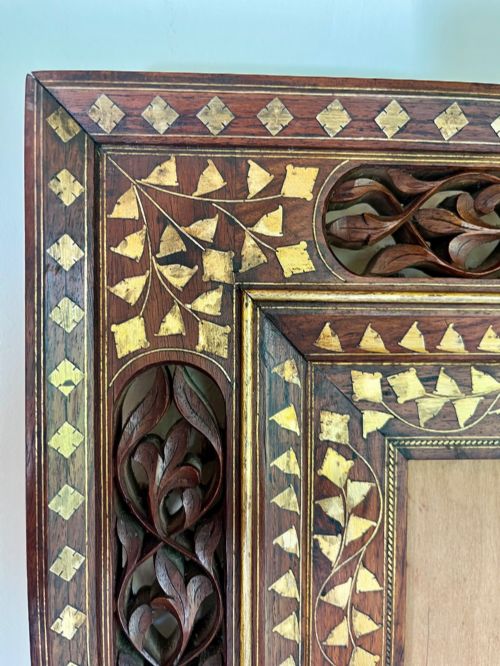
Makers built these frames using dense rosewood, often selecting timber with a pronounced grain that responds well to hand-carving and polishing. Workshops applied boxwood inlay and marquetry to create contrasting geometric or floral patterns across the wooden surfaces.
Mirror glass was fitted into the carved wooden structures, sometimes featuring bevelled edges that catch the light differently than flat panes. Brass elements occasionally appear for hanging hardware or structural support within the overmantel and wall mirror formats.
Listings span the nineteenth century through to the Edwardian era, featuring rosewood, boxwood inlay, mahogany, and brass.
What varies in quality
The distinction between standard and finer examples rests upon the depth and crispness of the carving within the rosewood. Crisp floral motifs or sharp architectural mouldings demand greater skill from the maker than simple, flat-planed timber surrounds.
The integration of decorative elements like boxwood inlay or marquetry influences the overall visual weight of the piece. Well-executed marquetry sits flush with the rosewood ground, whereas coarser work lacks the same precision in line and contrast.
The Carved Rosewood Wall Mirror Glossary
- Rosewood
- A dense, dark timber prized for its prominent grain and deep colour, frequently utilised in fine nineteenth-century cabinetmaking. It takes a high polish and accommodates intricate hand-carving.
- Overmantel mirror
- A large wall-hanging or mantel-resting glass designed specifically to sit above a fireplace opening. These pieces often feature architectural proportions to anchor the reception room wall.
- Marquetry
- The art of applying decorative pieces of veneer to a structure to form intricate patterns or pictures. In these mirrors, lighter woods such as boxwood provide contrast against the dark rosewood ground.
- Egyptian Revival
- A nineteenth-century design style drawing on motifs from ancient Egyptian art, including specific architectural forms and symbolic ornamentation. Pieces from this movement often display monumental geometry.
- Bevelled edge
- A glass pane whose outer perimeter is cut and polished at an angle to create a framed, prism effect. This technique adds depth and catches ambient light in domestic interiors.
Carved Rosewood Wall Mirror: Frequently Asked Questions
How do I hang a heavy overmantel mirror?
These substantial frames require secure fixing directly into wall studs or masonry using heavy-duty brackets suited to the weight of rosewood and glass. Consulting a professional installer ensures the mirror remains safely supported against the wall.
Position the mirror at a height that reflects eye level or catches natural light from a nearby window to brighten the room. Balance the visual weight of the frame against other furniture pieces placed below it.
How do I clean antique rosewood frames?
Dust the carved wooden surface regularly with a soft, dry cloth to prevent dirt accumulation within the recessed grain. Avoid using modern silicone polishes that can build up a residue over time.
Clean the mirror glass with a mild glass cleaner applied to a cloth rather than sprayed directly onto the surface, protecting the surrounding rosewood from moisture damage. Proper care preserves the original finish of the timber.
How do I date an Edwardian rosewood mirror?
Edwardian examples often combine rosewood with delicate boxwood inlay, marquetry, or small integrated shelves for decorative display. The lighter, more refined proportions typical of the early twentieth century distinguish them from earlier Victorian or Regency pieces.
Examine the construction methods visible on the reverse of the frame, including the type of screws, backing boards, and fixings used. These details help align the piece with documented manufacturing periods.