



Victorian Rosewood Dining Chairs
When sourcing victorian rosewood dining chairs, buyers encounter sturdy hardwoods and curved profiles that define mid-century formal interiors.
Victorian Rosewood Dining Chairs
Victorian rosewood dining chairs comprise single pieces, pairs, and larger sets designed for formal domestic dining. These seats appear frequently in matched groups of four or six, alongside occasional larger sets of eight or ten.
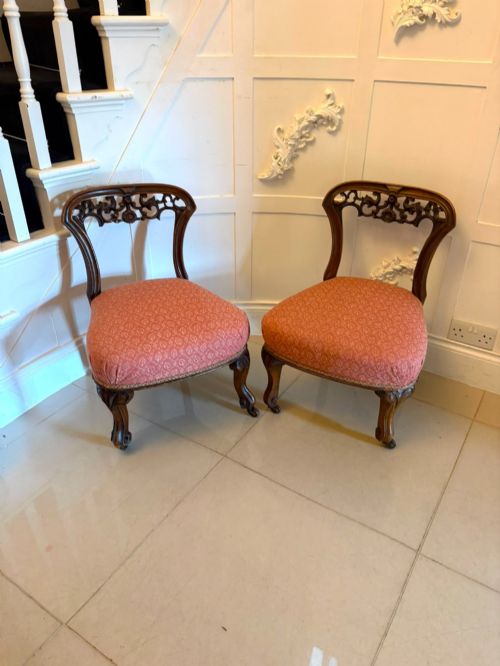
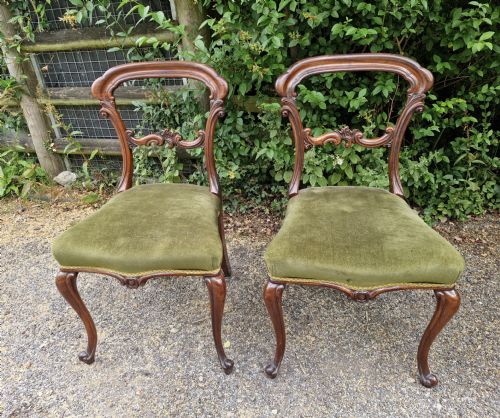
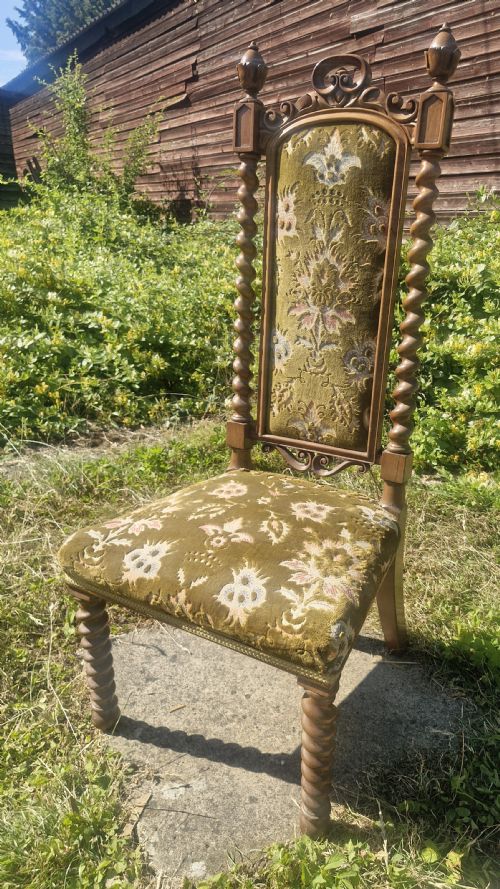
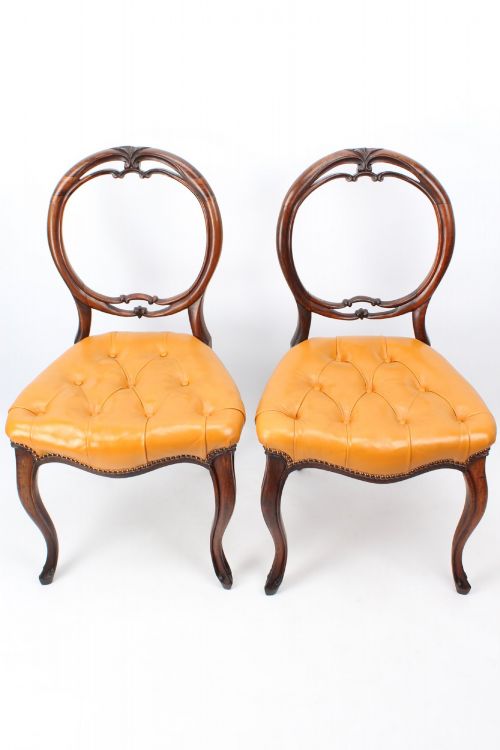
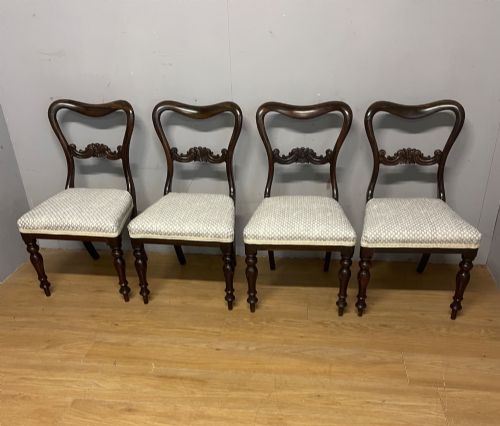
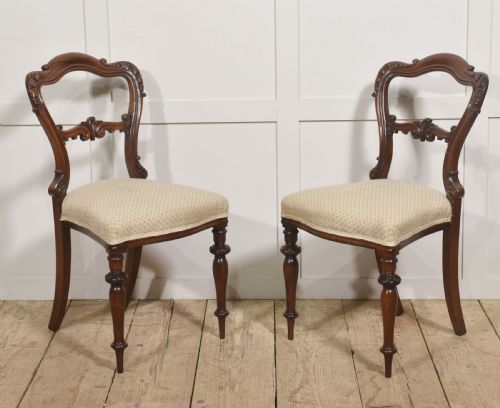
The dominant form on this page is the balloon back chair, characterised by an oval or rounded open backrest frame. Alongside these, side chairs, high back chairs, and occasional desk or parlour variants emerge from the nineteenth-century record.
Most examples date from the middle decades of the nineteenth century, aligning with the Victorian, William IV, and broader nineteenth-century periods. Makers of the era also incorporated revival styles such as Gothic and Rococo details into the timber frames.

How they were made
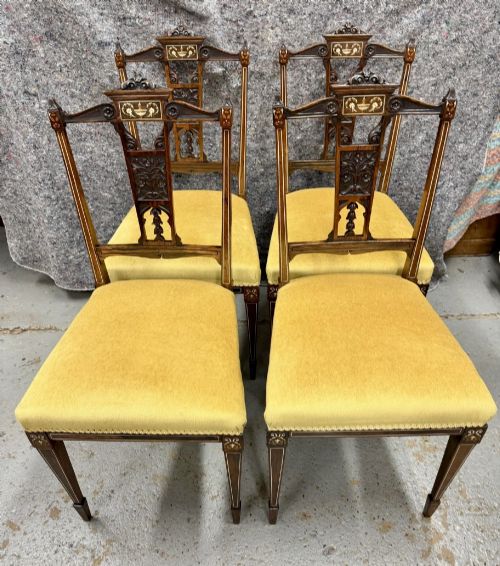
Frames are constructed from dense rosewood, sometimes complemented by mahogany components, utilising traditional joinery and steam-bending techniques to achieve the characteristic curved balloon backrests and carved details. Artisans also applied barley twist turnings and marquetry inlay to enrich the timber surfaces.
Seating portions incorporate supportive upholstery frameworks dressed in varied materials. Surviving examples feature textile coverings including fabric, velvet, needlepoint, and buttoned leather.
Victorian Rosewood Dining Chairs Retail Price Guide 2026
Typical asking prices for victorian rosewood dining chairs among the pieces listed under this phrase on Sellingantiques today, from the lower quarter to the upper quarter. They describe what is for sale here now, not the wider market.
Keep an eye out for diminutive child-sized chairs scaled down perfectly for nineteenth-century nurseries.
What varies in quality
The integrity of the carved wooden frame and the precision of the joinery set the baseline for each chair. Superior examples display crisp hand-carved ornamentation and firmly bonded timber joints that withstand structural weight without loosening.
Completeness alters the character of a group, as matched sets of six or eight command greater cohesion than assembled harlequin sets. Furthermore, the intricacy of inlay work and the preservation of original upholstery fabrics influence the overall standard of the piece.
The Victorian Rosewood Dining Chairs Glossary
- Balloon back
- A chair backrest shaped in a continuous oval or rounded loop resembling an inflated balloon. This form dominated mid-nineteenth-century seating design.
- Barley twist
- A decorative turning technique resembling a spiralling rope carved into wooden furniture legs or supports. It gained popularity during the Victorian period.
- Marquetry
- The art of applying decorative veneer pieces to a structure to form geometric or pictorial patterns. This technique frequently embellished the crest rails of finer chairs.
- Side chair
- An upright chair without arms designed for placement around a dining table or against a wall. These pieces form the majority of surviving nineteenth-century sets.
Victorian Rosewood Dining Chairs: Frequently Asked Questions
How many chairs came in a typical set?
Dining sets from this era commonly comprised four, six, eight, or ten chairs to accommodate family meals and formal gatherings.
Larger configurations of ten or more pieces are harder to find intact today.
Were these chairs used only for dining?
While primarily built for the dining room, lighter side and parlour chairs served secondary roles in sitting rooms and bedrooms.
Their decorative carved frames allowed them to function as occasional furniture when extra seating was required.
What is a harlequin set?
A harlequin set is a collection of chairs that share a similar period, timber, and general style but were not originally manufactured together as a single batch.
Collectors often assembled these groups over time to match larger dining tables.