




Victorian Rococo Clock
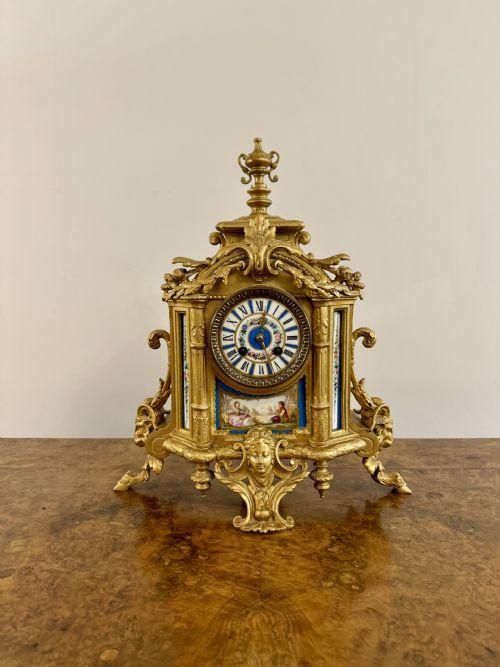
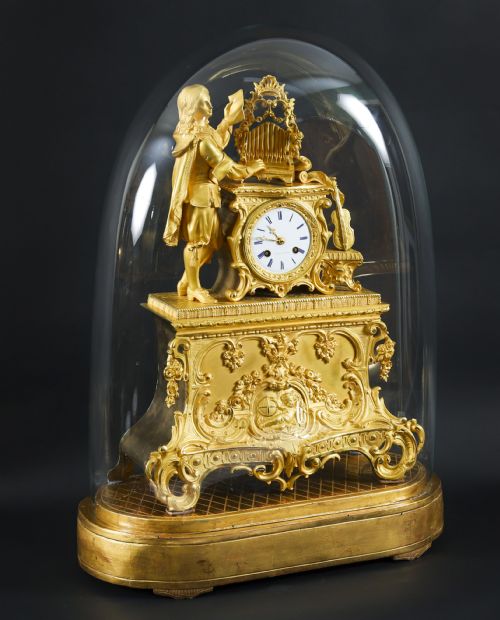
A victorian rococo clock brings exuberant nineteenth-century curves and elaborate gilt metalwork into a room.
Victorian Rococo Clock
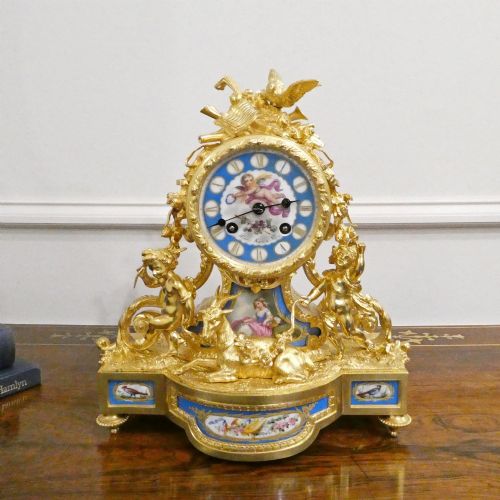
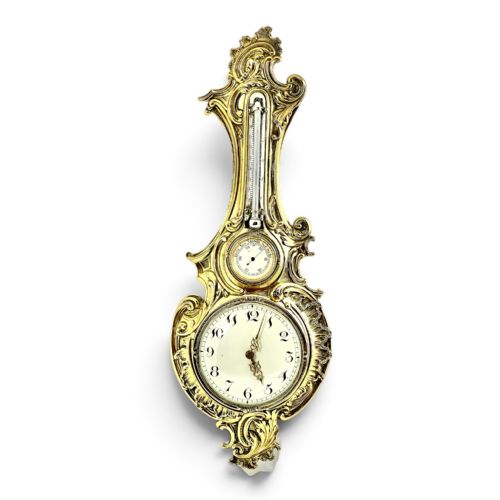
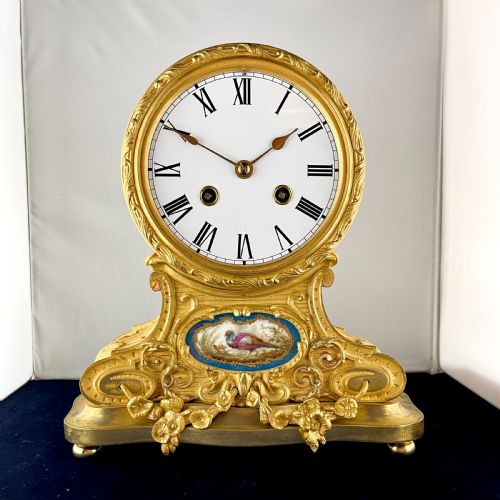
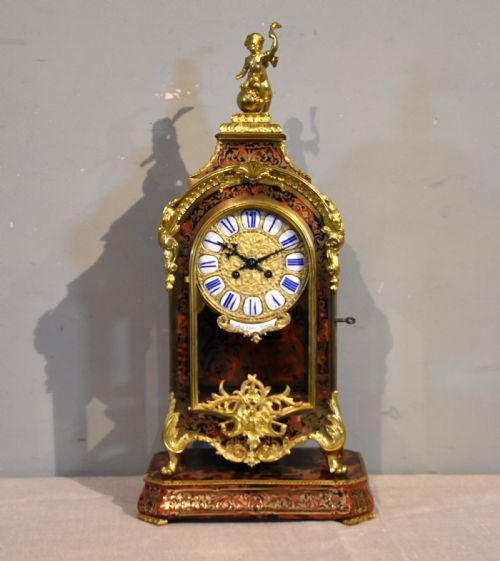
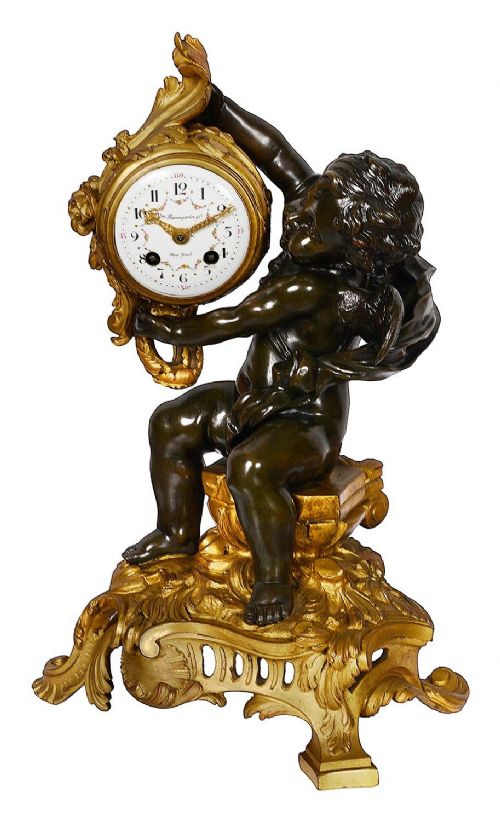
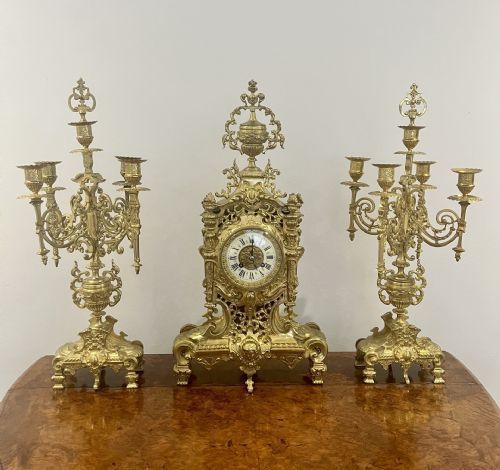
When you examine a victorian rococo clock, you encounter nineteenth-century interpretations of French eighteenth-century designs, heavily driven by revivalism across the Victorian period. These pieces appear most frequently as mantel clocks, often accompanied by matching garniture sets or ceramic dial plates.
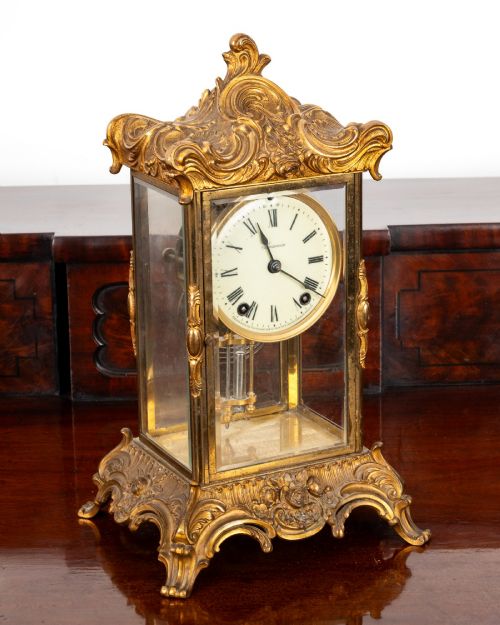
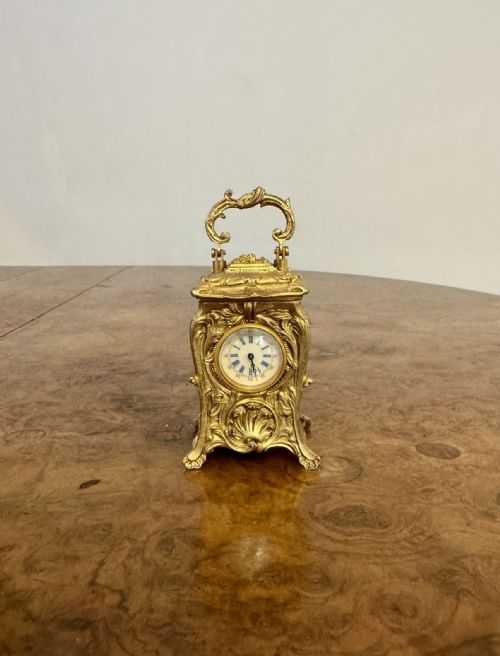
Makers drew on styles such as Louis XV Revival, French Rococo, and Napoleon III, placing asymmetrical scrolls and organic shell motifs across gilt bronze, brass, and porcelain bodies. The forms range from compact desk clocks to large architectural mantel pieces housed under hand-blown glass domes.
Materials and Construction
Foundry workers cast bodies in gilt bronze, ormolu, and patinated bronze, utilising chemical gilding and mercury finishes to achieve deep surface lustre. Cases frequently incorporate hand-painted porcelain panels and enamel dial chapters with delicate numerals.
Cabinetmakers also integrated walnut, tortoiseshell, and brass inlay into specific chassis designs. Movements required precision gear cutting, twin fusee systems, and pendulum regulation housed securely behind glazed bezel doors.
Several clocks preserve fragile hand-blown glass domes that spent over a century guarding delicate ormolu foliage from dust.
Distinctions in Quality
Quality rests upon the crispness of the metal chasing and the depth of the original gilding, where sharper cast ornamentation separates superior workshops from routine commercial output. The weight of the bronze and the complexity of the rococo scrolls indicate the original investment in the piece.
The integration of the movement with signed dial plates and matching case numbers reveals higher standards of assembly. Well-preserved porcelain faces free from hairline cracks and original hand-blown glass domes elevate the integrity of the surviving object.
Henry Marc·Ansonia New York·William Payne·Connell of London·PH Mourey·Leroy Paris·Samuel Marti·Japy Freres·LE ROY & FILS·Phillipe H. Mourey
The Victorian Rococo Clock Glossary
- Ormolu
- Gilded bronze produced by applying a mixture of gold and mercury to a bronze base and heating it. This technique creates a durable golden surface characteristic of nineteenth-century decorative arts.
- Garniture
- A set of matching ornamental objects consisting of a central clock flanked by two matching vases or candelabra. These sets balanced mantelpieces in formal Victorian interiors.
- Fusee
- A conical pulley used in clock movements to maintain even tension on the chain as the mainspring unwinds. It ensures consistent timekeeping across the duration of the wind.
- Bezel
- The metal ring that holds the glass protecting the clock face in place. It often opens on a hinge to allow hand-setting.
- Chasing
- The art of manually refining and detailing a metal casting with small punches and hammers. Master chasers added texture and depth to the rococo foliage.
Victorian Rococo Clock: Frequently Asked Questions
How do I wind a mantel clock?
Insert the appropriate winding key into the arbour holes on the enamel dial and turn gently until resistance is felt. Avoid over-winding to protect the internal mainsprings.
Ensure the clock rests on a completely level surface so the pendulum beats in an even rhythm without stopping.
What is a clock garniture?
A clock garniture is a matched set comprising a central timepiece accompanied by side ornaments such as urns or candelabra. Victorian households arranged these matching items symmetrically on fireplace mantels.
The components share identical materials, styles, and casting characteristics to create a unified decorative scheme.
Are these clocks accurate timekeepers?
Nineteenth-century mechanical movements can keep reliable time when serviced properly by a qualified horologist. Pendulum adjustments allow fine-tuning for daily gains or losses.
Environmental factors such as room temperature and vibrations from passing traffic can influence the performance of mechanical gear trains.