





Ornate French Table Clock
An ornate french table clock brings nineteenth-century precision into a room through cast bronze and porcelain.

Ornate French Table Clock
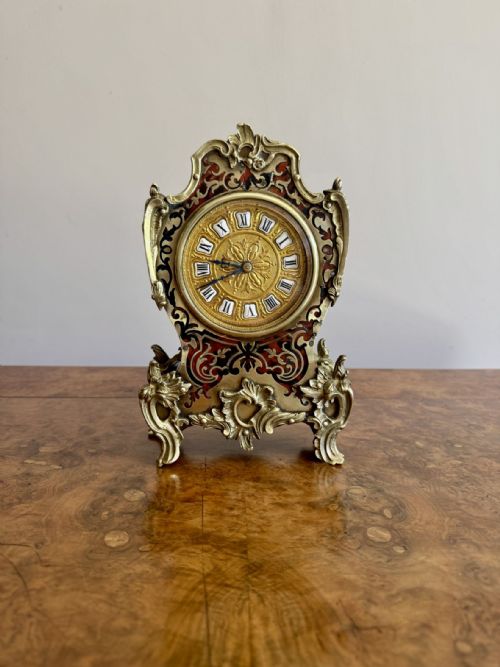
An ornate french table clock sits upon a mantel, desk or bracket, taking the form of mantel clocks, carriage clocks and clock garniture sets. These pieces date from the nineteenth century, spanning decades such as the eighteen-fifties through to nineteen-hundred, alongside Victorian designations.
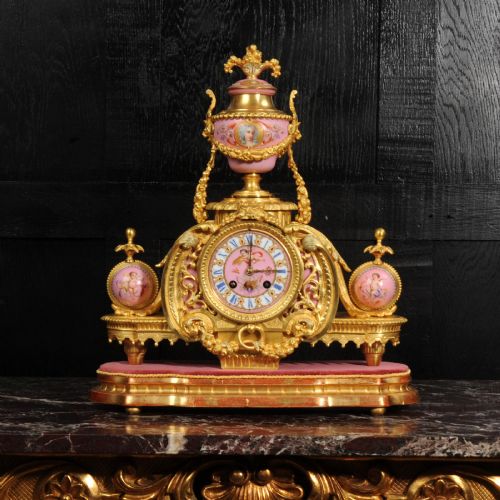
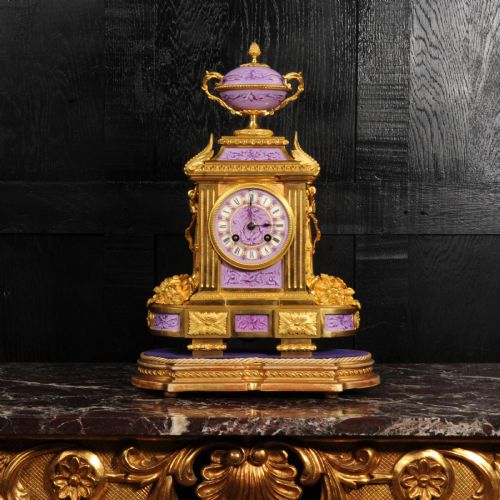
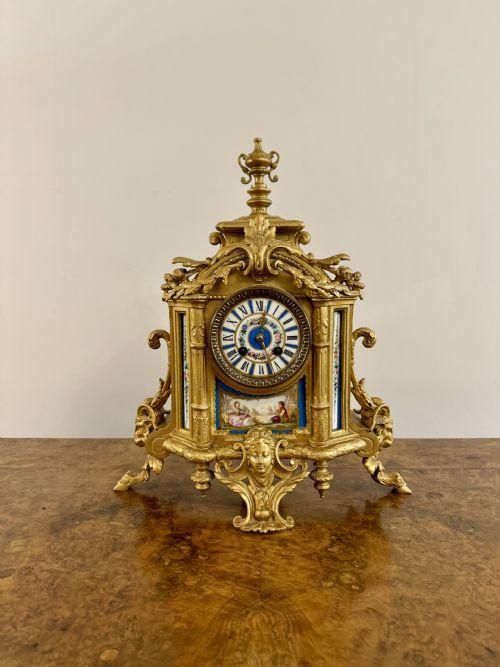
The version most commonly met on this page is the gilt brass or ormolu mantel clock styled in French Rococo Revival or Louis patterns. Makers housed these movements within architectural marble cases or beneath glass panels showing internal mechanics.
Carriage clocks and portico timepieces appear frequently alongside large garniture sets flanked by matching vases. Enamel dials and painted porcelain panels mark many of the surviving examples.
Materials and construction
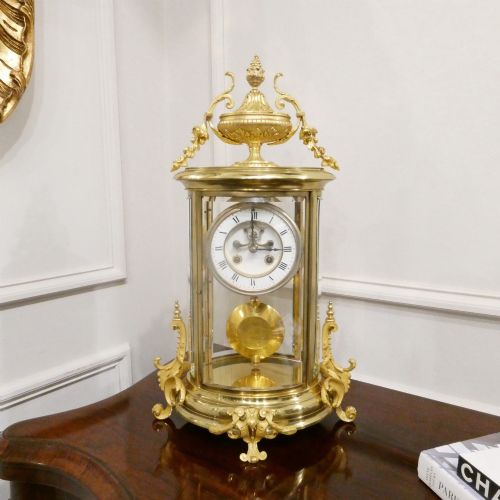
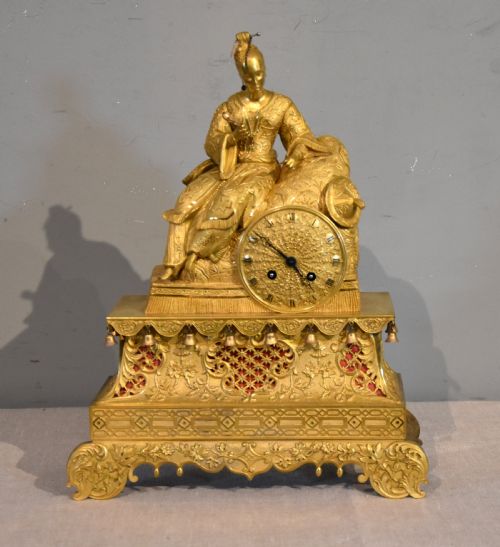
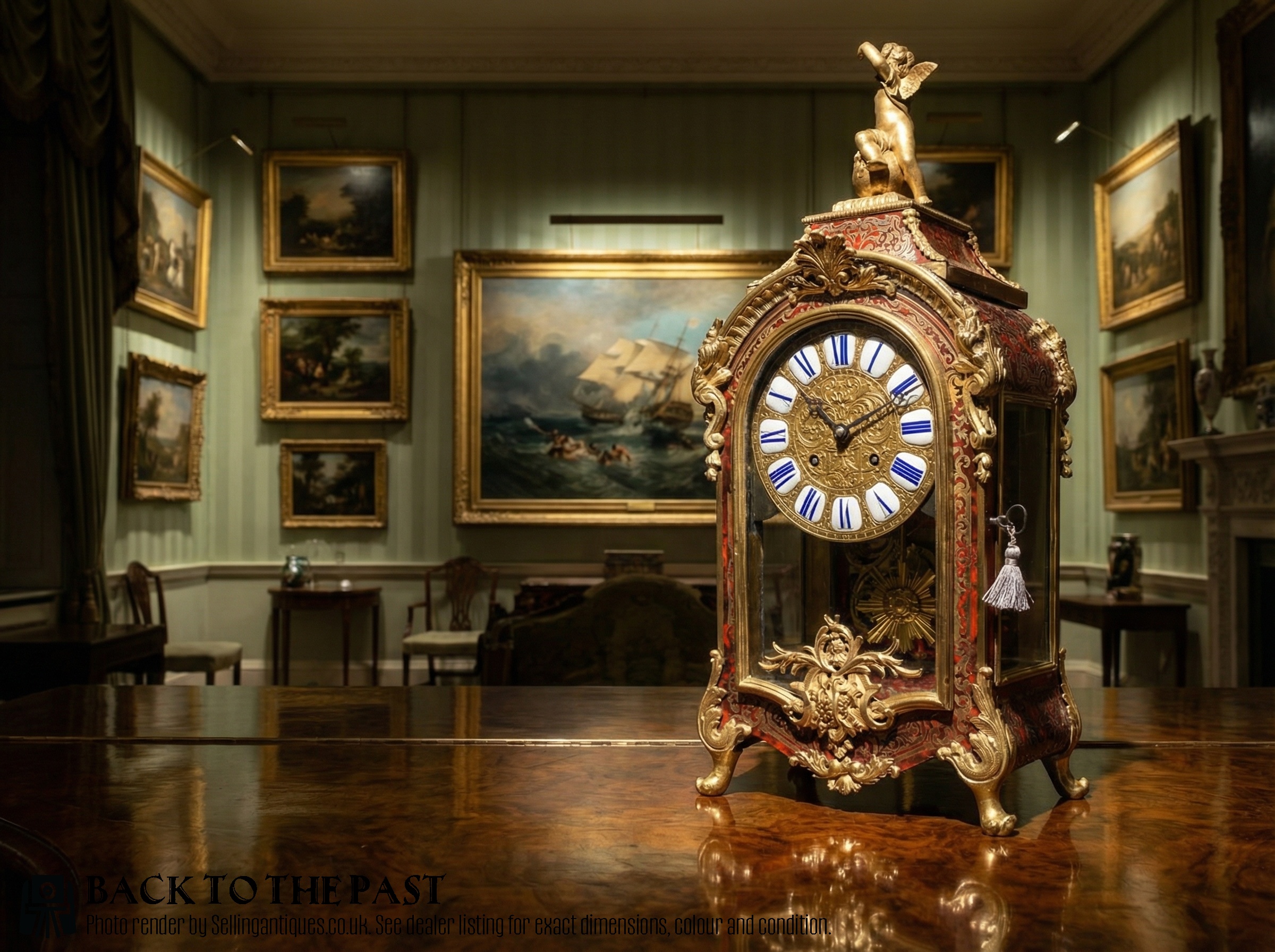
Foundries cast these bodies in brass, bronze and ormolu, applying a golden surface finish to detailed scrollwork and figural motifs. Marble and glass provide heavy structural housings for four-glass mantel designs and portico clocks.
Craftsmen integrated Sèvres porcelain plaques and champlevé enamel work directly into the metal frameworks of the dial surrounds. Movements rely on brass gear trains, often striking hours and halves on bells or gongs.
Ornate French Table Clock Retail Price Guide 2026
Typical asking prices for ornate french table clock among the pieces listed under this phrase on Sellingantiques today, from the lower quarter to the upper quarter. They describe what is for sale here now, not the wider market.
Listings span eight distinct decades of the nineteenth century, dominated by brass, ormolu, porcelain and marble materials.
Evaluating the craftsmanship
The crispness of the cast ornamentation dictates the upper tier of these clocks, where hand-chasing sharpens the foliage and figures after casting. Heavier gilding and thicker gauge brass separate substantial works from lighter commercial productions.
Signed movements by known makers indicate higher workshop standards in the gear cutting and escapement regulation. Complete garniture sets with matching side pieces demonstrate greater original investment than single timepieces.
Achille Brocot·Samuel Marti·Japy Freres
The Ornate French Table Clock Glossary
- Ormolu
- Gilt bronze produced by applying a mercury-gilding amalgam to cast brass or bronze. This technique creates a deep golden lustre found on nineteenth-century French cases.
- Champlevé
- An enamel technique where troughs are dug into a metal surface and filled with vitreous paste before firing. It decorates clock bezels and dial plates.
- Garniture
- A set consisting of a central clock and matching ornamental vases or candelabra designed to sit together on a mantelpiece.
- Four glass clock
- A mantel clock housed within glass panels on all four sides, allowing the pendulum and brass movement to remain visible from multiple angles.
- Portico timepiece
- A clock built within a classical architectural frame supported by columns, typically enclosing a suspended pendulum.
Ornate French Table Clock: Frequently Asked Questions
What is an ornate french table clock?
These pieces are nineteenth-century mechanical timepieces produced in France, combining decorative metal cases with enamel dials and precise brass gear movements.
They served both as functional timekeepers and status ornaments in domestic interiors, utilising styles from Rococo Revival to Louis periods.
How do I wind these clocks?
Most models require a specific key inserted into winding holes on the dial face to tension the springs or lift internal weights.
Careful turns power the eight-day striking mechanisms, while the pendulum regulates the beat rate for accurate timekeeping.
Where should I place a clock garniture set?
These sets demand a stable, level surface such as a mantelpiece, heavy sideboard or dedicated bracket where the central clock sits flanked by its matching side ornaments.
Keeping the base level ensures the pendulum swings evenly without catching on the movement components.
How do I distinguish Louis XV and Louis XVI styles?
Louis XV style pieces display asymmetrical Rococo scrolls, curving naturalistic leaf motifs and flowing cartouche shapes without rigid geometry.
Louis XVI pieces introduce neoclassical symmetry, straight columns, urns and crisp geometric framing derived from Greek and Roman architecture.