



Japy Freres Bronze Clock
A japy freres bronze clock brings nineteenth-century French precision and ornate metalwork into a room.
Japy Freres Bronze Clock
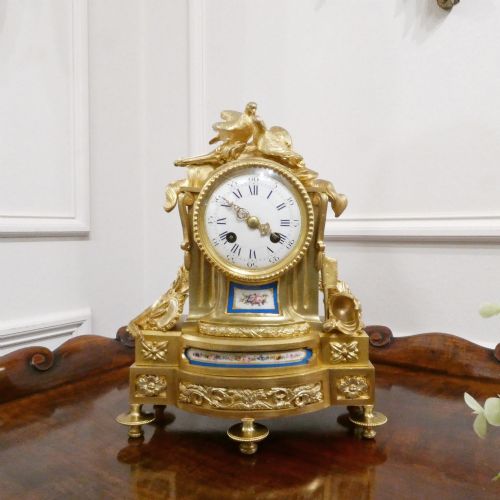
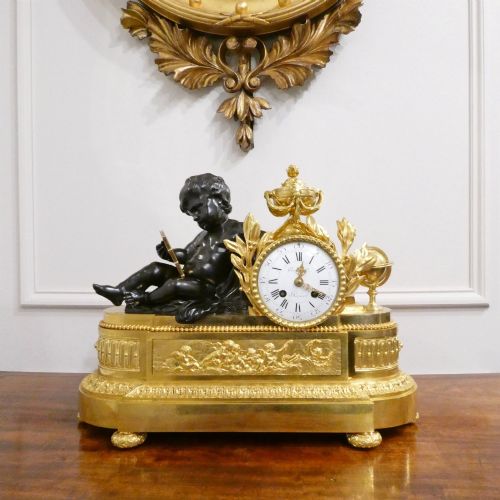
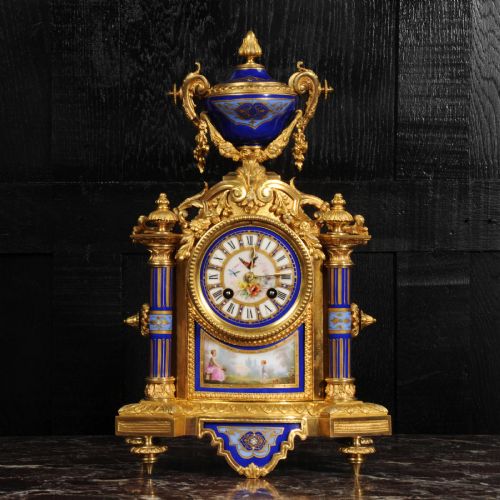
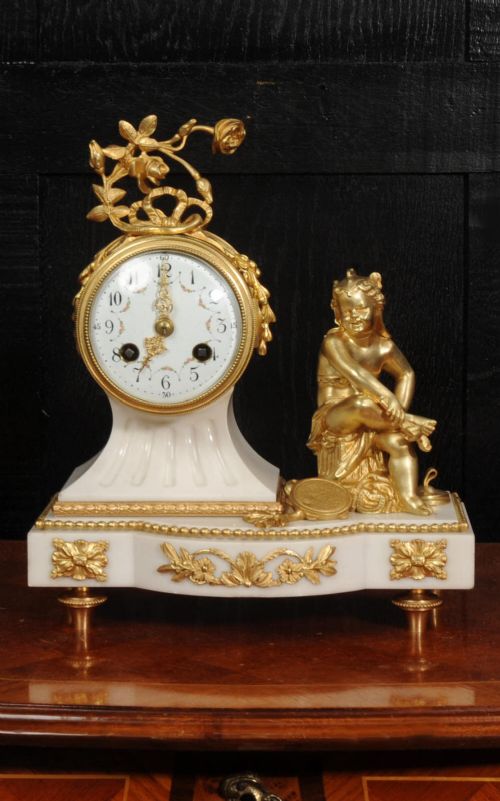
A japy freres bronze clock is a nineteenth-century timepiece originating from France, spanning mantel clocks, clock garnitures, and cartel wall clocks. These pieces combine heavy cast bronze or ormolu with decorative elements like porcelain panels and marble bases.
The most common examples encountered here date from the mid to late nineteenth century, particularly the eighteen-eighties and eighteen-seventies. Stylistically, they lean heavily towards Louis XVI revival and French rococo, reflecting the decorative tastes of the period.
Makers and retailers sometimes combined forces, resulting in pieces featuring porcelain panels or specific regional signatures alongside the core movement. Buyers will find both single mantel clocks and larger matched sets complete with side ornaments.
How they were made
Foundries shaped the bodies using bronze, ormolu, and brass, frequently applying a rich gilt finish to the metal surfaces. Artisans incorporated contrasting materials such as white marble, slate, and onyx into the structural housings.
Clock faces and decorative inserts often utilised painted porcelain, enamel, and glass components. Movements house mechanical gears stamped by the Japy Freres workshops, paired with hand-painted ceramic dial faces.
Japy Freres Bronze Clock Retail Price Guide 2026
Typical asking prices for japy freres bronze clock among the pieces listed under this phrase on Sellingantiques today, from the lower quarter to the upper quarter. They describe what is for sale here now, not the wider market.
Listings feature periods from eighteen-hundred to nineteen-hundred, utilising gilt bronze, porcelain, enamel, glass, ormolu, brass, and marble.
What varies in quality
The refinement of the cast bronze ornament dictates much of the visual hierarchy, with crisper foliage and more deeply undercut figures marking superior examples. Elaborate rococo scrolls and architectural Louis XVI columns require exceptional skill in the initial foundry work.
The integration of secondary materials such as Sevres-style porcelain panels and carved marble bases elevates certain pieces above standard brass-cased models. Completeness also plays a role, as full clock sets with matching side pieces represent a higher tier of production than single mantel timepieces.
Japy Freres·H F Moreau
The Japy Freres Bronze Clock Glossary
- Ormolu
- Gilded bronze, produced by applying a mixture of finely ground gold and mercury to a bronze base and heating it. This technique creates a durable, bright golden surface commonly seen on nineteenth-century French clock cases.
- Garniture
- A set of decorative matching objects for a mantelpiece, usually consisting of a central clock flanked by two matching vases, urns, or candelabra. Japy Freres movements frequently anchor these larger matched groupings.
- Cartel clock
- A wall-mounted clock housed in an ornate, asymmetrical frame made of gilt bronze or wood. These pieces use elaborate scrollwork typical of the rococo style.
- Sevres porcelain
- Fine ceramic panels and dial faces produced in France, often hand-painted with floral motifs and landscapes. They are frequently integrated into the front or sides of architectural mantel clocks.
- Drum head clock
- A timepiece featuring a circular clock case mounted on a stepped or architectural base. This distinct form places the movement directly inside a prominent drum-shaped housing.
Japy Freres Bronze Clock: Frequently Asked Questions
What periods do these clocks come from?
The pieces span the nineteenth century, with the majority originating between eighteen-fifty and nineteen-hundred. Production dates cluster heavily in the eighteen-seventies and eighteen-eighties during the Second Empire and subsequent revival periods.
Craftsmen produced these works across several decades using established French foundry techniques. Earlier examples from the start of the nineteenth century appear alongside later nineteenth-century variations.
How do I identify the style?
Stylistic cues point directly to French decorative movements, primarily Louis XVI revival and rococo. Louis XVI pieces feature symmetrical urns, ribbons, and neoclassical columns, while rococo examples display asymmetric scrolls and naturalistic foliage.
Materials also help signal the aesthetic, with gilt bronze and Sevres porcelain indicating classical French tastes. Portico clocks and architectural marble housings further distinguish the formal periods.
Were these clocks part of sets?
Many timepieces were created as part of larger garniture sets that included matching side ornaments. These configurations placed a central clock flanked by complementary objects on a mantelpiece.
Single mantel clocks and wall-hanging cartel clocks were also common production formats. The evidence records numerous multi-piece sets alongside standalone clocks.
What materials make up the body?
Foundries relied primarily on bronze, gilt bronze, and ormolu to build the structural cases. Secondary elements incorporated white marble, slate, onyx, and brass.
Faces and decorative highlights utilised porcelain, enamel, and glass components. These mixed media constructions define the physical weight and appearance of the objects.