


Dark Bronze Clock
These dark bronze clock pieces bring heavy patinated metal and classical French styling into a room, offering the weighty presence collectors prize.
Dark Bronze Clock
A dark bronze clock stands as a substantial timepiece, frequently arriving in French mantle, cartel wall, or bracket clock formats created across the nineteenth century. These objects combine cast metal figures with architectural cases, often appearing alongside garniture sets featuring matching side pieces.
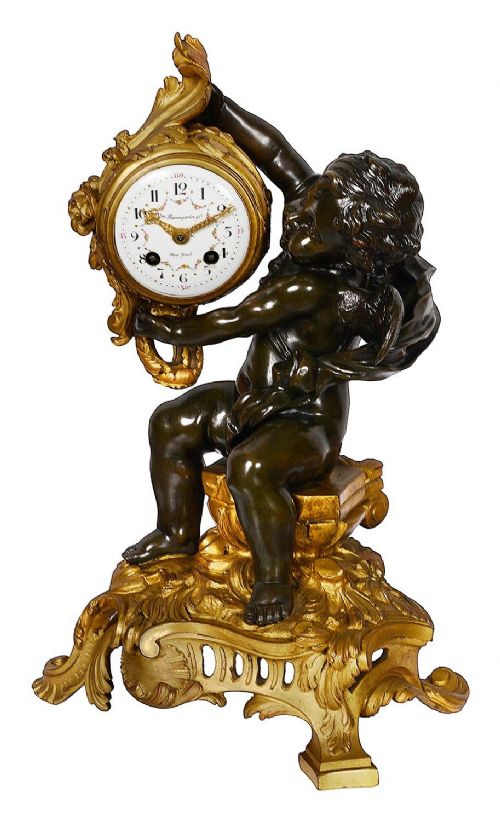
The domestic forms range from classical cherub mantle clocks to Gothic revival bracket designs and portico models housed in mahogany. Buyers encounter pieces influenced by French Empire, Rococo, and Realism styles, dominated by nineteenth-century manufacturing traditions.
Makers such as Japy Freres, Charpentier Paris, Lemerle Charpentier, and Bellenot Paris signed these works, placing them firmly within established European horological workshops. The typical items on this page combine dark patinated bronze with contrasting ormolu mounts, enamel dials, and marble bases.
How they were made
Foundries cast these metal cases using bronze, brass, and patinated bronze, frequently combining them with fire-gilded ormolu highlights. Artisans paired the dark cast metal with white enamel dials and inset glass panels to protect the movement.
Movements utilise twin fusee or standard mechanical gear trains to drive the striking mechanisms and timepieces. Marble and mahogany served as foundational materials for plinths and portico cases, anchoring the heavy metal structures.
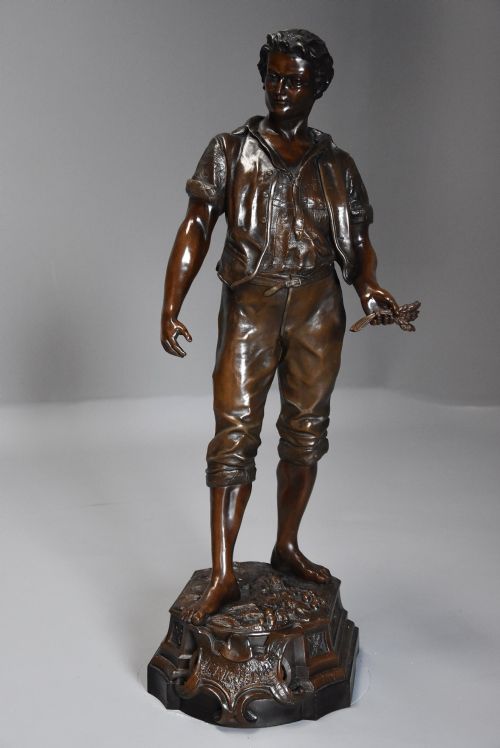
Several pieces on display include sculpted farm labourers and cheerful cherubs frozen in metal, guarding the passage of time from your mantelpiece.
What varies in quality
The finesse of the bronze casting and the depth of the dark patination separate standard production from superior examples. Signed works by established makers demonstrate sharper chisel work on decorative mounts and more complex figural modelling.
Complete clock garniture sets with matching side pieces represent a higher tier of survival compared to single isolated timepieces. The integration of complex movements, such as twin fusee systems, elevates the technical standard of the piece.
F.Milliot·Japy Freres·Charpentier Paris·James Moore·Lemerle Charpentier·Bellenot Paris
The Dark Bronze Clock Glossary
- Garniture
- A set of matching decorative objects, typically comprising a central clock and two flanking side pieces or vases. These sets were designed to sit harmoniously on a mantelpiece.
- Ormolu
- Gilded bronze produced by applying a mercury and gold amalgam to the bronze base metal and heating it. This technique yields a bright, durable gold surface that contrasts with dark bronze.
- Twin Fusee
- A mechanical movement using conical pulleys and chains or cords to maintain even tension on the gear train as the mainspring unwinds. It indicates a higher grade of clockmaking.
- Cartel wall clock
- A clock designed to hang directly on a wall, housed within an ornate frame made of cast metal such as bronze or ormolu. These pieces often feature asymmetrical Rococo scrolls.
- Portico clock
- A monumental clock style featuring a dial suspended within a architectural frame supported by columns. Mahogany and marble frequently form the structural piers of these designs.
Dark Bronze Clock: Frequently Asked Questions
What is a dark bronze clock?
A dark bronze clock is a nineteenth-century timepiece housed in a cast metal case with a deep patinated finish. These objects frequently incorporate classical figures, enamel dials, and architectural marble or bronze mounts.
Many examples originate from French workshops, reflecting styles ranging from Empire and Rococo revival to Gothic architecture. They often appear as standalone mantel pieces or as part of larger matching garniture sets.
How do I style a clock garniture?
A clock garniture is placed centrally on a mantelpiece, sideboard, or console table, flanked symmetrically by its matching side ornaments. The uniform dark bronze and ormolu materials create a balanced focal point in a traditional interior.
Ensure the supporting surface is sufficiently sturdy to bear the considerable weight of the bronze and marble components. Allowing adequate clearance around the piece highlights its sculptural details.
How do I identify nineteenth-century French clocks?
Nineteenth-century French clocks are identified through specific stylistic markers such as cast bronze figural groups, enamel dials, and signatures stamped on the movement backplates. Makers like Japy Freres and Charpentier marked their mechanism plates with foundry stamps and serial numbers.
The presence of characteristic decorative idioms, including classical cherubs, ormolu mounts, and architectural portico frames, points directly to this period of manufacturing.
How do mechanical movements work?
Mechanical movements rely on wound springs or hanging weights to drive a train of gears that regulate time through an escapement and pendulum. Twin fusee movements utilise conical drums to ensure constant power delivery as the spring unwinds.
Owners wind these clocks manually using a key inserted into the dial face at regular intervals to maintain operation. Regular professional servicing keeps the brass gears and pivots functioning smoothly.