
Victorian Regency Table
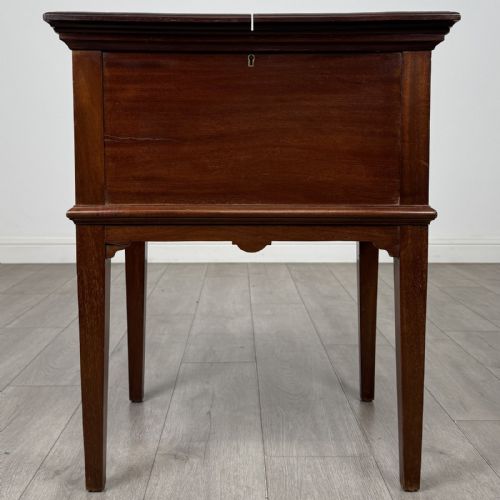
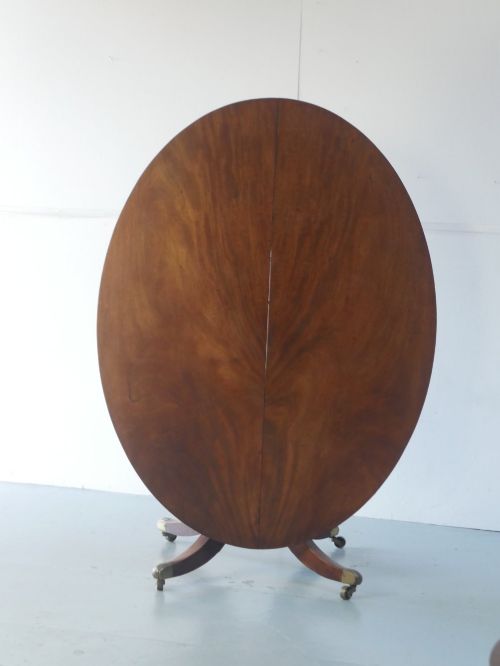
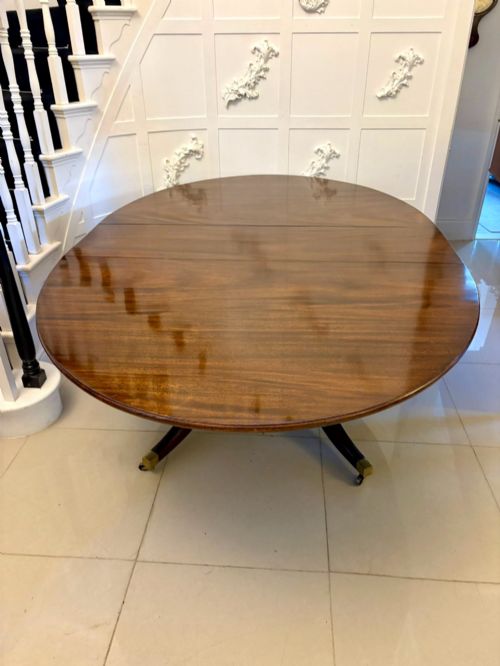
These pieces sold as victorian regency table span formal dining designs and smaller occasional forms constructed in rich timbers.
Victorian Regency Table
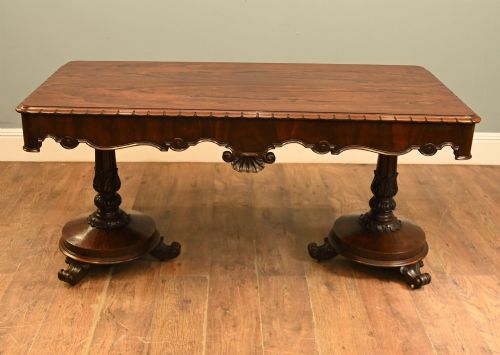
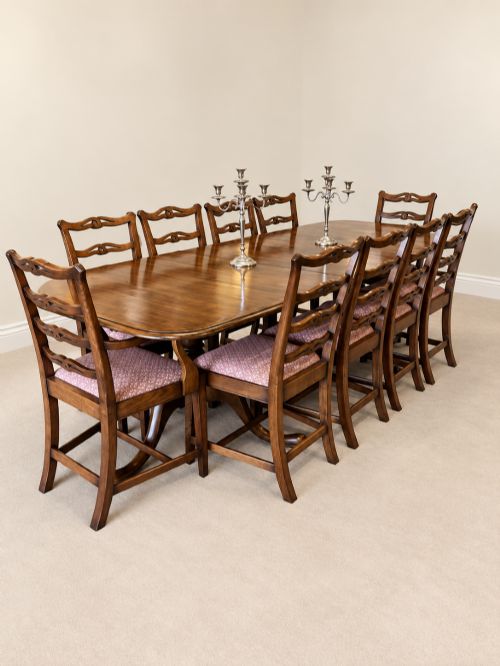
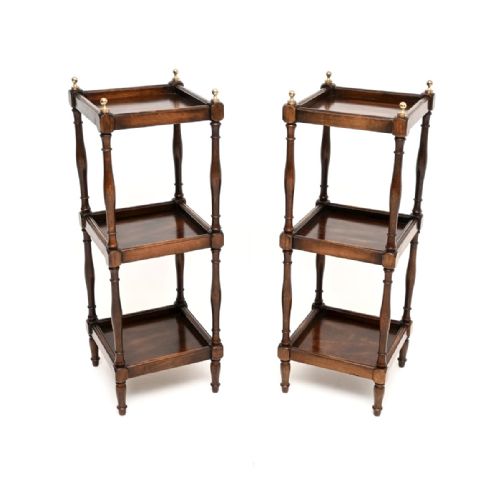
When you search for a victorian regency table, you encounter nineteenth century pieces that draw upon classical lines and earlier Georgian proportions. The selection encompasses large extending dining tables alongside smaller forms like wine tables, pembroke tables, and library tables.
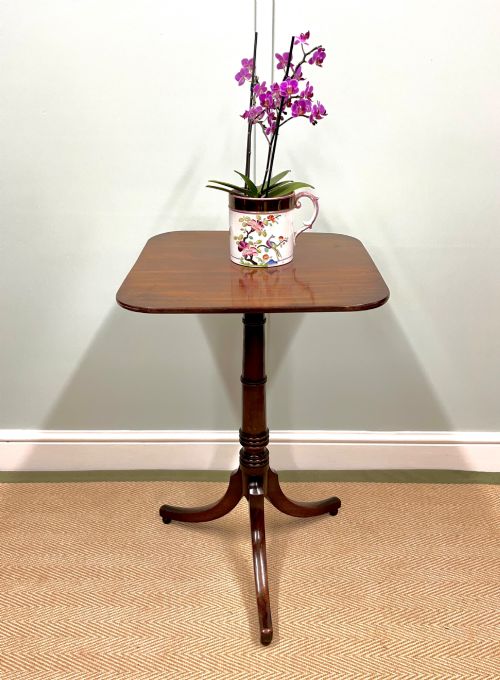
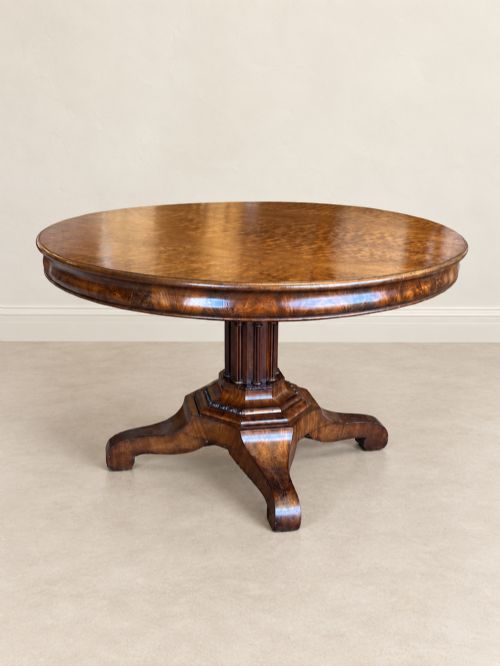
You are most likely to meet mahogany and rosewood examples from the nineteenth century, often reflecting Regency or William IV influences. These range from heavy pillar dining formats to tripod and pedestal occasional items designed for specific domestic uses.
How they were made
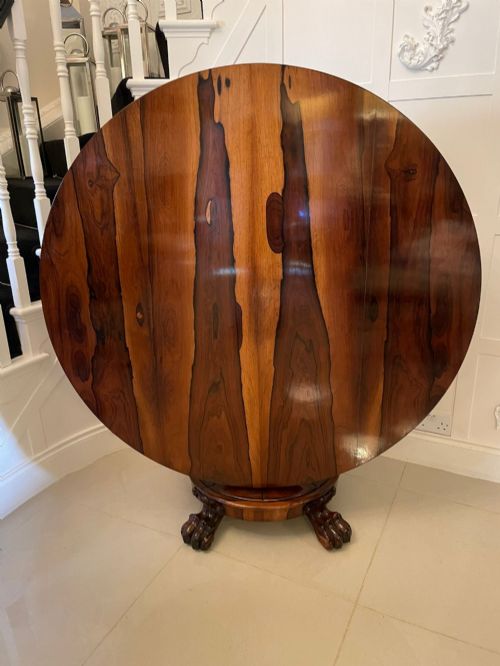
Makers utilised dense timbers such as mahogany, rosewood, and walnut, often selecting figured veneers for table tops. Solid sections formed structural legs and pillars, while secondary woods provided support beneath.
Decorative detailing relied upon parcel gilding, brass mounts, or carved ornamentation in neoclassical styles. Surface finishes were achieved through traditional polishing techniques that highlighted the natural grain of the wood.
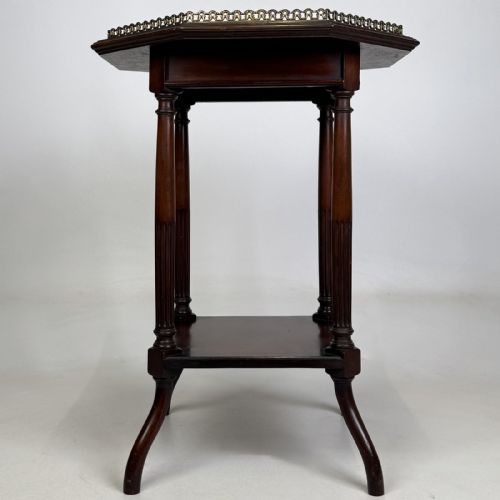
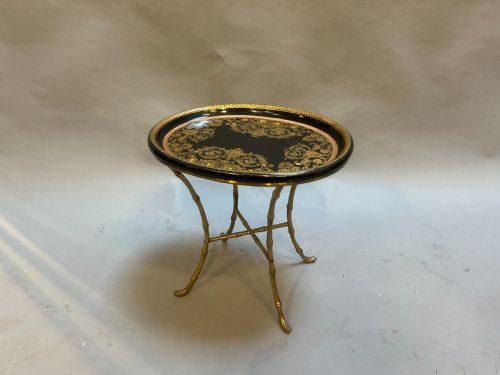
A nineteenth century octagonal tray table depicts the family of Darius before Alexander, turning supper into an ancient history lesson.
What varies in quality
The degree of refinement in carved details and the selection of timber figure distinguish higher tier examples from standard workshop output. Superior pieces display thoughtful proportion in pedestal bases and precise joinery in extending mechanisms.
Integration of secondary materials like leather inserts, brass gallery rails, or ormolu mounts impacts the overall sophistication of the piece. Craftsmanship is evident in the stability of tilt top mechanisms and the seamless fit of table leaves.
Gillows·William and Gibton·Maple and Co·P and MA Nicholson
The Victorian Regency Table Glossary
- Tilt top
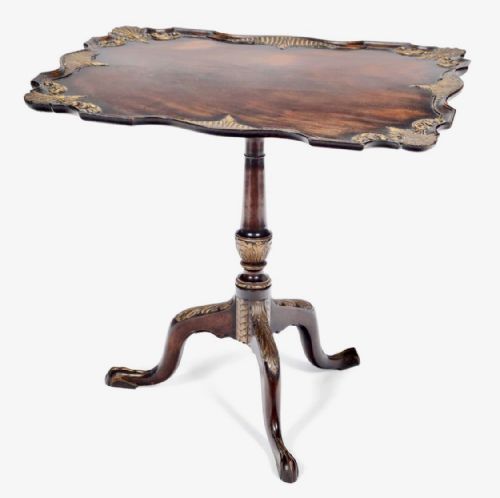
- A table mechanism allowing the top to pivot vertically for storage against a wall when not in use. This design is commonly found on nineteenth century tripod and breakfast tables.
- Pembroke table
- A small occasional table with hinged flaps on two opposite sides that can be raised to extend the surface. It frequently includes one or more drawers.
- Parcel gilt
- A decorative technique where specific carved details or mouldings are partially covered with gold leaf. It creates contrast against dark timbers like mahogany or ebonised wood.
- Extending dining table
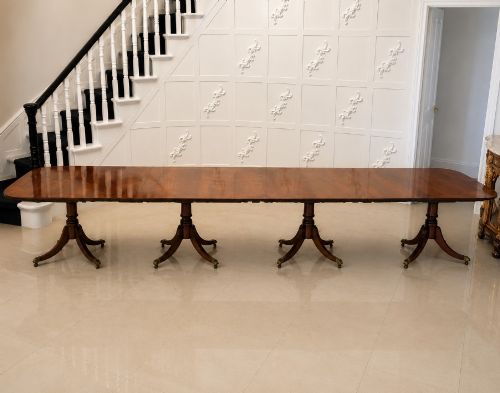
- A form designed with a central gap and internal leaves that slide apart on runners to accommodate larger groups. Such tables often utilise multiple pedestal pillars for support.
- Pedestal table
- A standalone table supported by a single central column resting on a tripod or platform base. This configuration maximises legroom around the perimeter.
Victorian Regency Table: Frequently Asked Questions
How do I identify a victorian regency table?
You identify these pieces by examining the combination of classical neoclassical motifs, such as reeded legs or brass paw feet, applied to nineteenth century forms. The use of dense mahogany or rosewood alongside specific stylistic revivals points directly to this grouping.
Pay attention to the construction methods beneath the top and the presence of period-appropriate brass or wooden hardware. Comparing the proportions against standard nineteenth century forms helps confirm the attribution.
Can I use a pembroke table for daily dining?
Pembroke tables are generally suited for occasional use, writing, or small tea settings rather than heavy daily family meals. The drop leaves rely on folding brackets that have weight limits.
If you utilise one for dining, keep heavier serving dishes toward the centre where the fixed portion of the top provides maximum support. Ensure the leaf supports are securely locked before placing items upon them.
How do extending dining tables operate?
Extending dining tables typically function on a telescopic wooden runner system that pulls apart from the centre. Additional leaves are then dropped into the resulting gap and secured with brass clips or wooden pins.
Larger versions require multiple people to separate the heavy timber sections evenly. Keeping the runners clean and lightly waxed ensures smooth operation during adjustments.
What is the difference between a library table and a writing table?
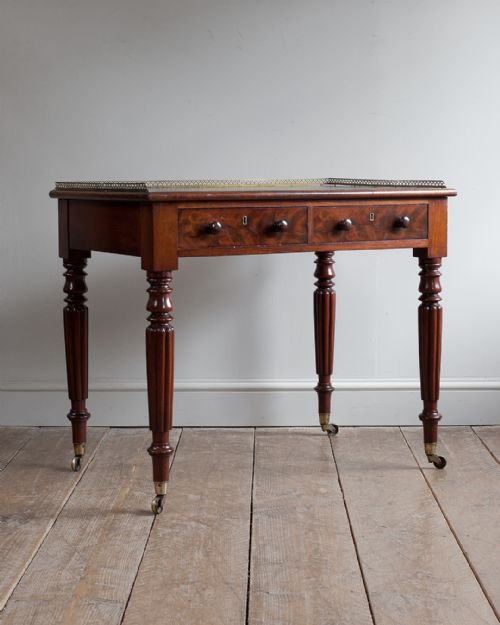
Library tables are traditionally finished on all four sides so they can stand free in the middle of a room, often featuring large tops for sorting books or papers. Writing tables usually incorporate drawers and may be designed with a finished back or intended to sit against a wall.
Both forms utilise fine timbers like mahogany or rosewood, but the intended placement dictates the presence of drawers and finished rear panels.