



Victorian Preserve Pan
A Victorian preserve pan brings warmth and heavy metal craft straight from the old kitchen into a modern home.
Victorian Preserve Pan
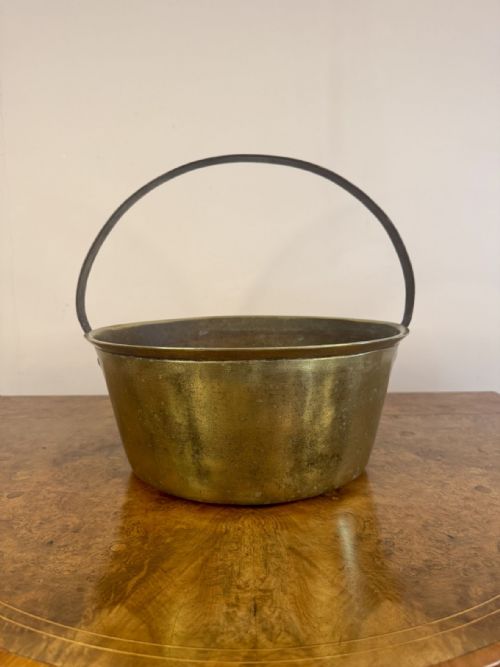
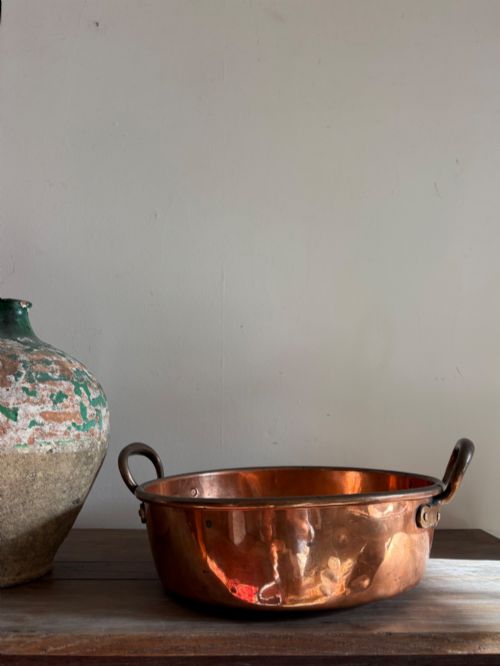
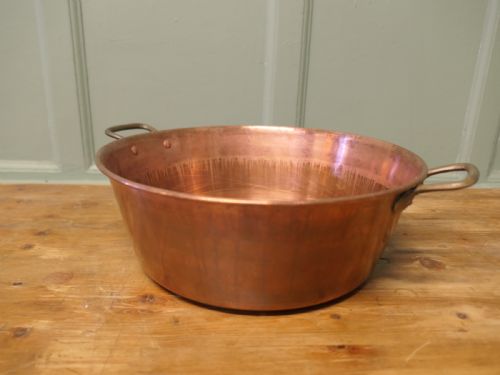
When you search for a victorian preserve pan, you encounter heavy kitchenalia designed for boiling fruit and sugar over an open fire or range. These pieces take the form of large round vessels, deep bowls, and jam pales intended for heavy culinary labour.
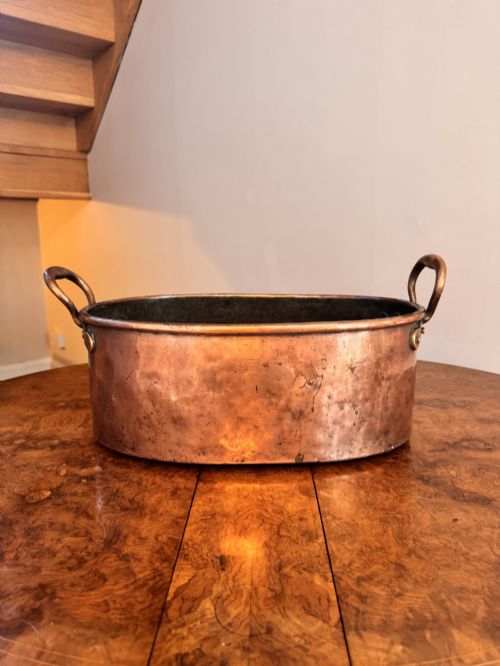
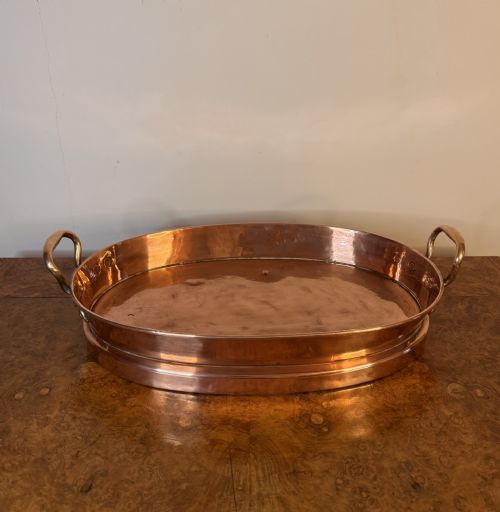
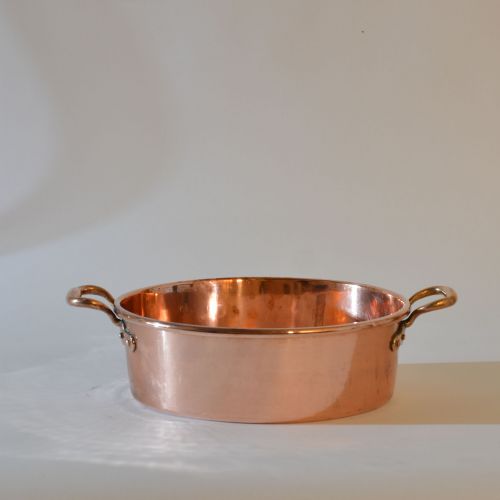
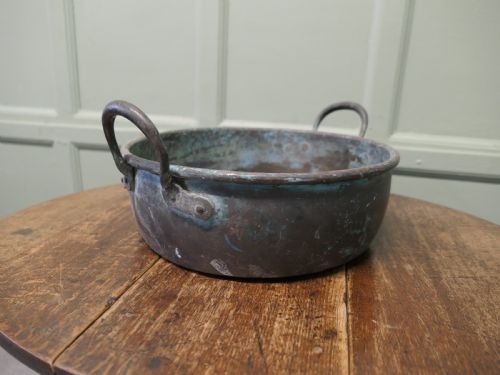
The objects listed on this page span the nineteenth century and stretch into later decades, displaying styles from standard Victorian and Victorian country to rustic farmhouse. Most examples are heavy copper vessels fitted with brass or iron handles, alongside brass jam pales and cream setting pans.
You find items ranging from small riveted swing-handled brass pans to large double-handled copper cooking vessels weighing several kilograms. These utility pans carry the distinct marks of nineteenth century domestic work, functioning equally well today as display pieces or log holders.
How they were made
Makers fashioned these preserve pans primarily from heavy copper and brass, sometimes combining them with iron or wrought iron for the handles. The choice of metal ensured even heat distribution during long hours of boiling fruit.
Construction methods relied on solid metal forming, often featuring visible riveting where handles attach to the body of the pan. Many examples display the mottled texture and substantial weight characteristic of nineteenth-century metalworking.
Victorian Preserve Pan Retail Price Guide 2026
Typical asking prices for victorian preserve pan among the pieces listed under this phrase on Sellingantiques today, from the lower quarter to the upper quarter. They describe what is for sale here now, not the wider market.
A heavy copper pan that once boiled sticky fruit now spends retirement holding dry logs by the fireplace.
What varies in quality
Quality in a preserve pan is dictated by the weight of the metal and the robustness of the handles. Heavy copper and thick brass signify durable vessels built for hard daily use rather than light decorative items.
The method of construction also defines the piece, with secure riveting and solid brass or iron mounts marking out superior examples. Makers such as Hodges & Sons produced pans where the joinery and metal thickness elevate the vessel above standard kitchenware.
Hodges & Sons
The Victorian Preserve Pan Glossary
- Jam pale
- A deep metal container with upright sides used specifically for boiling fruit and sugar into jam. These vessels often feature strong bail handles for lifting heavy loads.
- Kitchenalia
- Domestic utensils and equipment used in food preparation and cooking, now collected for display. This category includes copper pans, brass bowls, and heavy iron cookware.
- Cream setting pan
- A wide shallow vessel designed to hold milk so that cream could rise to the top. These pans utilise similar metalworking techniques to standard preserving vessels.
- Swing handle
- A movable arched metal handle attached to opposite sides of a pan by rivets or lugs. This design allows the handle to drop flat against the side of the vessel when not in use.
Victorian Preserve Pan: Frequently Asked Questions
What is a victorian preserve pan used for?
These heavy metal vessels were originally designed for boiling fruit, sugar, and jams over a fire or range. Their thick metal walls prevented scorching during long periods of cooking.
Today, buyers frequently utilise these large copper and brass bowls as decorative items, planter pots, or fireside log holders.
Are these pans made of copper or brass?
The evidence shows examples made from both copper and brass, occasionally incorporating iron or wrought iron for the handles. Copper versions are particularly common among the larger cooking vessels.
Both metals were chosen for their durability and ability to conduct heat evenly across the base of the pan.
How heavy are these preserve pans?
Many of these vessels are described as heavy, with specific large copper examples weighing between three and four kilograms. This substantial weight reflects the thick gauge of metal required for nineteenth century kitchen work.
Smaller pans, such as riveted brass examples, offer a lighter alternative while retaining the same sturdy construction.
How do I date a preserve pan?
Dating relies on the materials, manufacturing methods, and stylistic cues recorded across the nineteenth century and into the early twentieth century. Riveted handles, heavy copper construction, and maker details help place an object within this era.
Items range from standard Victorian designs to rustic farmhouse pieces spanning the period from eighteen sixty to nineteen thirty.