




Victorian Brass Preserve Pot
These robust vessels and serving pieces offer a glimpse into domestic history, bringing authentic Victorian brass preserve pot designs into modern homes.
Victorian Brass Preserve Pot
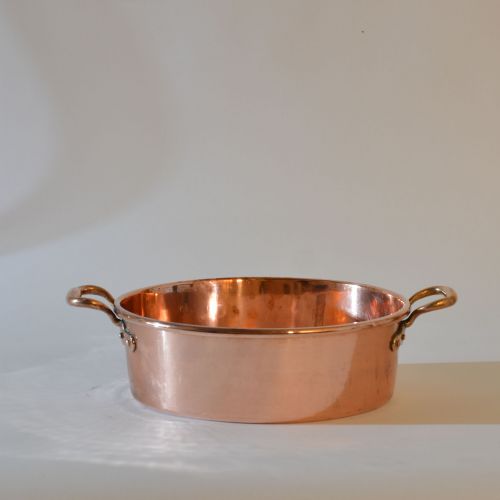
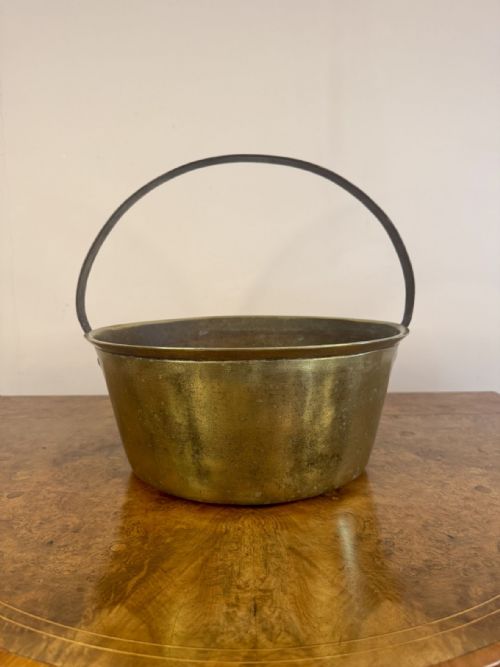
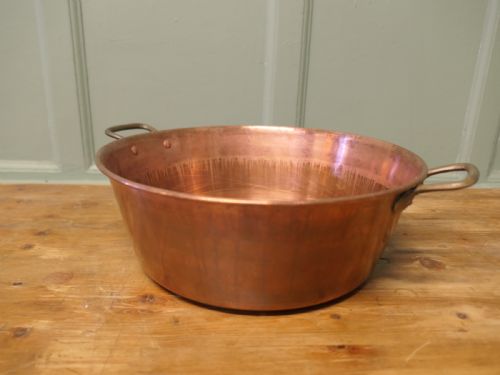
A victorian brass preserve pot represents the practical culinary equipment of the nineteenth century, designed primarily for boiling fruit and sugar. Buyers encounter heavy brass jam pails alongside large preserving pans featuring sturdy handles.
The selection on this page extends to copper kitchen pans, cream setting pans, and occasional serving vessels like cranberry glass dishes with silver gilt baskets or stoneware biscuit barrels. These forms reflect both utilitarian kitchen use and domestic display.
Most examples originate from the nineteenth century, encompassing Victorian country and rustic farmhouse styles. The forms range from small swing-handled pans to large double-handled vessels intended for substantial domestic output.
How they were made
Makers utilised heavy brass and copper sheets, often shaping them into substantial pans with riveted handles made from iron or wrought iron. The weight of these metals ensured even heat distribution across open hearths or kitchen ranges.
Techniques involved careful hammering and joining of metal, visible in the riveted construction of swing-handled and double-handled pans. Decorative variants incorporate cranberry glass set within silver gilt baskets or moulded jasperware.
Victorian Brass Preserve Pot Retail Price Guide 2026
Typical asking prices for victorian brass preserve pot among the pieces listed under this phrase on Sellingantiques today, from the lower quarter to the upper quarter. They describe what is for sale here now, not the wider market.
Some pans survived centuries of vigorous jam-making only to spend retirement holding logs by the fireplace.
What varies in quality
Quality rests in the substantial weight of the metal and the integrity of the original handles, where heavier gauge brass or copper indicates superior domestic utility. Pieces bearing maker attribution, such as Hodges & Sons, command greater attention from collectors.
The refinement of the form also distinguishes standard kitchenalia from finer domestic items, such as cranberry glass paired with silver giltwork. The balance between utilitarian strength and decorative finish dictates the standing of each piece.
Hodges & Sons
The Victorian Brass Preserve Pot Glossary
- Preserve pan
- A wide, open metal vessel designed for boiling fruit and sugar to create jams and preserves. Its shallow depth allows steam to escape efficiently during prolonged cooking.
- Jam pale
- A traditional term for a deep metal container, typically fashioned from brass, used for holding fruit mixtures. These often feature robust swinging or fixed handles for lifting heavy loads.
- Silver gilt
- Silver that has been coated with a thin layer of gold, providing a rich decorative finish. This technique appears on decorative baskets paired with glassware.
- Jasperware
- A type of stoneware developed by Josiah Wedgwood, known for its matte surface and contrasting neoclassical relief decorations. It appears on domestic storage containers from the period.
Victorian Brass Preserve Pot: Frequently Asked Questions
What is a victorian brass preserve pot used for?
These vessels were originally manufactured for boiling fruit and sugar over a heat source to make jams and preserves. Their heavy metal construction allowed for steady heat retention during the long cooking process.
Today, buyers frequently utilise them as decorative hearth ornaments, planters, or storage containers within rustic and traditional kitchen spaces.
How do I clean an antique brass or copper pan?
Most owners choose to maintain a warm, aged patina rather than polishing the metal to a bright shine. Gentle washing with mild soap and warm water preserves the historic surface.
Avoid harsh abrasive cleaners or wire wool, as these can scratch the original metal and diminish the historic character of the piece.
Are these pans safe for modern cooking?
While these vessels were made for food preparation in the nineteenth century, many surviving examples have experienced decades of wear and carry an aged patina. Using them for display or decorative storage is generally preferred by collectors.
Those intending to use them for culinary purposes should inspect the interior surface carefully for cleanliness and metal integrity.
How can I tell the age of a preserve pan?
Dating relies on observing construction methods, such as hand-riveted iron handles and the specific gauge of the brass or copper. Nineteenth-century pieces often display distinct hammer marks and heavy, solid construction.
Comparing the style against documented kitchenalia from the Victorian era helps confirm the period of manufacture.