
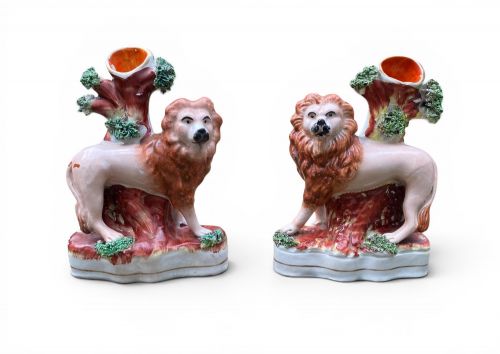


Victorian Pottery Mantel Ornaments
These Victorian pottery mantel ornaments bring the lively character of nineteenth-century parlours directly onto your shelf.
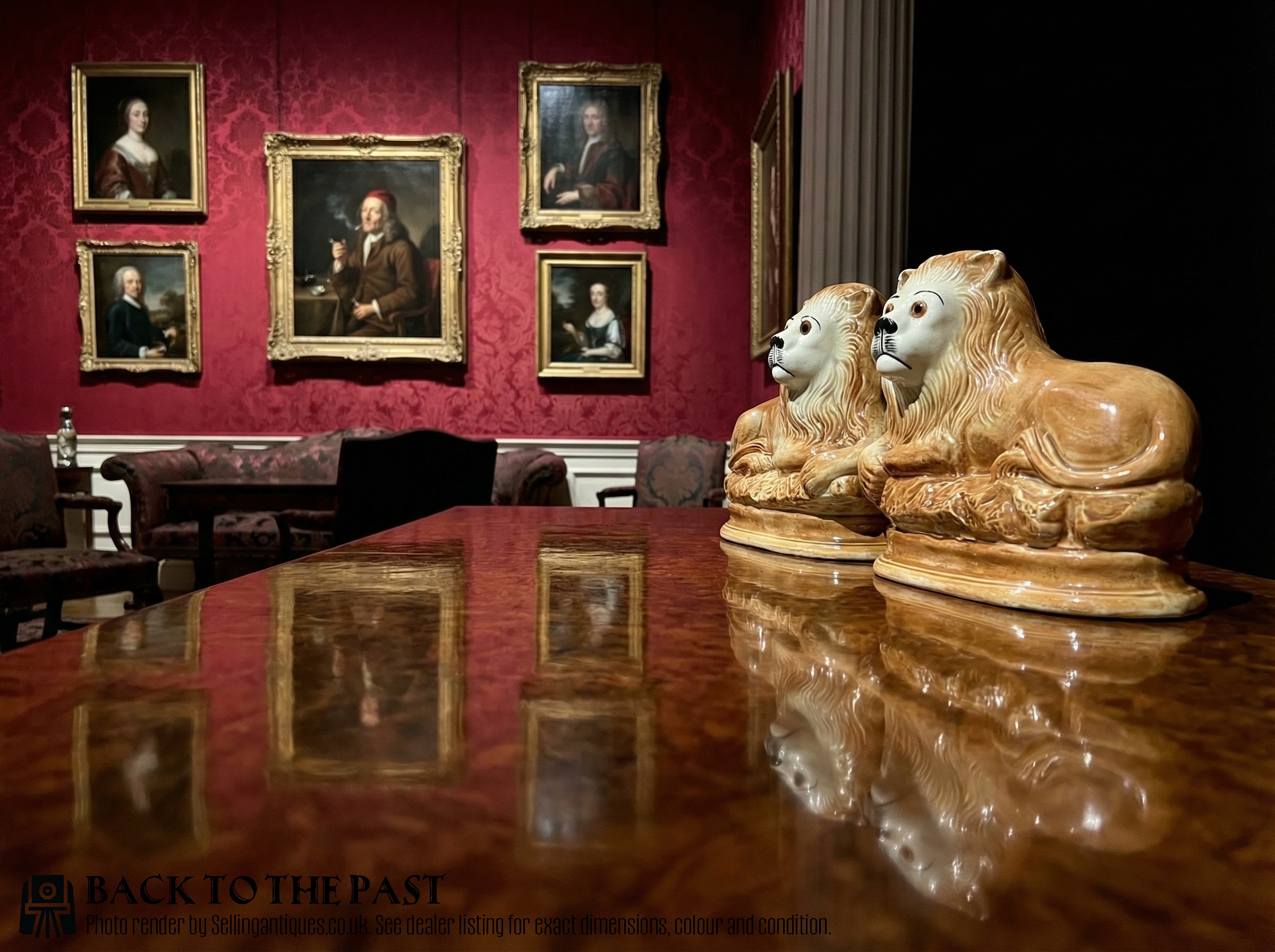
Victorian Pottery Mantel Ornaments
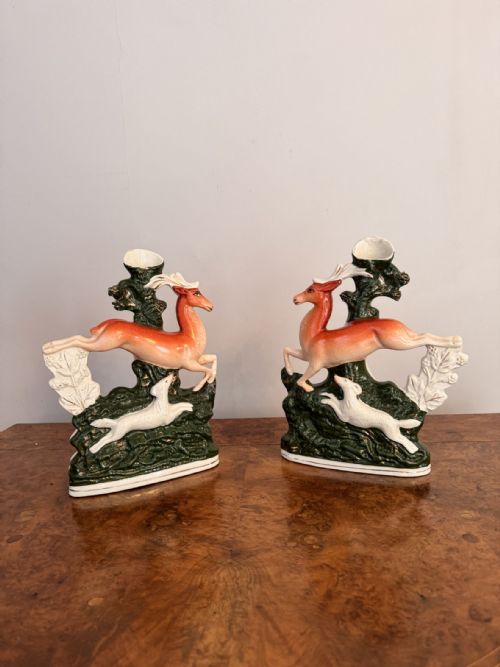
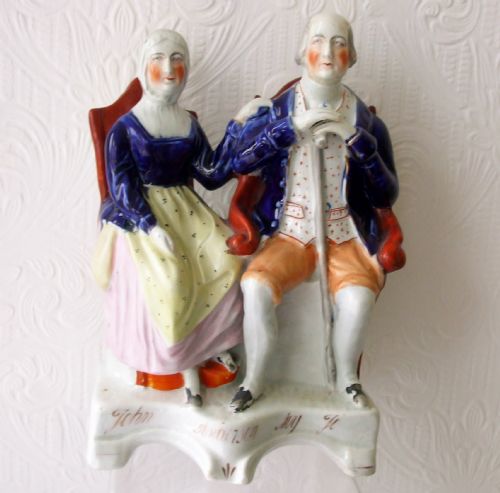
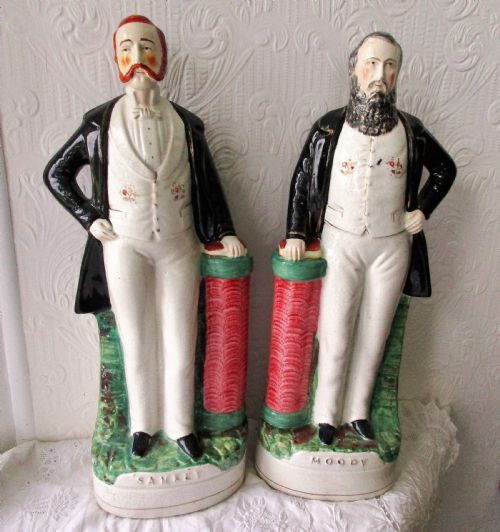
Victorian pottery mantel ornaments take the form of earthenware figures and spill vases designed to sit upon the fireplace shelf. When searching for victorian pottery mantel ornaments, you encounter a varied selection of Staffordshire pottery depicting animals, literary figures, and historical personages.
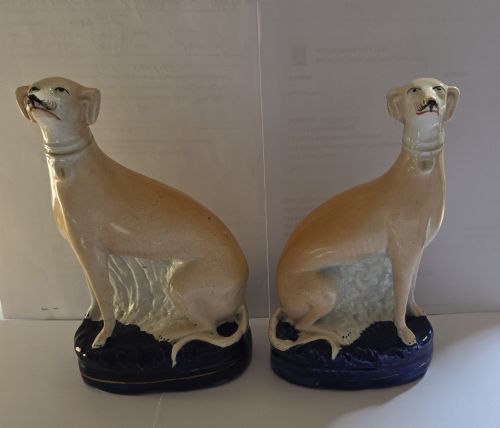
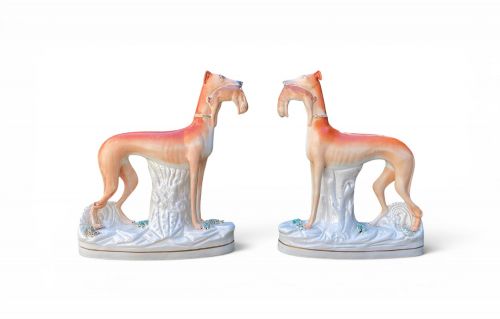
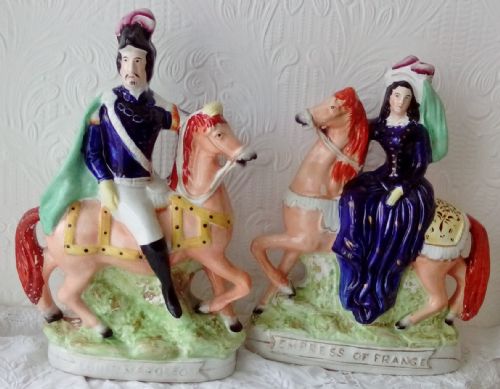
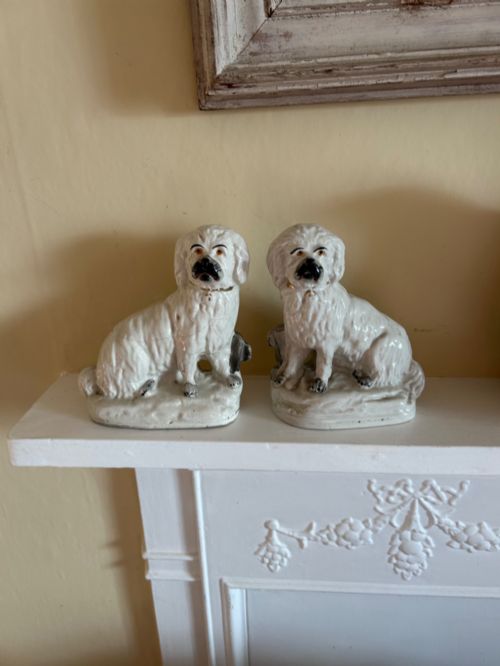
The objects span periods from the mid-nineteenth century through to the year 1900, with styles ranging from traditional English country pottery to folk art. Greyhounds, spaniels, poodles, lions, and portraits of figures such as Louis Napoleon populate the selection.
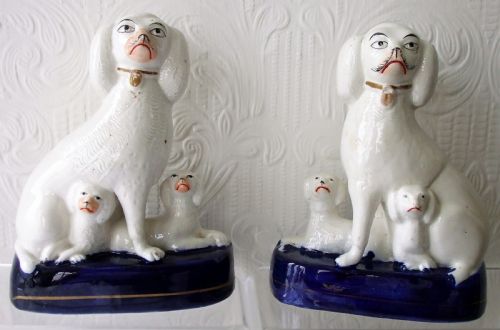
Pairs dominate the groupings, originally intended to sit symmetrically at either end of a mantelpiece. Figures vary from simple ceramic representations to detailed flatbacks designed to be viewed from the front.
Materials and Techniques
Makers added gold leaf highlights to accentuate collars, bases, and decorative trim on white and gilt models. Copper lustre finishes appear on specific pieces, providing a metallic sheen through specialised glaze applications.
Pups hide dutifully beside their ceramic mothers, keeping watch on the Victorian mantelpiece.
Distinguishing Quality
The fineness of the hand-painted enamel work separates superior portrait figures and animal pairs from simpler output. Crisp detailing in facial expressions, fur markings, and gilt accents indicates skilled execution by the potter.
Proportion and modelling define the success of a piece, particularly in larger formats such as grand spaniels or seated greyhounds. Strong, clear glazes without heavy pooling or cloudiness demonstrate better firing control in the kiln.
Thomas Parr
The Victorian Pottery Mantel Ornaments Glossary
- Spill vase
- A hollow pottery cylinder attached to a figure, designed to hold taper spills for lighting fires. These vessels combine practical function with decorative animal or human subjects.
- Flatback
- A figurine moulded with a finished front and a plain, unmodelled or partially glazed flat rear surface intended to stand against a wall. This construction economised on materials and firing space.
- Earthenware
- A porous ceramic body fired at lower temperatures, requiring a glaze to become impermeable to liquids. It serves as the standard foundational material for nineteenth-century Staffordshire figures.
- Copper lustre
- A metallic glaze technique producing a reflective, copper-coloured sheen over the ceramic body. Potters applied this finish to create decorative contrast on dogs and companion figures.
- Enamel paint
- Opaque vitreous colours applied over the fired glaze and subjected to a low second firing to bond with the surface. This medium delivers the bright reds, blacks, and golds seen on period figures.
Victorian Pottery Mantel Ornaments: Frequently Asked Questions
What subjects do these ornaments typically depict?
The pieces display a wide array of subjects, with domestic and sporting animals forming a major category alongside human figures. Spaniels, greyhounds, poodles, and terriers appear frequently, often matched as pairs.
Alongside animals, potters rendered literary characters, royalty, statesmen, and religious figures such as evangelists. Historical events and popular culture of the nineteenth century directly influenced the choice of subject matter.
How were spill vases used in a Victorian home?
Spill vases held thin strips of rolled paper or wood known as spills. Residents used these spills to transfer a flame from the fireplace fire to candles, lamps, or pipes.
Positioned on the mantelpiece, the vase served as both a practical household tool and a decorative container. The animal or human figure attached to the side made the utilitarian object an ornament.
How do I care for antique pottery ornaments?
Care requires gentle dusting with a soft, dry brush to prevent the accumulation of dirt on the glaze. Avoid abrasive cloths or chemical cleaners that might damage the delicate enamel paint and gold leaf.
Keep the ceramics away from direct sunlight and areas subject to sudden temperature fluctuations. Stable indoor conditions protect the earthenware body and the historic glaze layer.
How can I tell the period of a Staffordshire figure?
Dating relies on stylistic clues, the type of glaze, and the colour palette employed by the potter. Earlier nineteenth-century pieces often display robust modelling and distinct hand-painted details.
Flatbacks became particularly popular during the mid-Victorian era, while later nineteenth-century examples incorporated different glazing formulas. Comparing the modelling conventions and decorative techniques helps place a figure within its decade.