




Nineteenth Century Pottery Statues
Nineteenth century pottery statues are characterful ceramic figures and animals that bring domestic Victorian portraiture and storytelling straight to the mantelpiece.
Nineteenth Century Pottery Statues
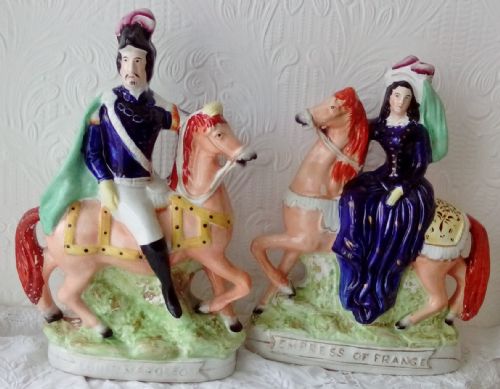
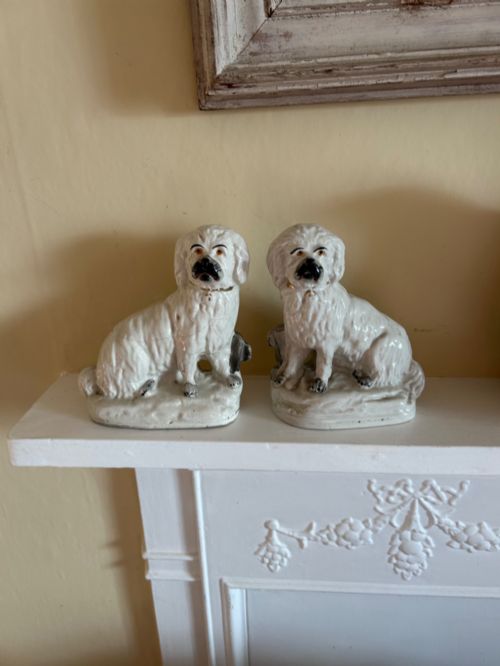
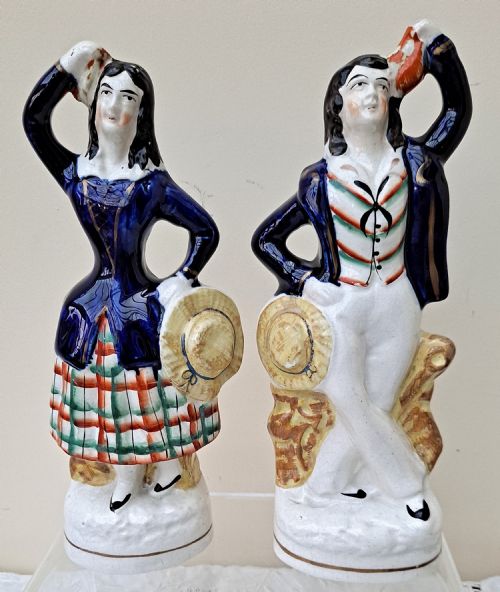
Nineteenth century pottery statues encompass a broad array of decorative figures, portrait busts, and sculptural pairs produced across the Victorian era. Buyers searching this phrase will most frequently encounter Staffordshire earthenware figures depicting royalty, theatrical characters, and animals such as dogs and cows.
The selection extends from classical Roman subjects and orientalist designs to salt-glazed garden lions and Dutch Delft blue and white cattle. These sculptural pieces range from utilitarian quill holders and vase figures to large cabinet centrepieces.
Originating predominantly from English kilns alongside continental and Asian workshops, these works capture the popular tastes and commemorative spirit of the eighteen-hundreds. They serve as tactile windows into domestic display habits of the period.
Materials and Manufacture
Potters utilised earthenware, pearlware, and ceramic bodies shaped through moulding and hand-finishing before applying rich enamel colours or transparent glazes. Many figures received a tin-glazed or salt-glazed finish to achieve waterproof durability and distinct surface textures.
Makers often cast figures in separate hollow parts - such as bases, limbs, and animal companions - before assembling and firing the pieces in kilns. Enamel painting and gold highlighting were typically added over the glaze during a secondary lower-temperature firing.
Nineteenth Century Pottery Statues Retail Price Guide 2026
Typical asking prices for nineteenth century pottery statues among the pieces listed under this phrase on Sellingantiques today, from the lower quarter to the upper quarter. They describe what is for sale here now, not the wider market.
Listings feature earthenware, pearlware, and salt-glazed ceramics originating from English, continental, and Asian kilns across the nineteenth century.
Assessing Quality
The depth and brilliance of the glaze, alongside the clean preservation of underglaze blue or polychrome enamels, distinguish finer studio outputs from mass-produced commercial runs. Proportions and the stability of large-scale pairs further mark the distinction between standard shelf ornaments and master models.
Goldscheider·Royal Dux·Hurlford Kilmarnock
The Nineteenth Century Pottery Statues Glossary
- Earthenware
- Porous ceramic fired at lower temperatures, serving as the primary body for the majority of Staffordshire figures. It requires a glaze to achieve complete water resistance.
- Pearlware
- A refined form of earthenware developed in the late eighteenth century featuring a subtle bluish tint in the glaze pooling around crevices. This material bridges the transition from salt-glazed wares to later Victorian ceramics.
- Staffordshire
- A major English pottery-producing region encompassing numerous independent kilns renowned for figural earthenware. These works span domestic animals, portrait figures, and theatrical groups.
- Tin-glazed earthenware
- Pottery coated with a white tin-oxide enamel that provides an opaque background for hand-painted decoration. This technique underpins traditional Dutch Delftware production.
Nineteenth Century Pottery Statues: Frequently Asked Questions
How do I identify a Staffordshire portrait figure?
Staffordshire portrait figures usually depict recognisable historical individuals, royalty, or literary heroes, often accompanied by raised lettering on the base identifying the subject.
Studying the clothing styles, facial painting technique, and the presence of flat unglazed undersides helps confirm their mid-nineteenth-century origin.
Were these statues meant to be displayed in pairs?
Many nineteenth-century figures were purposefully modelled and sold as symmetrical pairs, particularly animal studies, theatrical characters, and royal portraits.
Mantelpiece symmetry dictated much of Victorian interior display, making matching pairs highly desirable for collectors seeking complete decorative sets.
What is the difference between earthenware and pearlware?
Pearlware is an earlier refined earthenware formulation containing flint to produce a whiter ceramic body beneath a pale blue-tinged glaze.
Standard Victorian earthenware generally displays a warmer, buff-coloured body beneath heavier enamel or transparent glazes.
How should I clean my antique pottery figures?
Dust these ceramic pieces gently with a soft, dry brush to prevent accumulation in crevices and around delicate painted surfaces.
Avoid immersing antique earthenware in water, especially if hairline fractures or old restorations are present, as moisture can damage fragile historic bodies.