



Cream Earthenware Ornaments
Cream earthenware ornaments bring tactile warmth and narrative character to a room through modelled figures, animals, and decorative objects.
Cream Earthenware Ornaments
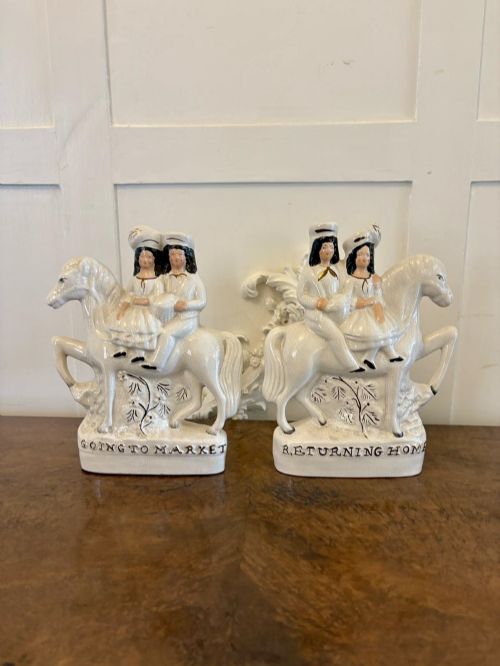
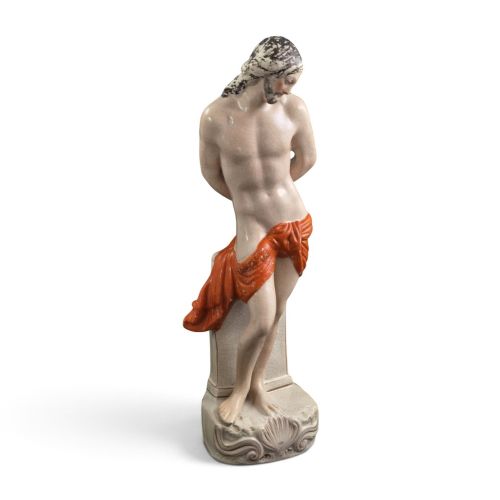
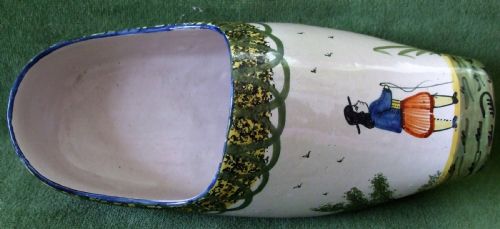
Cream earthenware ornaments encompass a diverse array of moulded pottery figures, animals, and decorative objects created during the nineteenth century. Buyers searching this phrase encounter Staffordshire portrait figures, poodles, lions, cats, and cottages, alongside French faience sabots and Scottish Portobello equestrian pieces.
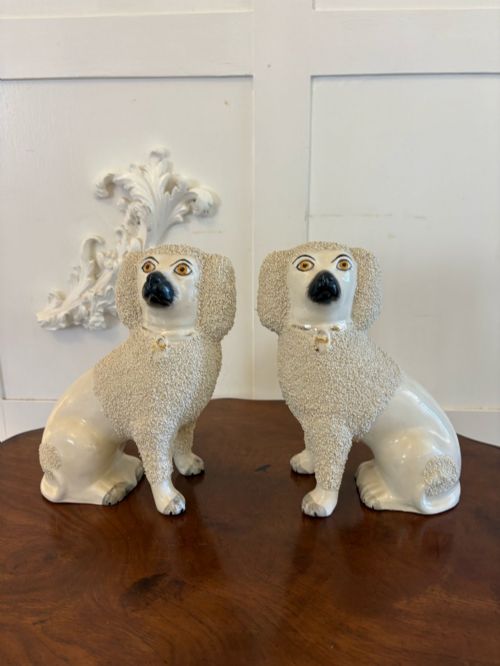
The selection on this page leans heavily towards Victorian Staffordshire productions, featuring flat back figures, pairs of dogs, and architectural models like castles and holy water stoups. These items served primarily as mantelpiece decorations in period homes, recording royal figures, historical events, and domestic animals.
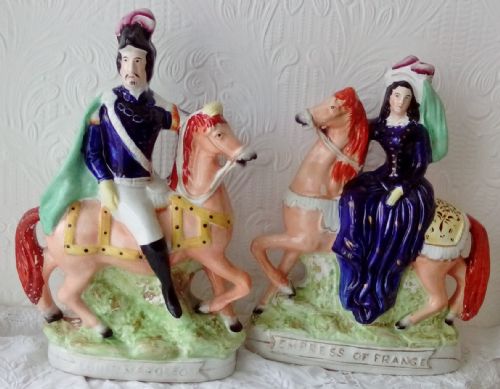
Dating ranges from the early nineteenth century through the eighteen-nineties, capturing both primitive folk art expressions and more refined Victorian modelling. Pieces vary from simple devotional stoups to large portrait pairs depicting historical personages such as Napoleon III and the Queen of England.
Judgements of quality
The distinction between standard output and superior work also involves the scale and ambition of the piece, such as large portrait figures versus smaller generic models. Preservation of the original enamel colours and lead glaze surfaces contributes significantly to the standing of an individual ornament.
Cream Earthenware Ornaments Retail Price Guide 2026
Typical asking prices for cream earthenware ornaments among the pieces listed under this phrase on Sellingantiques today, from the lower quarter to the upper quarter. They describe what is for sale here now, not the wider market.
A pair of earthenware poodles keeps eternal watch from the mantelpiece without ever needing a walk in the rain.
Wooley·HB Quimper
The Cream Earthenware Ornaments Glossary
- Flat back
- A Staffordshire figure modelled with a finished front and a plain, unglazed or thinly glazed flat reverse designed to stand against a wall.
- Faience
- Tin-glazed earthenware originating from French and European traditions, seen here in items such as decorative sabots.
- Enamel
- Opaque coloured decoration applied over the glaze and fired at a lower temperature to add bright hues to pottery figures.
- Lead glaze
- A shiny silicon and lead mixture applied to earthenware bodies before firing to provide a waterproof and glossy finish.
Cream Earthenware Ornaments: Frequently Asked Questions
What are Staffordshire flat backs?
Staffordshire flat backs are ceramic figures designed specifically to sit on mantelpieces or shelves against a wall. Their unpainted or simply finished flat backs allowed potters to save time and materials during production.
These pieces often depicted royalty, theatrical events, or domestic animals, serving as popular interior decorations in Victorian households.
How do I date these ornaments?
Dating relies on stylistic clues, subject matter, and manufacturing characteristics typical of the nineteenth century. Portrait figures often reference specific historical events or rulers, providing a reliable terminus post quem.
Changes in glaze composition and modelling styles from the eighteen-forties to the eighteen-nineties also help narrow the period of origin.
Where were these ceramics made?
The majority of the figures originate from the Staffordshire potteries in England, which dominated mass production of domestic ornaments. Other regional variations include Scottish works from Portobello and French provincial faience from workshops like Quimper.
Each region maintained distinct local traditions in clay preparation, modelling, and glaze application.
How should I clean antique earthenware?
Cleaning requires gentle dusting with a soft, dry brush to prevent the accumulation of dirt in crevices. Avoid submerging older glazed earthenware in water, particularly if hairline cracks or vulnerable enamel decorations are present.
Harsh chemical cleaners will damage the lead glaze and delicate overglaze enamels, so surface cleaning by hand remains the safest approach.