

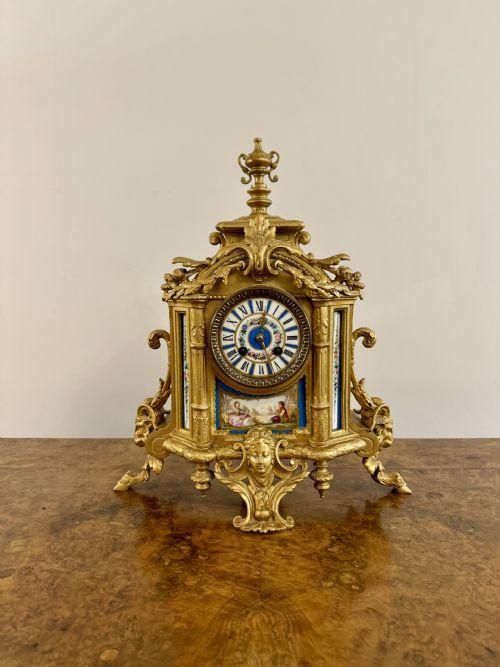


Victorian Porcelain Mantel Clock
A victorian porcelain mantel clock brings together decorative ceramic panels and cast metal mounts to mark time with considerable elegance.
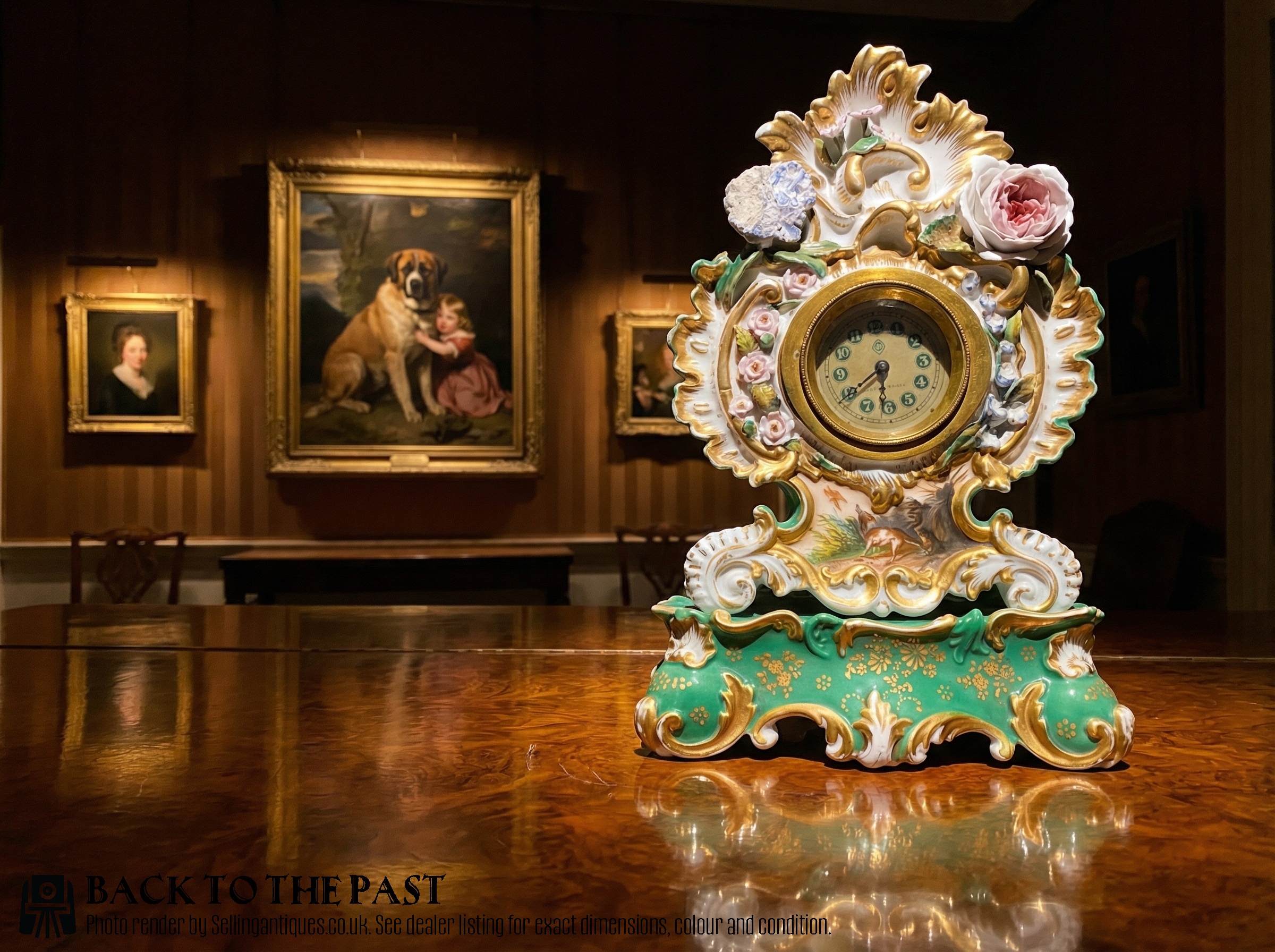
Victorian Porcelain Mantel Clock
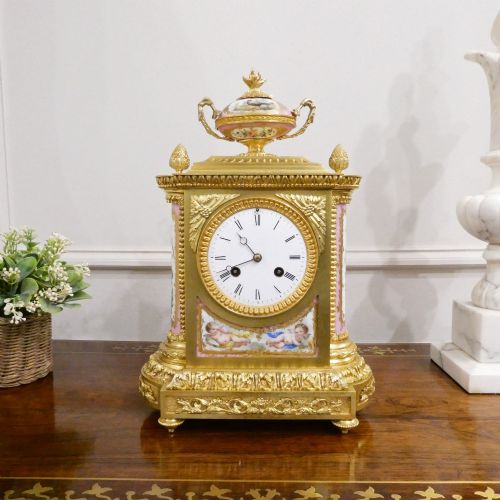
A victorian porcelain mantel clock combines the utility of a timekeeper with the ornamental artistry of nineteenth-century ceramic production. These pieces frequently emerge from French workshops during the middle and late decades of the nineteenth century, often arriving as part of a garniture set flanked by matching candelabra or urns.
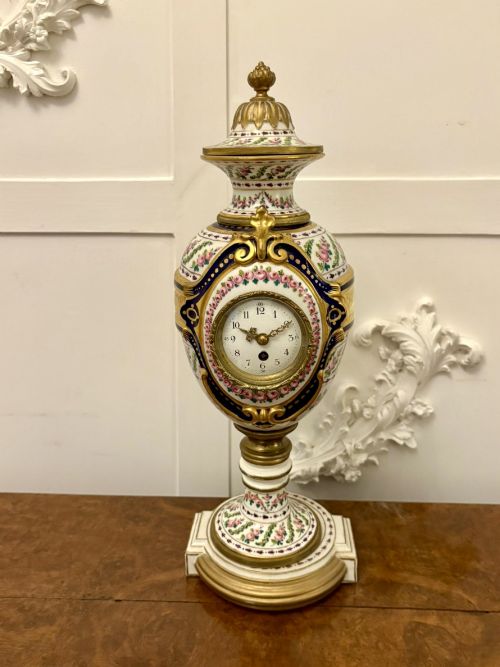
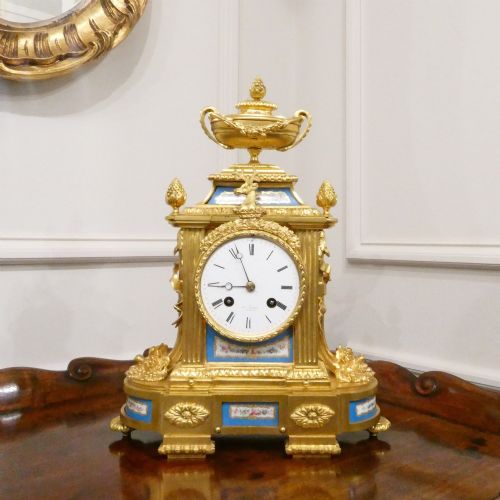
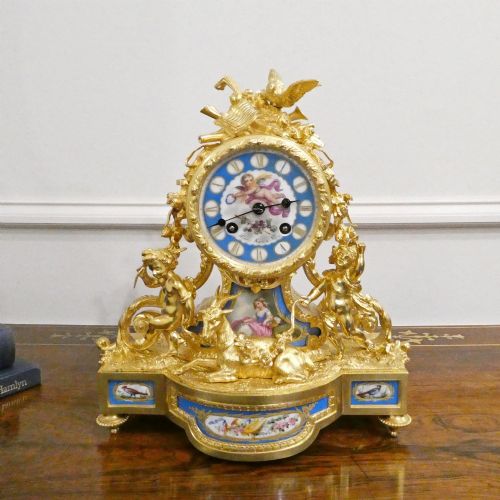
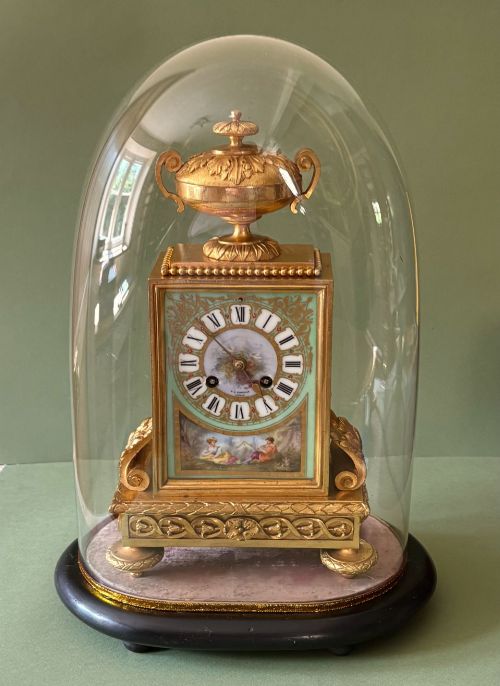
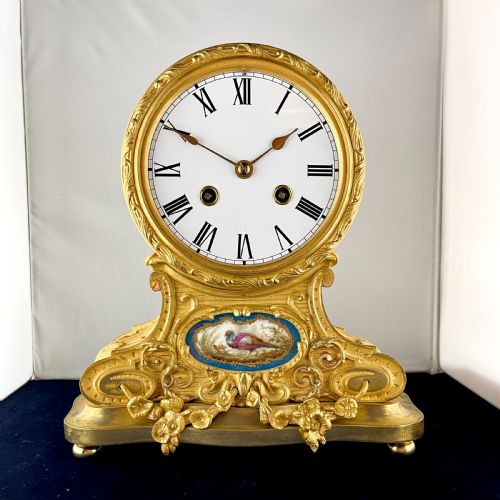
The predominant forms on this page include drumhead cases, urn-shaped bodies, and crystal regulators featuring hand-painted porcelain panels or dials. Many pieces display revivalist aesthetics such as French Rococo, Louis XVI, and Napoleon III styles, reflecting the eclectic tastes of the period.
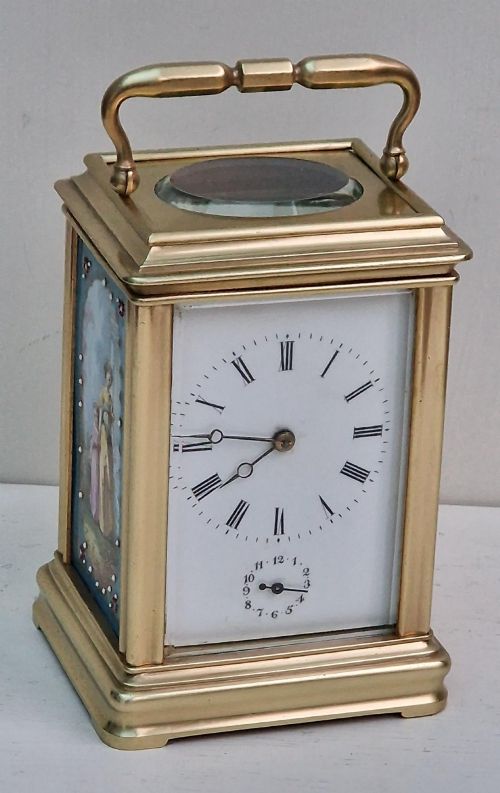
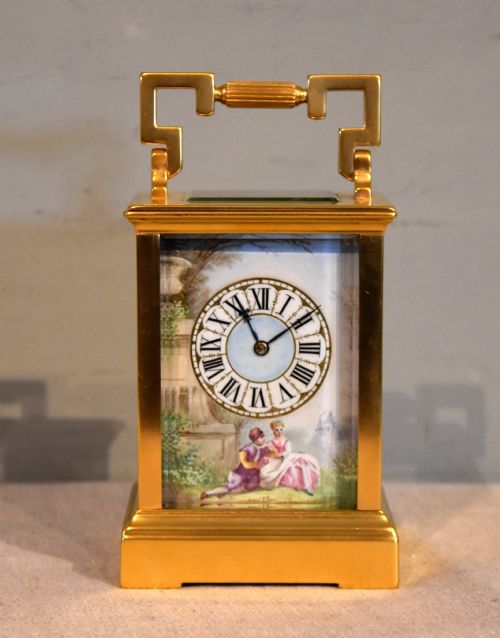
Buyers encountering these items will find works housed in gilt bronze, ormolu, and gilt metal alongside ceramic components. The selection spans carriage clocks and traditional mantel pieces, capturing the diverse output of nineteenth-century horology.
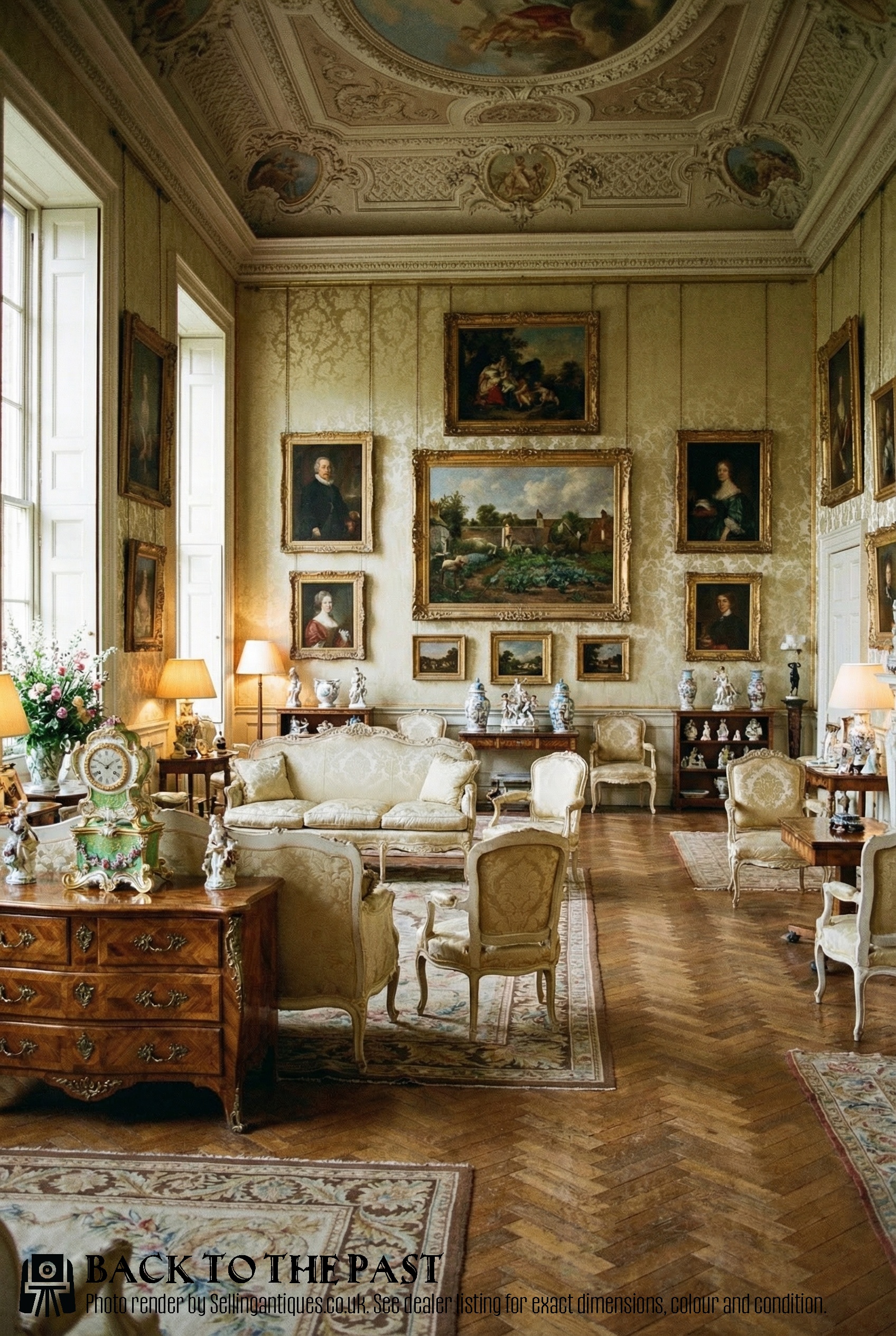
How they were made
The manufacture of these objects relies on the combination of fired ceramic and cast metalwork, utilising materials such as porcelain, ormolu, gilt bronze, and enamel. Makers cast metal cases in bronze or brass before gilding or finishing them to house mechanical movements driven by springs or weights.
Ceramic elements, including dials, plaques, and urn bodies, received hand-painted decoration, often featuring floral motifs or pastoral scenes, before being fired and mounted directly into the metal framework. Subsidiary components like glass panels and bevelled crystals completed the housing for the brass gear trains.
Some carriage clocks arrive with their original leather travel cases, having survived countless nineteenth-century journeys across Europe.
What varies in quality
The distinction between ordinary and superior examples rests upon the crispness of the metal chasing and the artistry applied to the porcelain panels. Finer pieces demonstrate deeply chiselled ormolu mounts and delicately painted ceramic plaques executed by skilled hands rather than mechanical transfer.
Mechanical refinement also dictates standing, with better examples utilising sophisticated movements by recognised makers that incorporate striking or alarm mechanisms. The integrity of the complete garniture set, where the clock and flanking pieces match precisely in material and wear, elevates the piece further.
Jean-Baptiste Delettrez·Henry Marc·PH Mourey·Drocourt·Le Roy Et Fils·Japy Freres
The Victorian Porcelain Mantel Clock Glossary
- Ormolu
- A technique of applying finely ground high-carat gold to an object of bronze or brass. This mercury gilding process imparts a warm, enduring lustre to metal mounts.
- Garniture
- A set of matching decorative objects designed to be displayed together on a mantelpiece or sideboard. Typically comprises a central clock flanked by two matching urns or candelabra.
- Carriage clock
- A small, portable spring-driven timepiece developed for travel during the nineteenth century. These clocks usually feature glass panels in brass frames and a folding handle.
- Crystal regulator
- A mantel clock featuring glass panels on four sides that reveal the internal movement. These pieces often incorporate porcelain dials and decorative enamel highlights.
- Drumhead clock
- A timepiece characterised by a circular clock case mounted on a plinth or base. The profile resembles a drum set upon its side.
Victorian Porcelain Mantel Clock: Frequently Asked Questions
How do I wind a mantel clock?
Wind the clock using the key provided on the arbors located on the dial face. Turn gently until resistance is felt.
Avoid over-winding to protect the internal spring mechanism from undue tension.
Where should I place my clock?
Position the piece on a stable, level mantelpiece or shelf away from direct sunlight and drafts. A stable surface ensures the pendulum beats evenly.
Ensure the room maintains a moderate temperature to preserve the delicate metal and porcelain components.
How do I identify a reproduction?
Examine the construction methods visible on the interior and exterior of the case. Nineteenth-century pieces exhibit hand-finished casting marks and genuine age patination.
Inspect the porcelain painting closely for signs of modern transfer printing rather than hand application.
What is a clock garniture?
A clock garniture consists of a central clock accompanied by matching decorative side pieces such as urns or candelabra. These sets were designed for symmetrical display on large mantelpieces.
Each component typically shares identical materials, such as ormolu mounts and porcelain panels.