


Floral Porcelain Clock
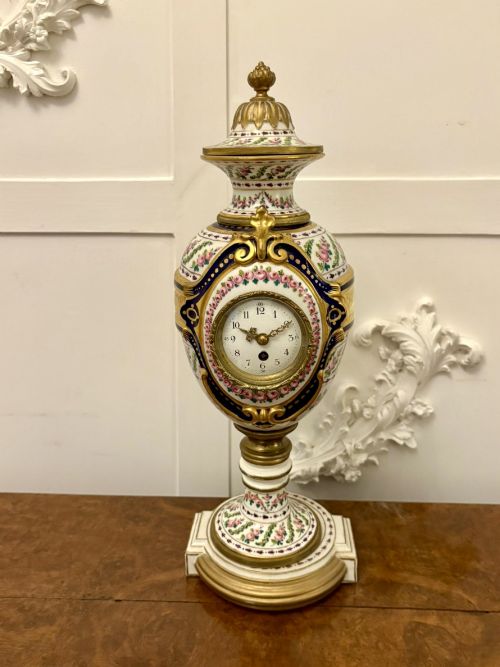
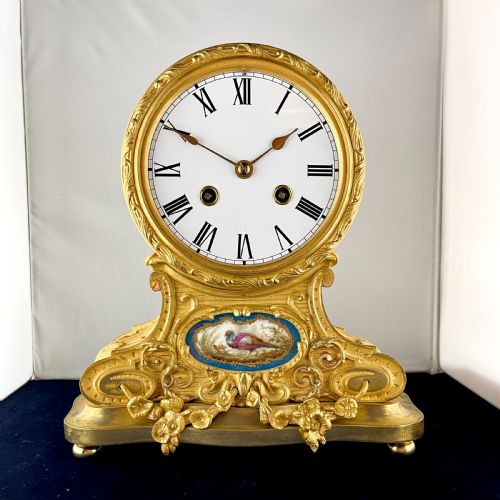
These floral porcelain clock pieces bring hand painted 19th century charm and rich gilt metal to a mantelpiece.
Floral Porcelain Clock
A floral porcelain clock typically takes the form of a mantel clock, a clock garniture set, an urn shaped mantle clock, or a boudoir clock. These pieces frequently emerge from the 19th century, spanning periods from the 1840s and 1850s through to the Victorian era and Edwardian times.
The aesthetic leans heavily into French Rococo revival and 19th century French design, often pairing delicate hand painted porcelain panels with sculptural metalwork. Buyers commonly encounter drumhead configurations alongside complete garniture sets that include matching side pieces.
Origins trace largely to continental workshops and British makers influenced by continental styles, with notable pieces bearing the hallmark of Meissen. The combination of figurative painting, seasonal motifs, and ornate ceramic bodies defines the core of this search.
Materials and construction
Makers shaped these objects using porcelain bodies decorated with hand painted floral scenes, paired with structural mounts of brass, gilt bronze, or gilt metal. Enamel dial faces with delicate numerical markers were then integrated into the ceramic and metal housing.
Surface ornamentation relied on extensive gilding and fire gilt bronze to accentuate the curves and scrollwork characteristic of Rococo revival styling. Glass covers protected the enamel dials, while heavy cast metal provided the stable base required for mechanical clock movements.
Object forms span mantel clocks, clock garnitures, urn shaped mantle clocks, and boudoir clocks.
Judging quality in these pieces
The refinement of the hand painted porcelain decoration dictates much of the distinction between ordinary and superior pieces. Finer examples display meticulous brushwork in floral motifs and figurative scenes, whereas simpler versions rely on transfer printing or coarser application.
The execution of the metal mounts, particularly the depth of the gilt bronze or gilt metal casting, separates standard production from exceptional work. Heavier, more deeply chased mounts with intricate Rococo scrolling demonstrate greater workshop investment than lighter, flatter pressings.
Meissen
The Floral Porcelain Clock Glossary
- Clock garniture
- A central clock accompanied by matching decorative side pieces such as urns or vases. These sets were designed to create a balanced display across a mantelpiece.
- Drumhead clock
- A timepiece featuring a circular clock housing shaped like a snare drum, mounted upon a decorative base. This form was popular during the 19th century.
- Gilt bronze
- Copper alloy coated with a layer of gold, frequently utilised in French clock mounts. It provides a durable and warm metallic lustre.
- Boudoir clock
- A smaller, more intimate timepiece intended for a private sitting room or bedchamber. These often feature delicate porcelain and Rococo detailing.
- Rococo revival
- A design movement popular in the 19th century characterised by asymmetrical scrolls, plant motifs, and ornate curves. It heavily influenced the casework of Victorian porcelain clocks.
Floral Porcelain Clock: Frequently Asked Questions
What is a clock garniture set?
A clock garniture set consists of a central mantel timepiece accompanied by two matching side ornaments, such as urns or vases. These matched suites were created to display together on a fireplace mantel for a symmetrical arrangement.
The porcelain and gilt metal components match across all pieces in the set, sharing the same floral hand painted decoration and stylistic motifs.
How do I identify a 19th century clock?
Nineteenth century timepieces often show specific stylistic traits such as Rococo revival scrollwork, heavy gilt bronze mounts, and hand painted floral porcelain panels. Examining the materials, construction methods, and enamel dial characteristics helps determine the period.
Makers during the Victorian era and earlier decades utilised specific casting and painting techniques that distinguish these older pieces from later reproductions.
Where should I place a mantel clock?
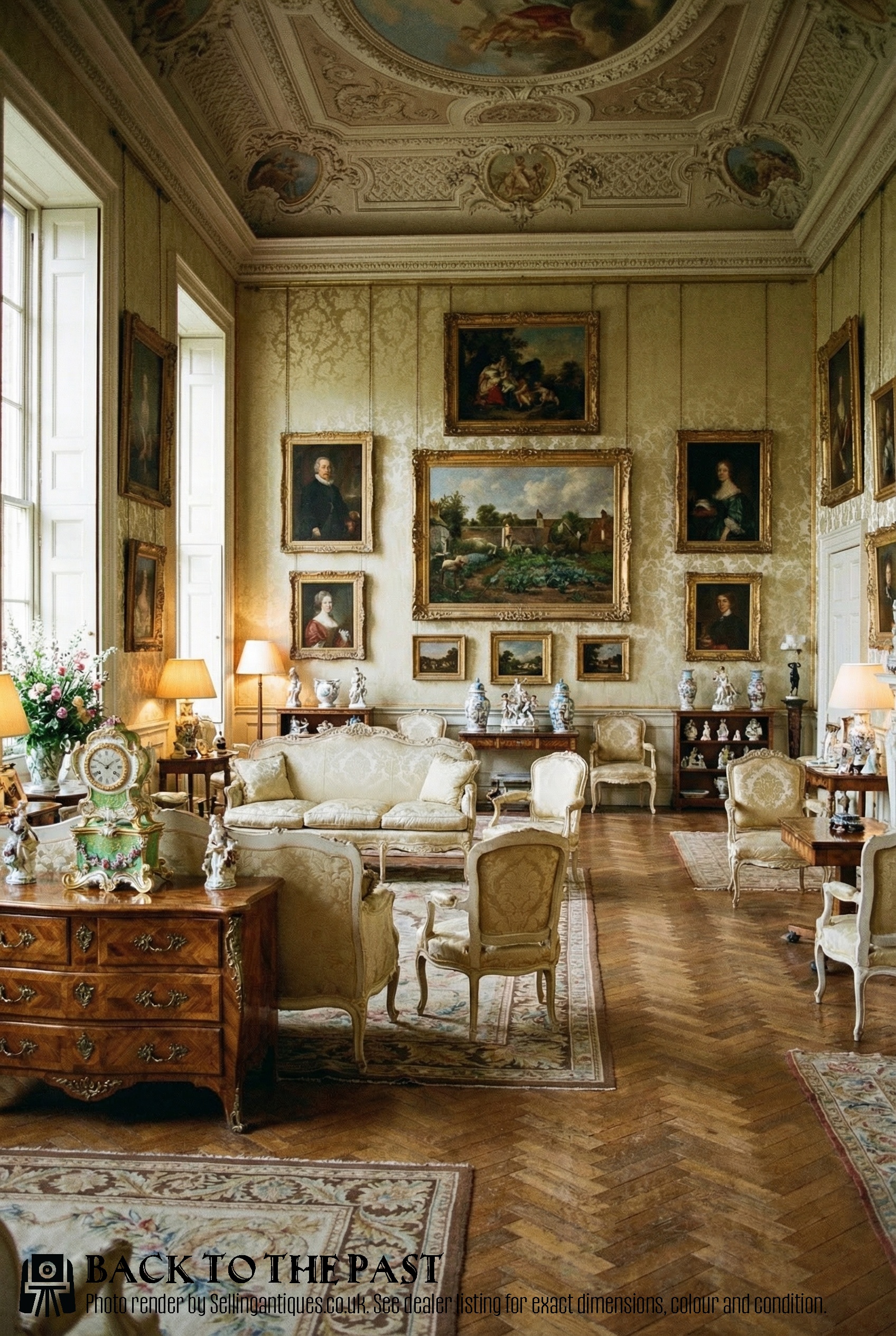
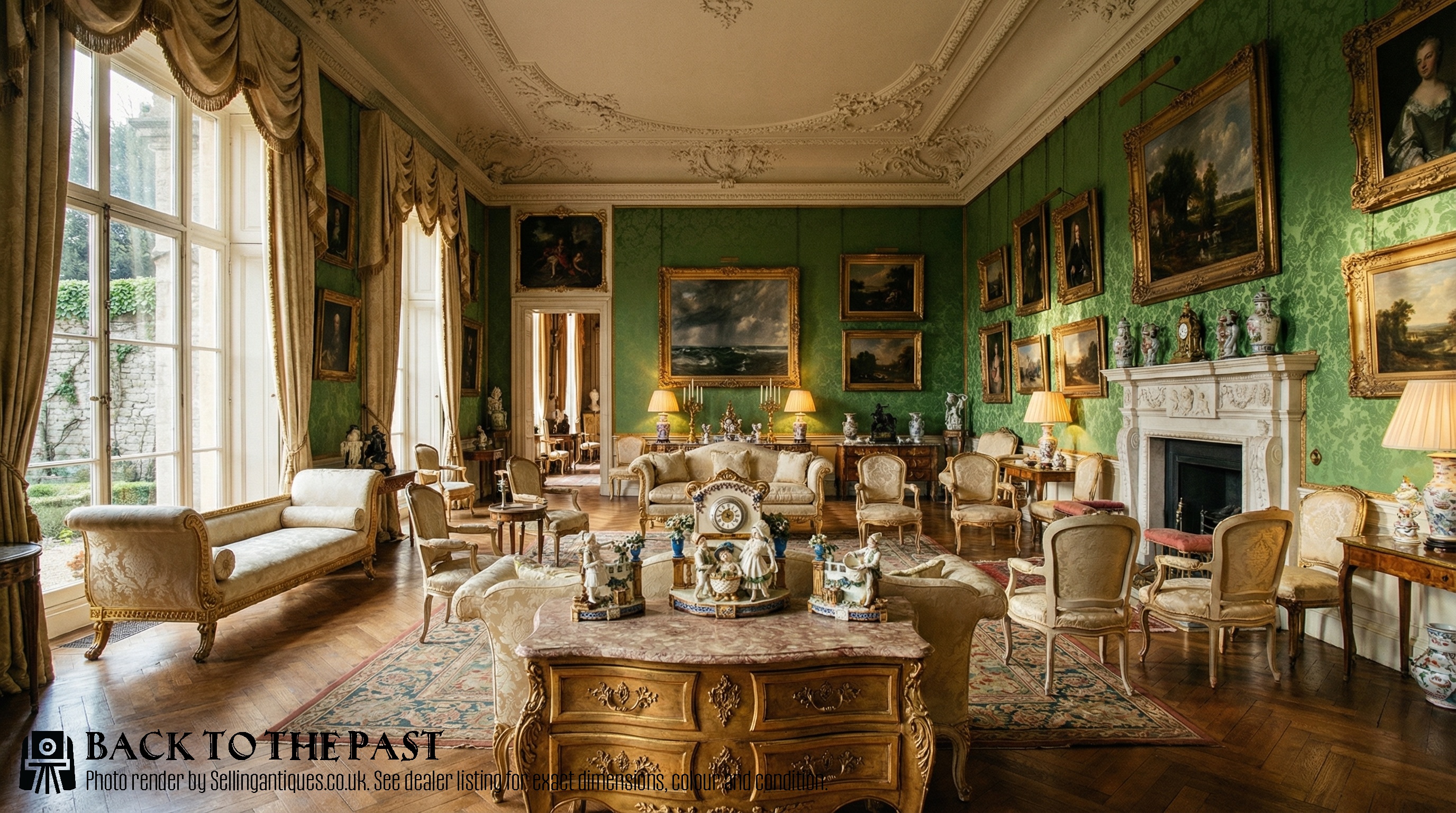
A mantel clock sits naturally on a fireplace mantel, a sideboard, or a prominent console table where its decorative porcelain and gilt metal work can be appreciated. Because these are mechanical objects, they require a stable, level surface to keep time accurately.
Keeping them away from direct heat sources and strong sunlight protects the delicate hand painted surfaces and the enamel dial face.