




White Porcelain Clock
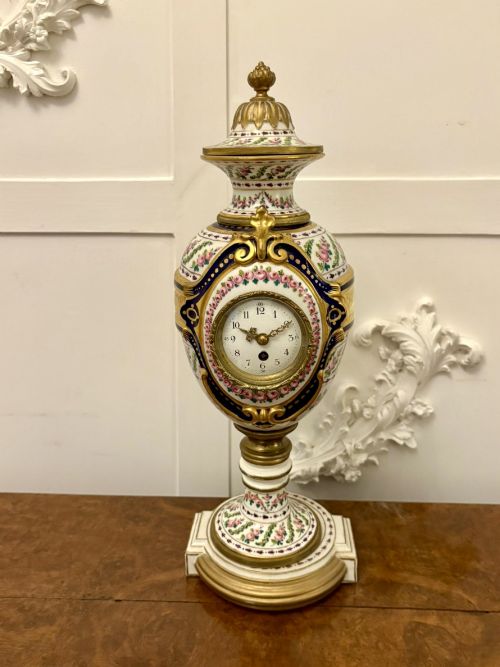
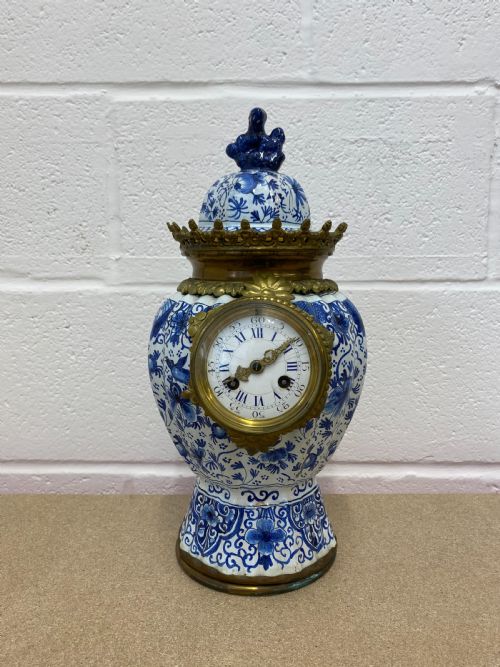
A white porcelain clock brings sculptural form and delicate hand painting to a room, ranging from grand French garnitures to small Dutch delftware pieces.
White Porcelain Clock
A white porcelain clock combines functional timekeeping with ornamental ceramic craft, taking the form of mantel clocks, boudoir pieces, urn shapes, and complete clock sets with matching garnitures. These items span the nineteenth century, including Victorian examples and earlier interpretations from continental workshops.
Buyers frequently encounter French rococo revival and neoclassical styles alongside miniature delftware longcases and Chinese blue and white bracket clocks. The selection covers everything from large decorative mantel pieces adorned with putti to smaller boudoir clocks.
Originating across Europe and beyond, these objects reflect distinct regional aesthetics, moving from ornate gilded metal mounts and hand painted surfaces to traditional blue and white ceramic traditions.
Materials and construction
Makers shaped these pieces using porcelain, ceramic, and delftware bodies, often mounting the ceramic components in brass, ormolu, gilt bronze, or gilded metal. Dial faces commonly feature enamel, while glass protects the delicate movements and hands within.
Surfaces frequently display hand painted decoration, particularly on nineteenth-century French and German porcelain bodies. Metal mounts are cast and gilded to frame the ceramic work, combining structural metal support with fragile fired clay.
Several diminutive pieces take the form of miniature longcase clocks, shrinking grandfather clocks down to tabletop porcelain proportions.
Judging quality and execution
Superior examples distinguish themselves through the crispness of the porcelain modelling and the finesse of the hand painting, particularly on urn shapes and figurative works depicting subjects like the four seasons or putti. The integration between the ceramic body and the brass or gilt bronze mounts reveals the maker's precision.
The sophistication of the movement and the quality of the surrounding metalwork elevate a piece above standard production. Heavier gilding, more complex rococo or neoclassical casting, and complete surviving clock sets indicate a higher tier of original manufacture.
Meissen
The White Porcelain Clock Glossary
- Clock garniture
- A set comprising a central clock flanked by matching ornamental side pieces such as urns or vases. These matched groups were designed to sit symmetrically on a mantelpiece.
- Ormolu
- Finely ground high-carat gold cast and chased onto a bronze base, frequently used to mount and highlight porcelain clock bodies during the nineteenth century.
- Putti
- Depictions of chubby male infants, often winged, appearing as sculptural figures on rococo revival clock cases. They add a theatrical and classical motif to the ceramic composition.
- Delftware
- Tin-glazed earthenware originating from the Netherlands, known for its distinct white surface and blue painted decoration seen on miniature longcase clocks.
- Boudoir clock
- A smaller scale timepiece intended for private rooms rather than grand reception spaces, typically displaying delicate porcelain and gilt details.
White Porcelain Clock: Frequently Asked Questions
What periods do these clocks cover?
The available pieces primarily date from the nineteenth century, spanning the mid-Victorian era through to the eighteen nineties. Common periods recorded include eighteen fifty, eighteen sixty, eighteen eighty, and eighteen ninety.
Production methods and stylistic revivals from these decades define the visual character of the objects found in this category.
How were clock garnitures used?
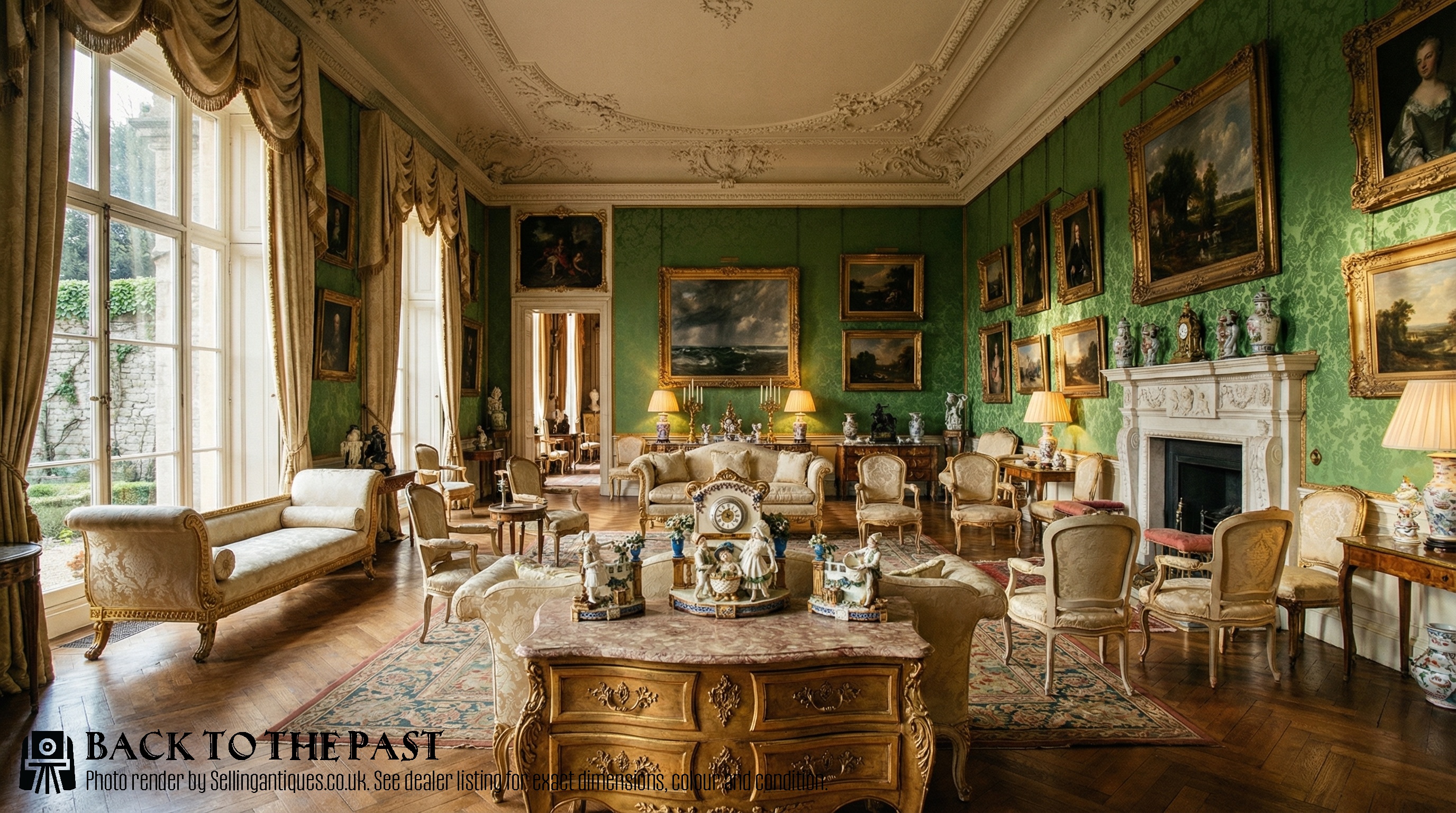
Clock garnitures functioned as coordinated decorative schemes for mantelpieces, placing the central timekeeper between matching side ornaments like urns.
This arrangement created a balanced display that dominated the principal reception rooms of nineteenth-century homes.
What materials make up these pieces?
Construction relies heavily on porcelain, ceramic, and delftware bodies, paired with structural elements of brass, glass, and enamel dials.
Many examples incorporate gilt bronze, ormolu, or gilded metal mounts to frame and support the ceramic components.
How do French and Dutch styles differ?
French pieces often display rococo revival and neoclassical forms with gilt bronze mounts and hand painted figurative scenes involving putti.
Dutch delftware clocks lean toward tin-glazed earthenware and miniature longcase formats with traditional blue and white painting.