
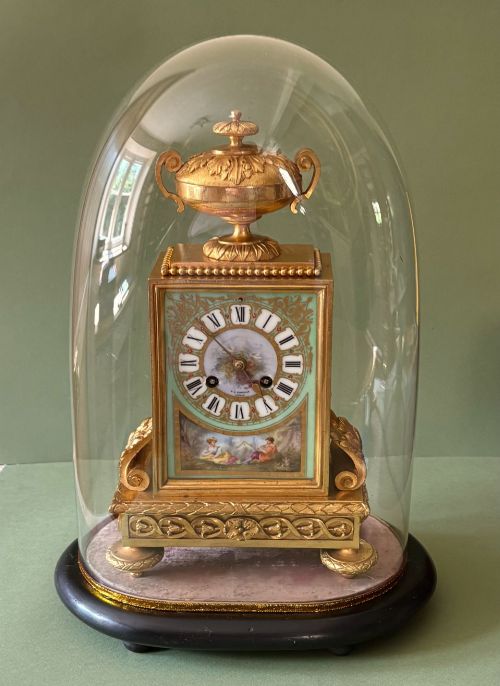

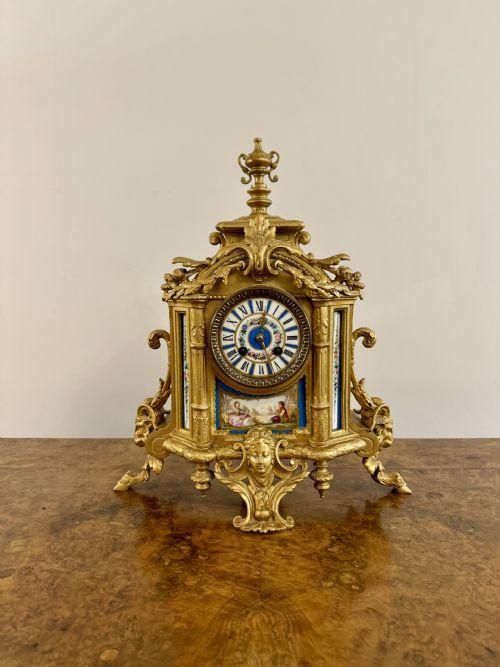


Gilded Porcelain Table Clock
A gilded porcelain table clock brings together hand-painted ceramic panels and cast metal mounts in domestic interiors from the nineteenth century.
Gilded Porcelain Table Clock
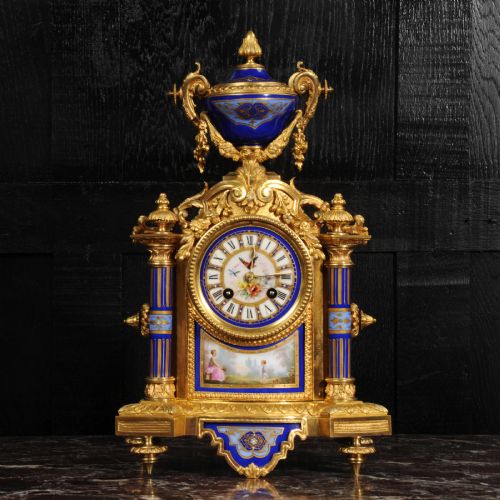
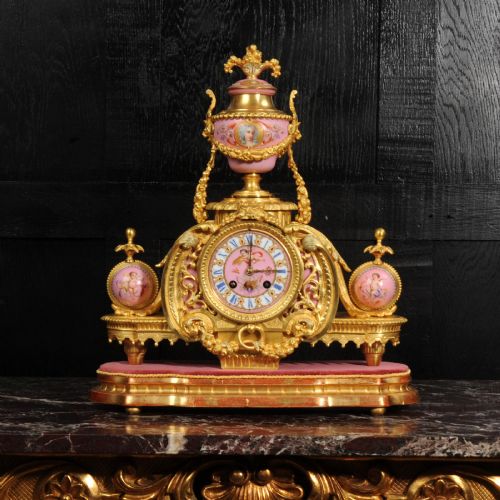
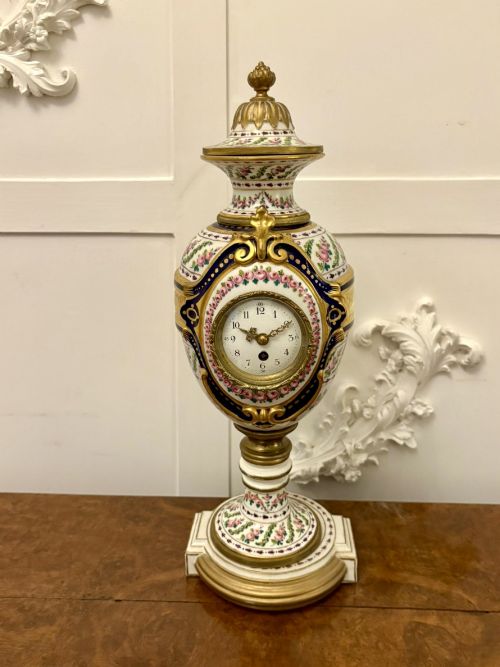
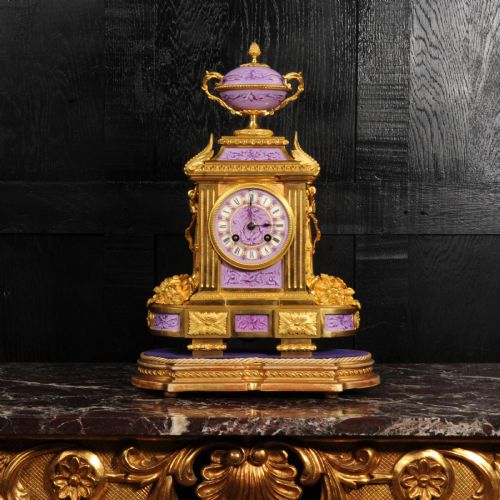
A gilded porcelain table clock typically takes the form of an elaborate mantel clock or clock garniture, originating predominantly from French workshops during the nineteenth century. These pieces combine functional timekeeping with decorative ceramic bodies, often taking shapes that reference earlier historical designs.
The version most commonly encountered on this page is a French nineteenth-century mantel clock, spanning periods from the Second Empire and Victorian eras through to Louis XVI Revival styles. These objects frequently incorporate painted porcelain panels, enamel dials, and elaborate cast metal housings.
Makers and designers of the period utilised porcelain bodies, sometimes associated with Sevres or Meissen aesthetics, mounted within gilded metal frameworks. The forms range from urn-shaped structures and boudoir clocks to crystal regulators and lyre-shaped designs.
How they were made
The construction of a gilded porcelain table clock relies on the combination of ceramic fabrication and metal founding, where porcelain panels or urns are fired, hand-painted, and glazed before being integrated into a metal chassis. Ormolu, gilt bronze, or gilt metal is cast and chased to form the decorative mounts that frame the porcelain.
Movements are housed within these composite structures, often driven by mechanical brass gear trains that require precision fitting alongside enamel dial faces marked with roman or arabic numerals. Glass components protect the dial faces and, in crystal regulators, provide visibility through the entire mechanism.
Cherubs occasionally peek out from the gilt bronze mounts, keeping watch over the ticking hours.
What varies in quality
Quality in a gilded porcelain table clock rests upon the crispness of the bronze casting and the artistic merit of the hand-painted porcelain panels. Finer examples display deeply chased ormolu mounts with sharply defined architectural and floral motifs, alongside delicately detailed ceramic painting.
The sophistication of the mechanical movement and the reputation of the maker, such as Achille Brocot or Philippe H. Mourey, further elevate the standard of the piece. Lesser examples rely on simpler gilt metal housings and mass-produced ceramic decoration without the depth of hand-finishing found at the top of the range.
Japy Freres·Achille Brocot·PH Mourey·LE ROY & FILS·Meissen·Japy Fils·Delettrez·Miroy Freres·Phillipe H. Mourey·J.B. Delettrez
The Gilded Porcelain Table Clock Glossary
- Ormolu
- A technique of applying finely ground high-carat gold to an bronze object. This process creates a rich golden finish characteristic of nineteenth-century decorative metalwork.
- Garniture
- A set of matching decorative objects, typically comprising a central clock flanked by two matching vases or urns. These sets were designed to sit symmetrically on a mantelpiece.
- Crystal Regulator
- A type of mantel clock featuring glass panels on all four sides, allowing a clear view of the interior mechanism and swinging pendulum.
- Lyre Clock
- A clock shaped like the ancient musical instrument, the lyre. This form gained popularity during the neoclassical revivals of the nineteenth century.
- Chasing
- The art of manually refining and detailing metal castings using hammers and small punches. This hand-work brings out texture and depth in the ormolu mounts.
Gilded Porcelain Table Clock: Frequently Asked Questions
How do I wind a antique French clock?
Most nineteenth-century mechanical clocks use a key inserted into winding holes on the enamel dial to tension the springs. Winding should be done gently until resistance is felt, taking care not to over-wind.
Depending on the movement, winding is typically required once a week or every thirty hours. Keeping a consistent schedule helps maintain timekeeping accuracy.
Where should I place a mantel clock?
These clocks are designed for stable, flat surfaces such as mantelpieces, sideboards, or console tables. They need a vibration-free environment to keep the pendulum swinging evenly.
Avoid placing them in direct sunlight or near heat sources, as extreme temperature fluctuations can affect the wooden or metal internal components and the enamel dials.
How can I tell the period of a clock?
Dating relies on stylistic clues, materials, and maker signatures stamped on the movement backplates. The presence of specific revival styles, such as Louis XVI or Rococo, points towards nineteenth-century manufacturing.
Maker marks and registration numbers often narrow down the decade of production. Comparing the dial typography and cast metal motifs against known dated examples provides further confirmation.
What is a clock garniture?
A clock garniture consists of a central timekeeper accompanied by matching side pieces, usually urns or vases made from the same porcelain and metal materials. These sets were manufactured to create a balanced decorative arrangement on a fireplace mantel.
Originating largely in France during the nineteenth century, garnitures brought a unified aesthetic to formal reception rooms.