
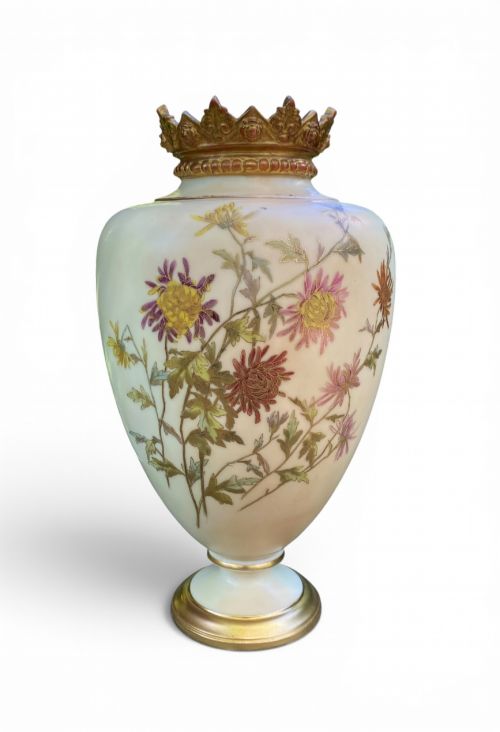


Victorian Porcelain Decorative Urns
Victorian porcelain decorative urns are ornate ceramic display vessels shaped by nineteenth-century revival styles and cabinet-maker ambitions.
Victorian Porcelain Decorative Urns
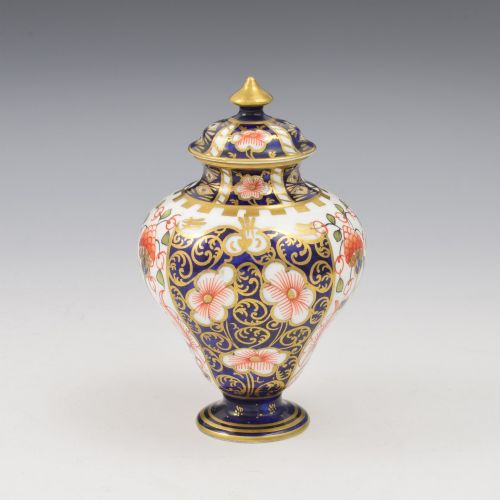
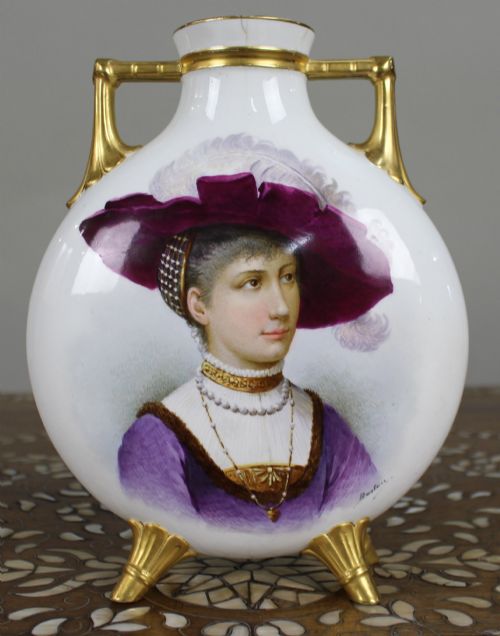
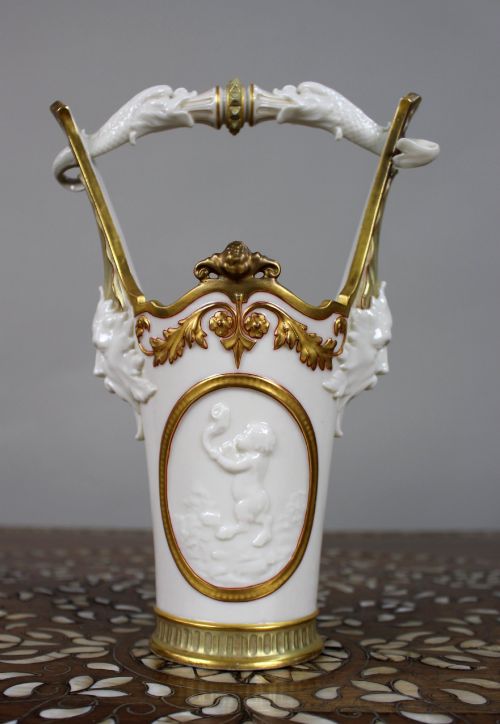
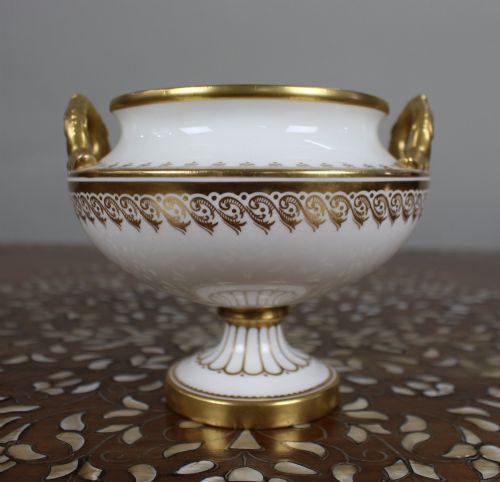
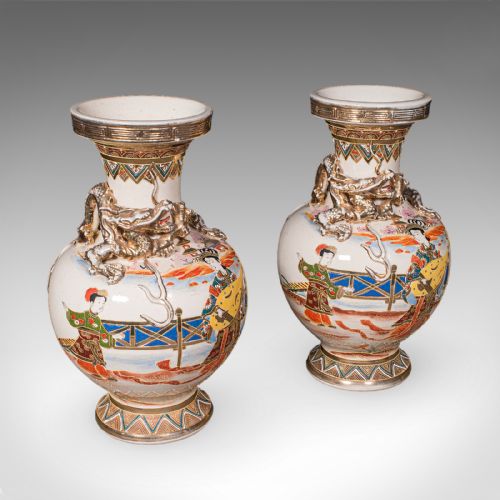
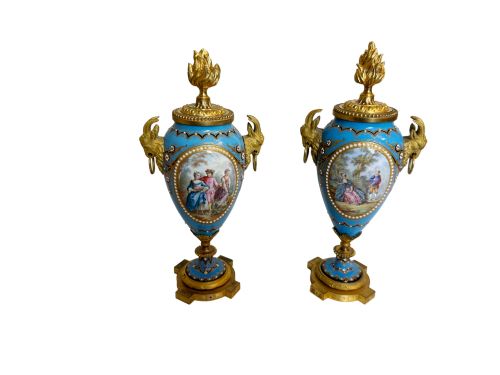
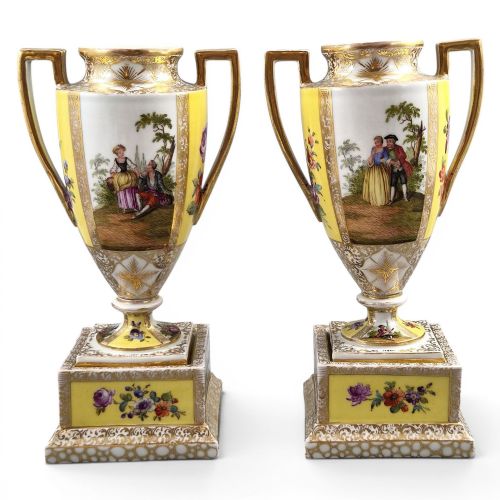
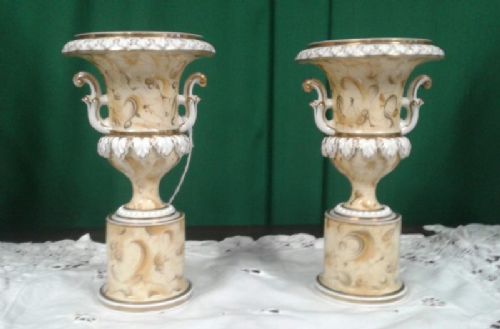
Victorian porcelain decorative urns appear on this page in forms ranging from campana shapes and lidded ginger jars to twin-handled mantel garnitures and moon flasks. Makers across England, continental Europe and Japan produced these pieces during the nineteenth century and into the Edwardian era.
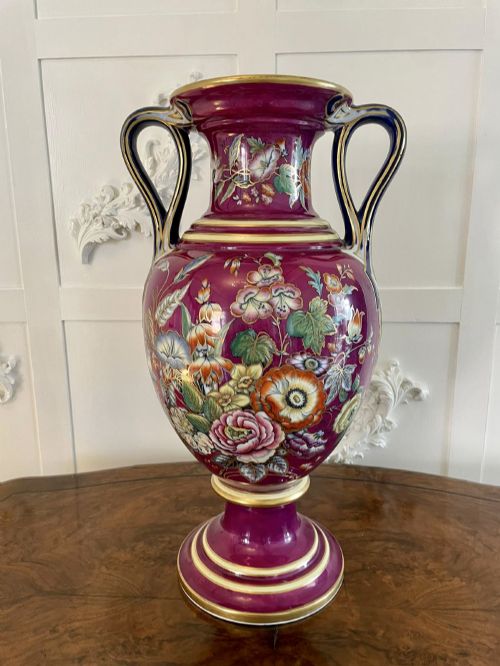
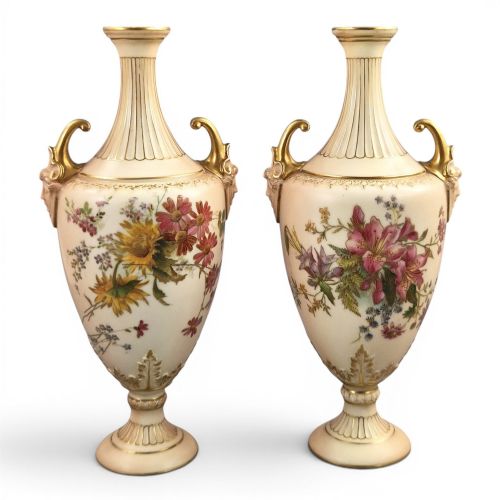
The version most commonly met on this page is the English or continental two-handled urn, frequently finished with hand-painted floral motifs and gilding. Pieces span diverse aesthetics, incorporating Rococo Revival curves, Neoclassical symmetry and Japanese ceramic traditions into domestic display items.
Materials and Technique
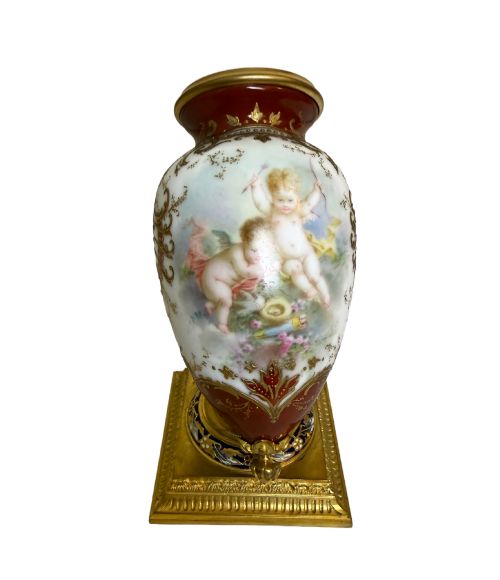
Craftsmen shaped these vessels from ceramic and porcelain bodies, often employing mould-pressing or throwing techniques before applying enamel colours and underglaze paints. Hand-painted details frequently feature botanical subjects, figural scenes or birds rendered in polychrome palettes.
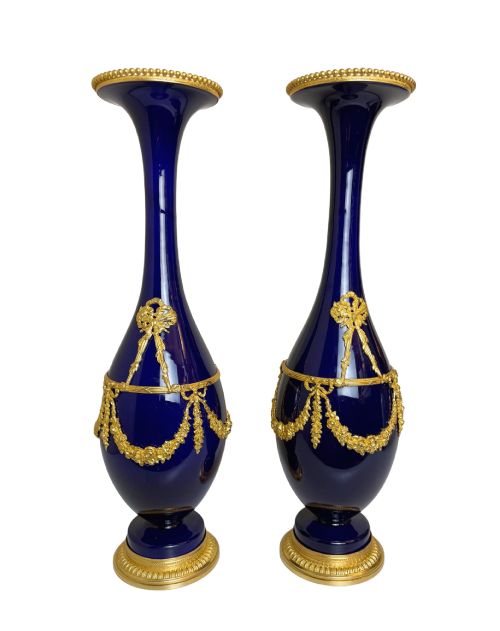
Gilt bronze trim, ormolu mounts and applied gold leaf or gilding accentuate handles, rims and pedestals. Some pieces integrate enamel work, relief moulding or jewelled decoration over turquoise, pink, yellow or white ground glazes.
Listings feature porcelain, enamel, gold leaf, and gilt bronze across 19th Century, Victorian, and Edwardian periods.
Evaluating Quality
Quality in these vessels rests on the precision of the hand-painted artistry and the crispness of the porcelain moulding. Superior examples display finely detailed brushwork by named or studio artists rather than mechanical transfer printing.
The weight and finish of accompanying metal mounts, such as gilt bronze trim or ormolu bases, separate finer productions from standard factory output. Well-preserved gilding and balanced proportions distinguish the top of the range.
Royal Crown Derby·Royal Worcester·Samuel Alcock and Co·Royal Doulton·Moorcroft Macintyre·KPM Berlin
The Victorian Porcelain Decorative Urns Glossary
- Campana
- A bell-shaped vessel with a flared rim and pedestal foot. This classical silhouette was widely revived by nineteenth-century potteries.
- Garniture
- A set of three or more matching vases or urns designed to sit together on a mantelpiece. These sets typically comprise a central lidded urn flanked by smaller matching vases.
- Moon flask
- A flattened circular flask with a short neck and two small handles, often supported on an oval foot. Potters used this form as a canvas for hand-painted landscapes and floral studies.
- Jasperware
- A fine-grained stoneware pioneered by Josiah Wedgwood featuring contrasting white relief ornaments applied against a coloured ground. Blue and pastel grounds predominate in nineteenth-century interpretations.
- Ormolu
- Gilt bronze mounts used to edge, elevate and finish porcelain bodies. This decorative metalwork adds architectural weight to cabinet urns and clocks.
Victorian Porcelain Decorative Urns: Frequently Asked Questions
What were Victorian porcelain decorative urns used for?
These vessels served purely ornamental functions within nineteenth-century drawing rooms and parlours. Owners placed them on mantelpieces, pedestals and side tables as centrepieces or paired them in garniture sets.
While some featured removable lids or served as pot pourri containers, their primary purpose was to display wealth, taste and an appreciation for classical or exotic aesthetics.
How do I style these urns in a modern home?
Place a pair of campana urns on a sideboard or mantel to anchor a room with nineteenth-century symmetry. Their painted panels and gilt details complement both minimalist spaces and traditional interiors.
Avoid overcrowding them with flowers, as these vessels were intended to stand alone as sculptural objects of art.
How can I tell a Victorian piece from a later copy?
Examine the base for period factory marks, impressed ciphers and registration numbers that correspond to nineteenth-century production. Hand-painted details under the glaze and the natural wear on gilt bronze mounts provide clues to true period manufacture.
Clumsy transfer printing and lightweight, stark white modern ceramic bodies usually indicate later reproduction pieces rather than genuine Victorian work.
What do styles like Rococo Revival mean for these urns?
Rococo Revival styles introduce asymmetrical scrolls, naturalistic floral relief and C-scroll handles derived from eighteenth-century French design. Neoclassical styles rely instead on strict symmetry, urn shapes and architectural bas-reliefs.
Recognising these aesthetic movements helps date a piece and reveals whether the maker drew inspiration from French court taste or ancient classical archaeology.