
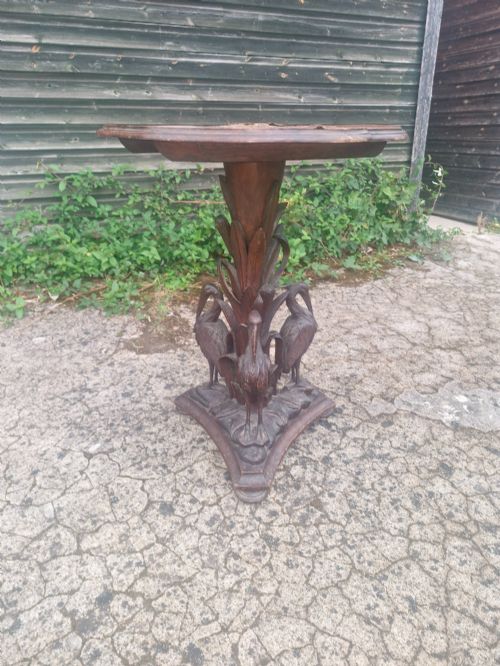
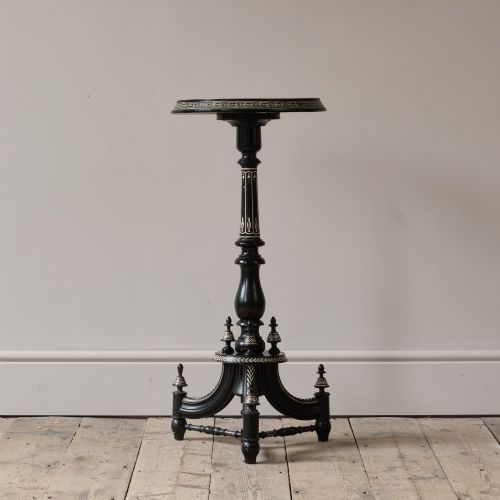
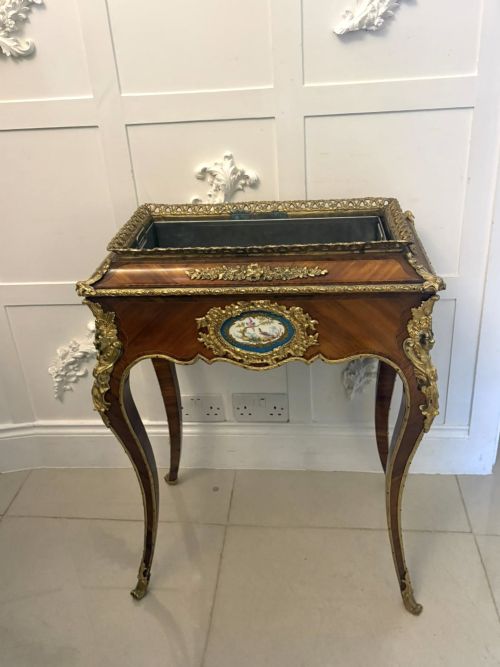
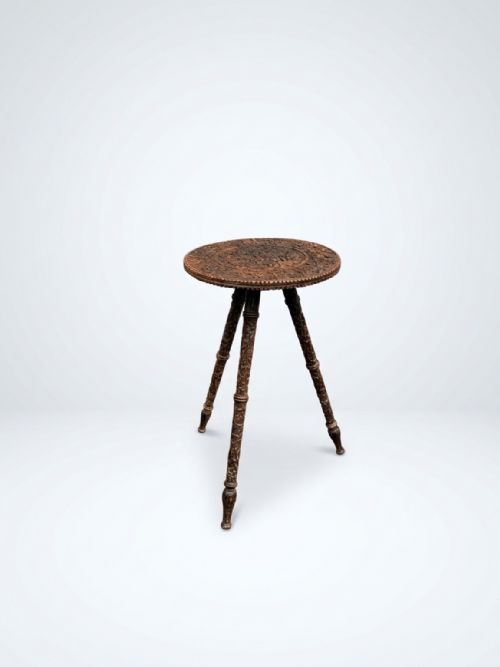

Victorian Plant Stand Table
These Victorian plant stand table examples combine practical display surfaces with the decorative forms of the nineteenth century.
Materials and Construction
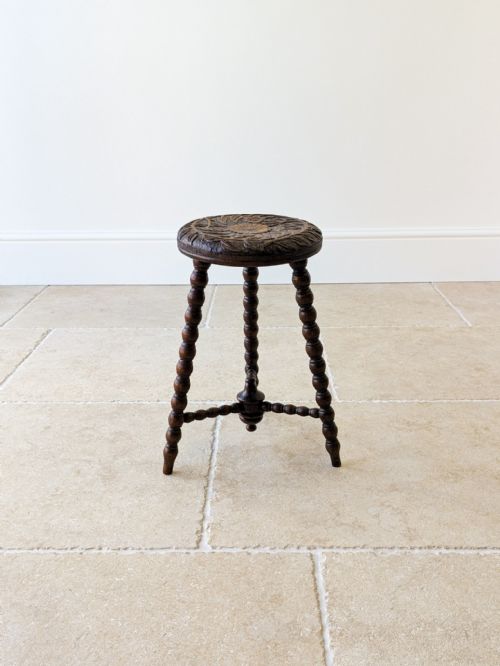
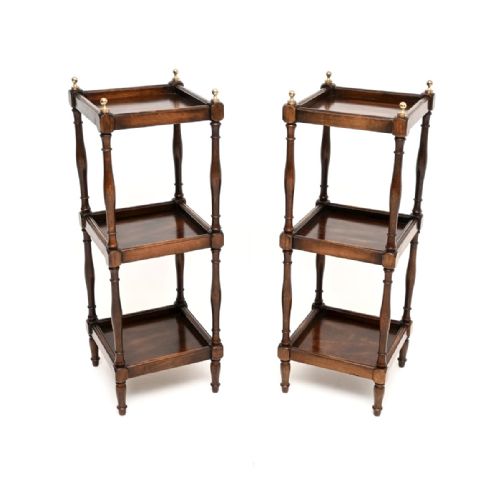
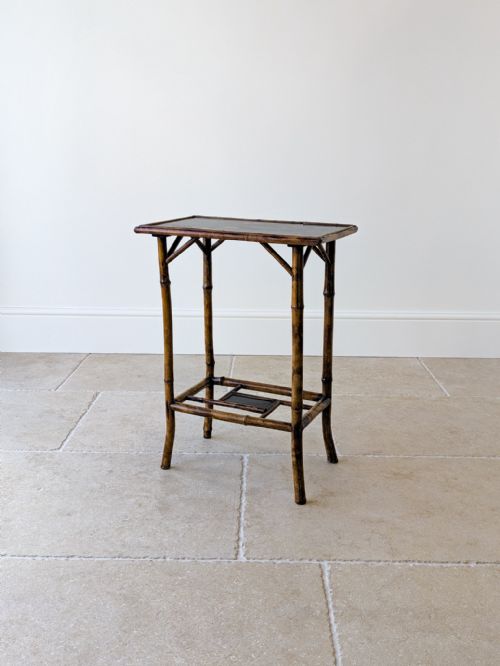
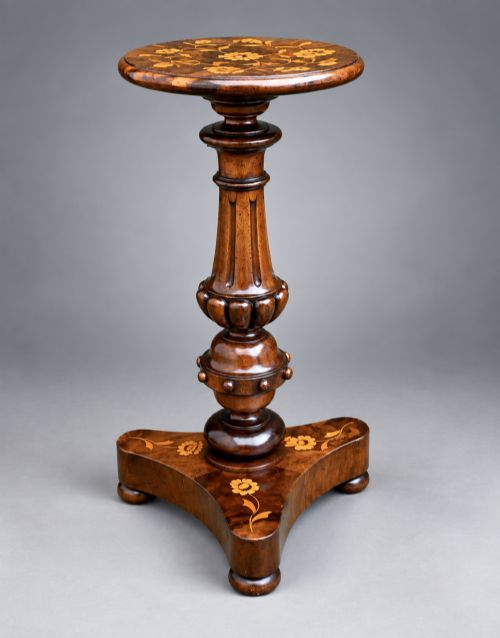
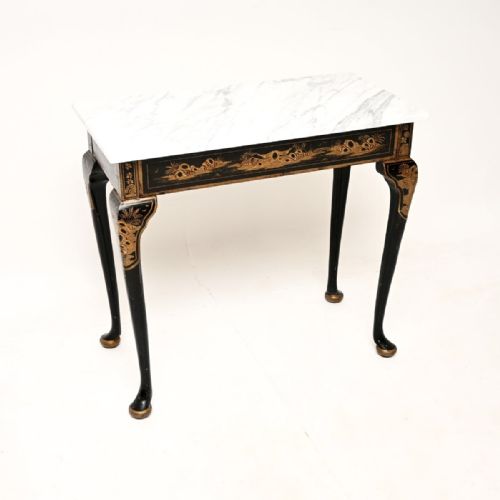
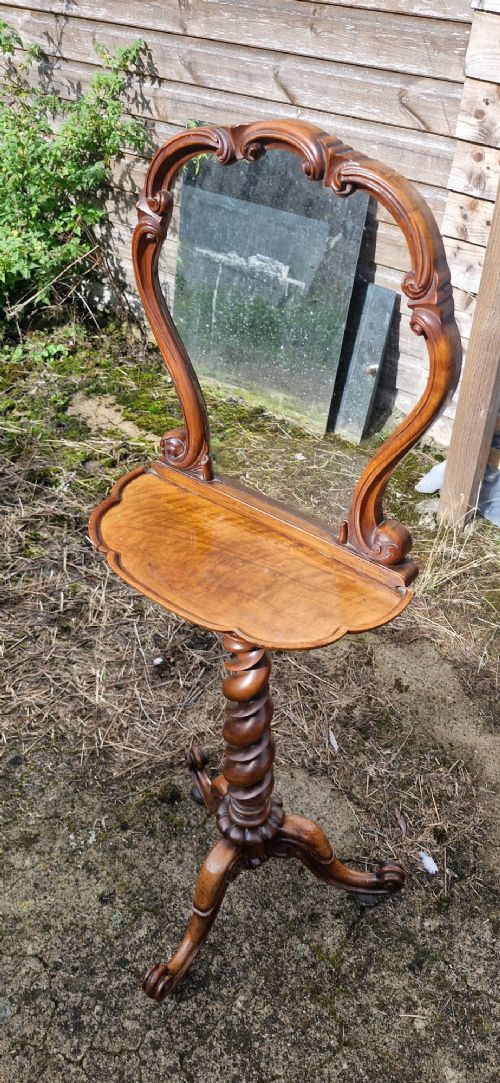
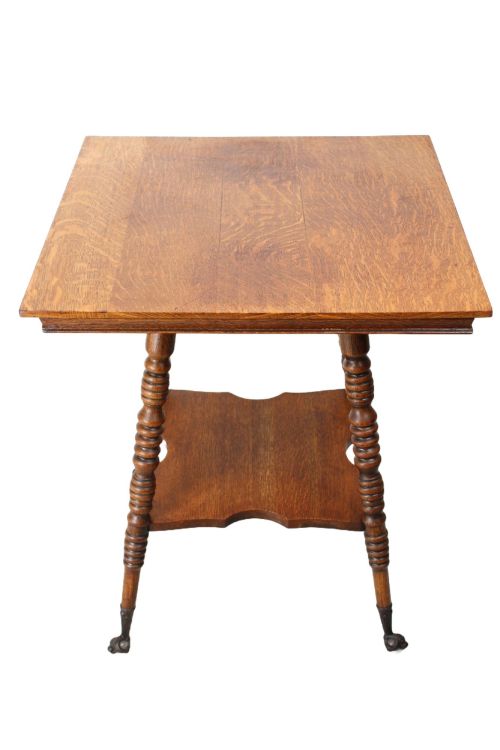
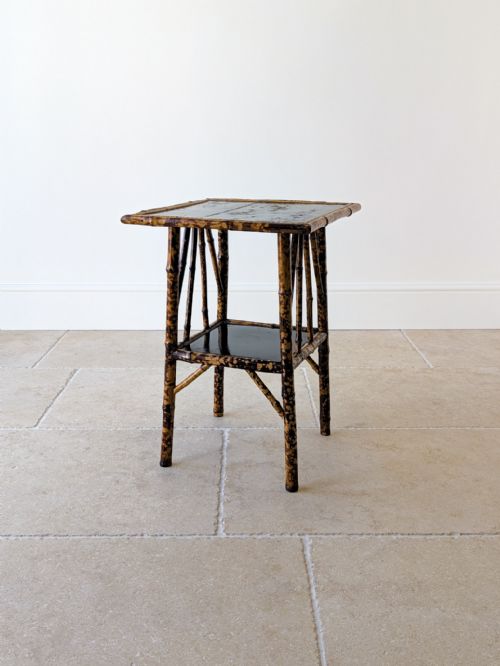
Construction relies heavily on traditional hardwoods such as mahogany, oak, walnut, hardwood, and satinwood, frequently paired with decorative elements like inset marble tops, brass fittings, and bone inlay. Ebonised wood and bamboo also appear frequently, reflecting the diverse aesthetic movements and global influences of the period.
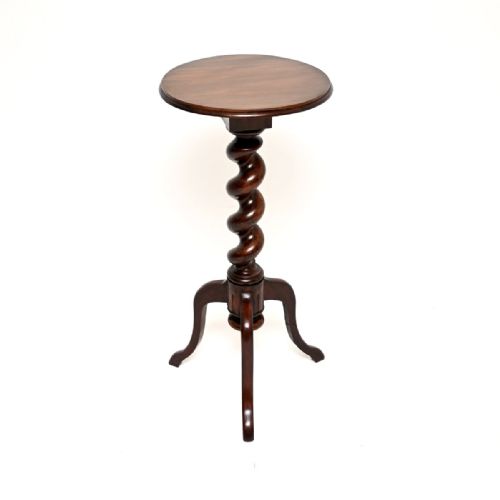
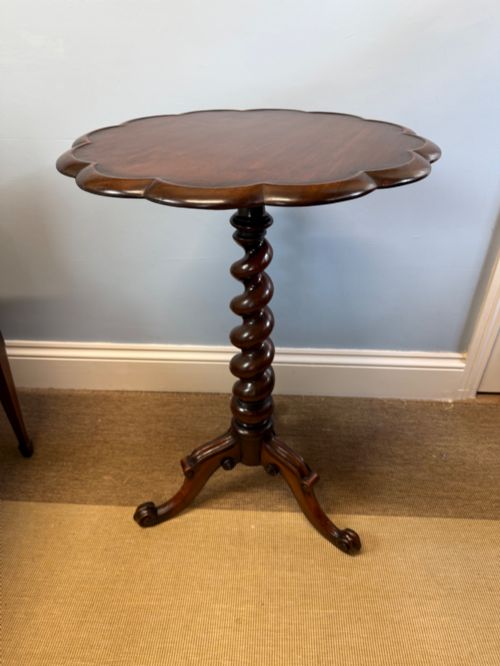
Joinery methods encompass turned elements like barley twist stems, hand-carved chip-carved detailing, and structural framing suited to both light occasional use and heavier display duties. Materials such as wrought iron and cast iron enter the record for garden and conservatory variants.
Distinctions in Quality
Quality rests upon the selection of timber, the crispness of hand-carved or chip-carved ornament, and the integrity of structural elements like turned legs and jointed frames. Tables featuring inset marble slabs, hand-painted satinwood, or intricate bone inlay occupy a higher tier than plain utility pieces.
The sophistication of regional or movement-specific design, such as Anglo-Indian pierce-carving or Arts and Crafts construction, distinguishes workshop-produced furniture from basic estate-made or folk items.
Listings feature woods spanning mahogany, oak, walnut, satinwood, and bamboo, alongside decorative inserts of marble and bone.
Hindley and Sons·Liberty and Co·William Birch·Druce and Co London·Shoolbred
The Victorian Plant Stand Table Glossary
- Jardiniere
- An ornamental stand or container specifically designed to hold a plant or flower arrangement. These pieces often feature waterproof liners or raised rims.
- Ebonised
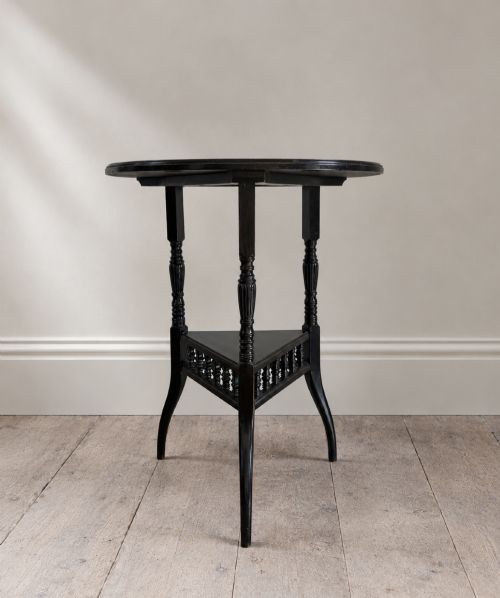
- Wood finished with a dark stain or paint to imitate the appearance of expensive ebony. This treatment was popular in Aesthetic Movement and nineteenth-century design.
- Barley Twist
- A type of turned wooden leg or column resembling a twisted rope. It became a prominent decorative feature in late Victorian furniture.
- Occasional Table
- A small, versatile table intended for specific, intermittent use within a room. They function easily as lamp, side, or display tables.
- Moorish
- A decorative style incorporating geometric lattice work and intricate geometric patterns. It reflects late nineteenth-century interest in Islamic design traditions.
Victorian Plant Stand Table: Frequently Asked Questions
What is a Victorian plant stand table used for?
These tables provide an elevated surface designed primarily to display potted plants, jardinieres, or lamps within domestic interiors and conservatories. Their sturdy tops and raised heights also suit the placement of decorative ceramics and occasional objects.
Beyond botanical display, many examples function adequately as standard side tables or lamp tables for everyday living spaces. Their compact proportions allow them to fit easily into corners or beside seating arrangements.
How do I identify a late Victorian piece?
Late Victorian examples often display characteristics associated with the eighteen-eighties and eighteen-nineties, including Arts and Crafts influences and ebonised finishes. Stylistic markers like barley twist turnings and octagonal tops frequently appear in this bracket.
Evidence from this period also shows a rise in exotic styling, such as Moorish and Anglo-Indian carving techniques. Comparing these decorative traits against standard mid-century mahogany forms helps clarify dating.
Are these tables suitable for daily use?
Most pieces are built from solid hardwoods like oak, walnut, and mahogany, making them structurally sound for holding everyday objects and small plants. Regular use requires basic care to protect sensitive surfaces like polished wood or marble from moisture.
Lighter constructions, such as bamboo or woven plant stands, demand more gentle placement to avoid structural strain. Ensuring the item matches your intended functional weight prevents undue wear.
What distinguishes an Anglo-Indian table?
Anglo-Indian tables feature dense, intricate hand-carved surfaces and frequently incorporate traditional bone inlay within geometric or floral patterns. They utilise indigenous hardwoods like teak and other dense regional timbers.
These pieces reflect nineteenth-century trade and stylistic exchange between Britain and India. Their distinct ornamentation separates them visually from standard domestic English tables.