
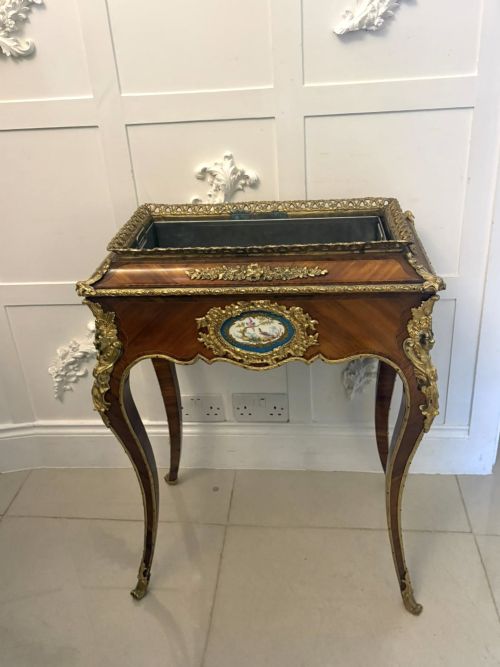
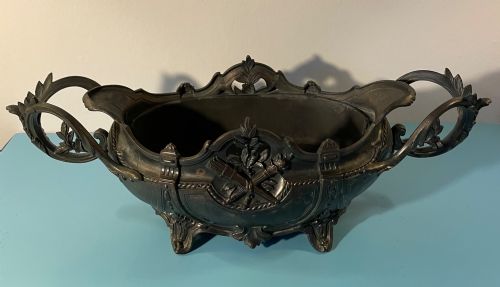
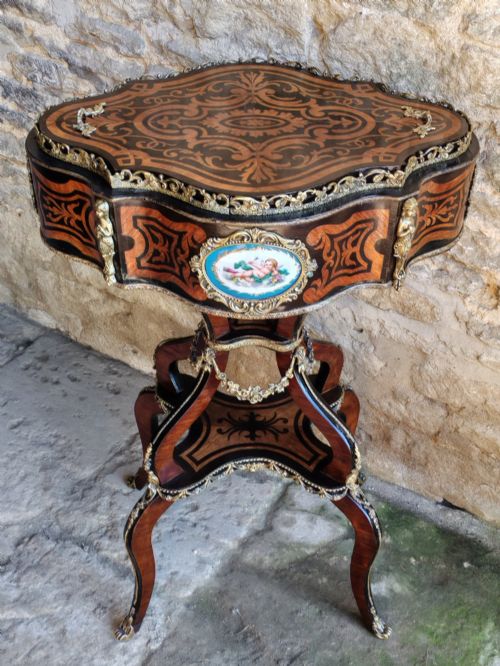
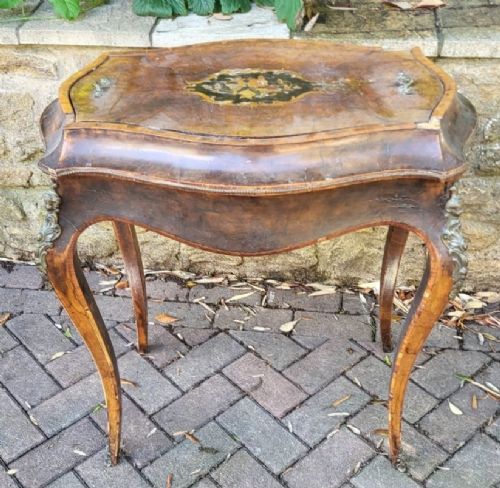
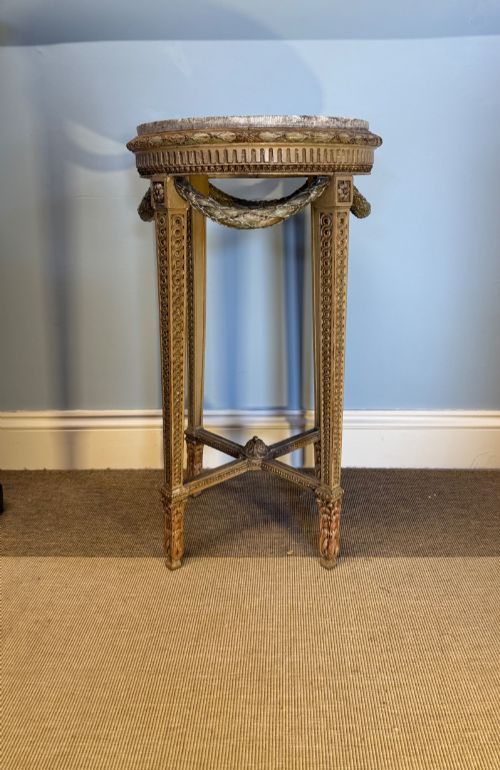
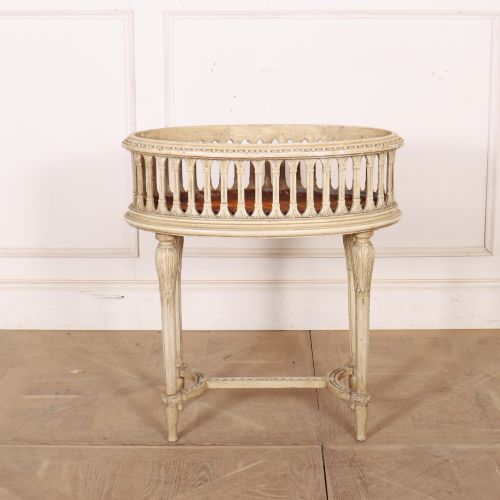
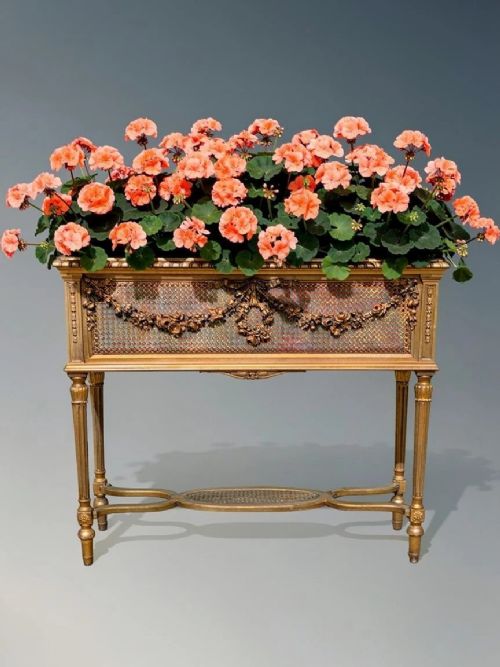


French Style Jardiniere Table
A french style jardiniere table brings indoor planting and display together with polished wood and metal mounts.
French Style Jardiniere Table
The french style jardiniere table unites plant display with occasional table utility, drawing on nineteenth century forms.
Most examples found here date from the nineteenth century, including Victorian and Edwardian periods, alongside Napoleon III and Louis XVI revival styles.
Makers shaped these pieces as planters, plant stands, wine coolers and centrepieces, often combining a vessel with a table base.
Materials and Construction
Cabinetmakers constructed these tables using timbers such as kingwood, burr walnut and walnut, frequently enriched with marquetry inlay.
Metal ornament played a central role, employing ormolu, brass, gilt metal, bronze and silvered bronze for mounts and stands.
Many designs incorporate ceramic porcelain plaques, marble tops or lift-off lids to hold plants and water safely.
Judging Quality
The distinction between tiers rests on the crispness of the cast metal mounts and the selection of figured wood veneers.
Integration of decorative elements, such as hand-painted porcelain plaques or fitted metal liners, separates standard production from finer examples.
The French Style Jardiniere Table Glossary
- Jardiniere
- An ornamental stand or vessel designed to hold plants or flowers indoors. It often sits within a table frame or acts as a centrepiece.
- Ormolu
- Gilt bronze ornamentation applied to furniture and decorative objects. It provides bright golden highlights against dark woods.
- Kingwood
- A dense, richly figured timber imported from Brazil and used extensively in high-end cabinetmaking.
- Napoleon III
- A nineteenth-century French revival style blending diverse historical influences with lavish ornamentation.
French Style Jardiniere Table: Frequently Asked Questions
What is a french style jardiniere table?
It is a decorative furniture piece combining a plant container with a table structure, designed for nineteenth-century interiors.
Such tables accommodated indoor plants while serving as functional surfaces for rooms or conservatories.
How were these tables used originally?
Owners placed live plants, ferns or cut flowers inside the metal or ceramic liners.
Some convertible designs also doubled as wine coolers or occasional side tables during entertaining.
How do I care for the wood and metal?
Keep wooden surfaces clean with a dry cloth and avoid exposing veneers to excessive moisture from plants.
Protect metal mounts by dusting gently without harsh chemical polishes that might strip the original finish.
Can I use it as a plant stand today?
These pieces suit modern interiors for holding potted plants, provided you use protective liners inside.
Their decorative wood and metalwork make them striking standalone furniture items in living spaces.