

Victorian Pine Sideboard Cabinet
These pieces give you practical storage with a distinct nineteenth-century grain, bringing the utility of a victorian pine sideboard cabinet into modern rooms.
Victorian Pine Sideboard Cabinet
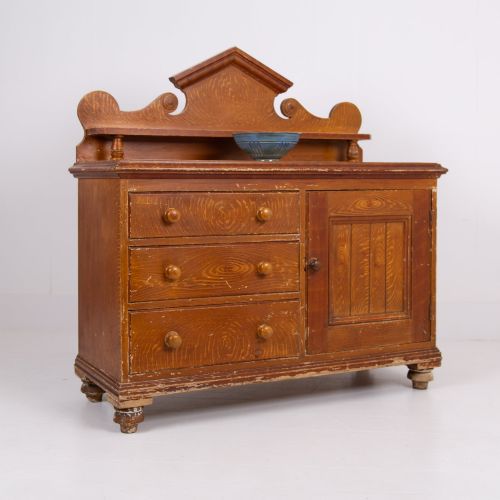
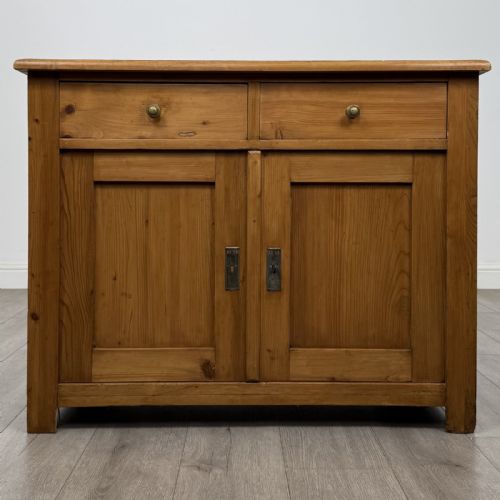
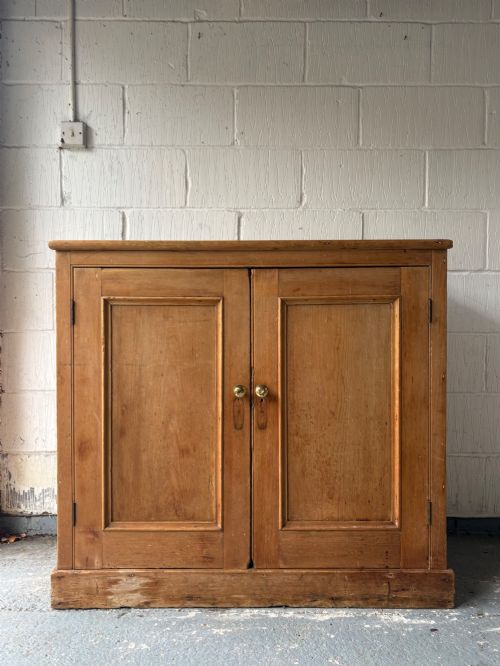
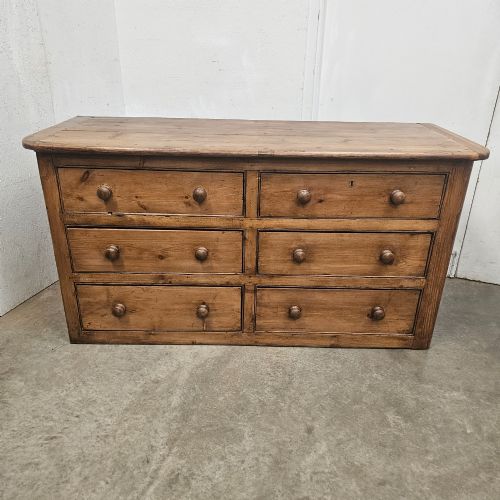
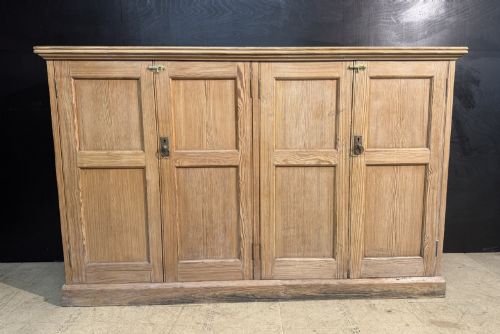
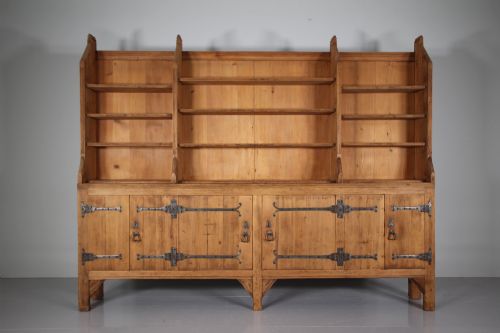
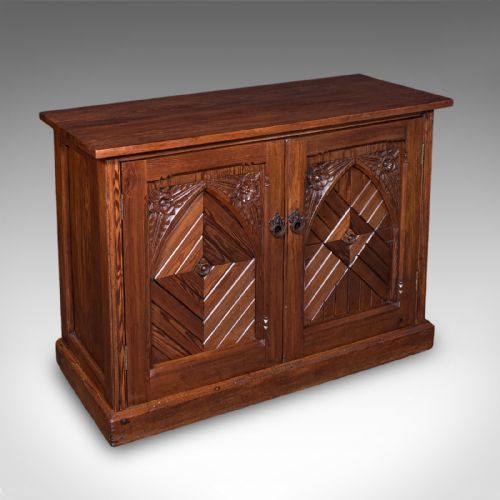
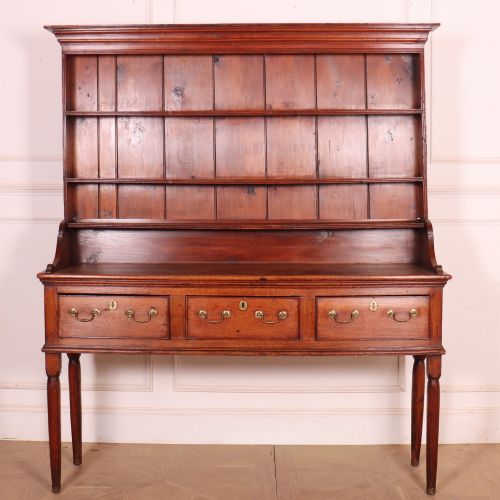
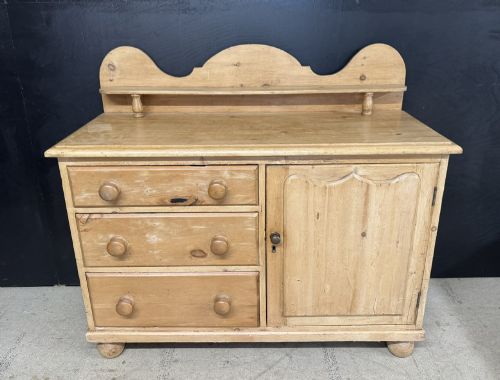
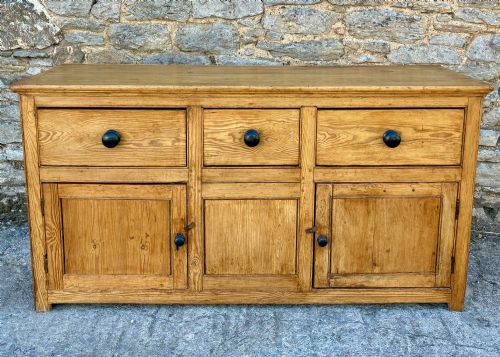
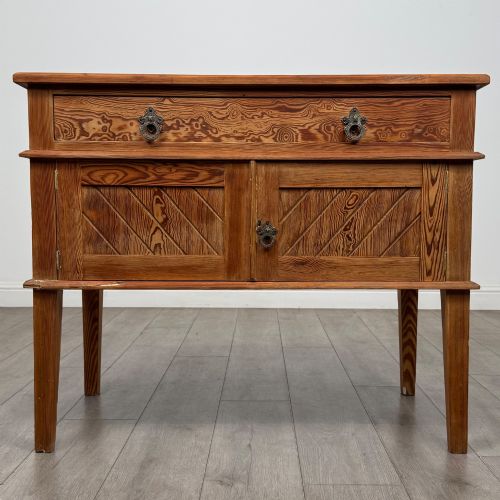
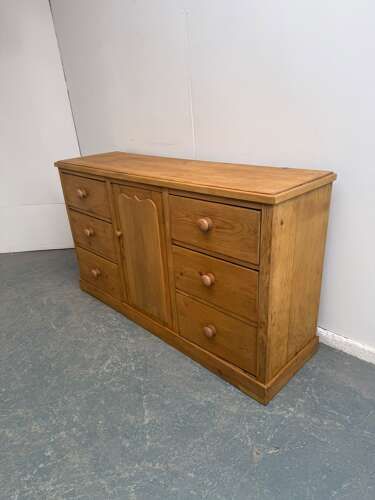
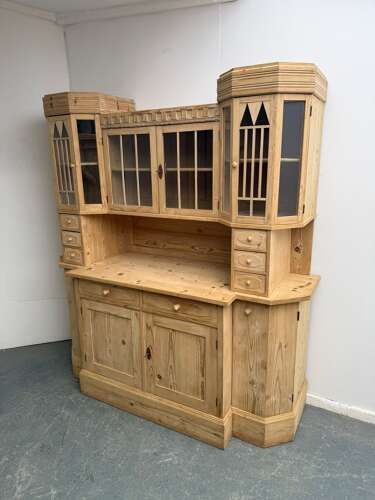
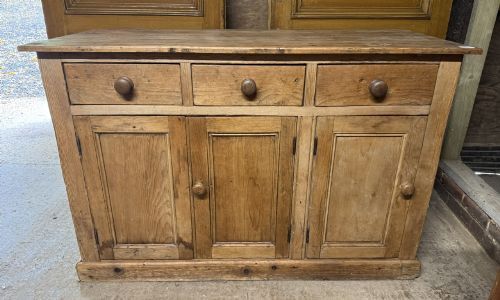
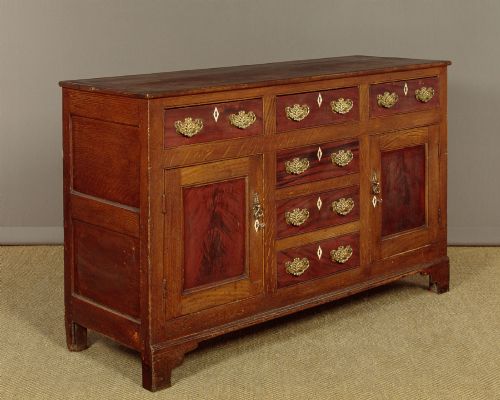
A victorian pine sideboard cabinet typically takes the form of a kitchen dresser base, a hall cupboard, or a low wide storage unit made during the nineteenth century. These items were built for utilitarian storage in domestic and rural settings, combining cupboards and drawers beneath a flat top.
The versions most common on this page are dresser bases and two-door cupboards originating from English, Welsh, Scottish, and continental workshops. They span styles from plain country farmhouse to Arts and Crafts and military campaign influences.
Buyers choose these items for their generous proportions and honest construction, which offer versatile storage for dining rooms, kitchens, and hallways. Each piece carries the marks of daily use and age, distinguishing factory-made modern storage from nineteenth-century joinery.
How they were made
Makers relied primarily on solid pine and pitch pine, shaped with hand tools and joined using traditional techniques such as dovetailing for drawers and mortise and tenon joints for frames. Iron, brass, and ceramic fittings appear on handles, hinges, and escutcheons.
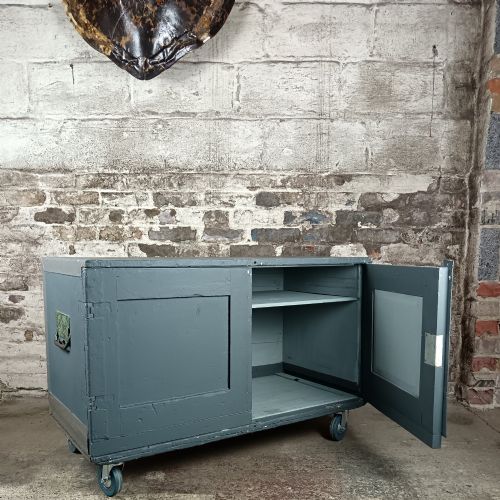
Surfaces were either left as bare wood to be waxed or finished in paint, with many surviving examples retaining original paint layers or historical coats of colour. Glazed glass panels appear on upper sections where display was required alongside enclosed storage.
Victorian Pine Sideboard Cabinet Retail Price Guide 2026
Typical asking prices for victorian pine sideboard cabinet among the pieces listed under this phrase on Sellingantiques today, from the lower quarter to the upper quarter. They describe what is for sale here now, not the wider market.
One exceptional workshop piece incorporates thirty distinct drawers, proving that nineteenth-century filing systems could match the scale of a small post office.
What varies in quality
Quality rests in the integrity of the timber selection, the crispness of the joinery, and the degree to which original hardware and paint survive intact. Pieces with untouched surfaces and solid backboards command greater interest than those altered or stripped down heavily over time.
Proportion and scale also separate standard utility items from finer examples, such as those with unusual drawer configurations like bread slides or multi-drawer banks. The balance between practical utility and decorative regional carving defines the upper tier of these items.
The Victorian Pine Sideboard Cabinet Glossary
- Dresser base
- The lower section of a kitchen dresser, featuring cupboards and drawers beneath a flat surface without the upper plate rack.
- Pitch pine
- A resinous, durable pine variety with a pronounced grain pattern utilised frequently in nineteenth-century cabinetry.
- Bread slide
- A pull-out wooden board integrated into a dresser base or cupboard, traditionally used for cooling or slicing bread.
- Campaign chest
- Portable modular furniture made in sections with recessed brass fittings, designed for easy transport by military officers.
- Chiffonier
- A low sideboard cabinet developed in the nineteenth century, often equipped with enclosed cupboards and small drawers.
Victorian Pine Sideboard Cabinet: Frequently Asked Questions
What is a victorian pine sideboard cabinet used for?
These cabinets serve as practical storage furniture in contemporary dining rooms, kitchens, and hallways. Their combination of cupboards and drawers provides ample space for tableware, linens, and household items.
Beyond utility, they act as anchor furniture pieces that introduce nineteenth-century character and natural wood textures to interior spaces.
How do I care for waxed pine furniture?
Maintain waxed pine by applying a quality beeswax polish periodically to nourish the wood and preserve its soft sheen. Avoid placing cabinets near direct heat sources or in damp areas to prevent timber movement.
Dust regularly with a dry cloth and clean spills immediately to protect the historic surface finish from staining.
Are these cabinets made from solid wood?
Nineteenth-century pieces of this type are constructed using solid timber, predominantly pine or pitch pine, rather than modern manufactured boards. Drawer linings, backboards, and internal framing rely entirely on traditional solid wood construction.
This solid build allows the timber to age naturally, developing a rich patina over decades of use.
How can I tell if the paint is original?
Original paint finishes show natural wear, craquelure, and multiple microscopic layers beneath surface grime that reveal their age. Modern repainting often appears uniform, lacking the subtle tonal variations and wear patterns accumulated through nineteenth-century domestic use.
Examining corners and hidden interior edges helps determine whether the current surface coating dates to the period of manufacture.