


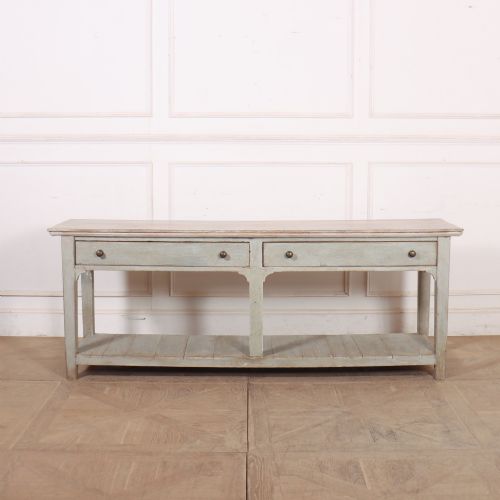

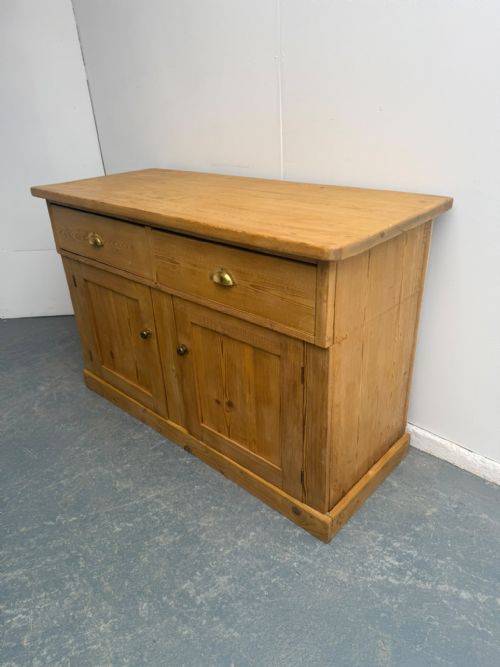

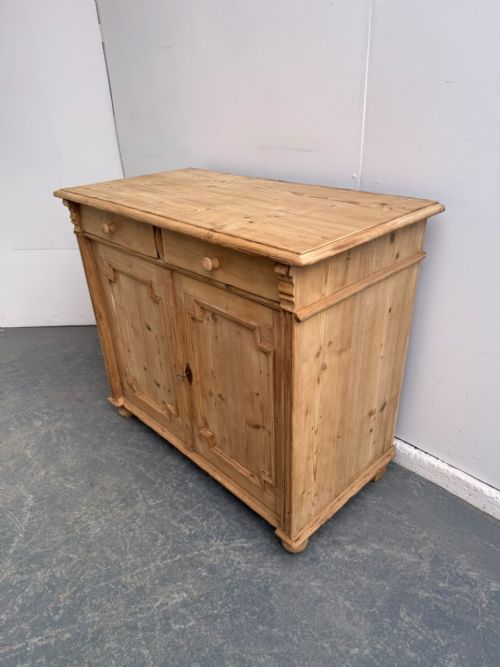
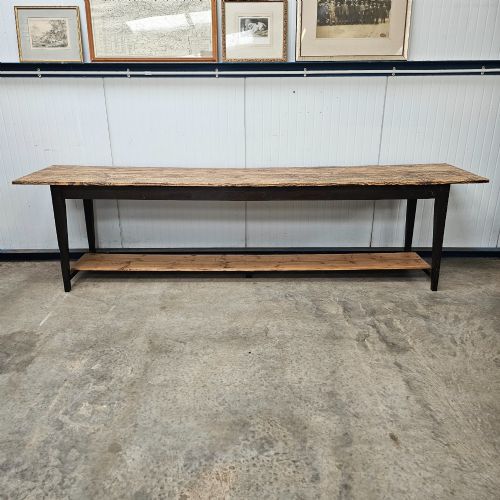

Traditional Pine Server
A traditional pine server brings utilitarian charm to a room, offering sturdy work surfaces and generous storage built from honest woods.
Traditional Pine Server
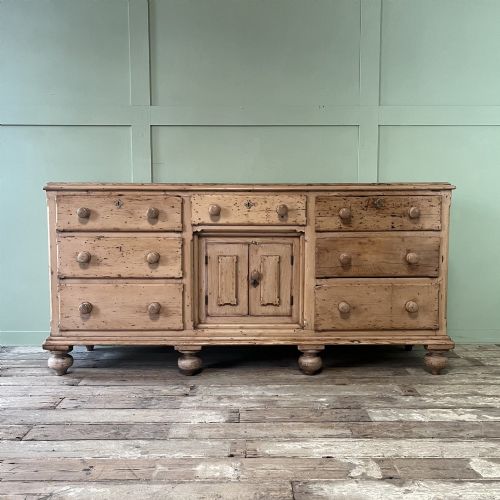
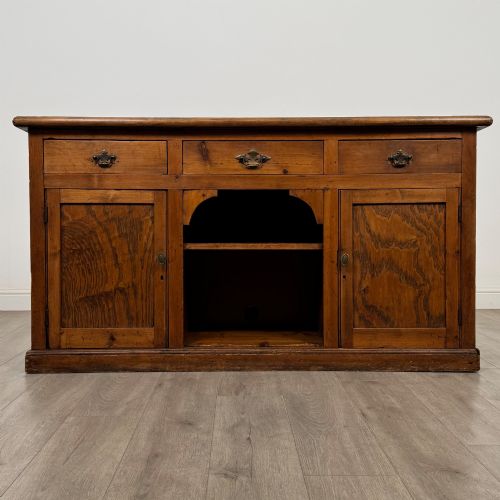
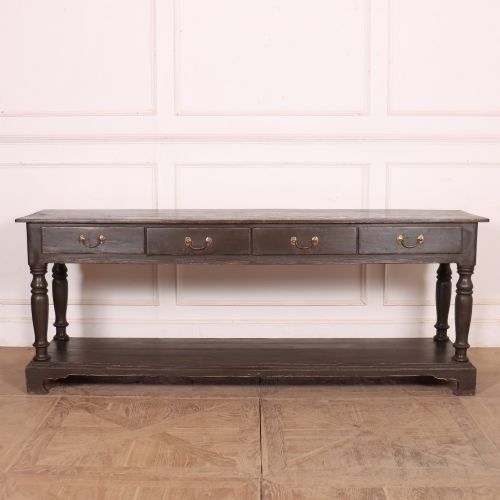
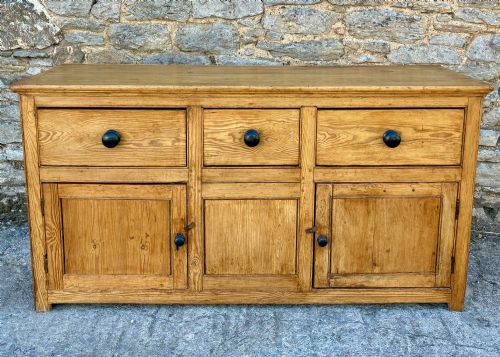
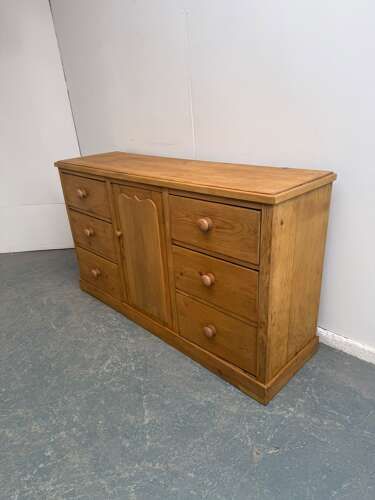
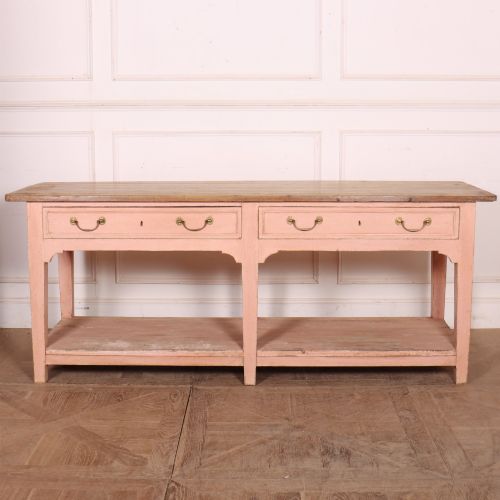
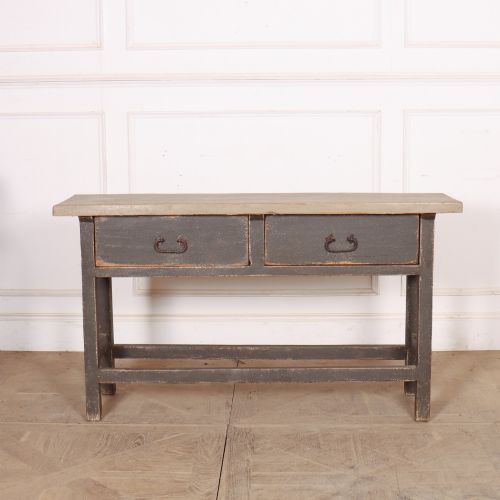
A traditional pine server encompasses robust dresser bases, sideboards, and serving tables rooted in utilitarian domestic spaces. These pieces emerge from periods spanning the eighteenth century through to the early twentieth century.
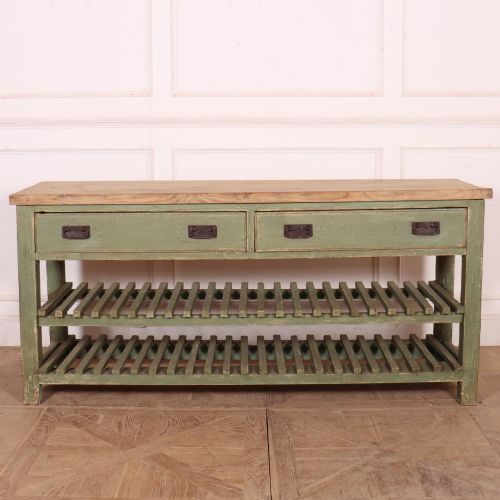
You will most frequently encounter nineteenth-century English and Scottish examples on this page. They typically manifest as low storage units with drawers, cupboards, and occasionally open potboards.
The aesthetic leans towards English country house and rustic farmhouse styles. These forms were originally designed for rigorous daily use in kitchens, dairies, and dining spaces.
What varies in quality
Quality rests upon the proportion and structural integrity of the timber framing. Heavier, monumental pieces demand robust joinery to support daily kitchen preparation work.
The integrity of the surface finish dictates the character, whether a well-waxed grain or an authentic, weathered layer of old paint. Original hardware and undisturbed construction details elevate the standing of a piece.
Traditional Pine Server Retail Price Guide 2026
Typical asking prices for traditional pine server among the pieces listed under this phrase on Sellingantiques today, from the lower quarter to the upper quarter. They describe what is for sale here now, not the wider market.
Listings feature pine alongside oak, brass, and iron materials across nineteenth-century, Victorian, and Georgian periods.
The Traditional Pine Server Glossary
- Dresser base
- The lower portion of a kitchen dresser, featuring cupboards and drawers without the upper plate rack. This functions independently as a sideboard or server.
- Potboard
- An open slatted lower shelf built into the base of a piece to store heavy pots and pans. This structural feature is common in country kitchen furniture.
- Chiffonier
- A low sideboard or cabinet featuring drawers and cupboards, developed during the nineteenth century. It provides compact serving and storage utility.
- Dairy table
- A utilitarian table designed for food preparation in agricultural settings, often built with scrubbed timber tops. These items prioritize robust function over ornamentation.
- Waxed finish
- A surface treatment using natural wax to nourish and protect the wood while preserving its matte lustre. This technique emphasises the natural grain of the pine.
Traditional Pine Server: Frequently Asked Questions
What is a traditional pine server?
A traditional pine server is a practical piece of utility furniture designed for food preparation and storage in domestic kitchens and dining rooms.
These items draw on nineteenth-century and earlier forms, offering sturdy wooden surfaces and generous storage through drawers and cupboards.
Where were these servers used?
They originated in domestic kitchens, country houses, dairies, and farmhouses across England and Scotland.
Their robust construction suited heavy daily tasks, from kneading dough to serving meals in busy households.
How do I live with a pine server?
You can integrate a server into modern kitchens, dining rooms, or hallways as a functional sideboard or console table.
Their practical surfaces and storage compartments accommodate everyday tableware and linens while adding rustic character to a room.
How do I tell periods apart?
Dating relies on observing construction methods, hardware types, and timber patination across eighteenth, nineteenth, and early twentieth-century examples.
Earlier pieces often display hand-cut joinery and deeper patination, whereas later nineteenth-century and nineteen-hundreds examples reflect standardised manufacturing techniques.