
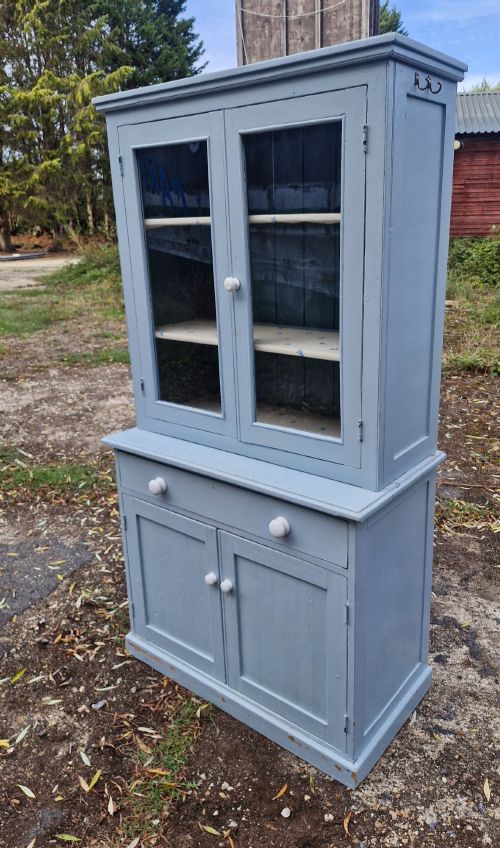
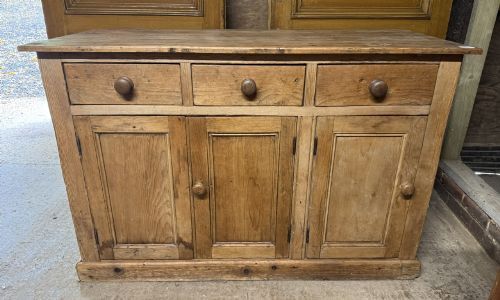
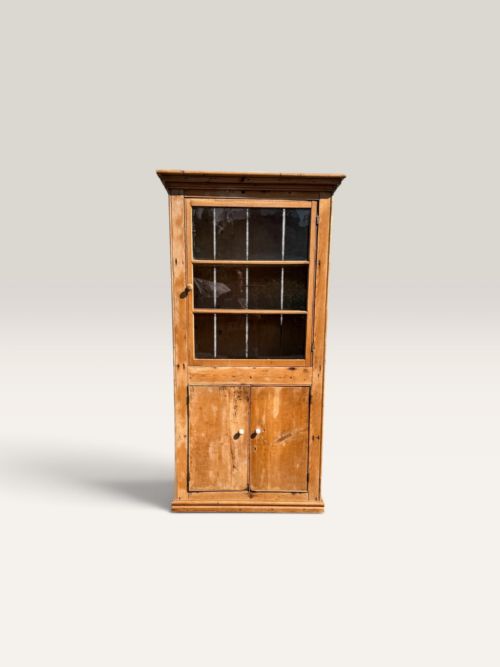
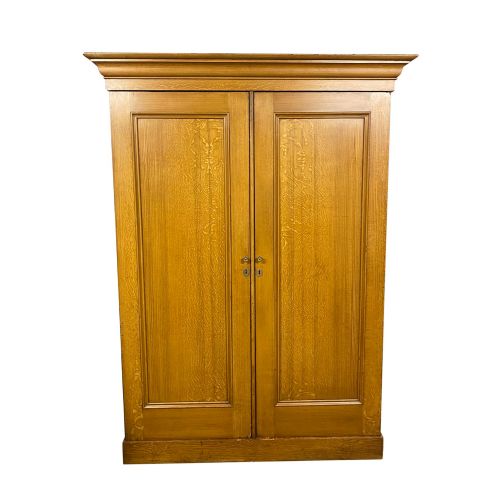
Victorian Pine Housekeeper Cupboard
A victorian pine housekeeper cupboard is a substantial storage piece designed for domestic organisation, offering large scale and practical shelving that suits modern country interiors.
Victorian Pine Housekeeper Cupboard
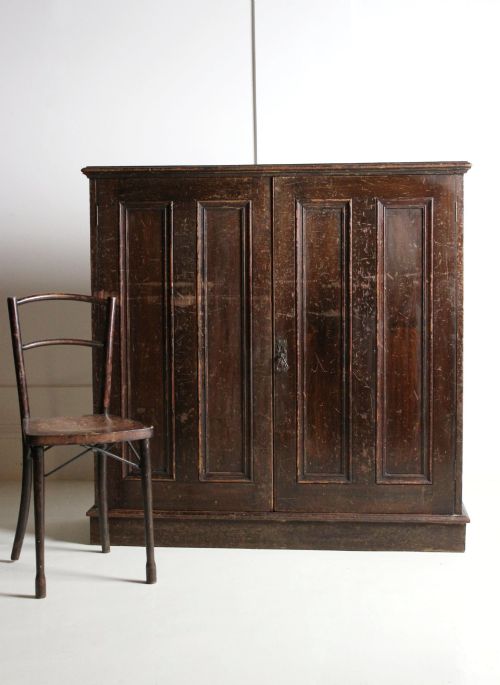
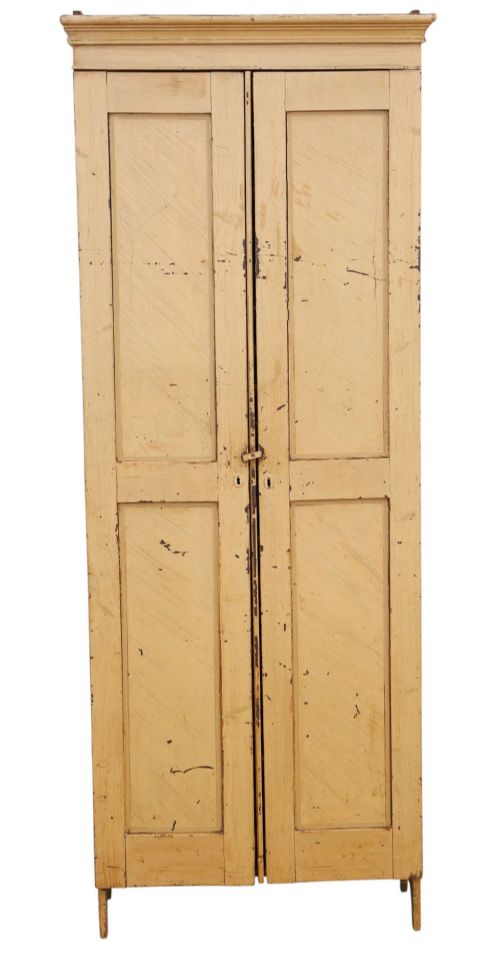
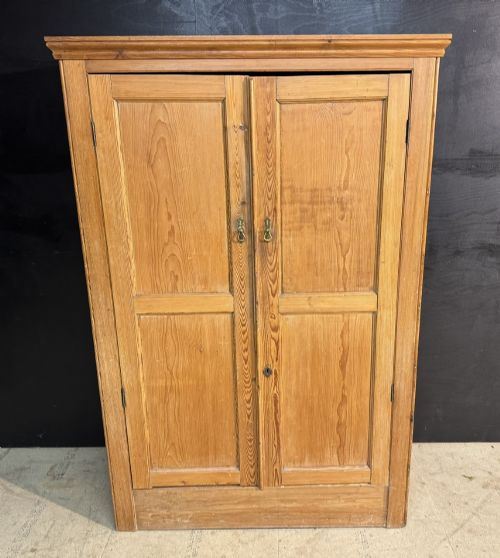
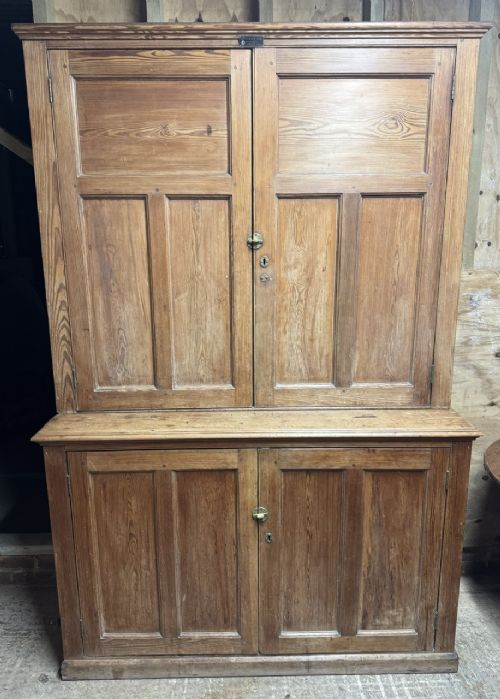
When searching for a victorian pine housekeeper cupboard, buyers encounter large utilitarian storage pieces originating from the nineteenth century. These items were built to store household provisions, linen, and tableware in country houses and large domestic settings.
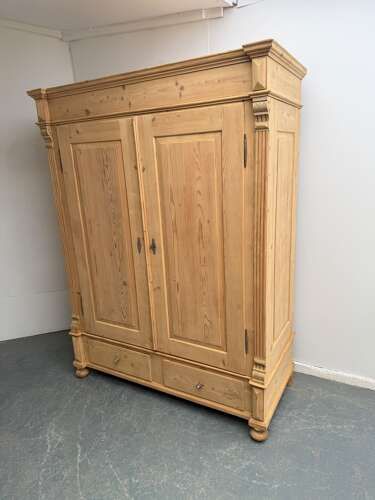
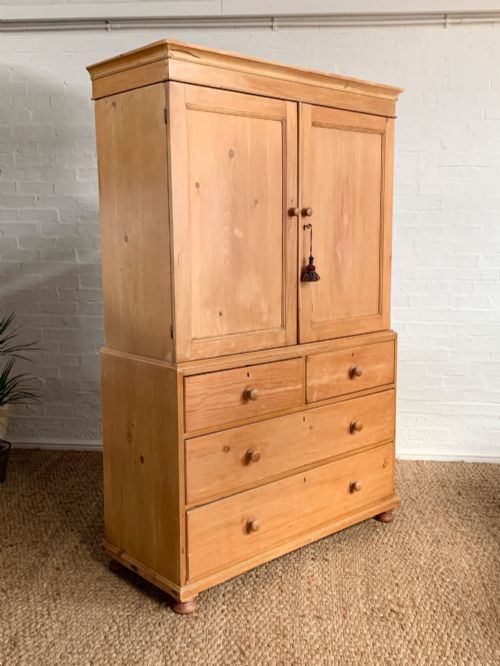
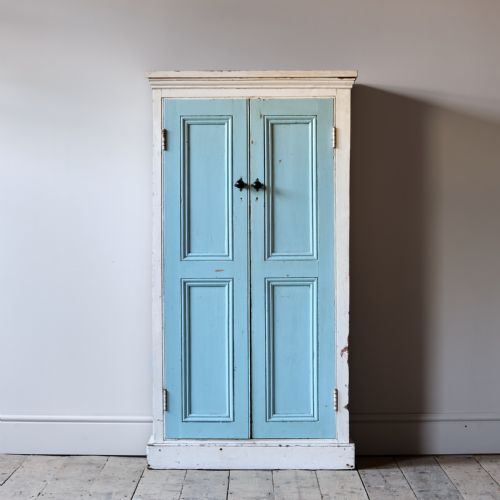
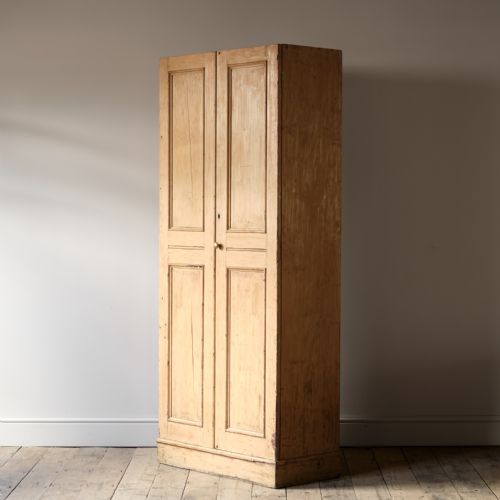
The versions most frequently found on this page span the Victorian and Edwardian periods, manifesting as tall two-door units, multi-door storage cabinets, and pieces combining cupboards with lower drawers or chests. Many examples reflect vernacular English and regional workshop traditions.
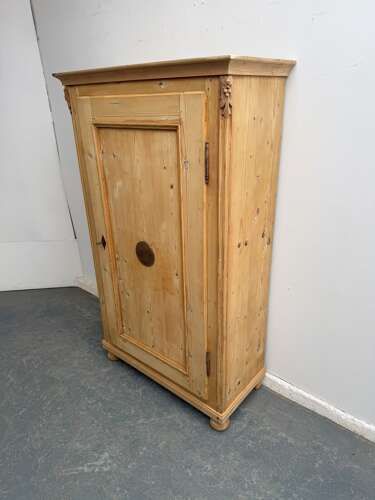
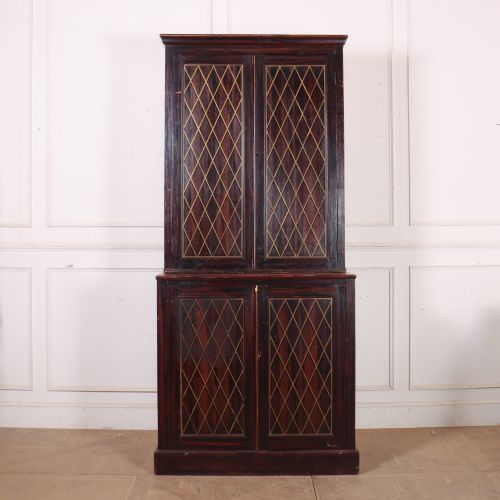
Construction forms range from simple single-door cupboards to grand estate pieces with glazed upper sections or extensive shelving. These functional origins mean each survivor carries practical modifications and signs of long domestic service.
How they were made
Makers utilised solid pine alongside pitch pine for structural framework and internal shelving, supplementing the wood with iron and brass hardware for hinges, latches, and pulls. Joinery relied on traditional methods suited to heavy utility furniture that required durability over decorative refinement.
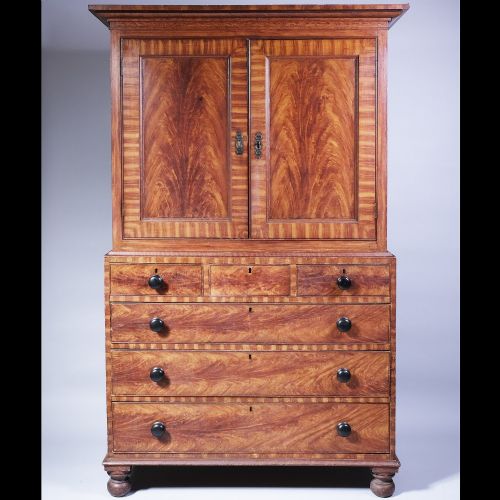
Surfaces frequently display layers of historical treatment, varying from stripped wood to original paint finishes, scumble grain effects, and applied wax. Glazed elements utilise glass panes set into wooden doors to display contents, while ventilation grilles appear on specialised food and larder cabinets.
Listings feature pieces spanning the Victorian period, nineteenth century, and Edwardian era, constructed from pine, pitch pine, and painted wood.
What varies in quality
The distinction between standard utility storage and finer examples rests on proportion, scale, and the retention of original surface treatments. Pieces displaying untouched scumble paint, grain effects, or early dry-scraped finishes stand apart from those stripped down to raw wood.
Structural integrity and proportion also define the range, separating straightforward workshop output from grander estate furniture featuring fielded panels, integrated drawer bases, or matched timber grain. The sophistication of interior fittings, such as adjustable shelving and specialised compartments, further separates everyday storage from exceptional pieces.
The Victorian Pine Housekeeper Cupboard Glossary
- Scumble
- A decorative paint technique used to imitate the grain of more expensive hardwoods like oak or walnut over a paler pine base. This finish was applied with combs and brushes to create artificial figuring.
- Linen Press
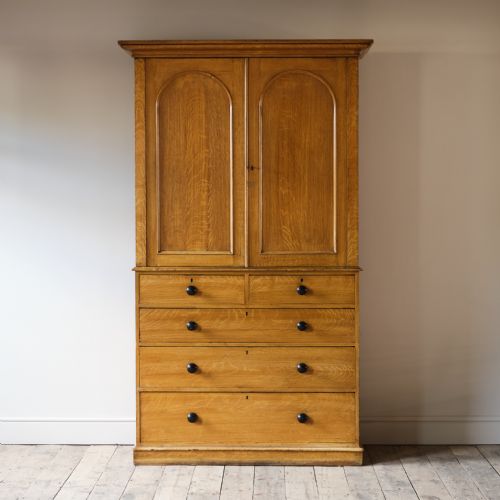
- A tall storage piece traditionally used for flat household textiles, combining upper cupboard space with lower drawer tiers. The interior typically houses sliding shelves known as trays.
- Pitch Pine
- A dense, resinous softwood frequently utilised in nineteenth-century cabinetry for its durability and strong grain pattern. It offers greater hardness than standard white pine.
- Fielded Panel
- A raised central portion of a wooden door or wall panel with bevelled edges designed to fit into a grooved frame. This technique allows the wood to expand and contract safely with humidity changes.
- Compactum
- A multi-compartment wardrobe or storage unit designed to maximise internal organisation with specialised sections for hanging garments, drawers, and shelves. These pieces represent advanced nineteenth-century domestic convenience.
Victorian Pine Housekeeper Cupboard: Frequently Asked Questions
How were housekeeper cupboards used originally?
These large pieces served as the central storage hub in large houses for household linen, dry goods, and provisions. Staff utilised them to keep household supplies secure, organised, and protected from dust.
Over time, their function evolved as modern kitchens and utility rooms took over those storage duties. Today, they translate easily into generous freestanding pantries or wardrobe storage in residential homes.
Are these cupboards made of solid pine?
The vast majority of examples utilise solid pine or pitch pine throughout their main frame, panels, and internal shelving. Timber selection prioritized practical strength and local availability rather than exotic hardwoods.
Construction methods relied on heavy planks and durable joinery to support the substantial weight of stored provisions and household goods. Secondary woods sometimes appear on internal drawer linings or hidden backing boards.
What is scumble paintwork on these pieces?
Scumble paintwork is a decorative glaze technique applied to pine surfaces to mimic the appearance of costly timbers like oak. Artisans worked a translucent darker pigment over a lighter base colour using combs or rags.
Surviving examples with original scumble paint provide a direct record of nineteenth-century decorative preferences. Many pieces retain these historic finishes beneath later layers of wax or paint.
How do you date a nineteenth century pine cupboard?
Dating relies on examining construction methods, hardware types, timber characteristics, and surface paint layers. Earlier nineteenth-century examples often display hand-planed surfaces, pegged joinery, and simpler wrought iron or brass fittings.
Later Victorian and Edwardian pieces tend to show machine-sawn timber, standardised iron hinges, and more complex internal configurations. Comparing panel styles and original paint finishes helps narrow the period of origin.