
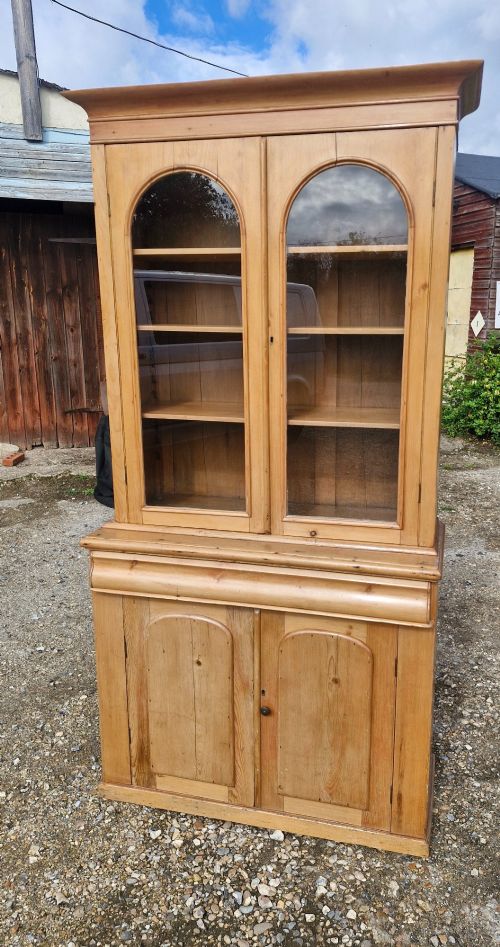
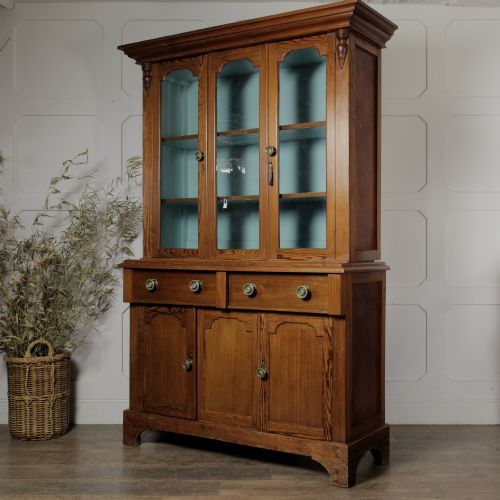
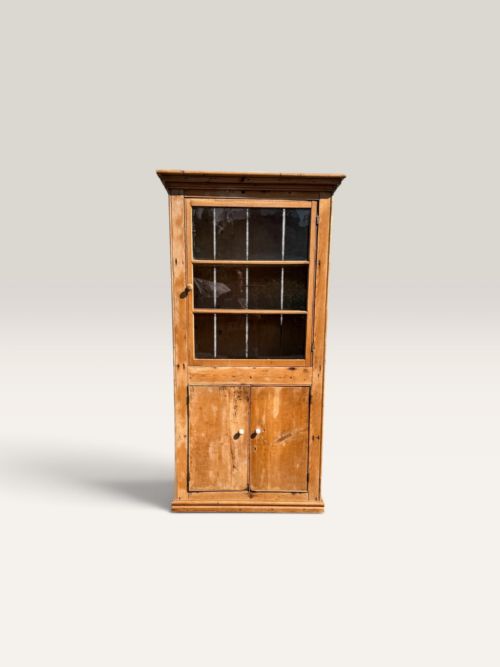
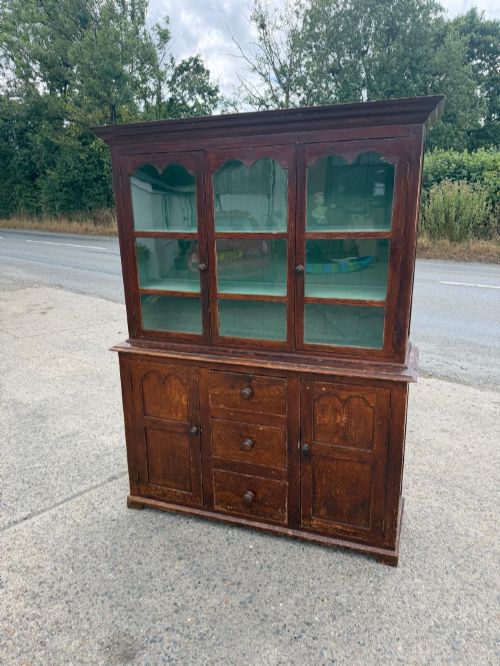
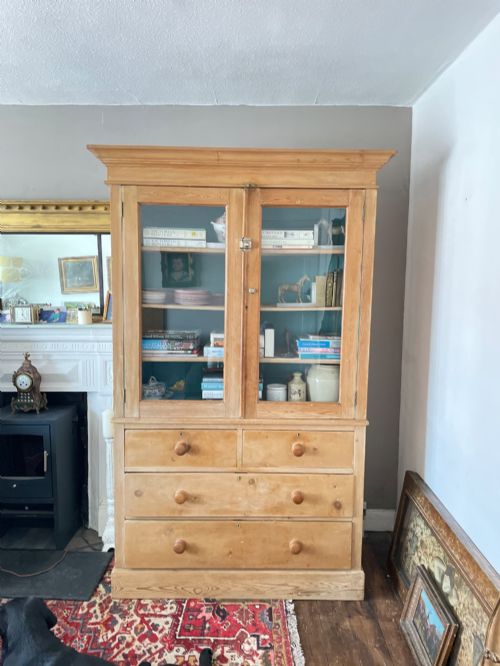
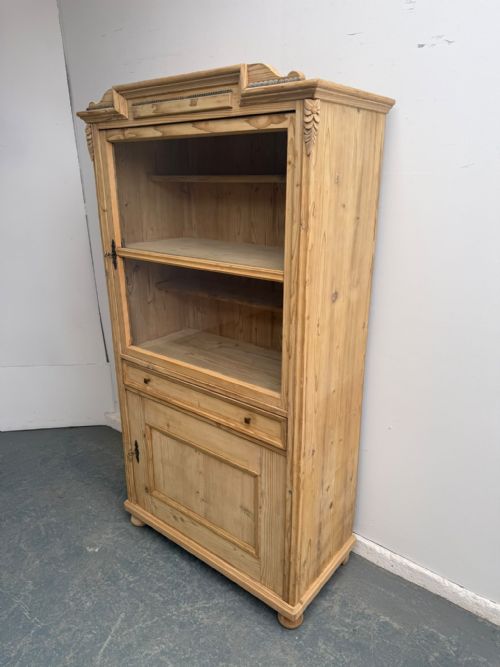
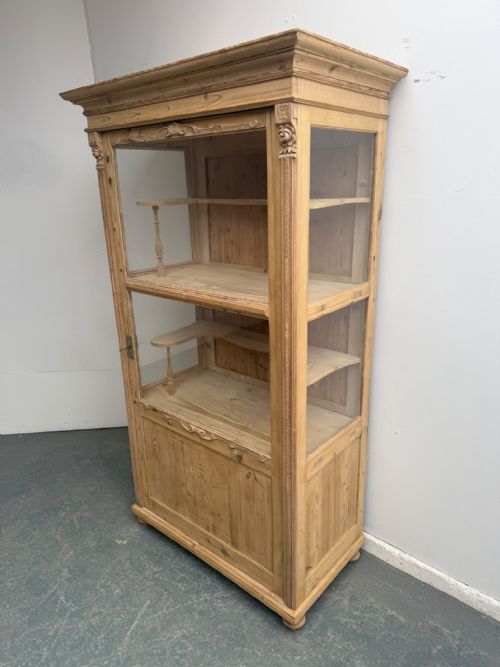
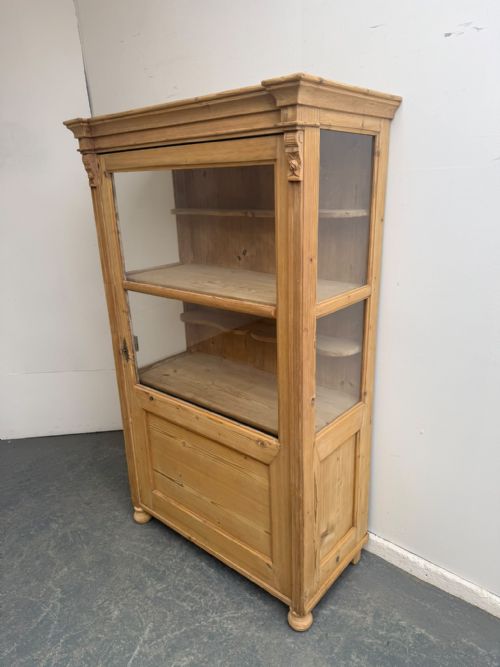


Victorian Pine China Cabinet
A victorian pine china cabinet brings domestic warmth and glazed display space to a room, offering the sturdy utility of nineteenth-century timber.
Victorian Pine China Cabinet
When you search for a victorian pine china cabinet, you encounter sturdy pieces designed for household storage and display during the nineteenth century. The selection spans straightforward glazed cupboards, kitchen dressers with upper shelving, and two-door display cabinets dated across the Victorian era.
Most examples you meet here originate from country workshops or domestic settings, combining utilitarian pine construction with glass-fronted upper sections. Styles range from plain rustic farmhouse forms to architectural Gothic Revival interpretations and scrubmled painted finishes.
Makers built these cabinets to house china, books, and household provisions, creating versatile furniture that serves equally well in modern kitchens and dining rooms. The forms vary from tall bookcase cabinets to compact flat display cupboards intended to hold valued collections.
How they were made
Carpenters constructed these cabinets primarily using standard pine and denser pitch pine, selecting the timber for its workability and strength. Workshops incorporated brass and iron hardware such as hinges and latches to secure doors and drawers.
Glazing bars hold individual panes of glass within the upper cabinet doors, allowing visibility while protecting the contents. Surfaces received various treatments including traditional wax finishes, scrumbled paint, and painted interior decorations.
Listings feature pieces utilising pine, pitch pine, glass, brass, iron, and porcelain across the Victorian period.
What varies in quality
The distinction between standard utility cupboards and finer pieces lies in the proportion of the cabinetry and the detailing of the glazing bars. Cabinets retaining original painted surfaces or distinct Gothic Revival architectural elements command greater interest among collectors.
Construction methods also separate simple vernacular items from more considered workshop pieces, evident in the joinery of the drawers and the thickness of the pitch pine used in the frame.
The Victorian Pine China Cabinet Glossary
- Pitch pine
- A dense, resinous softwood used for nineteenth-century furniture, offering distinct grain patterns and greater durability than standard softwood. It resists wear particularly well in high-use kitchen settings.
- Scrumbled paint
- A decorative paint technique involving translucent layers dragged or mottled over a base coat to imitate finer woods or create textured patterns. This finish appears frequently on country furniture of the period.
- Glazed cupboard
- An upright storage piece featuring glass panes in the doors to display contents safely. These units formed a standard component of Victorian domestic kitchens and parlours.
- Gothic Revival
- An architectural and decorative style drawing on medieval forms, featuring pointed arches and vertical emphasis. Victorian cabinet makers applied these motifs to display cases and bookcases.
Victorian Pine China Cabinet: Frequently Asked Questions
How do I date a pine cabinet?
Dating relies upon construction methods, timber choice, and hardware styles found across the piece. Nineteenth-century examples often display hand-cut joints and original glass panes.
Examining the backboards and interior surfaces reveals tool marks and ageing characteristics typical of the Victorian era.
Were these cabinets painted originally?
Many nineteenth-century pieces received painted finishes or scrumbled decoration to enhance their appearance or match domestic interiors. Stripping became common later, exposing the raw pine underneath.
Surviving original paint layers provide evidence of period decorative choices in country homes.
Can I use a display cabinet in a kitchen?
These cabinets served primarily for kitchen and parlour storage originally, making them suitable for modern kitchen use. Glazed doors keep china and tableware visible while protecting items from dust.
The sturdy pine construction handles everyday domestic environments effectively.
What is the difference between pitch pine and standard pine?
Pitch pine contains higher resin content, providing a harder surface and heavier weight compared to standard softwood. Cabinet makers utilised it for durability in high-use furniture.
The grain appears more pronounced and reddish-brown in tone than regular pine.