

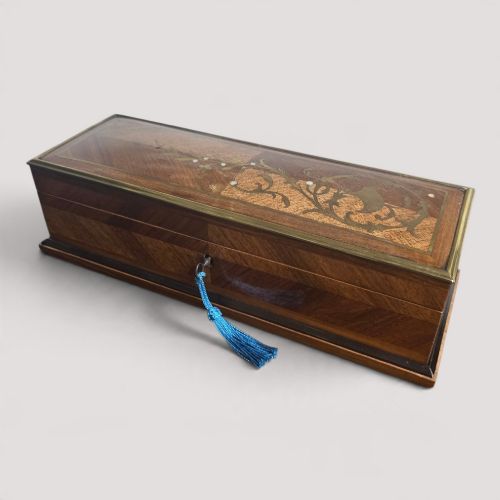
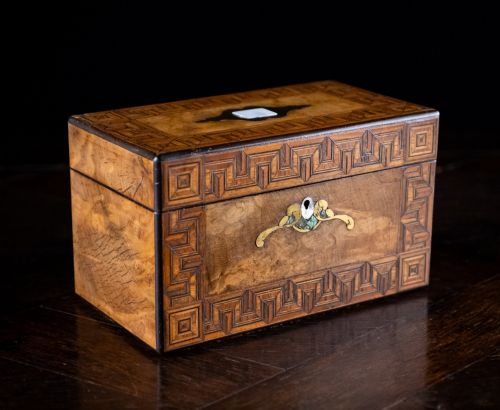


Victorian Parquetry Casket
These Victorian parquetry caskets are decorative wooden boxes featuring geometric inlaid veneers and fitted interiors, prized for holding keepsakes and needlework.
Victorian Parquetry Casket
A Victorian parquetry casket combines decorative utility with intricate surface craft, functioning historically as a tea caddy, sewing box, or keepsake trinket box. The pieces seen here span the nineteenth century, including specific dates from eighteen forty to nineteen hundred.
The dominant forms on this page include work boxes, sewing boxes, and ladies boxes alongside table boxes and tea caskets. Walnut and figured walnut provide the foundational carcase material across the majority of these examples.
The stylistic influence of Tunbridge Ware appears frequently among these caskets, demonstrating regional English woodworking traditions that utilise micro-mosaic techniques. Buyers encounter varied functional compartments within, often retaining original silk linings and bone fittings.
How they were made
Maker workshops constructed these caskets using wood veneers laid over solid carcases, predominantly walnut and rosewood. Surface decoration relies on geometric parquetry and Tunbridge Ware mosaic work.
Inlays incorporate contrasting timbers such as boxwood alongside mother-of-pearl and brass elements to articulate the geometric patterns. Silk interiors and bone details complete the fitted compartments found inside the boxes.
Victorian Parquetry Casket Retail Price Guide 2026
Typical asking prices for victorian parquetry casket among the pieces listed under this phrase on Sellingantiques today, from the lower quarter to the upper quarter. They describe what is for sale here now, not the wider market.
What varies in quality
Quality in a Victorian parquetry casket rests upon the precision of the geometric veneer work and the complexity of the wood selection, such as figured walnut. The crispness of the Tunbridge Ware micro-mosaic patterns dictates the upper tier of execution.
Internal fittings elevate certain pieces, particularly those retaining intact silk linings and original bone or brass hardware. The structural integrity of the box joints and the harmonious alignment of the parquetry panels separate standard utilitarian boxes from finer display pieces.
The Victorian Parquetry Casket Glossary
- Parquetry
- Geometric wood veneer work arranged in repeating patterns to form a decorative surface. This technique creates the chequered and mosaic designs characteristic of these caskets.
- Tunbridge Ware
- A specialised form of British woodwork originating in Kent, using thousands of tiny contrasting wood blocks to form pictorial or geometric motifs. It defines many of the finest lids and panels seen here.
- Caddy
- A small box or chest historically used for storing tea, featuring internal compartments or canisters. In this collection, caddies are part of the broader category of decorative and work boxes.
- Work Box
- A fitted container designed for sewing and needlework implements, housing trays, pins, and threads. These boxes often feature silk linings and specialised bone accessories.
Victorian Parquetry Casket: Frequently Asked Questions
What were these boxes used for?
Victorian parquetry caskets served as functional desktop or parlour containers for precious items, letters, or sewing equipment. Many were specifically designated as tea caddies or ladies work boxes.
Inside, owners organised personal valuables, writing materials, or needlework tools within compartmentalised trays. The inclusion of silk linings and mirrors points to their role in domestic dressing and writing routines.
How do I date a Victorian casket?
Dating relies on timber choices, construction methods, and stylistic markers recorded in the titles, such as specific years between eighteen forty and nineteen hundred. Walnut and rosewood carcases combined with Tunbridge Ware typically point to the nineteenth century.
Internal hardware, such as brass hinges and bone pulls, also assists in establishing the period. Examining the specific type of parquetry and veneer thickness helps confirm whether a piece belongs to the mid or late Victorian era.
Are the interiors usually original?
Many caskets retain their original fitted wooden trays, silk linings, and bone or brass compartments. Preservation varies depending on how heavily the box was used for sewing or keepsake storage over the decades.
Subsequent repairs to the silk or paper linings do occur in nineteenth-century examples. Checking the interior construction alongside the exterior parquetry reveals the extent of any later restoration.
How should I care for a wood parquetry box?
These caskets require stable environmental conditions away from direct sunlight and extreme humidity to protect the delicate wood veneers and boxwood inlays. Gentle dusting with a dry, soft cloth preserves the polished walnut surface.
Harsh chemical polishes should be avoided to protect the historic finish and the mother-of-pearl or brass elements. Proper humidity prevents the tiny mosaic tiles of Tunbridge Ware panels from lifting.