





Inlaid Wood Casket
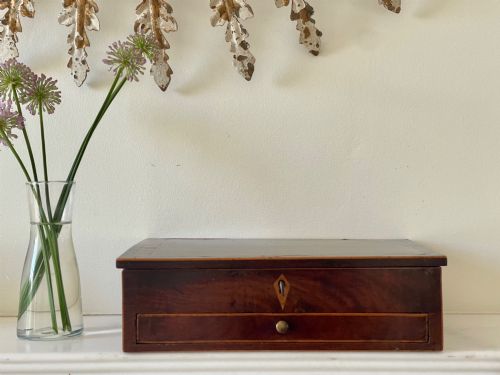
An inlaid wood casket holds letters, jewels and keepsakes, offering a tactile focal point for a desk or dressing table.
Inlaid Wood Casket
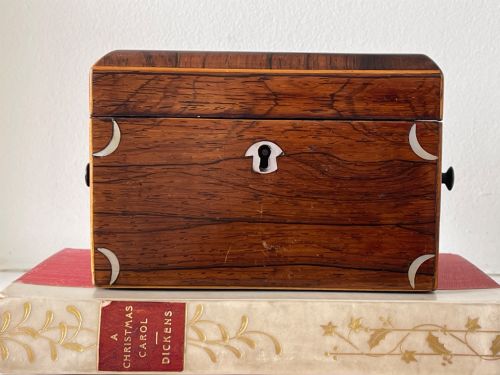
An inlaid wood casket spans small tabletop trinket containers to larger stationery boxes and jewellery cabinets, serving practical storage needs across centuries. Pieces matching this search phrase emerge frequently from the Regency and Victorian eras, alongside select examples from the seventeenth and early twentieth centuries.
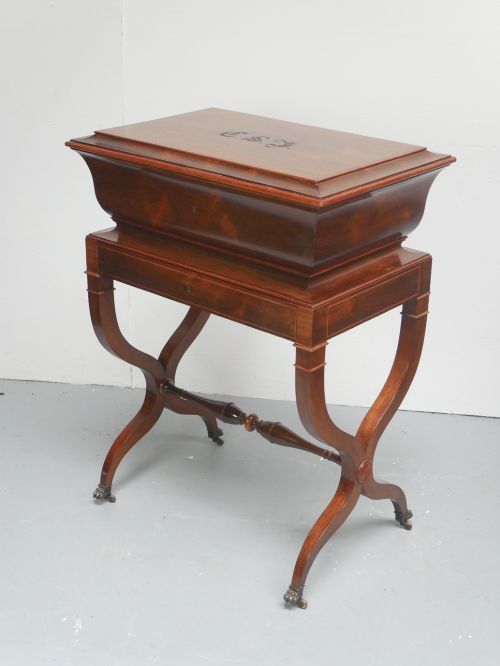
Makers shaped these containers in various forms including tea caddies, sewing chests, glove boxes and desk caskets. Rosewood and mahogany provide the primary structural carcasses, complemented by exotic veneers and contrasting inlay work.
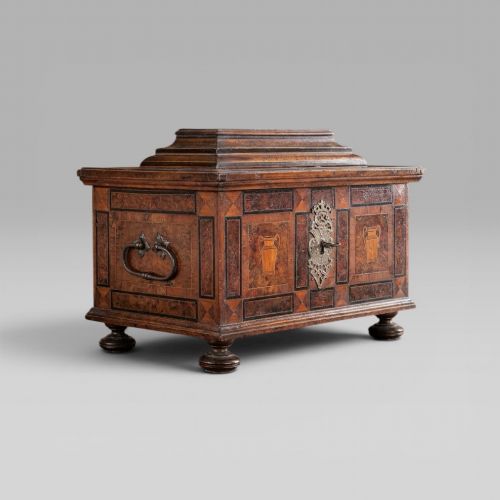
Origins stretch from English workshops to continental centres such as France, Italy and Germany, taking influence from Anglo-Indian and Oriental styles. Buyers encounter both fitted interiors with trays and simpler compartments designed for personal valuables.
Materials and construction
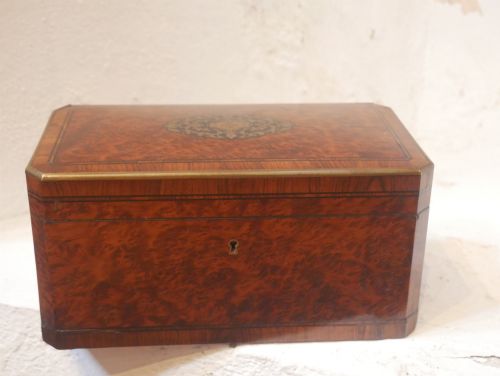
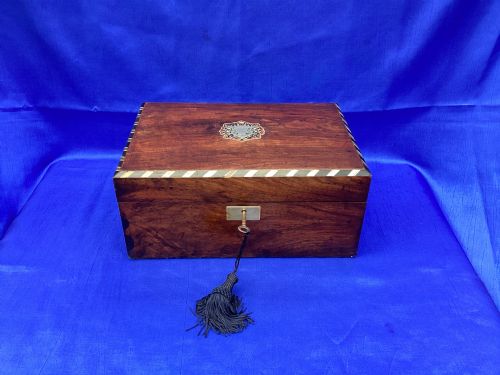
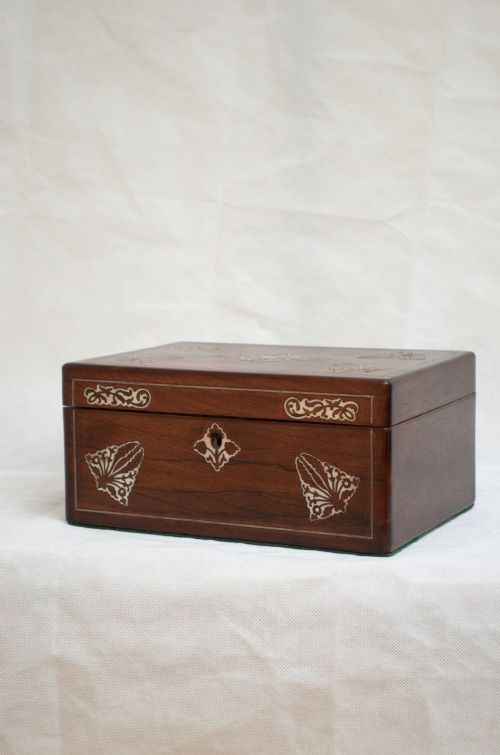
Craftsmen built the underlying carcase from dense timbers such as rosewood, walnut, mahogany and coromandel, often applying finer veneers of amboyna, burr yew or satinwood over the core. Boxwood, ebony and fruitwoods form delicate stringing and contrasting geometric patterns.
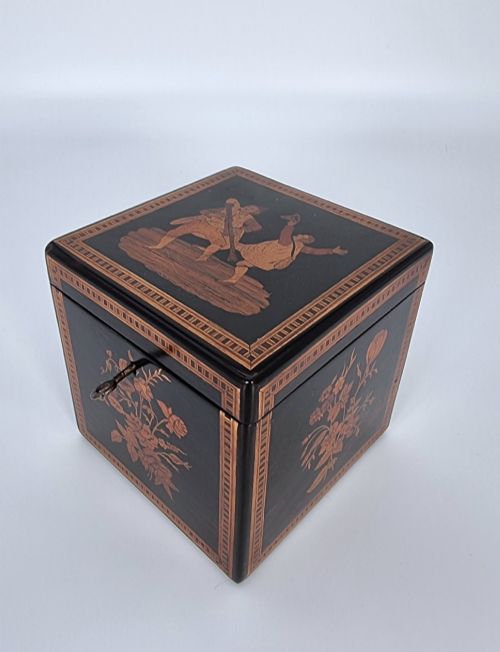
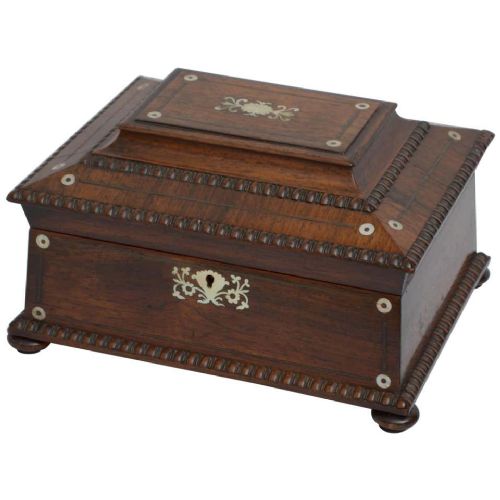
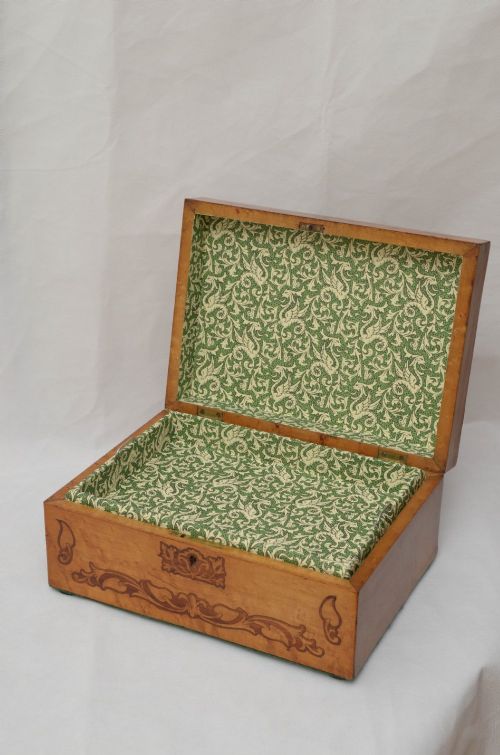
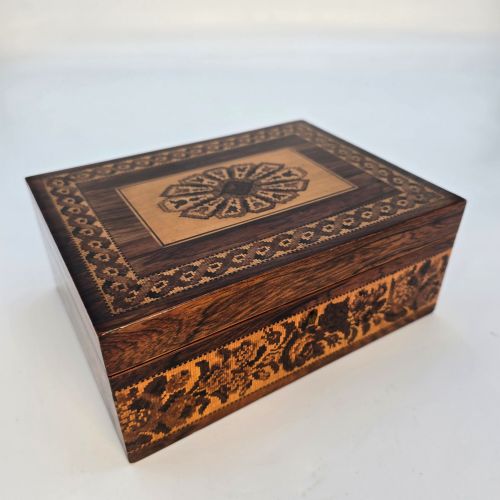
Inlay and marquetry techniques incorporate brass, mother-of-pearl, pewter, bone and tortoiseshell, set flush into the wooden surface. Tunbridge ware examples utilise thousands of tiny tinted wood blocks to create intricate mosaic pictorial scenes.
Internal fittings rely on velvet, silk or paper linings, accompanied by brass locks, campaign handles and escutcheons. Joinery methods include precise mitred corners and dovetailed trays designed to withstand daily handling.
Inlaid Wood Casket Retail Price Guide 2026
Typical asking prices for inlaid wood casket among the pieces listed under this phrase on Sellingantiques today, from the lower quarter to the upper quarter. They describe what is for sale here now, not the wider market.
Porcupine quill boxes bring unexpected prickly texture into the lineup alongside smooth tropical hardwoods.
Judging execution and finish
Quality rests upon the precision of the inlay work and the choice of timber figure. Tighter grain patterns, complex multi-wood marquetry and crisp brass stringing separate superior boxes from plain production pieces.
The sophistication of internal fittings dictates overall grade. Removable velvet-lined trays, secret drawers and original working locks with matching keys elevate a piece above standard utility boxes.
Condition of the veneer and the subtlety of colour ageing influence value. Untouched surfaces retain deep patination, whereas unsympathetic repairs or heavy refinishing obscure the original hand of the maker.
Tahan Paris·Edmund Nye·Lesage
The Inlaid Wood Casket Glossary
- Marquetry
- The art of forming decorative patterns using thin veneers of wood, metal or shell applied to a wooden structure. This technique allows artisans to create pictorial scenes or scrolling foliage across the lid.
- Tunbridge Ware
- A specialised form of woodworking originating from Kent, featuring microscopic mosaic tiles assembled from natural coloured woods. Geometric bands and architectural views typify this meticulous craft.
- Escutcheon
- A protective metal plate surrounding a keyhole, usually cast in brass. It prevents the surrounding wood from bruising when inserting the key.
- Parquetry
- Geometric mosaic woodwork formed by small blocks or veneers arranged in regular patterns like cubes or herringbone. It differs from marquetry through its strict adherence to repeating angles rather than pictorial designs.
- Stringing
- Thin lines of contrasting wood inlaid into the surface to frame panels or edges. Boxwood and ebony strips commonly create this linear definition.
Inlaid Wood Casket: Frequently Asked Questions
What were inlaid wood caskets used for?
These containers served to safeguard correspondence, jewellery, tea leaves, sewing implements and personal trinkets. Wealthy households relied on them to keep valuable items organised and secure in private chambers.
Over time their function shifted toward decorative display on drawing-room tables. Today they continue to hold small keepsakes while adding texture to interior spaces.
How do I distinguish Regency pieces from Victorian ones?
Regency boxes often feature bold cut brass inlay, sarcophagus shapes and rosewood timbers reflecting classical architectural influences. They emphasise restraint and strong linear geometry.
Victorian examples tend toward heavier ornamentation, incorporating mother-of-pearl, Tunbridge ware mosaics and more elaborate fitted interiors. Woods like walnut and coromandel become prominent alongside rosewood.
How should I care for an antique wood box?
Keep the wood away from direct sunlight and steady heat sources to prevent the veneers from drying and lifting. Maintain a stable room humidity to protect old adhesives and linings.
Apply a microcrystalline wax sparingly to nourish the surface polish. Avoid modern chemical sprays that can damage the historical patina.
Are replacement interior linings acceptable?
Fresh silk or velvet linings frequently appear in older boxes because original fabrics wore out through daily use. Professional reupholstery preserves the practical utility of the piece without detracting from its structural integrity.
Collectors generally accept renewed interiors provided the exterior wood and inlay remain undisturbed and authentic to the period.