
Victorian Painted Glass
Victorian painted glass brings together vibrant 19th-century colour and delicate hand-applied detail, offering a decorative focal point for any traditional interior.

Victorian Painted Glass
Victorian painted glass encompasses a diverse array of domestic and decorative items created during the 19th century, featuring hand-applied surface decoration. Buyers encounter everything from table lustres and oil lamps to vases, scent bottles, and architectural leaded windows.
The most common forms on this page include ruby, green, and cranberry glass tableware alongside opaline mantel lustres and decorative glass panels. These pieces reflect the period's fondness for colourful, ornamented vessels and illuminated household fittings.
Originating largely from British and continental workshops, these items demonstrate the widespread popularity of enamel and pigment application on blown or moulded glass surfaces. Each category retains distinct domestic functions, shifting from lighting to display.
Materials and Technique
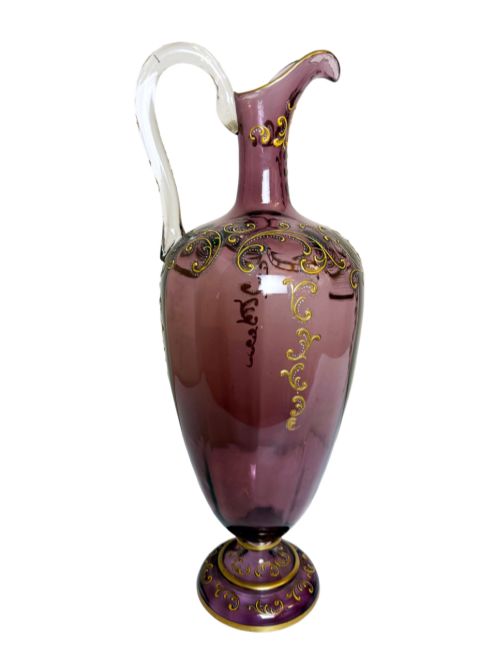
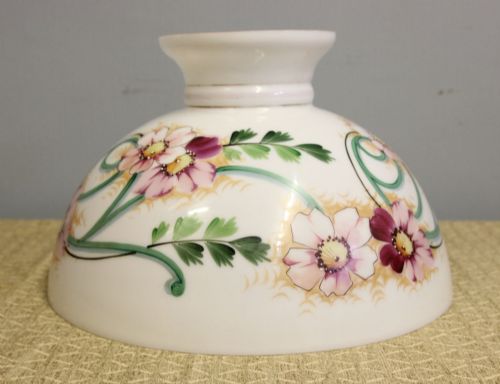
Glass production relied on traditional blowing and moulding techniques, utilising lead crystal, opal glass, and coloured metal oxides to achieve rich base tones like ruby, blue, and amber. Artisans then applied enamel paints, gold leaf, and mineral pigments directly to the hardened surface.
Decoration required careful kiln-firing to bond the painted and gilded details permanently to the glass body. Many items also incorporated brass fittings, bronze mounts, or lead cames to structure larger architectural panels and lamps.
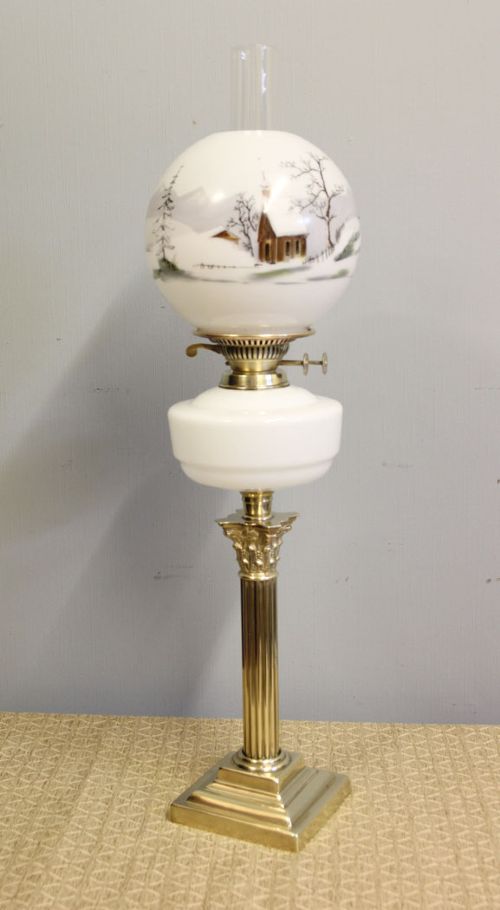
Victorian households enjoyed watching painted glass oil lamp shades cast flickering winter scenes across the parlour ceiling.
Assessing Quality and Execution
Quality rests upon the precision of the brushwork and the complexity of the enamel or gilt application. Fine examples display crisp, deliberate detailing without the smudging or flat opacity seen in mass-produced items.
The weight and clarity of the base glass itself dictate the tier of the piece, with heavier blown vessels and unblemished crystal commanding greater appreciation. Preservation of the original gilding and enamel colours without excessive rubbing determines the integrity of the surviving object.
The Victorian Painted Glass Glossary
- Mantel lustre
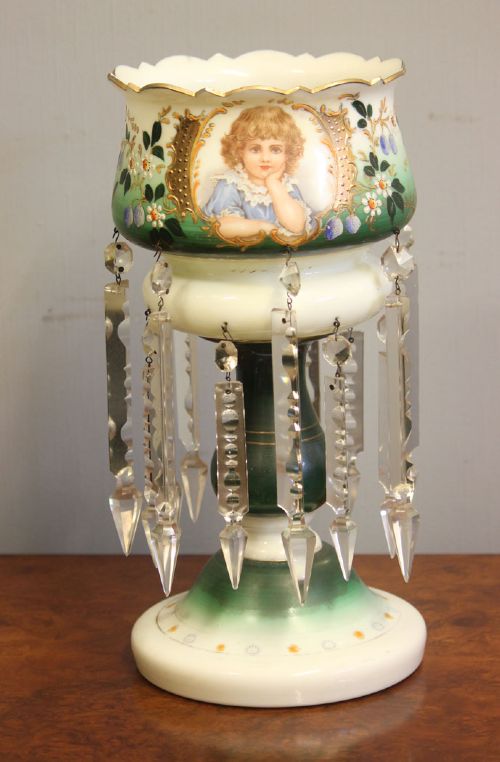
- A decorative glass vase fitted with hanging crystal prisms designed to catch the light, typically displayed on a fireplace mantel. These often feature hand-painted floral motifs.
- Opaline glass
- An opaque, pastel-hued glass popular in the 19th century, varying from white to soft shades of pink or blue. It served as an ideal smooth ground for enamel painting.
- Mary Gregory glass
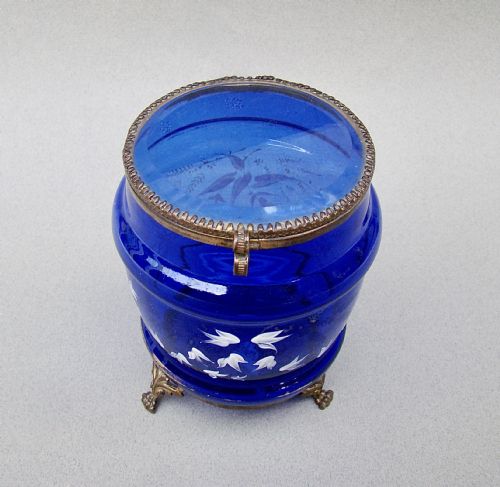
- Glassware decorated with white enamel silhouettes of children, usually engaged in pastoral activities amidst foliage. The technique became widely emulated across the Victorian period.
- Leaded glass
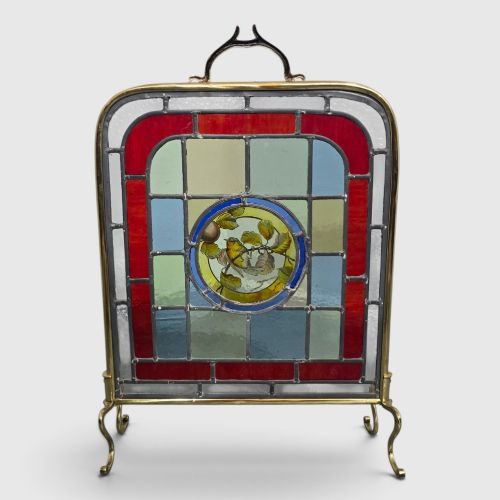
- Small panes of glass held together by strips of lead to form a decorative window or panel. Painted details were frequently fired directly onto the glass segments before assembly.
- Gilt applique
- Applied decorative metal or gold leaf details adhered to the glass surface. This technique added metallic brilliance alongside polychrome enamel work.
Victorian Painted Glass: Frequently Asked Questions
Were these pieces used daily?
Many items, such as decanters, biscuit barrels, and oil lamps, served active daily roles in Victorian households. Others, like mantel lustres and painted windows, remained purely decorative.
Tableware saw frequent handling during dining and entertaining, whereas display items occupied prominent domestic spaces. Today, surviving examples balance functional utility with decorative presentation.
How can I date painted glass?
Dating relies on stylistic clues, colour palettes, and manufacturing methods recorded across the 19th century. Acid-etched marks, pontil scars, and specific Victorian aesthetic preferences help narrow the period.
Archival comparisons with documented makers and registered designs provide further chronological clarity. Examining the wear patterns on the base also indicates age.
Can painted glass windows be installed?
Stained and painted glass windows can be integrated into modern interiors as hanging decorative panels or secondary interior glazing. Professional installation ensures the lead cames support the weight properly.
Securing the panels within wooden frames protects the fragile glass from structural stress. Proper placement avoids excessive direct weathering on antique enamel work.