
Victorian Padded Stool
A victorian padded stool brings tactile comfort and period charm to a room, offering versatile seating or a place to rest tired feet.
Victorian Padded Stool
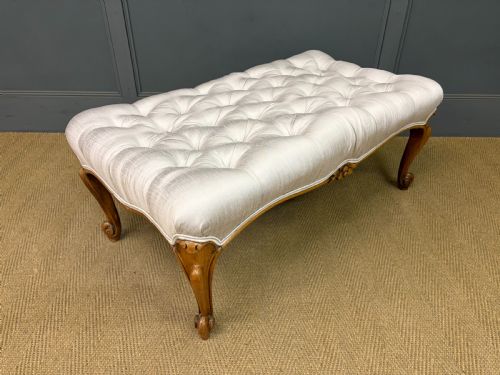
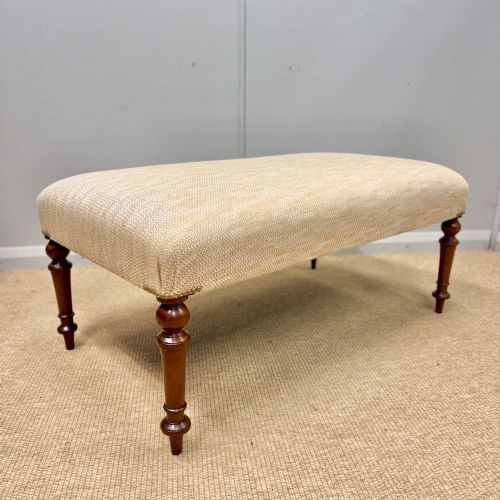
A victorian padded stool encompasses a broad category of low seating, footstools, long benches, and window seats originating across the nineteenth century. These items range from compact domestic footstools to large Scottish baronial pieces and long buttoned ottomans.
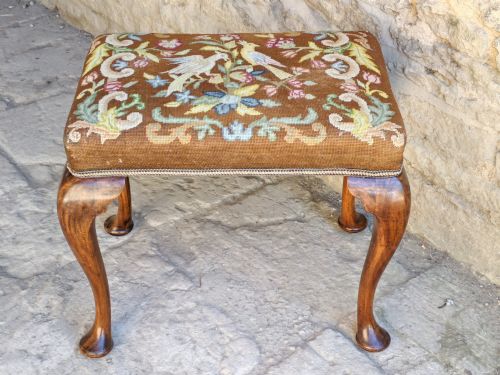
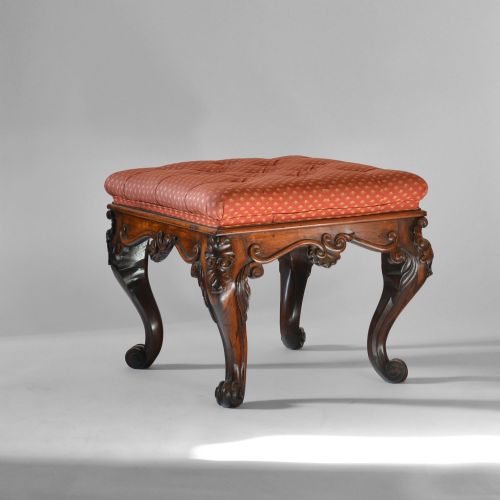
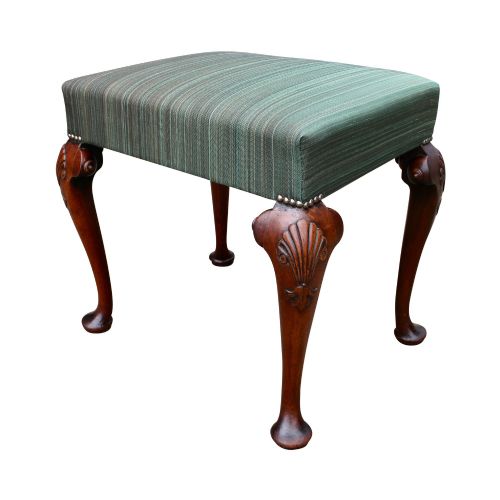
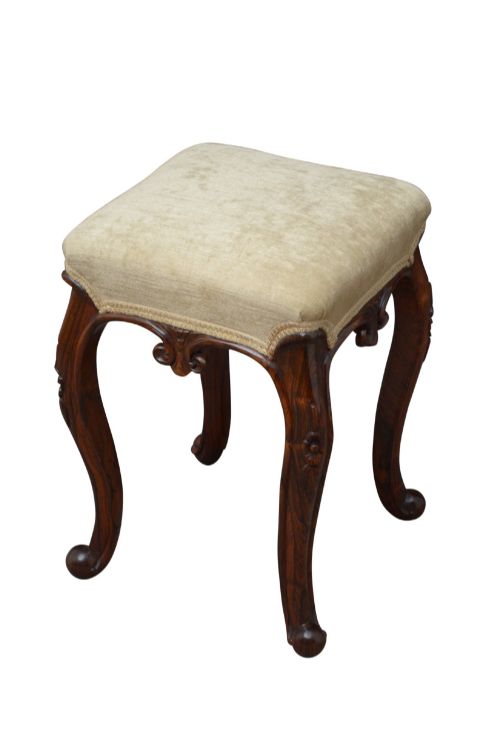
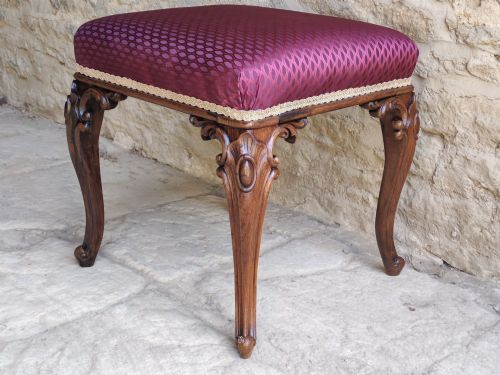
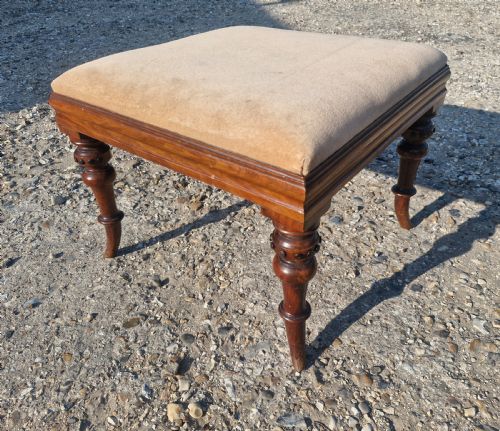
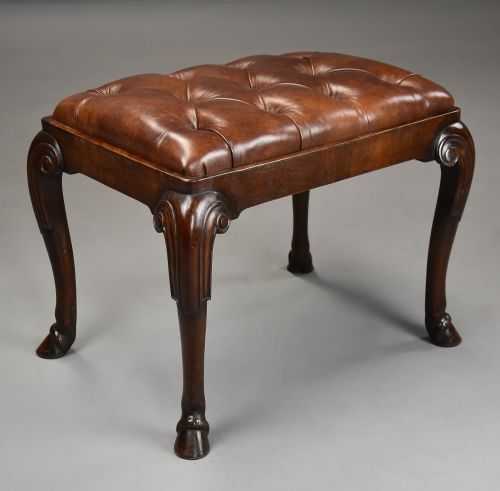
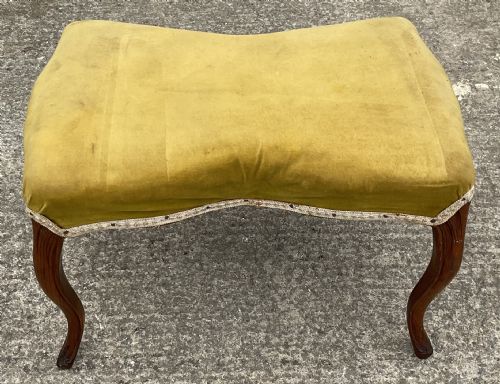
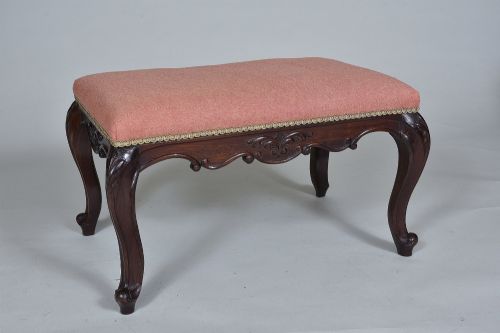
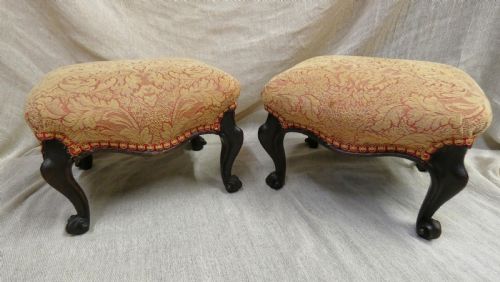
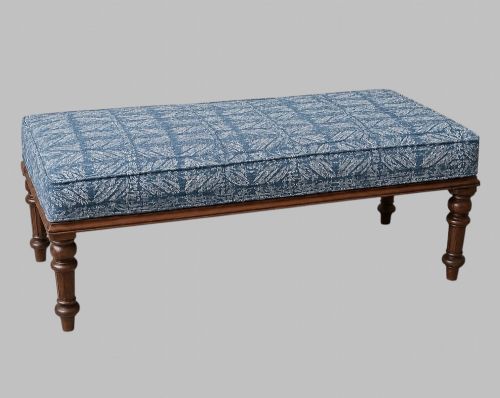
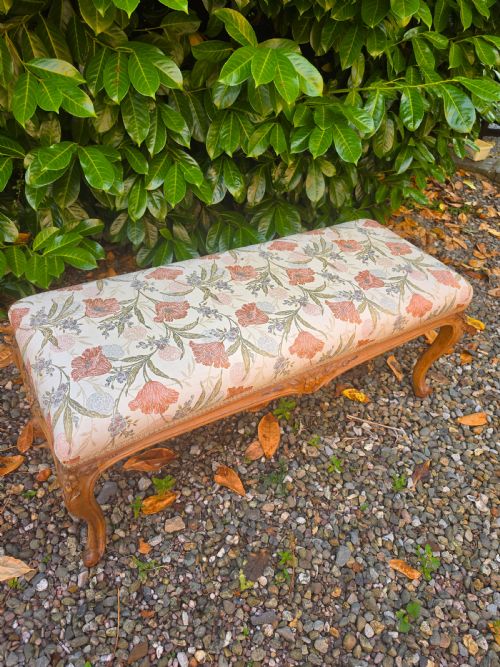
The versions most commonly met on this page combine sturdy timber frames with upholstered tops in various textiles, fabrics, and tapestries. Many examples feature classic cabriole legs, while others display turned, twist, or bobbin supports.
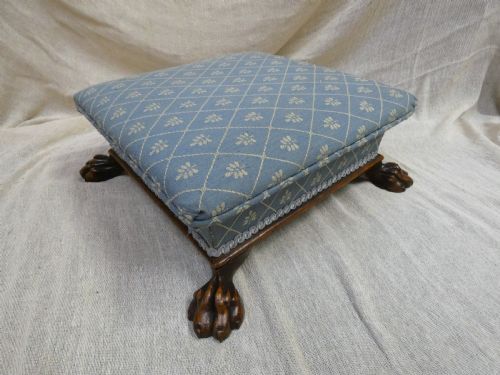
Makers designed these furnishings for multiple domestic settings, including dressing tables, hallways, and living spaces. Some specialist variants serve specific ergonomic functions, such as metamorphic gout stools or low footstools equipped with brass castors.
How they were made
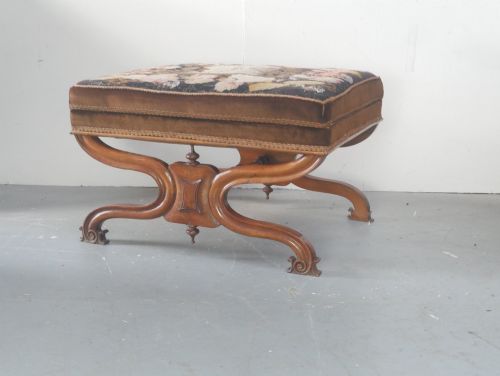
Craftsmen built the structural frames using dense hardwoods like mahogany, walnut, and rosewood, alongside occasional alternatives such as oak, beech, and burr maple. These timbers were frequently carved, ebonised, or stained to achieve specific aesthetic results.
Upholstery techniques involved padding the seating areas with textile, velvet, leather, or tapestry, often secured with buttoning or finished with fresh fabric coverings. Many surviving examples retain original textiles or have received professional reupholstery using traditional methods.
Listings feature timber frames in walnut, mahogany, rosewood, and oak, alongside varied upholstery including leather, velvet, and tapestry.
What varies in quality
The standard of a victorian padded stool depends heavily on the choice of timber and the sophistication of the frame carving. Dense, richly figured woods like rosewood and walnut, combined with finely detailed cabriole or turned legs, distinguish superior examples.
Upholstery execution and frame stability also dictate overall quality. Pieces exhibiting robust joinery, well-sprung or firmly padded interiors, and sympathetic restoration or retention of appropriate textiles hold greater distinction.
The Victorian Padded Stool Glossary
- Cabriole leg
- A furniture leg that curves outward at the knee and tapers inward toward the ankle, ending in a pad or scroll foot. This form appeared frequently on mid-nineteenth-century seating.
- Gout stool
- An adjustable or angled footstool designed to elevate and support the foot or leg of a person suffering from gout. These specialist pieces often incorporate mechanical adjustments.
- Window seat
- A long, narrow form of stool or bench intended to sit beneath a window. These examples often feature padded tops and upholstered ends or backs.
- Ottoman
- A low, upholstered seat or bench typically lacking a back, sometimes incorporating internal storage beneath the hinged top. Larger versions accommodate multiple sitters.
- Bobbin leg
- A furniture support turned on a lathe to resemble a string of beads or bobbins. This decorative turning style appears on mid-nineteenth-century wooden frames.
Victorian Padded Stool: Frequently Asked Questions
Where should I place a victorian padded stool?
These versatile pieces suit various domestic locations depending on their length and height. Compact footstools work well beside armchairs in living spaces, while longer window seats fit naturally beneath sills or at the end of a bed.
Dressing table stools pair neatly with matching vanity furniture in bedrooms. Hall benches provide convenient transitional seating in entranceways and corridors.
How do I identify a Victorian footstool?
Look for characteristic nineteenth-century timber choices such as walnut, mahogany, and rosewood used in the frame construction. Traditional joinery methods and classical revival design elements like cabriole legs offer strong period indicators.
Upholstery styles also provide clues, as many examples feature traditional buttoning, tapestry work, or period textiles. Hardware components, including brass castors, help confirm nineteenth-century manufacture.
Are these stools comfortable for daily use?
Most pieces provide firm, supportive seating thanks to traditional padding techniques and solid wooden frames. Long stools and window seats offer ample space for relaxing or sitting.
Many listings feature newly upholstered surfaces or restored padding designed to ensure everyday practicality. Specialist variants like gout stools offer adjustable angles for targeted foot elevation.
How do I care for antique upholstery and wood?
Protect wooden frames from direct sunlight and dramatic humidity changes to prevent timber cracking or warping. Dust carved details gently with a dry or slightly damp cloth without harsh chemical polishes.
Vacuum upholstered fabric surfaces carefully using a low suction attachment to remove surface dust. Address spills immediately by blotting rather than rubbing the textile covering.