


Antique Needlework Footstool
An antique needlework footstool brings texture and craft to a room, offering low seating or a place to rest tired feet.
Antique Needlework Footstool
When you search for an antique needlework footstool, you look for low timber frames topped with hand-stitched textiles. These pieces combine practical support with decorative surface work.
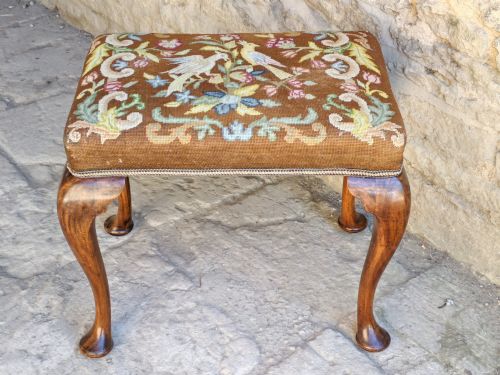
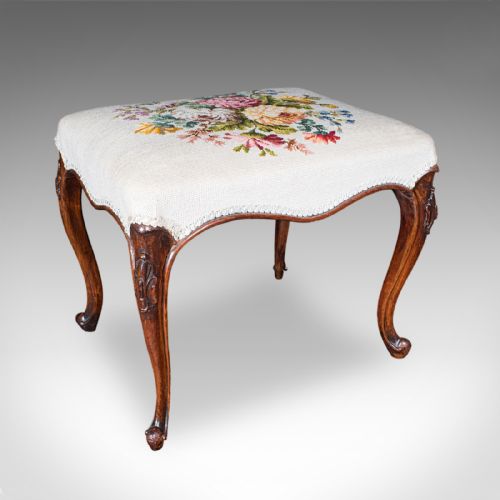
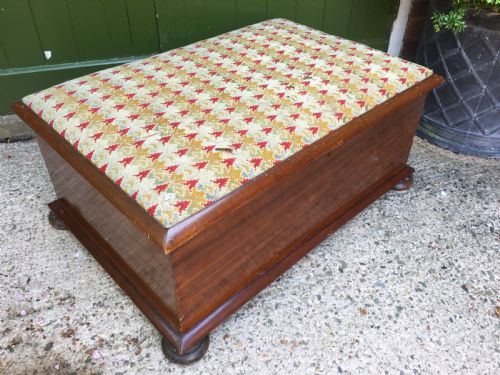
The selections here span from the Regency and William IV eras through the Victorian period and into the nineteen twenties. You encounter mahogany, walnut and rosewood structures carrying wool tapestry, needlepoint and beadwork seats.
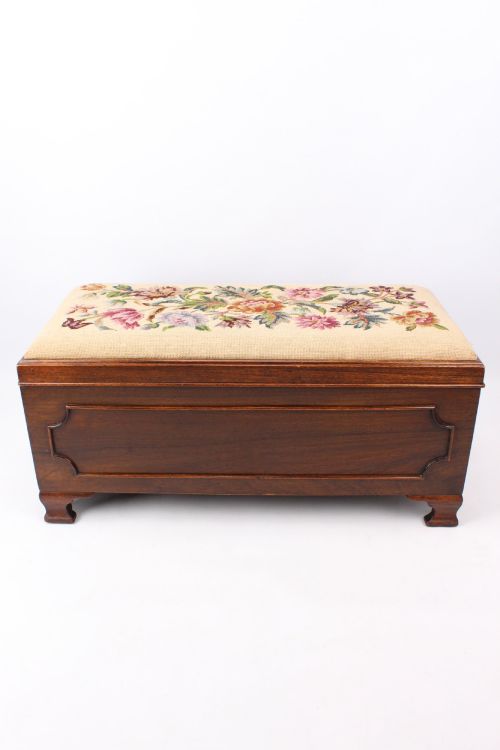
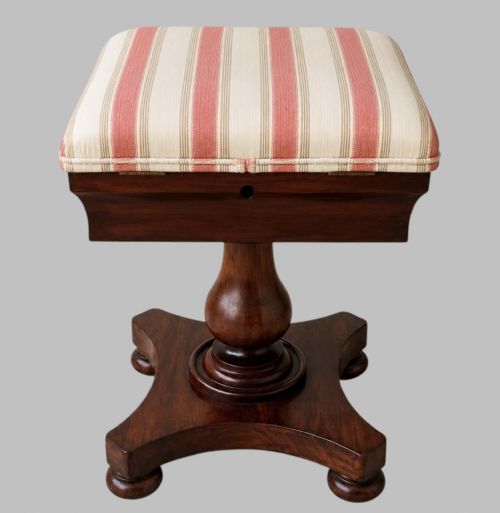
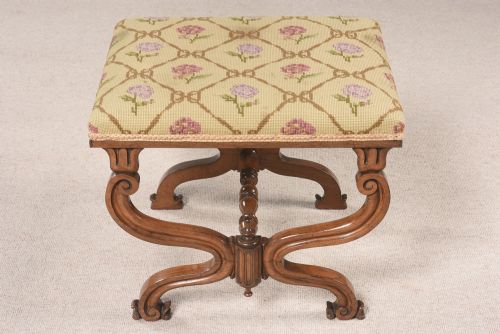
Stools take various forms, including straightforward rectangular frames, X-frames, oval shapes, and combined sewing box work tables. Frames draw on revival styles such as Queen Anne, Chippendale and Louis XV alongside Italian Neoclassical designs.
Materials and construction
Frames rely on solid hardwoods like mahogany and walnut, shaped by turners and joiners to form sturdy supports. Timber surfaces often display natural grain patterns or painted finishes.
Seats feature textile work created using wool yarns and glass beads. Artisans worked needlepoint, gros-point and tapestry stitches onto canvas grounds before mounting the finished panels onto the wooden bases.
Listings feature woods like walnut and mahogany alongside wool tapestry, needlepoint and glass bead seats.
Assessing craftsmanship and finish
Quality rests in the crispness of the timber carving and the tightness of the joinery. Finer frames show careful proportion and stable construction that withstands everyday use.
The needlework itself reveals the skill of the maker through regular tension, detailed colour shading and secure attachment to the seat frame.
The Antique Needlework Footstool Glossary
- Needlepoint
- A type of canvas work embroidery stitched with wool or silk yarns. This forms the patterned top seen on many period stools.
- Gros-point
- A coarse needlepoint stitch worked on canvas, often used for durable upholstery. It provides a heavy, textured surface.
- X-frame
- A stool structure supported by intersecting diagonal legs. This design appears in various nineteenth century seating forms.
- Ottoman
- A low, upholstered seat without arms or back. Larger examples accommodate needlework or tapestry covers.
Antique Needlework Footstool: Frequently Asked Questions
What is an antique needlework footstool?
It is a low wooden frame with a hand-stitched textile seat designed for resting feet or sitting.
Craftsmen built these pieces from hardwoods like mahogany and walnut during the nineteenth and early twentieth centuries.
How do I date an antique footstool?
Dating relies on timber selection, frame style and the type of needlework employed. Pieces range from Regency rosewood designs to Victorian walnut X-frames and later nineteen-twenties creations.
Revival styles such as Queen Anne and Chippendale also offer clues to the period of manufacture.
What woods were used for these stools?
Common timbers include mahogany, walnut and rosewood. Craftsmen selected these hardwoods for their strength and rich grain.
Some examples also feature painted wooden frames.
How do I care for needlework upholstery?
Keep textile seats away from direct sunlight to prevent fading of the wool yarns. Gentle brushing helps remove dust from the tapestry surface.
Ensure the wooden frame remains in a stable environment with moderate humidity.