


Brown Tapestry Stool
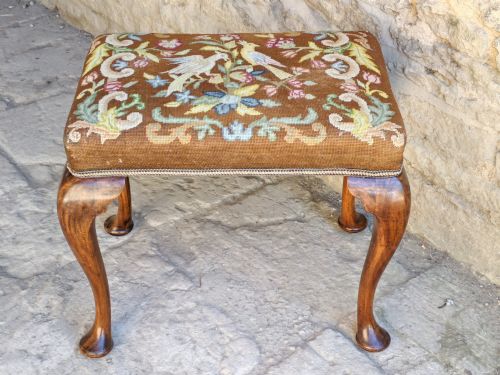
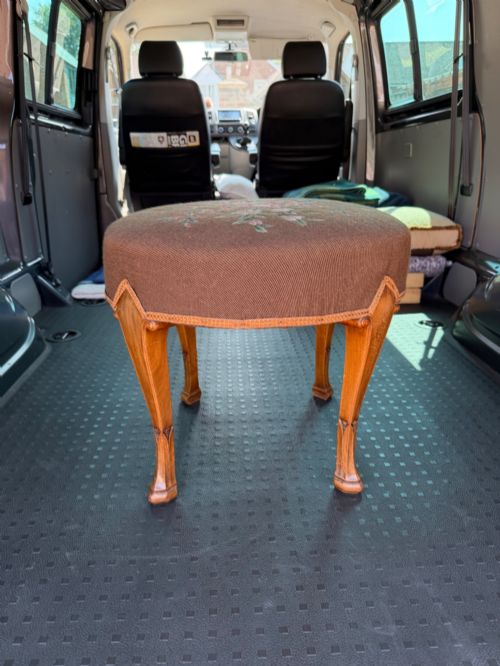
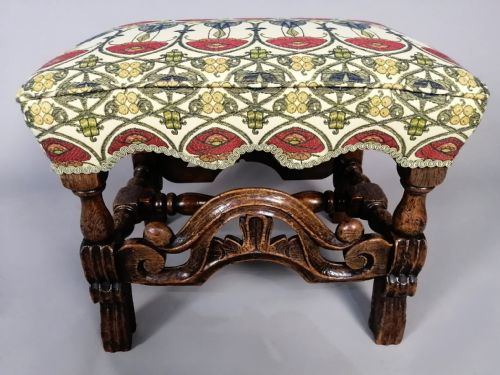
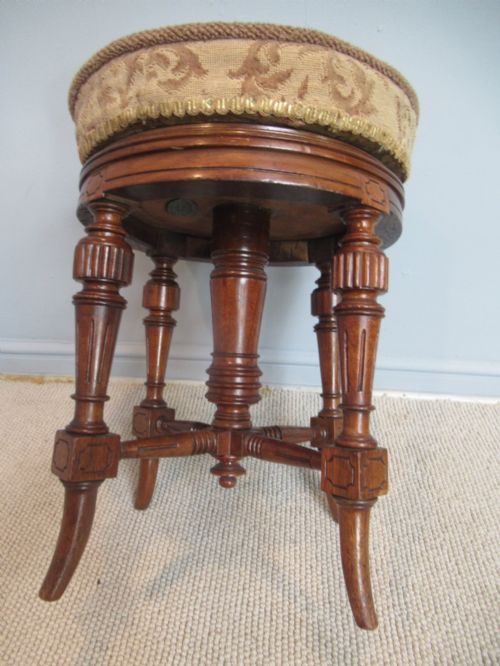
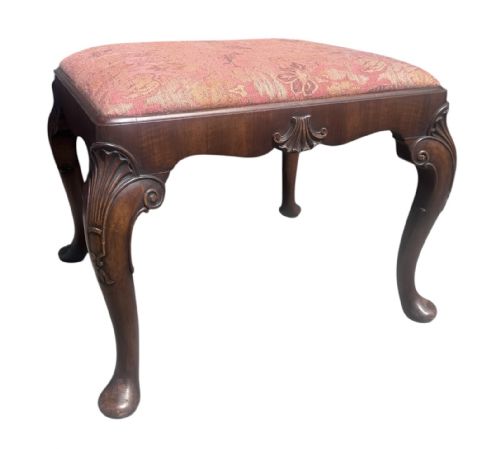
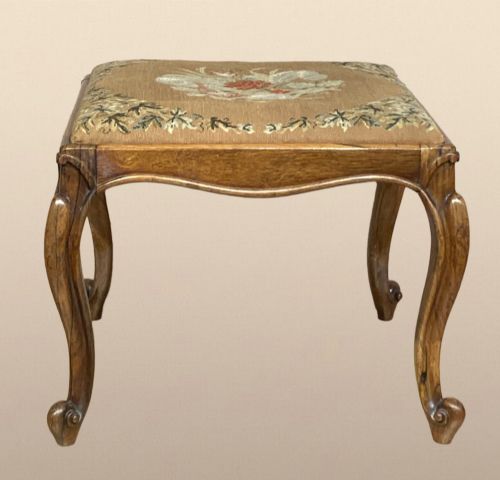
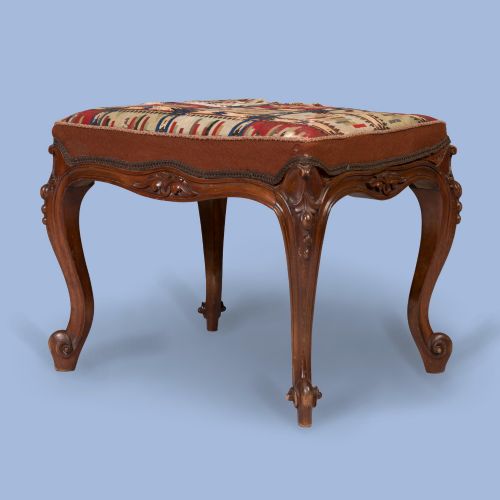
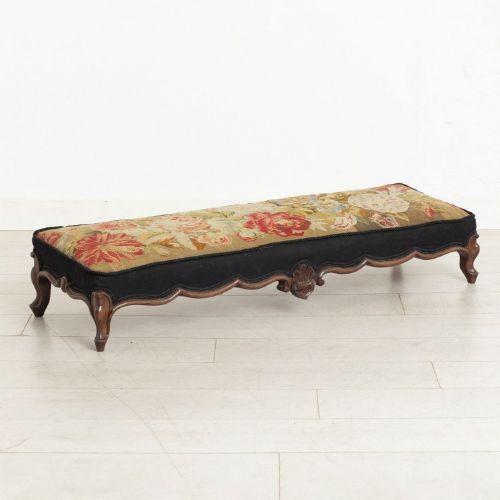
Brown tapestry stool choices range from compact Victorian footstools to grand Queen Anne style mahogany seats.
Brown Tapestry Stool
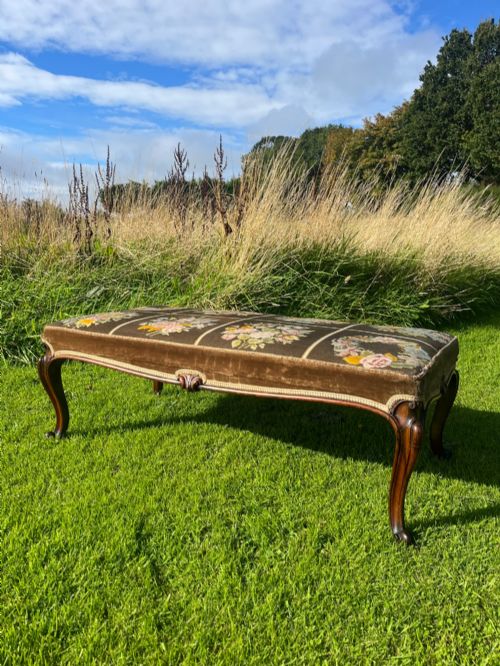
A brown tapestry stool brings traditional seating to a room, functioning as a footstool, dressing table seat, piano stool or low window bench. These pieces appear across several centuries, spanning seventeenth century oak up through eighteenth century walnut and Victorian rosewood and mahogany forms.
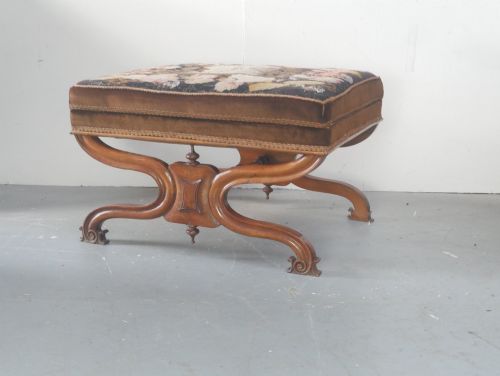
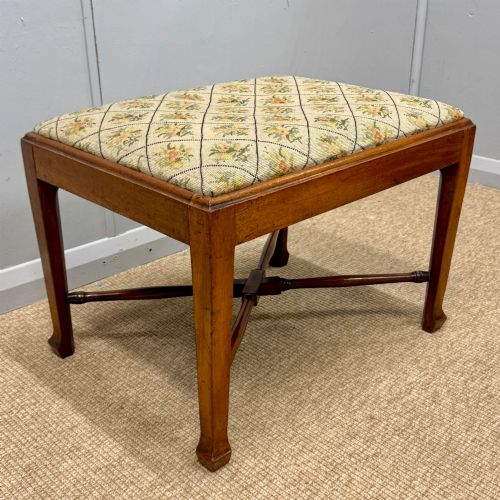
The most common examples on this page are Victorian and early twentieth century walnut or mahogany frames paired with needlepoint or tapestry fabric covers. Variations include revolving mechanisms, X frames, cross stretchers, box seats, and carved cabriole legs.
Makers and styles stretch from simple vernacular oak to revival pieces mimicking Queen Anne, Georgian, Carolean and French Rococo designs. Scottish Baronial and Art Nouveau examples also surface among the wider selection of stools and ottomans.
Materials and construction
Timbers used for the frames rely heavily on solid walnut, mahogany, rosewood and oak, shaped into cabriole legs, straight supports or cross stretchers. Brass details sometimes appear on castors or hardware.
Upholstery relies on textile, fabric, velvet and needlepoint tapestry work, often secured over traditional stuffing and webbing. Needlepoint covers frequently feature detailed floral or figural wool and silk stitching.
One particularly spirited Victorian window stool comes complete with carved hunting dog heads keeping watch at the corners.
Judging the work
Quality rests upon the crispness of the timber carving, such as detailed cabriole legs, carved hunting dog heads, or elaborate friezes. Dense hardwoods like walnut and mahogany provide durable framing that outlasts softer woods.
The needlepoint or tapestry cover dictates much of the character, where densely worked wool, intricate petit point stitching, and original textile covers separate standard production from finer artisan pieces.
Whytock and Reid
The Brown Tapestry Stool Glossary
- Needlepoint
- A type of canvas work embroidery executed with a wool or silk yarn covering the mesh ground completely. These stitched panels form the decorative tops of many period footstools.
- X frame
- A structural base formed by intersecting diagonal timbers that cross beneath the seat. This configuration appears on window stools and dressing seats for added rigidity.
- Cross stretcher
- Wooden rails connecting the lower legs horizontally in an X formation to reinforce the frame. They provide structural stability while adding decorative profile to dressing table stools.
- Box seat
- A stool construction where the upper section lifts to reveal an internal compartment for storage. These versatile pieces combine seating with concealed utility.
Brown Tapestry Stool: Frequently Asked Questions
How do I date a brown tapestry stool?
Dating relies on timber choice, leg style, and construction methods. Walnut and oak dominate earlier centuries, while Victorian and Edwardian pieces often utilise rosewood or mahogany alongside machine-assisted joinery.
Upholstery materials and tack types also offer clues, though many pieces have been recovered over their lifespan. Comparing the frame's carved motifs to known revival periods helps narrow down the decade of production.
What is the difference between a footstool and an ottoman?
Footstools generally sit lower to the ground and serve primarily to support feet while seated. Ottomans tend to be larger, sometimes functioning as low benches or providing internal storage beneath a box seat.
Both forms share similar wooden framing and tapestry upholstery, but their scale and intended placement within a room differ.
Are tapestry covers original?
Some pieces retain their original Victorian or antique needlepoint covers, while others have been reupholstered during restoration. Original covers show authentic wear and fading consistent with age.
Examining the underside reveals the webbing, tacks, and lining fabric which help determine whether the upholstery dates to the period of the wooden frame.
How do I care for antique wood and tapestry?
Keep wooden frames away from direct sunlight and heat sources to prevent timber from drying and splitting. Regular dusting with a dry cloth maintains the finish without moisture damage.
Tapestry and needlepoint covers require gentle vacuuming through a mesh screen to protect delicate wool fibres from abrasion.