


Victorian Oval Wall Glass
Victorian oval wall glass brings immediate nineteenth-century elegance to a room, offering functional reflection within ornate or carved frames.
Victorian Oval Wall Glass
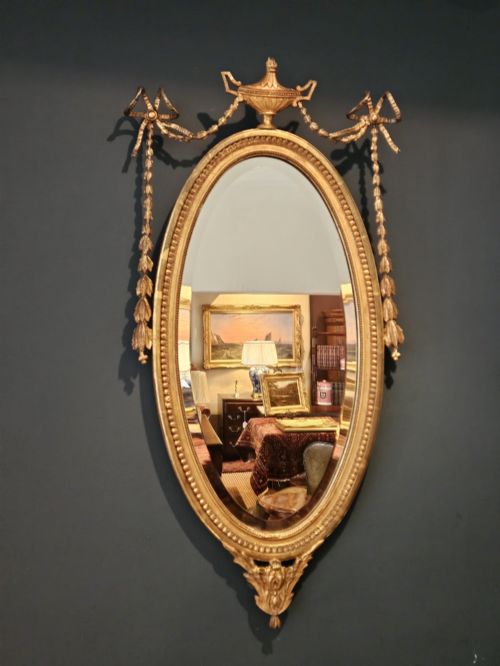
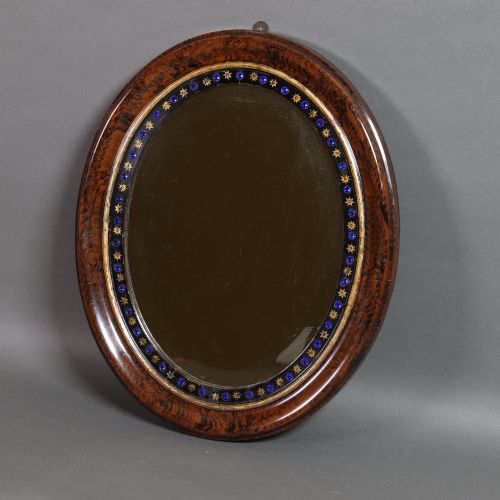
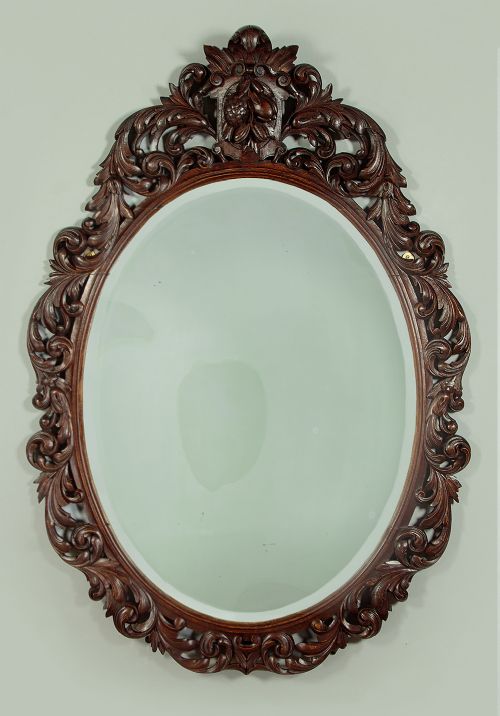
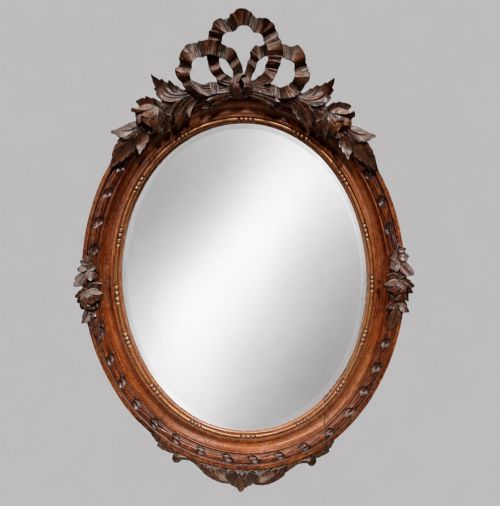
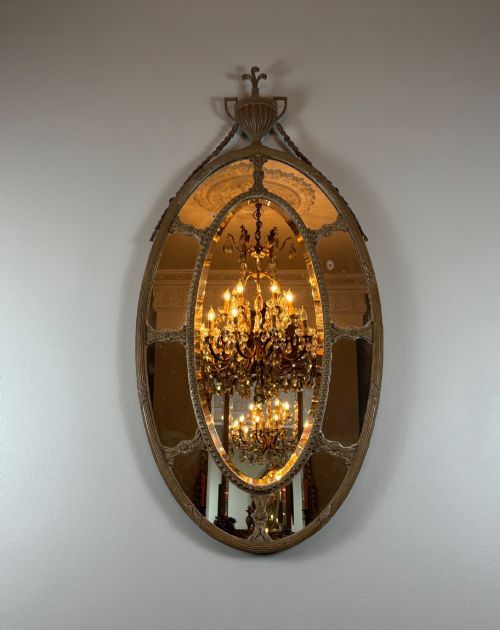
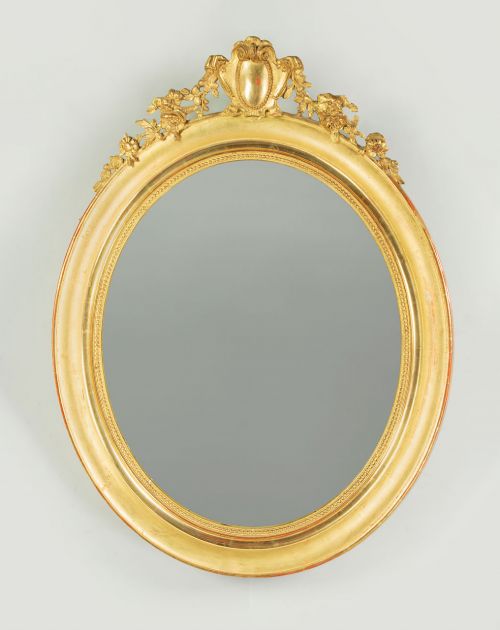
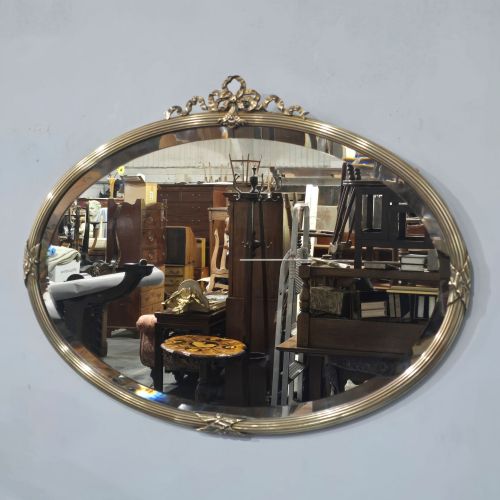
A Victorian oval wall glass is primarily encountered as a wall-hanging mirror or an overmantel mirror dating from the nineteenth century. These pieces emerge in styles ranging from Rococo Revival and Neoclassical Revival to Louis XVI Style, often taking the form of large pier or hall mirrors. The selection spans decades from the mid-nineteenth century through to nineteen hundred, demonstrating diverse regional influences including French and Middle-Eastern design.
Buyers will find frames shaped from timber such as oak, mahogany, walnut, and burr yew-wood alongside pieces finished with giltwood, gesso, composition, and brass. Many examples incorporate decorative elements like urns, swags, and fretwork, while others present simpler designs with bevelled glass. Pairs of mirrors also appear within the evidence, offering matched symmetry for larger interior spaces.
Materials and Technique
The construction of these mirrors relies heavily on traditional woodwork joined with moulded ornamentation in gesso and composition over a wooden base. Carved frames utilise timbers such as oak, walnut, and mahogany, shaped by hand to create intricate borders and architectural details. Giltwood examples receive layers of gold leaf applied over preparatory grounds, creating the lustrous surfaces seen on nineteenth-century decorative pieces.
Glass plates are frequently bevelled at the edges to catch the light, set securely within original wooden or metallic fittings. Ormolu mounts and brass elements appear on specific pieces, fastened alongside detailed carvings of swags, urns, and floral motifs. These combined techniques produce sturdy wall glasses designed to withstand decades of domestic use.
Materials recorded across the inventory range from giltwood, gesso, and brass to solid woods like mahogany, oak, walnut, and burr yew-wood.
Craftsmanship and Proportion
Quality in a Victorian oval wall glass rests upon the depth and crispness of the hand-carving or the modelling of the gesso and composition ornaments. Superior pieces display sharply defined swags, urns, and foliate scrolls that retain their original spatial integrity without heavy clogging from successive layers of over-gilding.
The choice and treatment of materials also dictate the standing of a piece, from finely figured mahogany and burr yew-wood to substantial giltwood frames with intact original fittings. The integration of bevelled glass plates and well-balanced proportions separates impressive larger wall mirrors from standard decorative examples.
The Victorian Oval Wall Glass Glossary
- Gesso
- A plaster-like mixture applied to a wooden frame to create a smooth surface for gilding or painting. It is frequently moulded into decorative reliefs.
- Composition
- A durable mixture of whiting, resin, glue, and linseed oil pressed into moulds to form decorative ornamentation. This material was widely used as a cost-effective alternative to hand-carved wood.
- Giltwood
- Timber that has been coated with thin sheets of gold leaf. It defines many of the ornate wall mirrors from the nineteenth century.
- Bevelled Glass
- A mirror plate with edges cut and polished at an angle. This technique creates a prismatic border that catches and refracts light.
- Overmantel Mirror
- A large mirror designed specifically to be hung above a fireplace mantelpiece. These pieces often feature grand proportions and horizontal or vertical orientation.
- Pier Mirror
- A tall mirror positioned on the wall space between two windows, known as a pier. They frequently match console tables placed below them.
Victorian Oval Wall Glass: Frequently Asked Questions
How do I hang a heavy Victorian mirror?
These substantial pieces require secure fixings anchored directly into wall studs or masonry using heavy-duty brackets. Professional installation ensures the weight of the timber and glass is properly supported.
Check that the original hanging rings or newer reinforced wire on the reverse can bear the load before mounting the glass at eye level.
Where should I place an oval wall glass?
Oval mirrors suit narrow wall spaces, hallways, and above mantelpieces where their curved frames soften linear architectural elements. Positioning them opposite a window helps maximise natural light within a room.
Consider the scale of the surrounding furniture to ensure the mirror anchors the space harmoniously.
How do I clean antique gilt frames?
Dust gilt gesso and composition frames gently with a very soft, dry brush to avoid disturbing the delicate surface. Moisture can damage old gilding and cause the underlying gesso to soften.
Keep chemical cleaners away from both the frame and the glass to preserve the original nineteenth-century materials.
What defines Rococo Revival style?
Rococo Revival design embraces asymmetrical scrolls, organic shell motifs, and exuberant floral carvings. It draws inspiration from eighteenth-century French aesthetics adapted by Victorian makers.
Mirrors in this style display curving, fluid frames that reject rigid geometric symmetry.