


Victorian Oval Tilt Table
A Victorian oval tilt table combines clever pivoting mechanics with rich timbers to serve grand dining rooms and smaller drawing rooms alike.
Victorian Oval Tilt Table
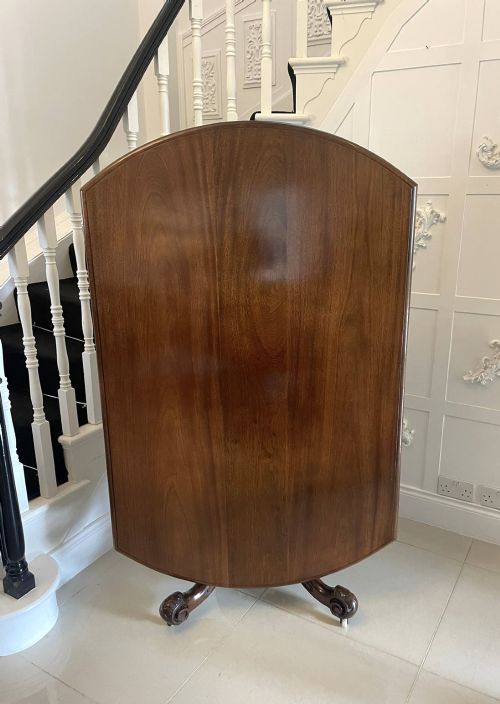
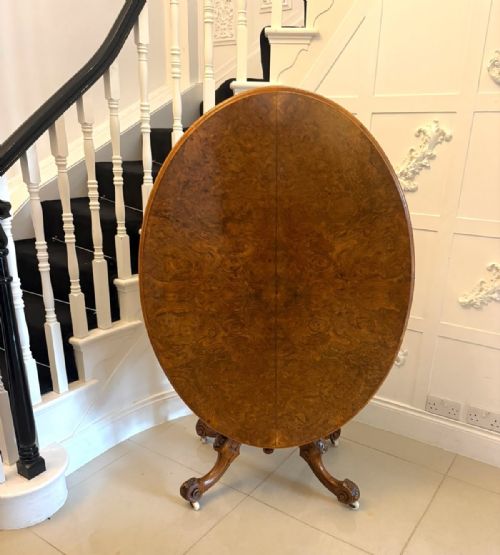
A victorian oval tilt table is a versatile piece designed to pivot on a central pedestal and save space when not in use. The examples you encounter on this page span the Victorian period, alongside occasional nineteenth-century Scandinavian and Biedermeier variations.
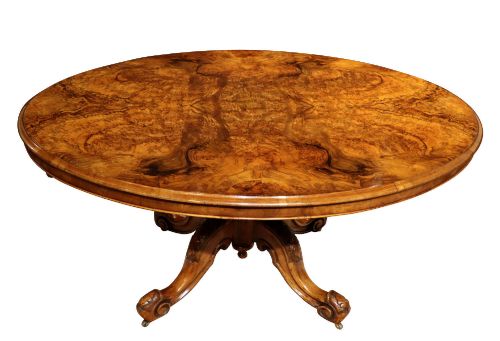
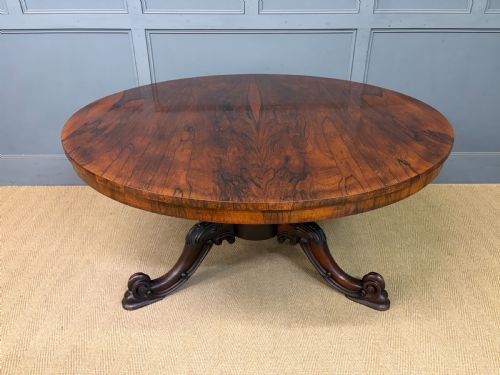
Makers fashioned these tables from timber veneers and solid woods, frequently mounting them on carved quadrapod or tripod bases. They functioned as multi-purpose furniture in nineteenth-century homes, transitioning easily from tea service to social gatherings.
How They Were Made
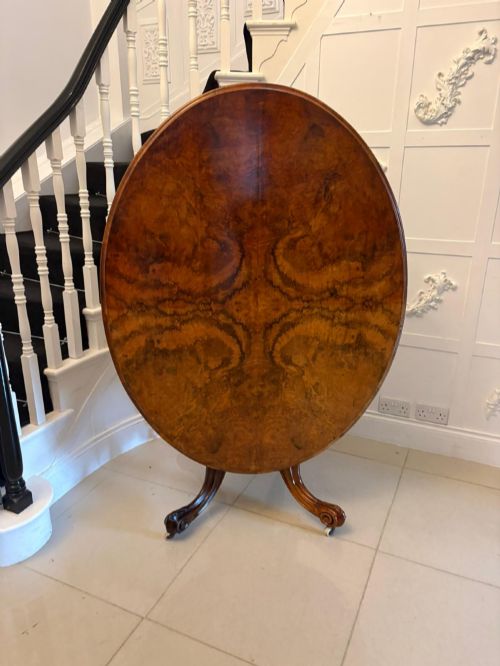
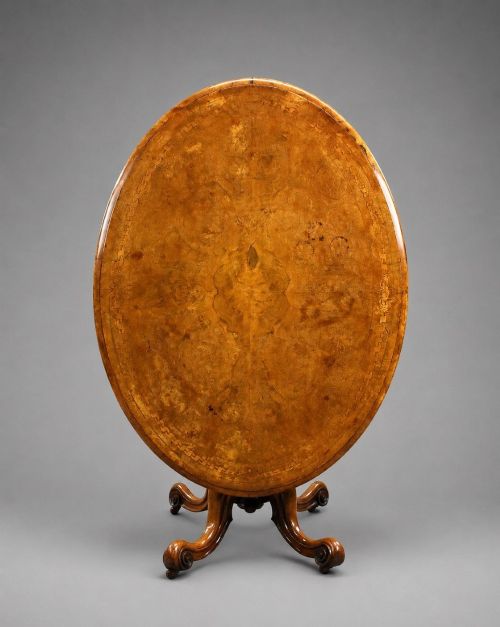
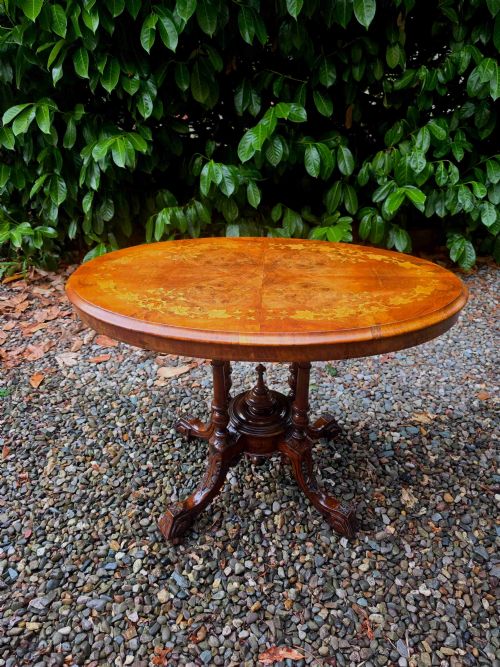
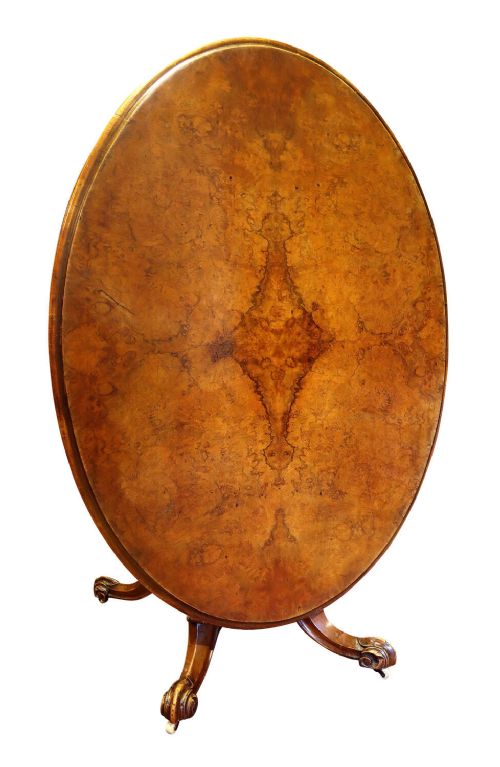
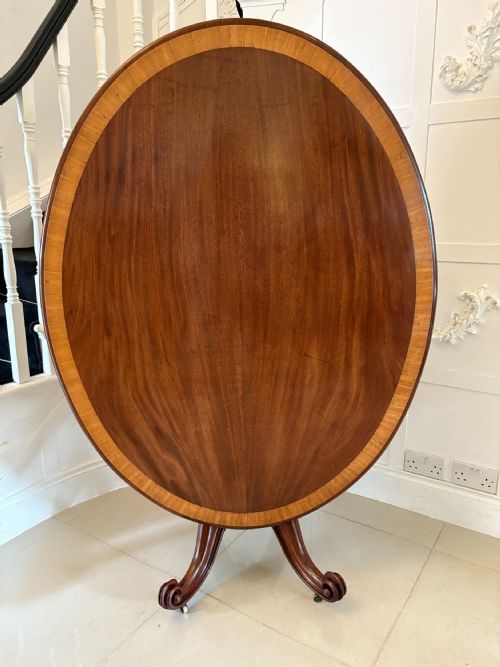
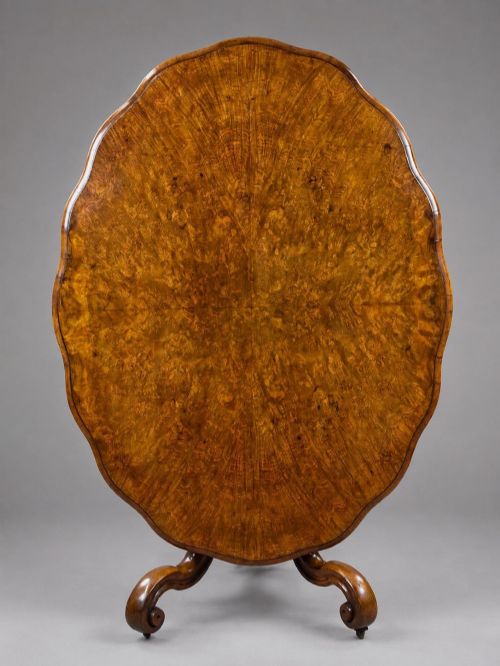
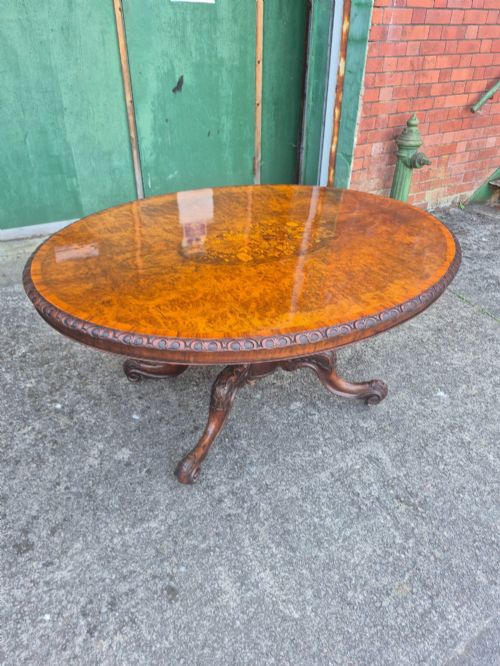
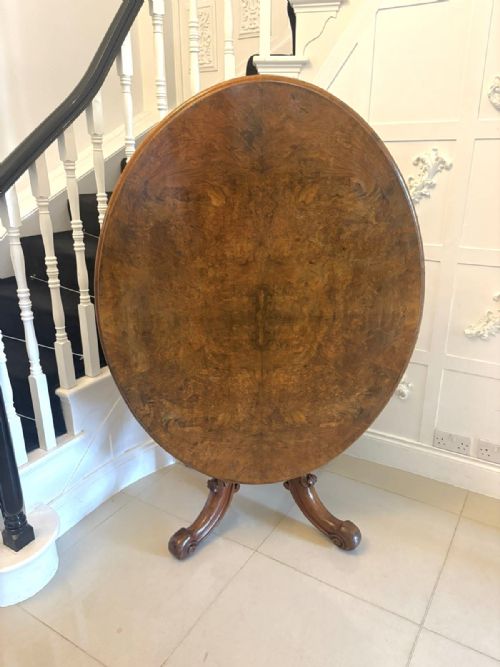
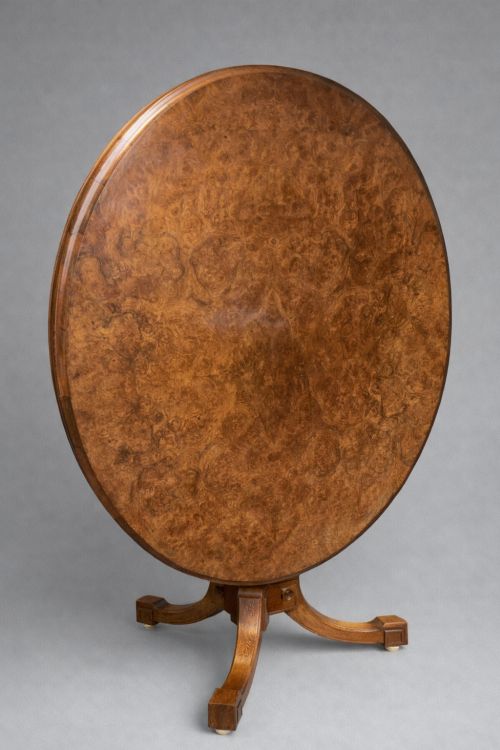
Cabinet makers relied heavily on burr walnut and mahogany, often applying figured veneers and crossbanding to the expansive oval tops. Boxwood inlay, marquetry, and amboyna mounts further enhanced the decorative surfaces of finer examples.
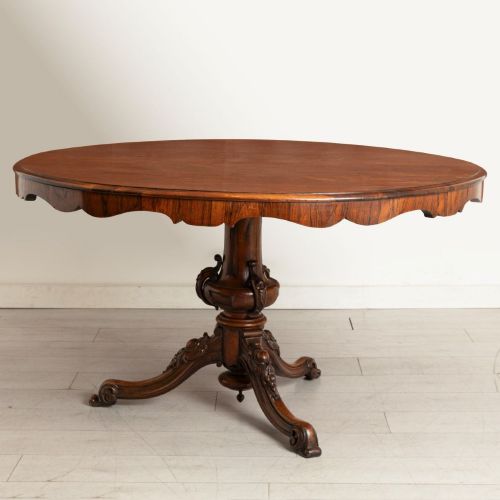
The pivoting mechanism requires precise carpentry, joining the table top to a tilting block that secures firmly to a central pillar. Heavy turned and hand-carved solid timber bases, such as rosewood or mahogany quadrapods, provide essential counterweight and stability.
Listings feature burr walnut, mahogany, and rosewood across Victorian, Regency, and Biedermeier styles.
What Varies in Quality
The selection of timber grain dictates the visual impact of a piece, with richly figured burr walnut commanding attention over plain surfaces. Finely executed marquetry and crisp boxwood stringing denote superior workshop output compared to simpler veneered tops.
Structural harmony also defines the better pieces, visible in the depth of hand-carving on the pedestal base and the seamless operation of the brass tilt latch. Robust quadrapod legs with well-defined carvings support larger dining formats far more successfully than weak junctions.
Gillows
The Victorian Oval Tilt Table Glossary
- Tilt-top table
- A table featuring a mechanism that allows the top to rotate ninety degrees into a vertical position. This clever design enabled nineteenth-century households to push unused furniture flat against a wall.
- Loo table
- A large Victorian centre table originally intended for the popular card game loo. These pieces typically feature grand oval tops and heavy pedestal bases.
- Burr walnut
- A prized timber veneer harvested from walnut tree growths, known for its swirling, highly figured grain patterns. Cabinet makers utilised it extensively on high-status Victorian table tops.
- Quadrapod base
- A heavy central pedestal supported by four carved legs or feet. This configuration provides the necessary balance for large oval table tops.
- Marquetry
- The art of applying decorative pieces of veneer to form intricate pictorial patterns. Makers used contrasting woods to embellish the surfaces of fine tables.
Victorian Oval Tilt Table: Frequently Asked Questions
How do you tilt the top safely?
Release the brass catch or wooden locking pin beneath the table top while supporting the edge with one hand. Guide the top smoothly upward until the mechanism locks securely into the vertical position.
Ensure the area around the base is completely clear before operating the hinge. When lowering the table back to horizontal, guide its descent gently to prevent shock to the central pillar and block.
Where were these tables used?
Nineteenth-century households placed these tables in central drawing rooms, formal dining spaces, and large parlours. They served multiple functions throughout the day, accommodating morning breakfast, afternoon tea, and evening gatherings.
When tilted vertically, the tables moved easily to the perimeter of the room to reclaim floor space. Smaller occasional and coffee table variants found homes in smaller sitting rooms for display purposes.
How do I care for burr walnut?
Keep nineteenth-century timber away from direct sunlight and strong heat sources to prevent the burr walnut veneer from drying and splitting. Dust the surface regularly with a soft, dry cloth.
Apply a quality beeswax polish sparingly every few months to nourish the wood and maintain its natural sheen. Avoid using modern aerosol sprays or silicone-based cleaners, which damage historic finishes.
How do I date a Victorian table?
Examine the timber species, base carving styles, and construction methods to establish an approximate decade within the nineteenth century. Burr walnut veneers and heavy marquetry gained immense popularity around eighteen sixty and onward.
Look for traces of original hardware, hand-cut screws, and secondary timbers beneath the top. Pieces produced around eighteen fifty often display simpler mahogany pedestal forms before elaborate carved quadrapods became standard.