
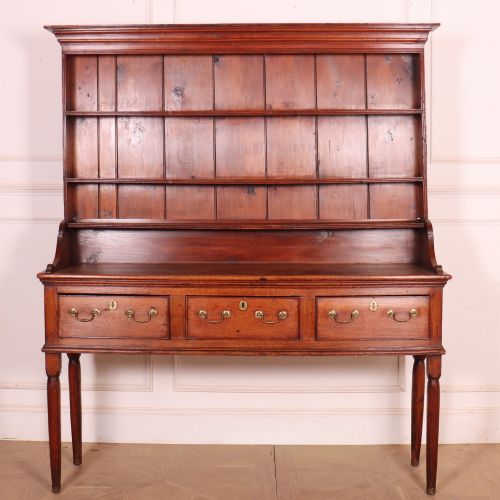
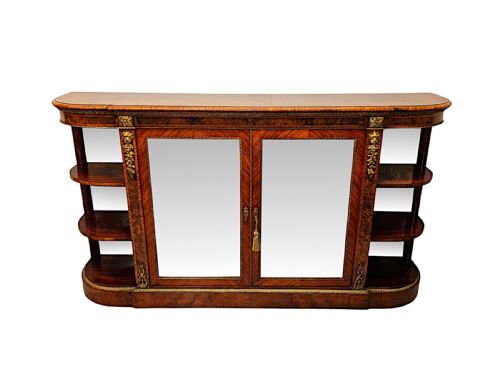
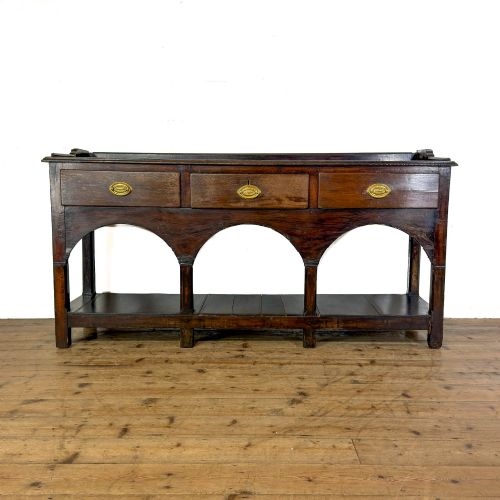
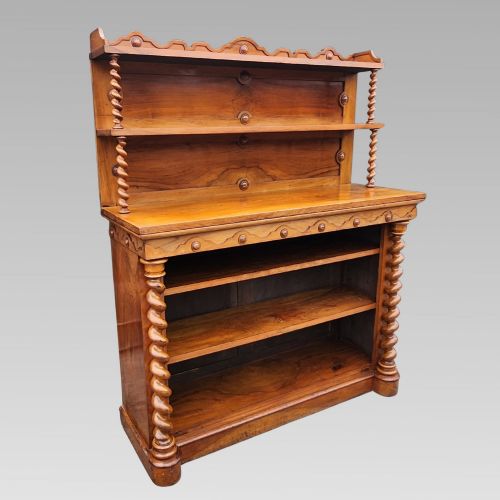


Victorian Open Shelf Dresser
A victorian open shelf dresser brings functional display space and period timber character straight into a room.
Victorian Open Shelf Dresser
A victorian open shelf dresser combines lower storage with upper open display compartments, drawing on forms like bookcases, dresser bases, and sideboards. These pieces provide practical storage alongside accessible shelving for books or household items.
Most examples appearing on this page date from the nineteenth century, including the Victorian and Edwardian eras. They range from compact wall shelves and corner cabinets to large Welsh dressers and breakfront bookcases.
The style spans English country and rustic farmhouse vernaculars to Gothic Revival designs and finer inlaid cabinet work. Buyers encounter various timbers and configurations, reflecting both formal drawing-room tastes and utilitarian farmhouse origins.
How they were made
Cabinet makers utilised solid and veneered timbers including oak, walnut, burr walnut, mahogany, pine, and rosewood. These woods were chosen for their durability and grain patterns, sometimes enhanced with painted finishes or multi-wood marquetry.
Construction involved traditional joinery methods suited to heavy domestic furniture, occasionally augmented with brass hardware, glass panels, or ormolu mounts. Backboards, dovetail drawers, and pegged joints appear across the different regional workshops and periods represented.
Materials recorded on this page include oak, pine, mahogany, walnut, burr walnut, rosewood, brass, glass, and painted wood.
What varies in quality
Quality shows in the selection of timber figures, such as burr walnut or figured mahogany, and the precision of inlaid details. Superior execution appears in clean dovetailing, stable framing, and well-fitted doors or drawers.
The distinction also lies in the ambition of the design, moving from simpler rustic pine and oak farmhouse pieces to elaborate Gothic Revival or ormolu-mounted cabinet work with integrated display shelving.
Gillows
The Victorian Open Shelf Dresser Glossary
- Dresser base
- The lower cabinet portion of a dresser, featuring cupboards or drawers without the upper shelving superstructure.
- Breakfront
- A cabinet design where the central section projects forward from the flanking outer wings, creating depth and architectural presence.
- Ormolu
- Gilded bronze mounts applied as decorative highlights to finer nineteenth-century furniture pieces.
- Welsh dresser
- A traditional form featuring lower storage cupboards surmounted by open plate racks or display shelving.
- Chiffonier
- A low sideboard or cabinet developed in the nineteenth century, sometimes fitted with open book shelves above the main surface.
Victorian Open Shelf Dresser: Frequently Asked Questions
What is a victorian open shelf dresser?
A victorian open shelf dresser is a nineteenth-century storage piece featuring lower cupboards or drawers combined with open upper shelving for display.
These pieces encompass forms ranging from oak dresser bases and Welsh dressers to bookcases and chiffoniers.
How were these dressers used originally?
They served in domestic interiors for storing tableware, linens, and provisions while displaying books or decorative ceramics on the open shelves.
Farmhouse variants worked in kitchens and pantries, whereas walnut and mahogany versions stood in parlours and libraries.
What woods should I look for?
Listings feature structural timbers including oak, pine, and mahogany, alongside decorative hardwoods like walnut, burr walnut, and rosewood.
Some pieces also showcase painted finishes or multi-wood construction reflecting Gothic Revival and country styles.
How do I date a dresser?
Dating relies on stylistic markers from the nineteenth century, including Victorian, Edwardian, and specific decades like eighteen-eighty or eighteen-seventy.
Construction details, timber choices, and regional design traits help distinguish pieces across these periods.
Are these pieces suitable for modern homes?
Their combination of enclosed storage and open shelving makes them practical for organising living rooms, dining spaces, and kitchens.
They accommodate books, tableware, and display items while adding period timber warmth to an interior.