

Traditional Welsh Kitchen Dresser
A traditional welsh kitchen dresser brings robust storage and deep regional character to a room, grounding the interior with centuries of practical craft.
Traditional Welsh Kitchen Dresser
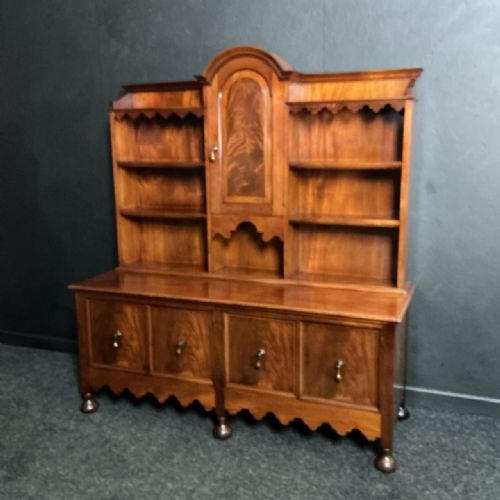
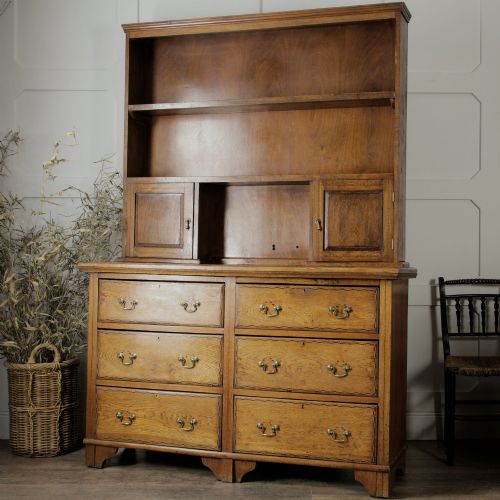
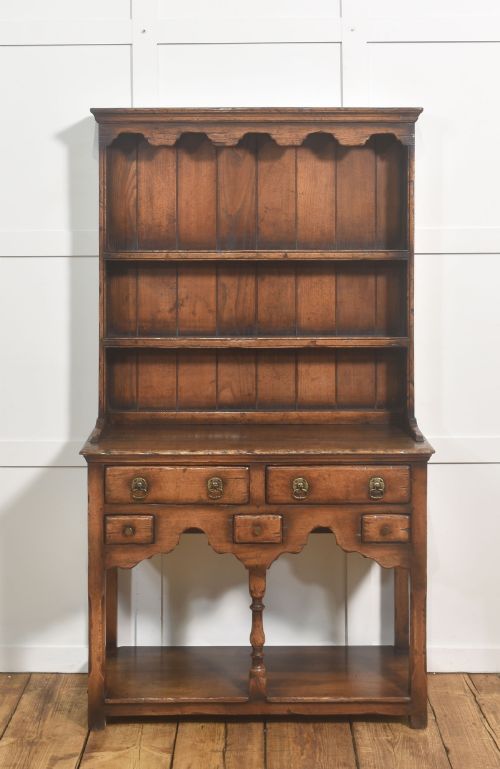
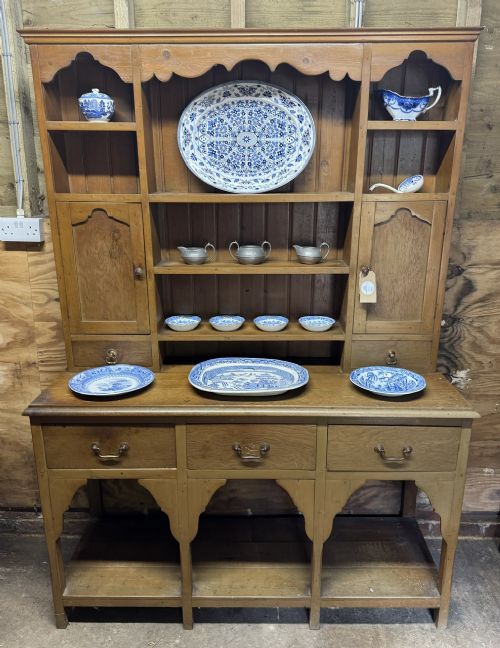
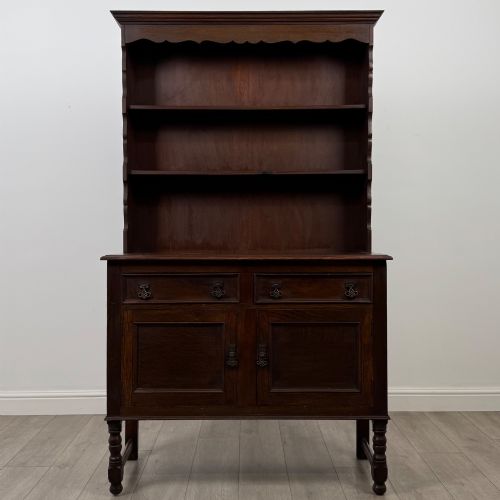
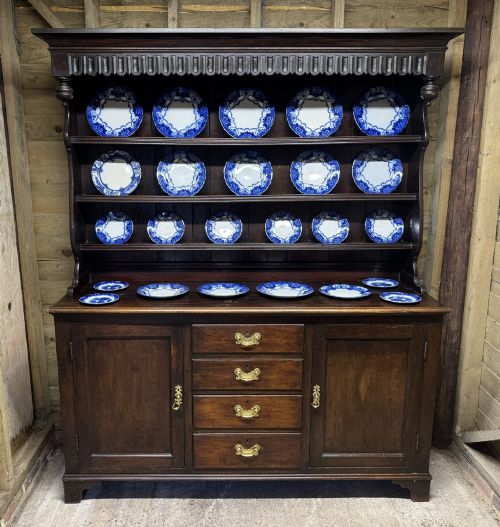
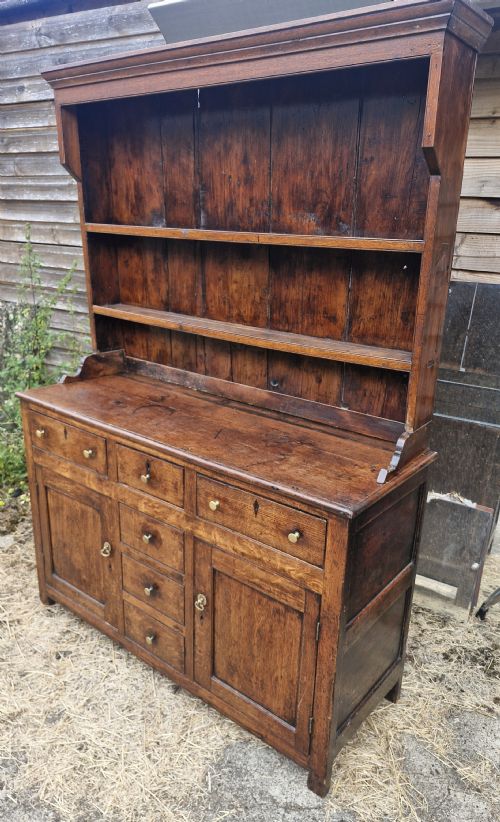
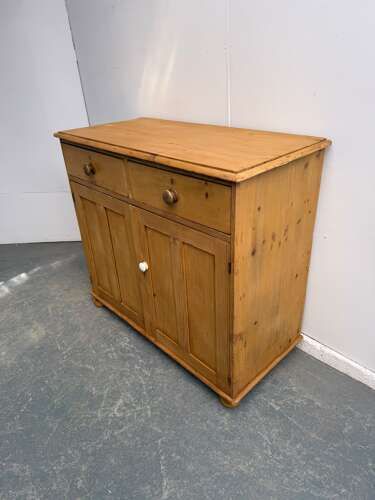
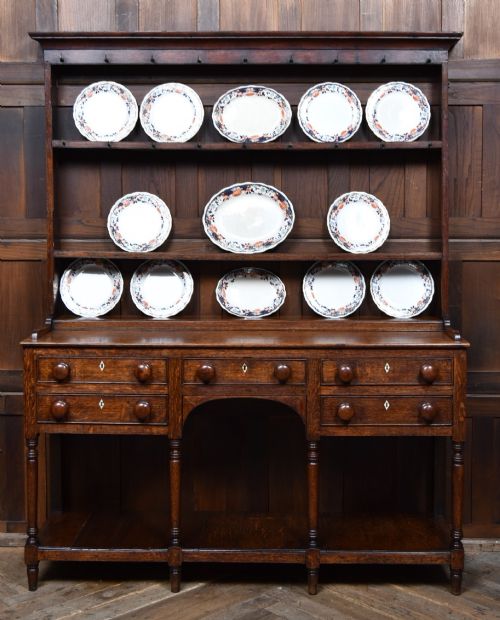
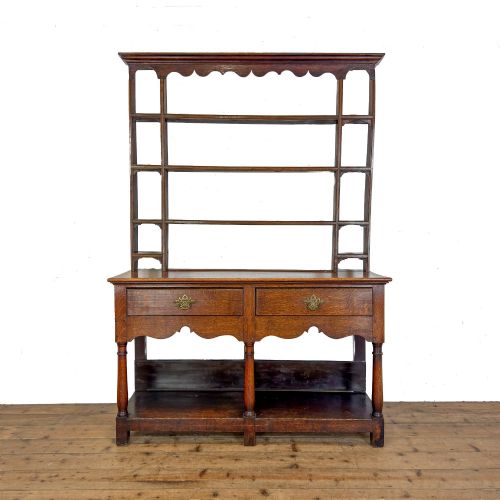
A traditional welsh kitchen dresser combines an open plate rack top with a base fitted with drawers and cupboards, serving as the central storage hub of the rural home. These pieces emerge predominantly in oak, pine, and mahogany across the eighteenth and nineteenth centuries.
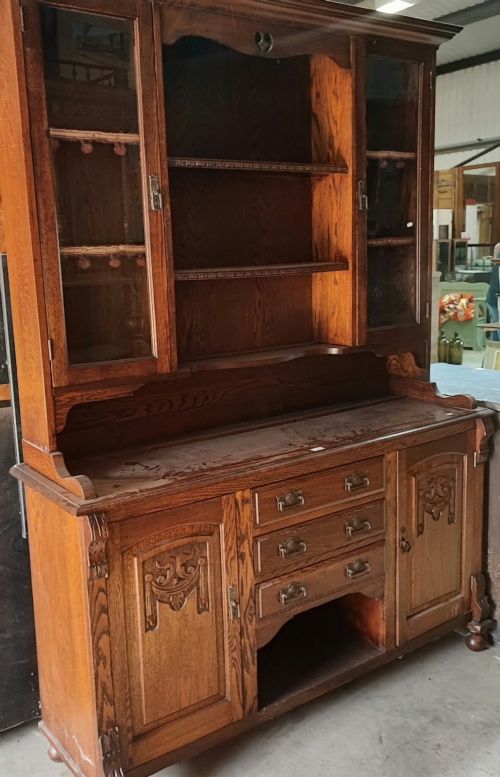
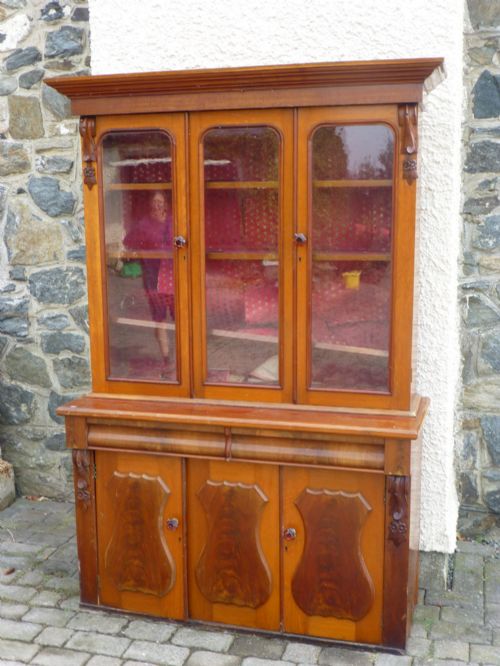
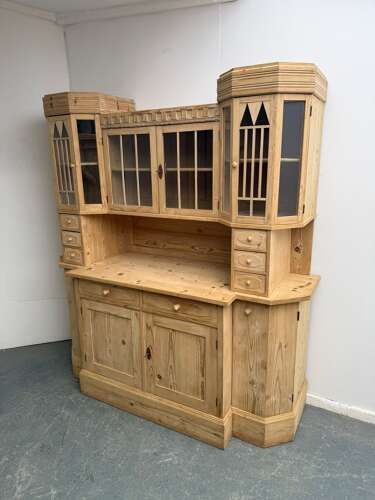
The buyer meets many variations on this page, ranging from early Georgian potboard designs to Victorian and Edwardian examples featuring glazed upper bookcases or breakfront drawers. Regional types such as Snowdonia and North Wales variants appear alongside broader English country styles.
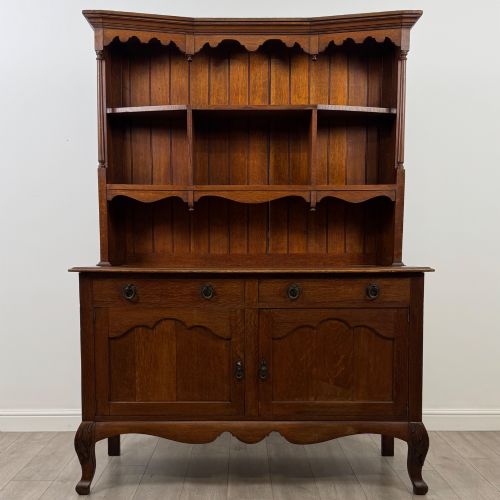
Most examples divide into two sections for transport, pairing lower cupboard bases with upper shelving units built to display ceramics. The vernacular tradition prioritises utility, resulting in sturdy proportions and honest structural joinery.
Character and Proportion
The distinction between ordinary and exceptional examples lies in the integrity of the timber and the retention of original surface patinas. Unaltered proportions, intact potboards, and original plate racks elevate the standing of a piece.
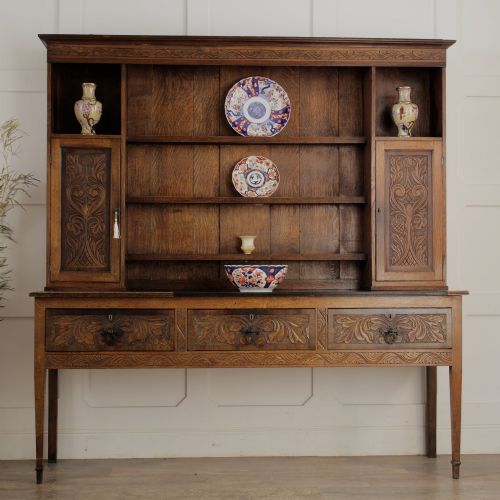
Subtle details such as carved ornamentation, period brass drop handles, and harmonious grain patterns separate utilitarian kitchen furniture from finer vernacular cabinetwork.
Several pieces preserve the lively character of their working lives, including one historic dresser accompanied by dogs from a Snowdon café.
The Traditional Welsh Kitchen Dresser Glossary
- Potboard
- An open slatted lower shelf positioned beneath the main base of early dressers. This platform held heavy pots and pans in busy rural kitchens.
- Plate rack
- The upper shelving unit featuring grooved plate rails and vertical boards. It safely displays ceramic plates and platters upright.
- Vernacular
- Architecture and furniture built by local craftsmen using regional materials to satisfy specific domestic needs. These items reflect traditional local designs rather than metropolitan fashions.
- Breakfront
- A cabinet design where the central section projects forward from the flanking wings. This configuration adds architectural depth to larger dresser bases.
- Patina
- The deep surface sheen and mellow colour developed by wood over decades of handling and polishing. It marks genuine age and continuous use.
Traditional Welsh Kitchen Dresser: Frequently Asked Questions
What is a traditional welsh kitchen dresser?
A traditional welsh kitchen dresser is a dual-purpose storage unit featuring open shelves above and cupboards or drawers below. It evolved to hold domestic crockery and foodstuffs in country houses.
Today, these pieces serve as prominent dining room or kitchen focal points for displaying ceramics and storing tableware.
How do I date an oak dresser?
Dating relies on examining construction methods, timber selection, and hardware styles across the piece. Hand-cut dovetails, pegged joints, and vernacular moulding profiles point towards specific centuries.
Earlier eighteenth-century examples often feature open potboards, while nineteenth-century versions typically incorporate enclosed cupboard bases or glazed upper sections.
Are the top and base original to each other?
Many country dressers were constructed in two distinct sections that match in timber, wear, and proportion. Checking the grain alignment and colour continuity helps verify their pairing.
Matching patination across both the plate rack and the base indicates that the components have remained together for generations.
How do I care for antique waxed wood?
Maintaining waxed surfaces requires regular dusting with a soft cloth and occasional applications of traditional beeswax. Avoid placing wooden furniture near direct heat sources or strong sunlight.
Keeping consistent indoor humidity prevents the oak or pine from splitting and preserves the natural patina.