



Victorian Oak Spirit Stand
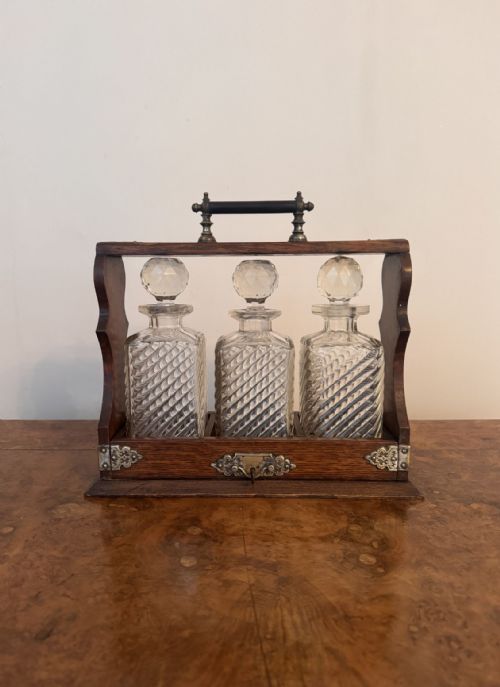
When you search for a Victorian oak spirit stand, you find a secure wooden frame designed to lock away and display fine drink.
Victorian Oak Spirit Stand
A Victorian oak spirit stand brings together solid timber and secure locking mechanisms to protect good whiskey, gin, and brandy from unauthorized household use. The pieces seen on this page date principally from the Victorian and Edwardian periods, including specific years such as 1880, 1885, and 1900.
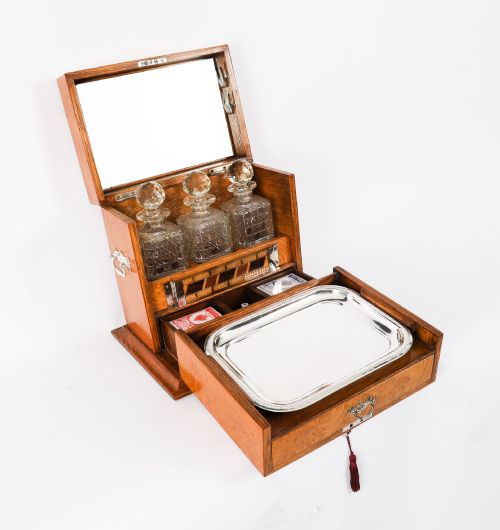
Forms range from standard three-bottle tantalus frames and single-bottle oak cases to elaborate tantalus and games compendiums, barrel sets, and Black Forest stands. Most examples incorporate hinged locking bars and drop-front bases, occasionally combining drinking compartments with card games and counters.
How they were made
Cabinet makers built these stands primarily in solid oak, sometimes utilising mahogany or applying marquetry stringing for surface decoration. Brass mounts, brass binding, and silver plate reinforce the corners, handles, and locking mechanisms.
The drink is held in cut glass or cut crystal decanters and bottles, while specific iterations feature coopered oak and metal barrels mounted on decorative stands.
Victorian Oak Spirit Stand Retail Price Guide 2026
Typical asking prices for victorian oak spirit stand among the pieces listed under this phrase on Sellingantiques today, from the lower quarter to the upper quarter. They describe what is for sale here now, not the wider market.
The current listings span the Victorian and Edwardian eras, incorporating oak, brass, cut glass, silver plate, and mahogany across various tantalus and barrel formats.
What varies in quality
Quality separates the standard production piece from the exceptional workshop creation through the crispness of the oak joinery and the complexity of the internal mechanisms. Marquetry stringing, heavy brass mounts, and complete sets of matching cut glass decanters elevate certain examples significantly above simpler single-bottle housings.
The inclusion of integrated games compartments, games compendiums, or elaborate Black Forest carving denotes a higher tier of Victorian and Edwardian manufacturing effort. The presence of working locks and original keys further distinguishes the best-preserved specimens.
The Victorian Oak Spirit Stand Glossary
- Tantalus
- A locking drink stand that holds decanters securely within a wooden frame so the contents remain visible yet physically unreachable without the correct key. This device gained immense popularity in British homes during the nineteenth century.
- Marquetry
- The art of applying decorative pieces of veneer to a structure to form geometric or floral patterns. On these stands, stringing lines of contrasting wood accent the oak surfaces.
- Compendium
- A multi-functional box or cabinet that combines a spirit stand with equipment for games such as cards, cribbage, or chess. These pieces served social entertaining needs in the Victorian drawing room.
- Coopered
- Constructed from wooden staves bound together with metal hoops, a technique utilised in the manufacture of oak barrels designed to hold spirits. This method mirrors traditional cask-making traditions.
Victorian Oak Spirit Stand: Frequently Asked Questions
What is a tantalus?
A tantalus is a locking spirit stand that displays decanters behind a wooden bar. The locking mechanism prevents guests or servants from accessing the contents without a key.
First patented in the Victorian era, the design takes its name from the mythological figure Tantalus, who was condemned to stand in water that receded whenever he tried to drink.
How do I open the lock?
Most models feature a side-mounted or top-mounted lock that secures a hinged metal retaining bar across the necks of the decanters. Turning the key releases the bar, allowing it to tilt or lift so the bottles slide out.
Many surviving pieces retain their original working locks and keys, though replacement keys can often be fitted by a specialist restorer.
Where were they used?
These stands sat in gentleman's studies, dining rooms, and drawing rooms across British homes. They provided a ready supply of whiskey, gin, or brandy for evening hospitality.
Because spirits were expensive and household staff were numerous, locking the decanters kept the household supplies secure and strictly monitored.
How do I date an Edwardian piece?
Edwardian spirit stands typically display lighter oak tones and slightly more restrained ornamentation than their heavy Victorian predecessors. They often combine barware with games compendiums reflecting changing Edwardian leisure habits.
Comparing the brass hardware styles, joinery techniques, and cut glass patterns against documented examples helps confirm the production decade.