



Oak Whiskey Decanter Set
An oak whiskey decanter set locks away good spirits in sturdy timber and heavy glass, offering both security and display for the sideboard.
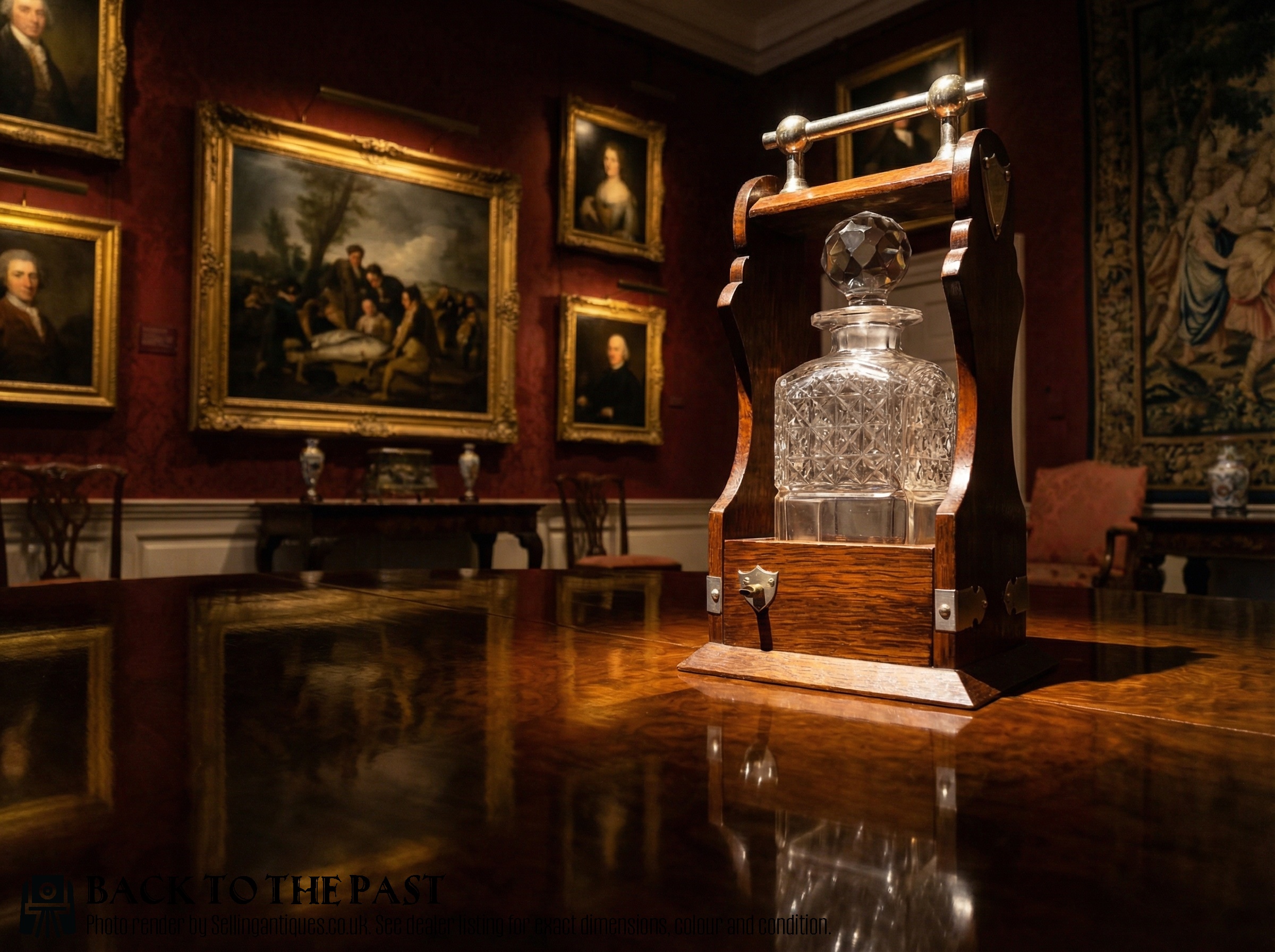
Oak Whiskey Decanter Set
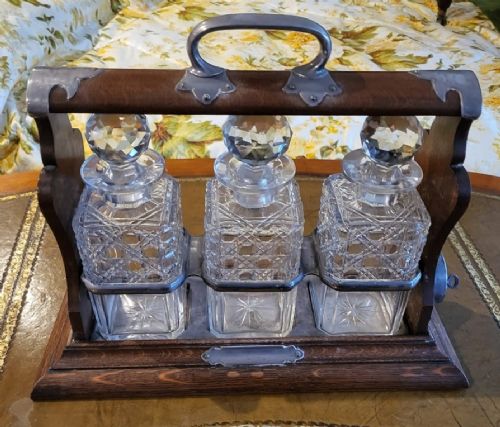
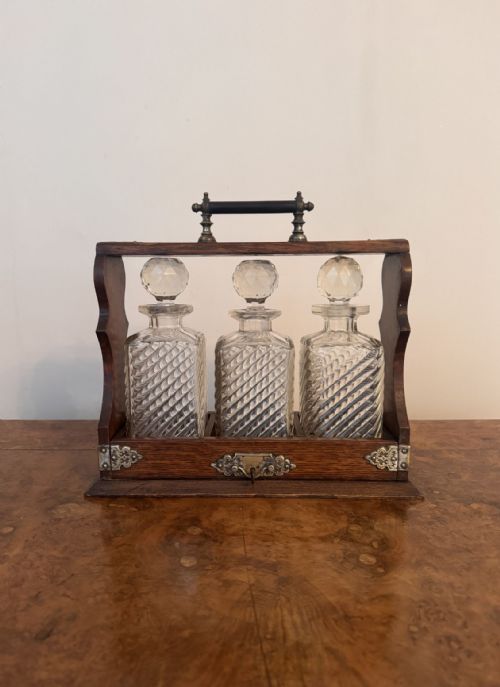
An oak whiskey decanter set generally takes the form of a tantalus or dry bar, designed to hold two or three glass bottles securely under a locking mechanism. These pieces date predominantly from the Victorian and Edwardian eras, spanning from eighteen eighty up to nineteen hundred.
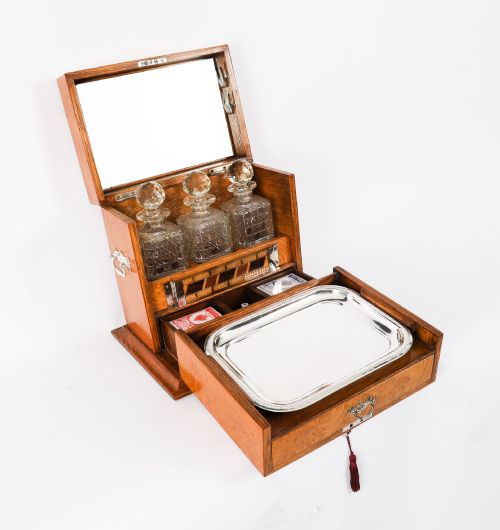
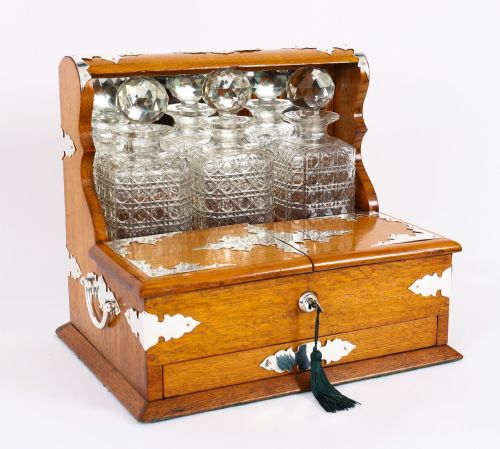
The most common version met on this page is the three-bottle oak tantalus, often featuring silver plated mounts and sometimes incorporating a games compendium or dry bar beneath the decanters. Single-bottle cased examples and spirit barrel sets also appear among the Victorian and Edwardian listings.
How they were made
Cabinet makers utilised blonde, golden, and standard oak to construct the heavy frames and cases, shaping the timber to house square cut glass decanters snugly. Brass and silver plated metal hardware forms the locking bars, carrying handles, and corner mounts that secure the bottles in place.
Many of the larger pieces incorporate mirror glass panels within the interior backings of dry bars and games compendiums, reflecting the cut glass decanters when open. The decanters themselves are heavy glass, often cut with geometric patterns to catch the light of the room.
Oak Whiskey Decanter Set Retail Price Guide 2026
Typical asking prices for oak whiskey decanter set among the pieces listed under this phrase on Sellingantiques today, from the lower quarter to the upper quarter. They describe what is for sale here now, not the wider market.
What varies in quality
The distinction between standard examples and superior pieces rests on the presence of integrated dry bars, games compendiums, and heavier silver plating on the metal mounts. Finer pieces display substantial golden or blonde oak construction with robust brass locks and mechanisms that operate smoothly.
The glass quality also marks the grade of the set, where thick cut glass decanters with matching stoppers elevate the piece above simpler utilitarian versions. Elaborate brass mounting and mirror glass interiors further distinguish the more ambitious late nineteenth-century productions.
The Oak Whiskey Decanter Set Glossary
- Tantalus
- A locking spirit cabinet that secures decanters beneath a metal bar so they cannot be removed without a key, famously frustrating would-be drinkers. The name derives from Greek mythology.
- Compendium
- A fitted box containing multiple pastimes such as cards, cribbage, or board games alongside the liquor bottles. These multi-use items were popular for evening entertaining in Victorian drawing rooms.
- Silver plate
- A thin layer of silver applied over a base metal foundation like brass or copper to give the appearance of solid silver. This technique provided durability and shine for the locking bars and handles.
- Cut glass
- Glass decorated by grinding facets or patterns into the surface using a wheel. This method creates brilliant refractions and adds considerable weight to the spirit decanters.
Oak Whiskey Decanter Set: Frequently Asked Questions
What is an oak whiskey decanter set?
An oak whiskey decanter set is a secure housing for glass spirit bottles, frequently built as a tantalus with a locking mechanism. These units protect expensive liquor from unauthorized consumption while displaying the bottles attractively on a sideboard.
The form typically includes fitted wooden framing, metal mounts in brass or silver plate, and matching glass decanters. Victorian and Edwardian examples often expand this basic function into a full dry bar or games compendium.
How did Victorians use a tantalus?
Victorian households used the tantalus to store good whiskey, brandy, and gin in the dining room or drawing room. The lock prevented domestic staff or visiting guests from helping themselves to the master of the house's private stock.
When entertaining, the host would unlock the metal bar to pour after-dinner drinks for guests. The key remained in the owner's possession to maintain control over the household consumption.
How do I date an oak tantalus?
Dating relies on examining the timber, the style of the metalwork, and the configuration of the case. Pieces from the late Victorian period often feature heavier brass mounts and simpler two or three-bottle frames.
Edwardian versions and items from around nineteen hundred sometimes incorporate more complex fold-out dry bars and games compendiums. The presence of blonde or golden oak finishes also points towards specific late nineteenth-century cabinet-making preferences.
Are the decanters original to the set?
Determining originality involves checking whether the glass bases match the fitted wooden recesses precisely. Cut glass decanters should sit snugly in their individual platforms without excessive lateral movement.
Matching stoppers and uniform glass clarity across all bottles suggest the set remains complete as originally assembled. Replacement decanters often show slight variations in height or cutting style.