
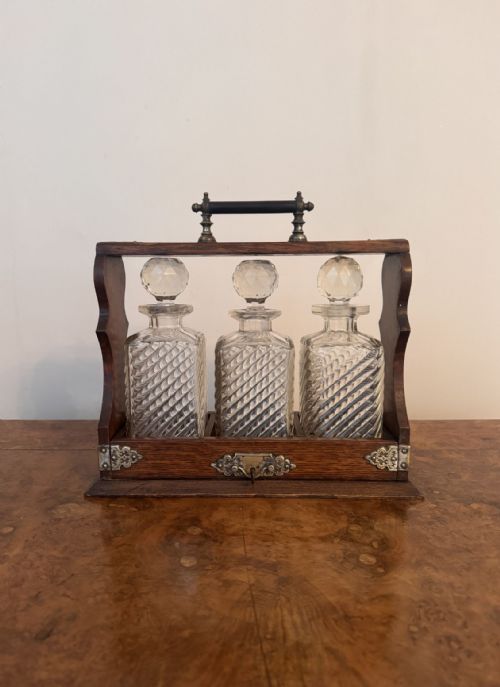


Oak Decanter Stand
An oak decanter stand is a solid timber holder for bottles, built to keep spirits secure and ready for pouring.
Oak Decanter Stand
An oak decanter stand groups bottles in frames, boxes, or barrel forms, spanning Victorian, Edwardian, and later periods.
The most common form on this page is the tantalus, which locks the bottles in place with a metal bar and handle.
Other variations include wine coasters, open stands, and combination games compendiums housing decanters alongside playing pieces.
Materials and construction
Makers built these pieces primarily using oak, often selecting quarter-sawn timber to display prominent grain patterns and medullary rays.
Metal mounts in brass, silver plate, or sterling silver provide structural rigidity, handle hinges, and locking mechanisms.
Glass is integrated through cut crystal decanters, barrel inserts, and coasters that sit snugly within the timber frames.
Listings feature oak combined with brass mounts, cut glass decanters, and silver plate across Victorian, Edwardian, and later twentieth-century dates.
Judging the work
Quality shows in the precision of the joinery and the integration of brass or silver-plated mounts rather than simple surface decoration.
Mechanisms in locking tantalus pieces distinguish sturdier examples, operating smoothly with properly fitted keys and solid hinge pins.
The presence of matched, original cut glass decanters or crystal inserts elevates the piece above those altered or re-glassed later.
The Oak Decanter Stand Glossary
- Tantalus
- A locking drink stand that holds decanters upright while preventing removal without a key. Named after the mythological figure who was kept just out of reach of water.
- Marquetry
- Inlaid wood patterns used to decorate the surface of boxes and stands. It creates decorative pictures or geometric borders using contrasting timbers.
- Treen
- Small handmade wooden objects and household utensils. In this context, it refers to turned wooden stands and coasters.
- Compendium
- A multi-functional box combining a drink stand with games or smoking accessories. These pieces typically fold or open to reveal multiple compartments.
Oak Decanter Stand: Frequently Asked Questions
How do I open a tantalus?
Most tantalus stands require a small key inserted into the lock at the front or top of the metal securing bar. Turning the key releases the internal locking pins, allowing the handle and bar to lift.
If the mechanism resists, avoid forcing the metal. Many older locks need gentle cleaning or professional adjustment if the internal springs have stiffened over time.
Are the decanters usually original?
Many surviving stands retain their matched set of cut glass or crystal decanters, often featuring matching star-cut bases and neck rings. Because bottles frequently broke through heavy use, finding a complete original set remains a key consideration.
Replacement decanters appear regularly in older stands. Examine the fit within the wooden base ring and the height beneath the locking bar to determine if they match the original specification.
How do I care for the oak?
Feed the timber periodically with a traditional wax polish to maintain the grain and prevent the oak from drying out. Avoid harsh chemical cleaners or silicone sprays which damage antique finishes.
Keep the stands away from direct heat sources and strong sunlight, as rapid temperature shifts cause the timber to shrink and crack the joinery.
What is the difference between a stand and a box?
An open stand or coaster frame holds bottles upright with minimal side enclosure, allowing the decanters to remain visible from every angle. These are designed for quick access during dining or after-dinner service.
A box or tantalus encloses the bottles within a secured wooden housing, sometimes with folding panels that protect the glass and lock away the contents.