
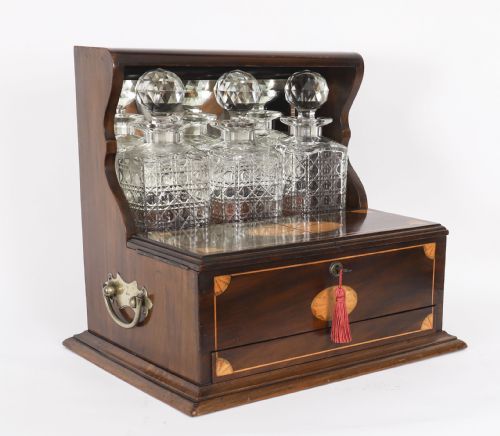
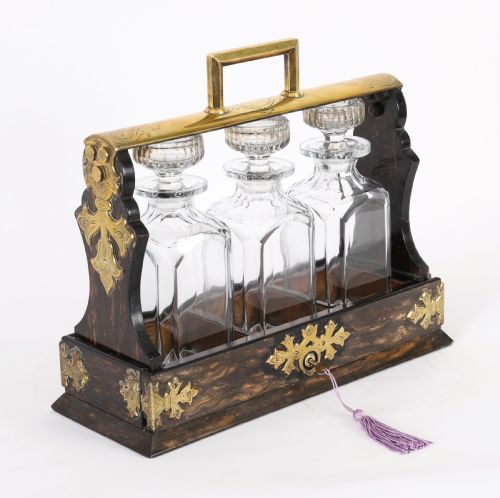

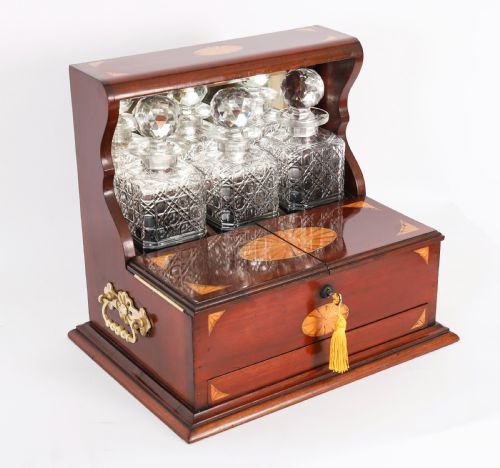


Cut Glass Decanter Tantalus
A cut glass decanter tantalus holds bottles securely under a locking mechanism, offering both display and security for spirits.
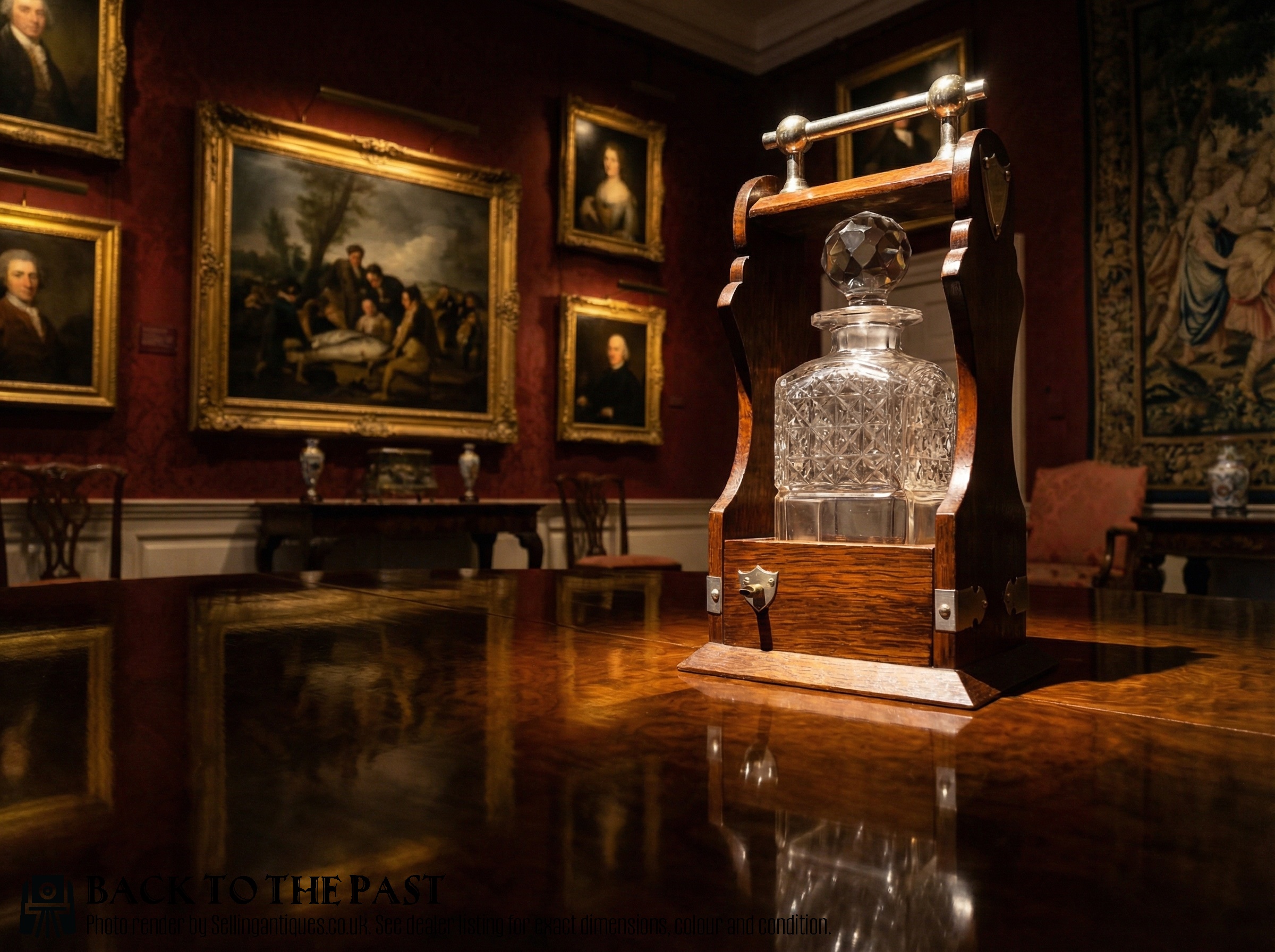
Cut Glass Decanter Tantalus
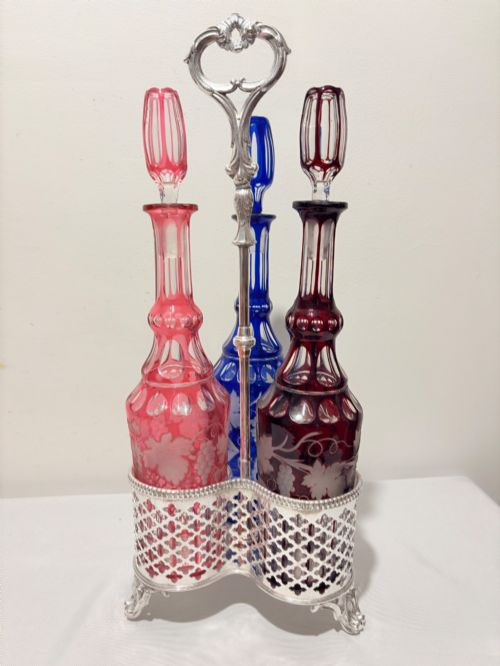
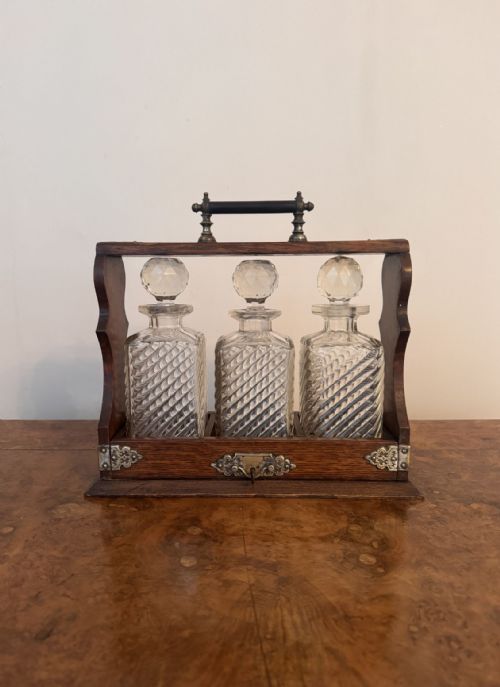
A cut glass decanter tantalus combines locking metal frames with heavy glass bottles, designed to keep household spirits secure from unauthorised access. You will most frequently encounter Victorian and Edwardian examples framed in timber.
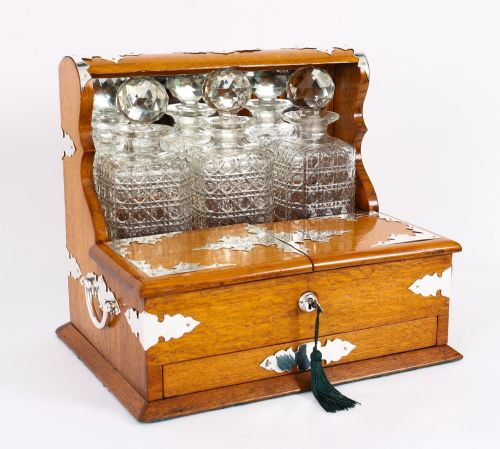
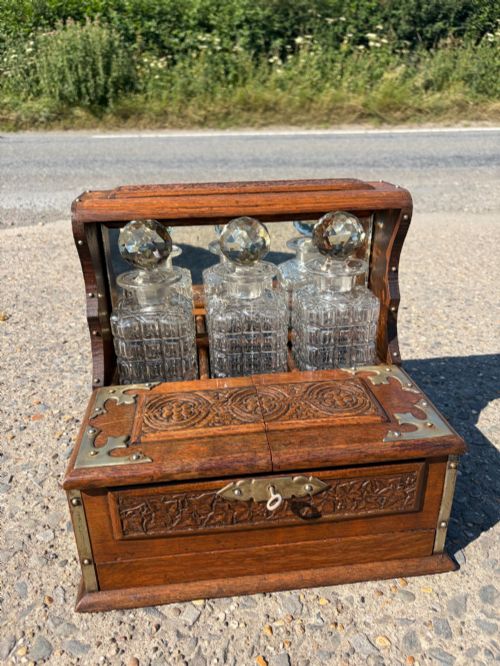
The standard configuration houses two or three cut crystal decanters within an oak, coromandel, or mahogany body, frequently accompanied by integrated games compendiums. These pieces served as functional dry bars in late nineteenth and early twentieth century reception rooms.
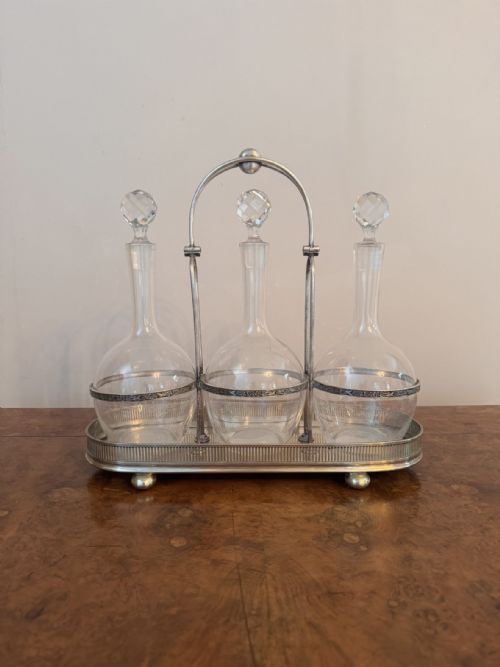
Origins span English and French workshops, with late Victorian oak models and French cave a liqueur designs appearing regularly. The phrase encompasses standalone decanter stands as well as locking cases fitted with brass mounts.
Materials and Construction
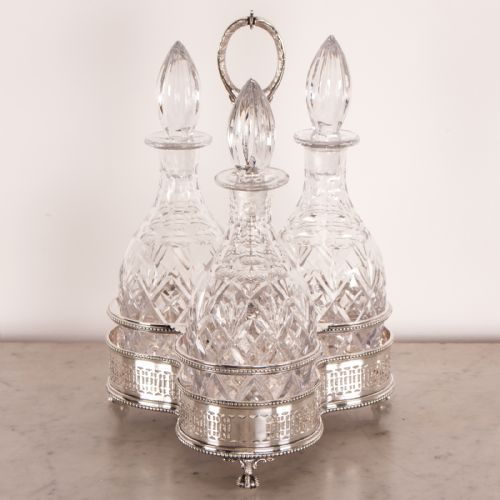
Makers constructed the enclosing frames from solid oak, mahogany, walnut, and exotic veneers such as coromandel and satinwood, often embellishing the surfaces with marquetry stringing and brass mounts. Silver plating and old Sheffield plate supplied the structural locking handles, hinges, and bottle collars.
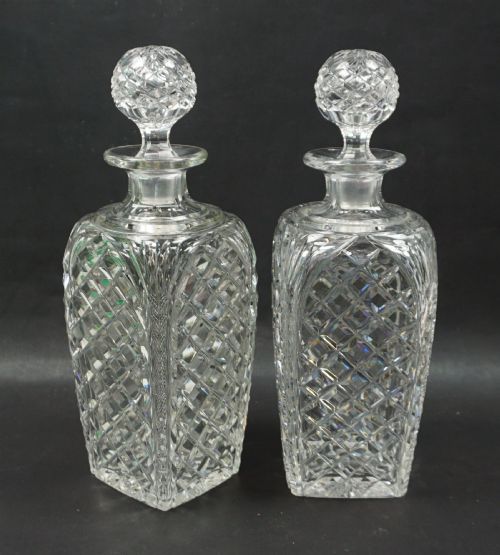
The bottles themselves utilise heavy cut glass and cut crystal, shaped into square sections or tapered profiles, and paired with matching stoppers. Metal locking bars drop down over the bottle stoppers, engaging with a key-operated lock to prevent removal.
Listings feature oak, mahogany, coromandel, and walnut frames paired with cut crystal, silver plate, and brass mounts across Victorian and Edwardian periods.
Gradations of Execution
Quality rests upon the weight and depth of the glass cutting, the density of the timber body, and the complexity of the locking mechanism. Superior pieces incorporate integrated games drawers, fully functioning keys, and heavy silver plated mounts rather than plain brass.
Finer examples display precise marquetry inlay, undamaged cut crystal with matching stoppers, and robust cabinetwork that withstands regular handling. Lesser variations rely on simpler box construction without supplementary compartments or intricate metalwork.
Walker And Hall·Elkington·Betjemann Brothers·Excelsior
The Cut Glass Decanter Tantalus Glossary
- Cave a liqueur
- A French locking liquor cabinet, often lined with velvet or ormolu mounts, designed to hold glassware and liqueur bottles. These containers frequently feature hinged panels that open to reveal fitted bottle rests.
- Silver plate
- A thin layer of silver fused to a base metal, commonly used for the handles, locking bars, and mounts of late nineteenth century drinks stands. It provides the appearance of solid silver while offering structural rigidity.
- Games compendium
- A multi-use cabinet combining a decanter section with storage for playing cards, dice, or board game pieces. These combination boxes were popular in Victorian and Edwardian smoking rooms.
- Coromandel
- A dense, dark East Asian timber with contrasting light streaks, utilised for luxury nineteenth century veneer work. Cabinetmakers prized it for high-end tantalus and jewellery caskets.
Cut Glass Decanter Tantalus: Frequently Asked Questions
What is a tantalus?
A tantalus is a locking stand that secures decanters beneath a metal bar, preventing guests or domestic staff from pouring drinks without a key.
First patented in the Victorian era, the mechanism holds the stoppers firmly in place so the bottles cannot be lifted out until the lock is released.
How do you open a tantalus?
You insert a matching key into the lock assembly, usually located on the wooden base or the upright handle, and turn it to release the locking bar.
Once unlocked, the metal bar hinges upward or slides aside, allowing the cut glass decanters to be lifted free from their fitted compartments.
What woods were used?
Oak remains the most common timber found on these pieces, spanning dark fumed finishes and lighter blonde varieties from the Edwardian period.
Finer examples utilise exotic hardwoods such as coromandel, mahogany, walnut, and satinwood, frequently enhanced with brass mounts and marquetry inlay.
Are the decanters original?
Many surviving pieces retain their matching cut crystal or cut glass bottles, though replacements do occur due to accidental breakage over the decades.
Original decanters typically fit the wooden base precisely and share the same period characteristics, glass tint, and cutting style as the frame.