




Cut Crystal Whiskey Decanter
A cut crystal whiskey decanter holds liquor with heavy refraction and weight, bringing nineteenth-century service to a modern sideboard.
Cut Crystal Whiskey Decanter
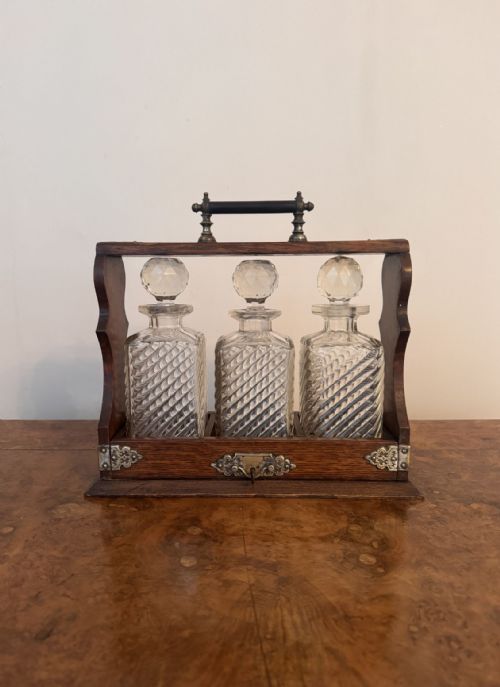
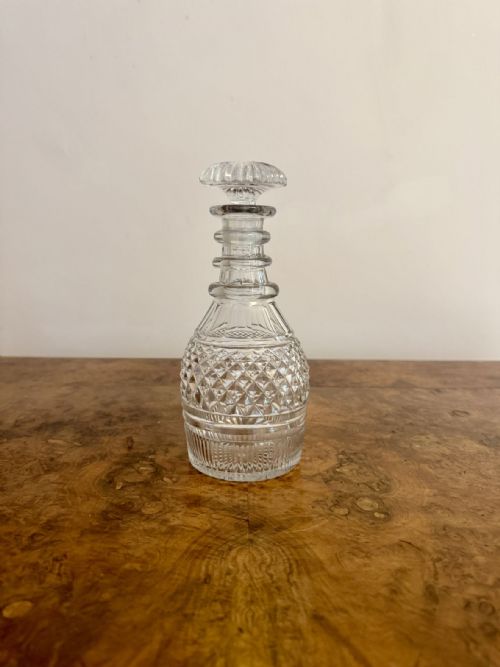
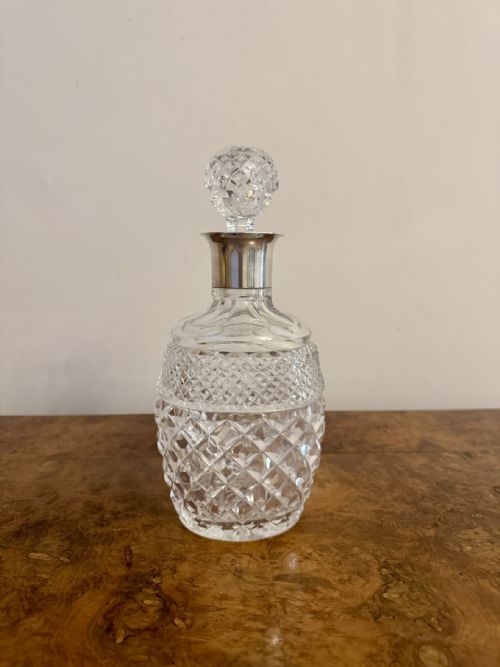
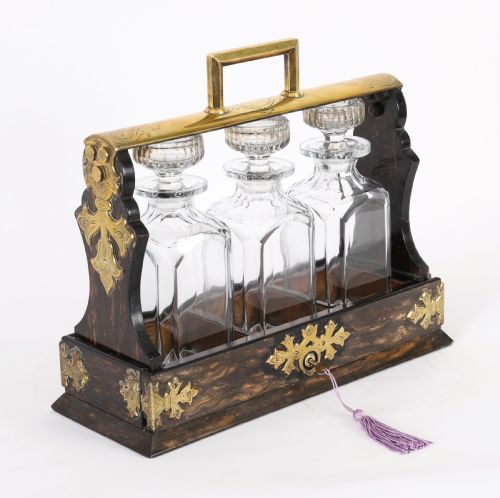
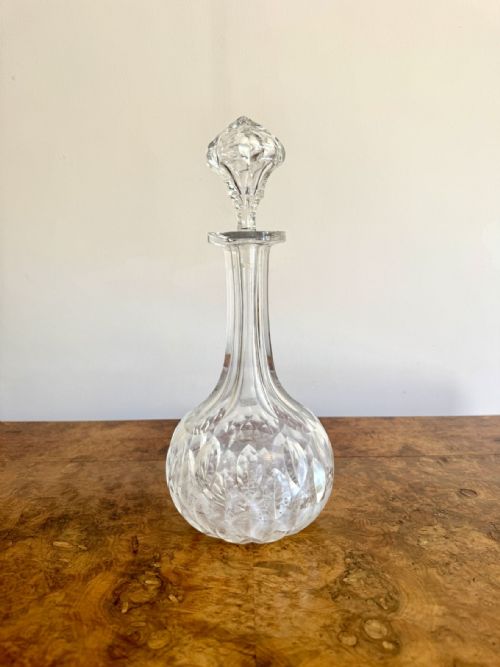
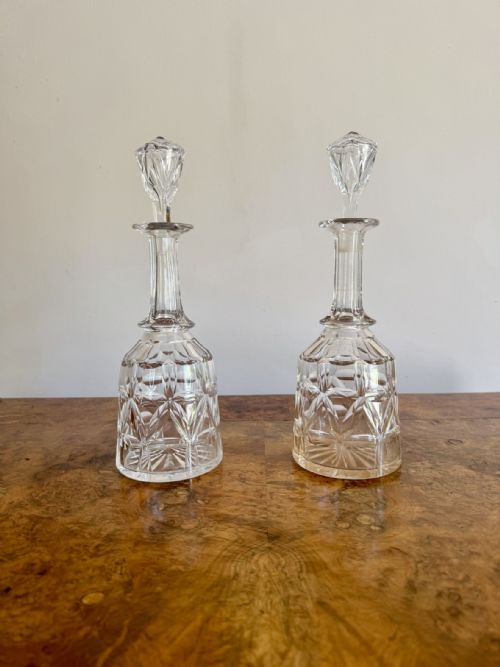
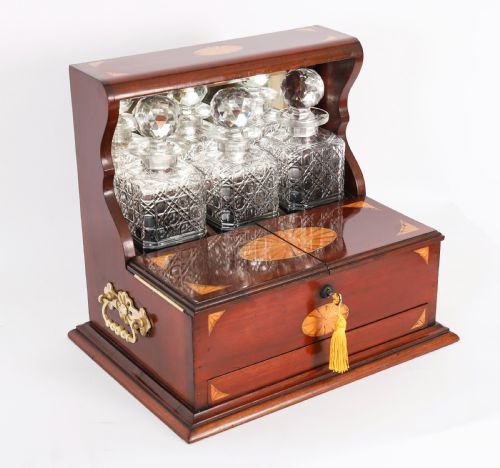
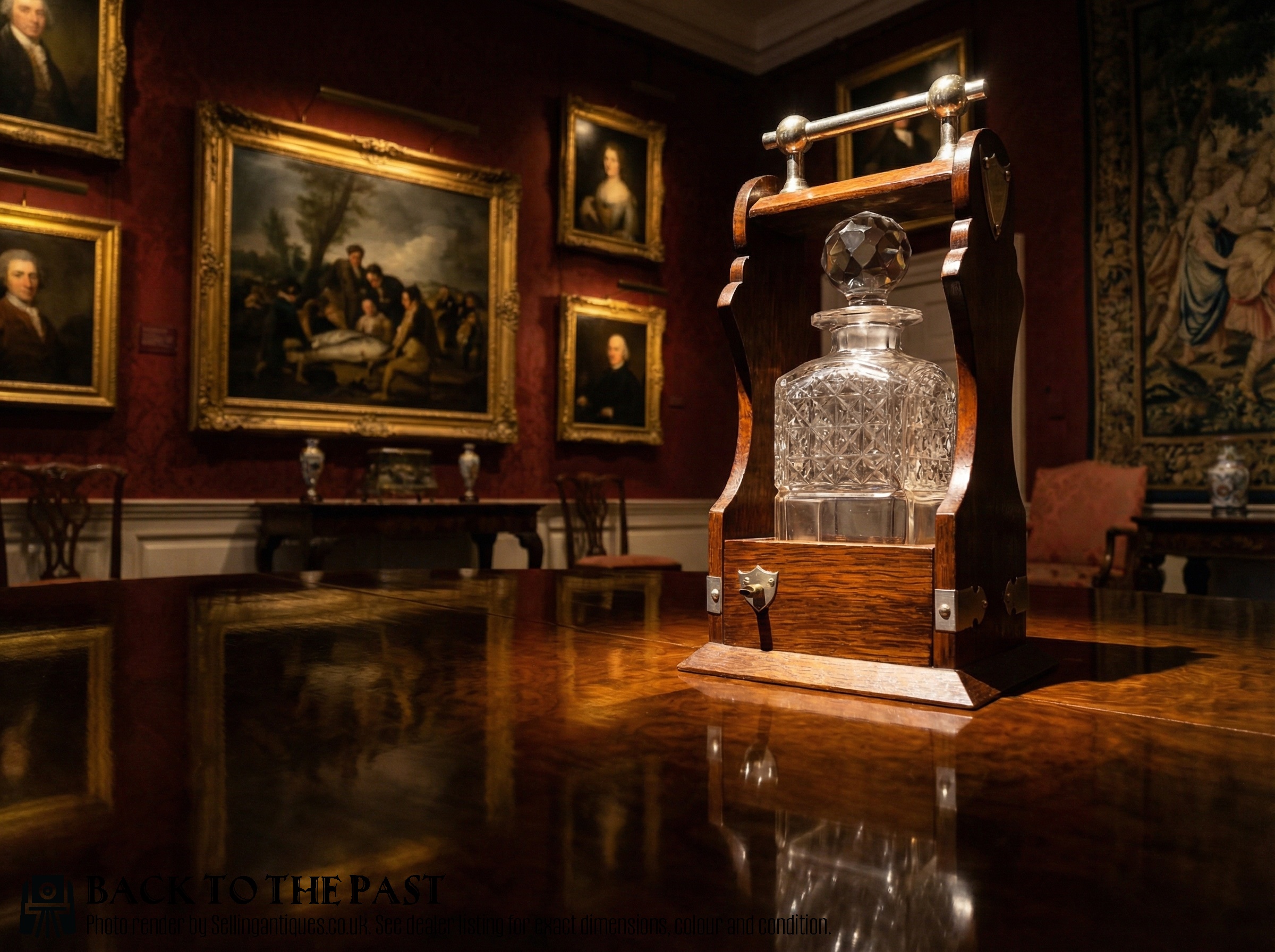
When you search for a cut crystal whiskey decanter, you encounter vessels built to hold spirits during the Victorian and Edwardian periods. These pieces range from solitary bell-shaped bottles to elaborate tantalus sets secured within oak or walnut frames.
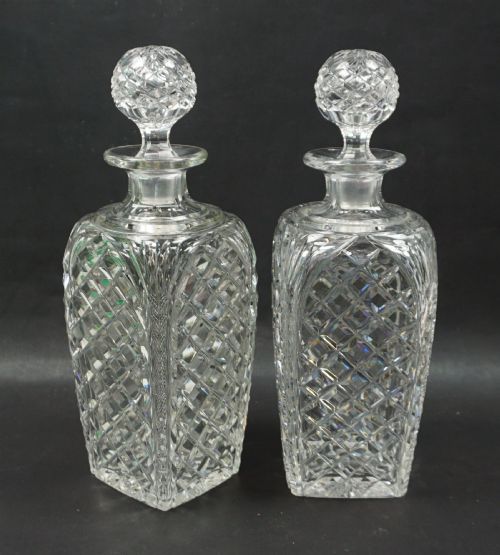
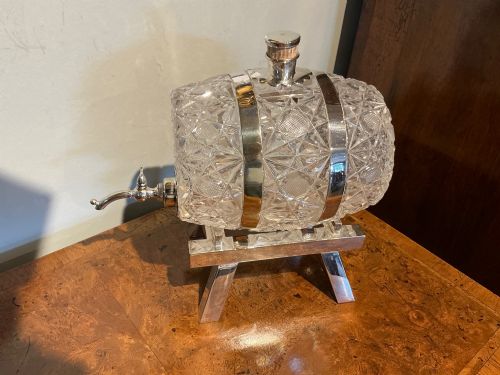
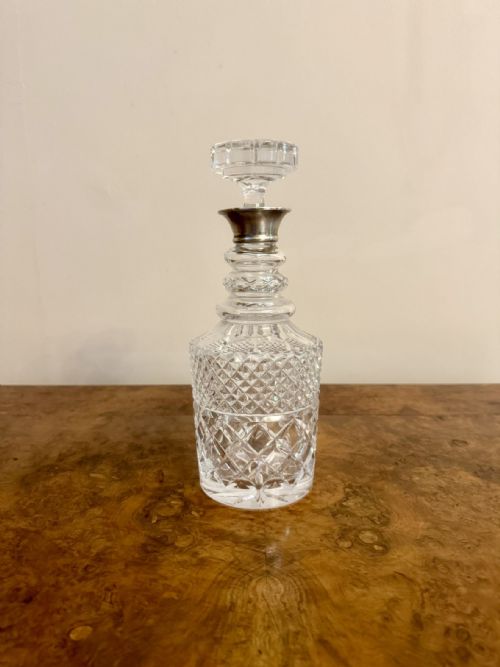
The most common examples on this page date from the later nineteenth century and the early twentieth century. They appear as square-section tapered bottles, hourglass profiles, and spirit barrels designed for after-dinner service.
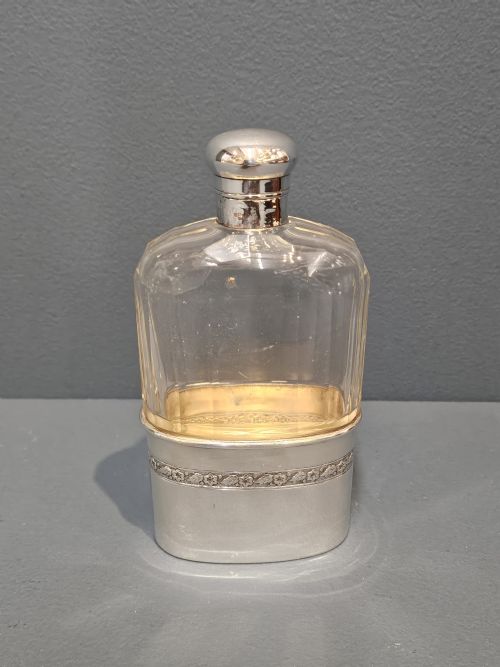
Many are fitted with sterling silver or silver-plated collars, whilst others remain purely glass. You will also find matching pairs and complete drinks sets resting on silver-plated trays.
Materials and construction
Makers fashioned these pieces from lead crystal, cut glass, and standard glass, often combining the heavy material with wooden frameworks made from oak, satinwood, coromandel, and walnut. Metal elements such as brass mounts and silver-plated or sterling silver collars complete the assemblies.
The decorative surfaces rely on deep cutting and optical blowing techniques to catch the light. Frames incorporate locking mechanisms in tantalus sets to secure the bottles safely away.
Judging the work
Quality rests upon the crispness of the glass cutting and the weight of the metal collars. Finer decanters display sharp, precise geometric patterns that refract light cleanly, whereas lesser examples show softer facets and lighter metalwork.
The integrity of the accompanying wooden furniture dictates the standard of tantalus sets. Superior items feature finely grained timbers like coromandel or satinwood with intact brass locking mechanisms and matching stoppers.
James Powell·Elkington
The Cut Crystal Whiskey Decanter Glossary
- Tantalus
- A locking wooden frame designed to hold decanters securely while displaying the bottles inside. It prevents unauthorized access to the contents by locking the handle down over the stoppers.
- Lead crystal
- Glass containing metallic lead oxide to increase brilliance, density, and weight. This composition allows for deeper and sharper facet cutting.
- Collar
- A metal band fitted around the neck of a decanter. These are frequently made from sterling silver or silver-plated metal.
- Optically blown
- A glassblowing technique that creates subtle internal ripples and patterns within the body of the vessel. It adds texture and visual depth to the finished piece.
Cut Crystal Whiskey Decanter: Frequently Asked Questions
How do I date a decanter?
Dating relies on the shape, the style of the glass cutting, and any accompanying metal collars. Victorian pieces often feature heavier proportions and deeper facet cutting, while Edwardian examples can be lighter and more slender.
Silver collars frequently bear hallmarks that provide exact assay years. Fitted wooden tantalus frames also reflect the cabinet-making styles of their respective decades.
Are the stoppers original?
Matching the stopper to the bottle requires checking the ground glass neck and the base of the stopper for matching number marks or identical wear patterns. Original stoppers fit snugly and continue the facet pattern of the body.
Replacements are common because stoppers were easily dropped and broken during use. A true matching pair maintains consistent glass colour and weight throughout.
How should I clean them?
Cleaning antique glass requires warm water and mild detergent, avoiding sudden temperature changes that can crack aged material. Stubborn residue inside the base responds to non-abrasive cleaning beads rather than harsh scrubbing.
Silver collars and mounts need gentle polishing with a soft cloth to preserve the metal. Wooden frames benefit from occasional waxing to keep the timber nourished.