







Victorian Oak Serving Table
A victorian oak serving table is a sturdy, timber-built piece designed for dining rooms and halls, prized for rich grain and honest utility.
Victorian Oak Serving Table
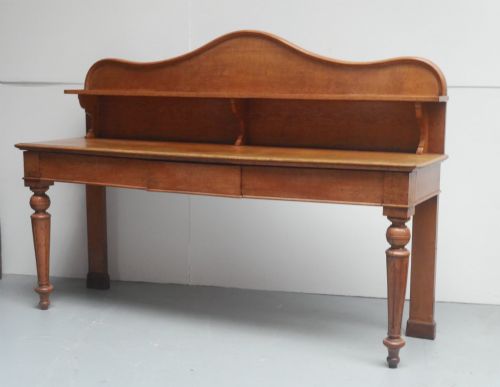
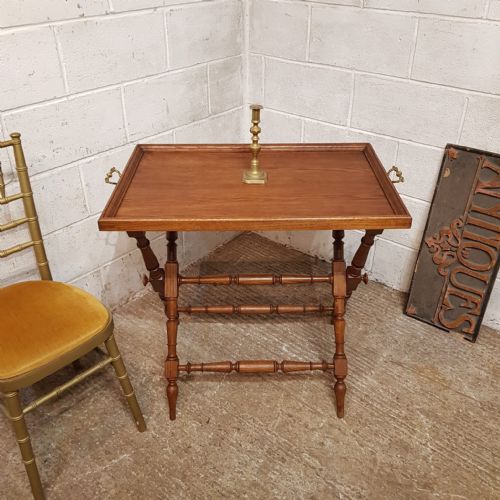
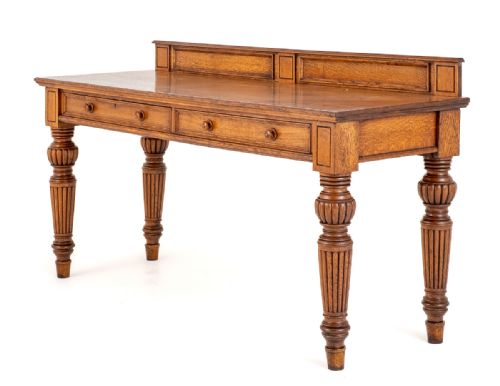
A victorian oak serving table takes several distinct structural forms across this selection, appearing as large serving surfaces, hall tables, buffets, and folding butlers trays. These pieces date across the nineteenth century, with specific examples recorded from the eighteen-fifties, eighteen-sixties, eighteen-eighties, and the turn of the twentieth century.
The material palette centres firmly on oak, occasionally paired with pollard oak, walnut, brass, or iron to add contrast and structural support. Workshops and makers produced these items in straightforward country house styles as well as more ornate decorative designs for domestic service.
Buyers most frequently encounter heavily carved formats, Gothic Revival adaptations, and simple refectory or hall console variants. These tables served practical duties in domestic interiors, functioning as sideboards, dumb waiters, and tray stands.
Gradations in Quality
Quality rests upon the selection of the timber, particularly the depth of figure in pollard oak or the density of standard oak boards. Heavier, solid construction without excessive modern replacement parts distinguishes better examples from simpler utilitarian pieces.
The execution of the carving dictates the distinction between standard workshop output and exceptional craftsmanship. Crisp, deep relief work in Gothic Revival or heavily carved styles elevates a piece far above plain, mass-produced joinery.
Victorian Oak Serving Table Retail Price Guide 2026
Typical asking prices for victorian oak serving table among the pieces listed under this phrase on Sellingantiques today, from the lower quarter to the upper quarter. They describe what is for sale here now, not the wider market.
One exceptional tray stand arrived directly from Bäckaskog Castle.
PHILLIPS BRISTOL
The Victorian Oak Serving Table Glossary
- Serving Table
- A large table used in dining rooms for holding food and dishes before service. These pieces often feature drawers or tiers.
- Butlers Tray
- A removable wooden tray designed to sit upon a folding stand. They frequently appear in nineteenth-century country houses.
- Gothic Revival
- A nineteenth-century design style drawing inspiration from medieval architecture. Pieces show pointed arches, tracery, and heavy carving.
- Pollard Oak
- Timber taken from trees that were pollarded, creating a dense, highly figured grain pattern. Cabinet makers used this for decorative veneer and surfaces.
- Dumb Waiter
- A tiered piece of furniture or revolving stand used for holding serving dishes. Examples range from simple multi-tier buffets to rise and fall mechanisms.
Victorian Oak Serving Table: Frequently Asked Questions
What is a victorian oak serving table?
A victorian oak serving table is a nineteenth-century wooden furniture piece built to hold food, drinks, or tableware in a dining room or hall.
These items range from simple planked tables with drawers to heavily carved Gothic Revival buffets and folding tray stands.
How were these tables used originally?
Household staff utilised these surfaces to stage courses, hold serving dishes, and transport items between the kitchen and the dining room.
Trays on stands allowed servants to move drinks and china easily, while larger buffets stayed fixed against the wall as permanent storage.
How do I identify a Gothic Revival piece?
Gothic Revival tables display distinct architectural motifs borrowed from medieval buildings, including pointed arches, quatrefoils, and deep linenfold or geometric carving.
Makers working in this style often drew direct inspiration from designers such as Augustus Pugin.
What is pollard oak?
Pollard oak is a specialised timber derived from trees that had their top branches cut off to promote dense, knobby branching and turbulent grain patterns.
Cabinet makers valued this wood for its rich, mottled appearance on prominent surfaces like tabletops and buffet doors.
Where should I place one at home?
These tables fit naturally into dining rooms as functional sideboards or into entrance hallways as console tables for mail and keys.
Smaller tray stands adapt well to living spaces as portable drinks tables or display surfaces.