


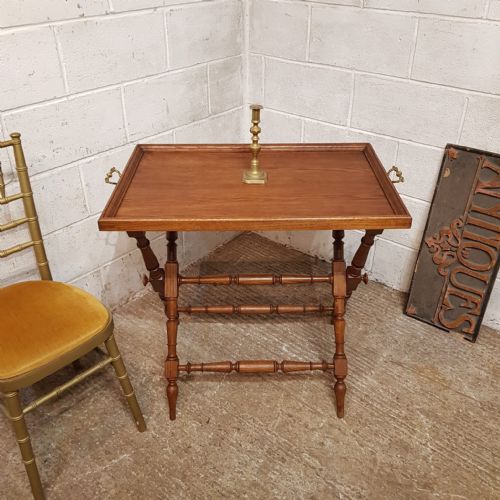


Carved Oak Tray Table
These carved oak tray table pieces offer sturdy timber construction and practical removable tops, serving well for tea or display in traditional spaces.
Carved Oak Tray Table
A carved oak tray table combines a solid wooden tray top with a folding or fixed stand, designed for portability and service. Buyers searching for a carved oak tray table will encounter various forms spanning the Victorian era, the nineteenth century, and the nineteen twenties.
Originating from periods ranging from eighteen seventy to nineteen twenty, these tables demonstrate robust construction suited to both historical interiors and contemporary rooms requiring functional wooden furniture.
How they were made
Construction relies heavily on solid oak and hardwood, selected for strength and distinctive grain patterns. Workshops employed traditional joinery techniques to ensure stability for both the folding stands and the removable trays.
Carving embellishes the timber surfaces, reflecting Jacobean revival, Gothic revival, and Victorian design motifs. Additional materials such as brass, copper, glass, and mirror occasionally appear on inserts, trays, or wheel fittings.
Carved Oak Tray Table Retail Price Guide 2026
Typical asking prices for carved oak tray table among the pieces listed under this phrase on Sellingantiques today, from the lower quarter to the upper quarter. They describe what is for sale here now, not the wider market.
Listings feature oak, brass, copper, glass, and mirror across nineteenth-century and nineteen-twenty periods in styles including Gothic revival, French provincial, and English country.
What varies in quality
Quality differences stem from the depth and crispness of the hand carving on the oak surfaces, distinguishing standard utility items from more ambitious decorative pieces. The weight and selection of the solid timber also affect the overall substance and durability of the stand and tray.
Hardware details, including brass hinges, copper insets, and the integrity of folding mechanisms or wheels, dictate the refinement of individual pieces. Well-preserved joinery and uniform patination across both the top and the base indicate superior preservation over time.
The Carved Oak Tray Table Glossary
- Butlers Tray
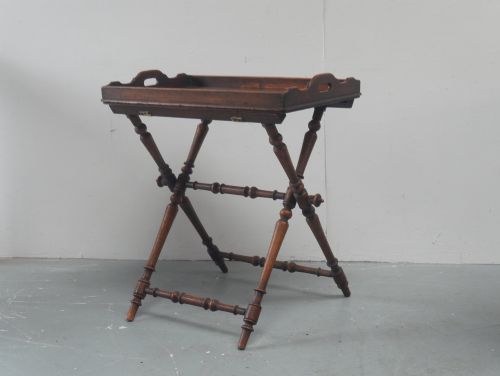
- A portable wooden tray with raised edges, often fitted with cut-out handles, designed to rest upon a separate folding stand. This form allowed servants to transport items between rooms easily.
- Lazy Susan
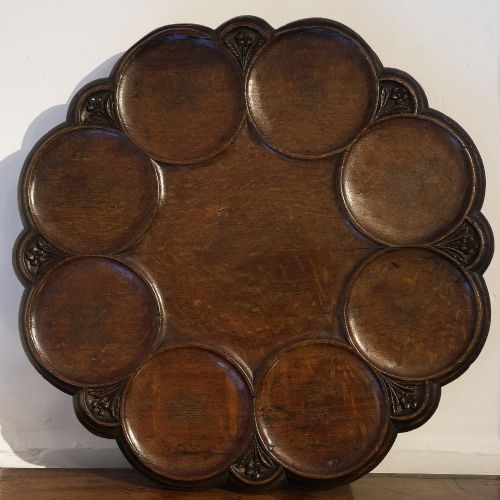
- A revolving tray placed on a table to facilitate the movement of food or condiments. The nineteenth-century oak examples utilise wooden pivot mechanisms.
- Gothic Revival
- An architectural and decorative style popular during the nineteenth century, characterised by pointed arches, trefoils, and heavy carved ornamentation. Pieces in this style display dramatic ecclesiastical motifs.
- Jacobean Revival
- A nineteenth-century design movement mimicking seventeenth-century English furniture, known for dark oak, geometric moulding, and deep relief carving. It gives these tables a sturdy, antique appearance.
- Lift-Off Tray
- A removable upper surface that separates entirely from its base structure. This feature allowed the tray to function independently for serving before returning to the trolley or stand.
Carved Oak Tray Table: Frequently Asked Questions
What is a carved oak tray table used for?
These pieces function primarily as serving furniture or occasional tables, with removable tops that allow food and drinks to be carried directly from the kitchen.
In modern spaces, they serve as side tables or display stands, holding books, lamps, or decorative objects while maintaining portability.
How do I identify a Victorian tray table?
Victorian examples generally date from the mid-nineteenth century to nineteen hundred, often featuring dark oak timber and heavy carved decoration.
Stylistic markers include Gothic revival motifs, folding X-frame stands, and traditional joinery methods typical of nineteenth-century British workshops.
Are the tray tops removable?
Many models feature a lift-off tray design where the top rests securely on the folding stand without permanent fixings.
This construction enabled servants to clear or set tables quickly before placing the tray back onto its supporting frame.
What materials are used besides oak?
While solid oak and hardwood form the primary structure of these tables, makers incorporated auxiliary materials for function and decoration.
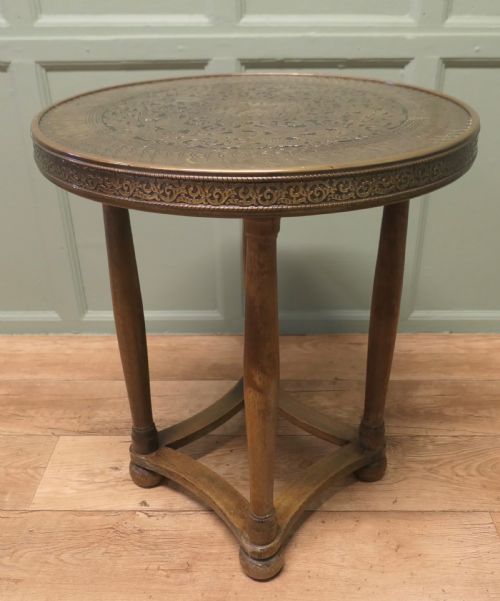
Surviving examples occasionally feature brass handles, copper inset tops, mirrored glass centres, and metal castors on wheeled trolley versions.