

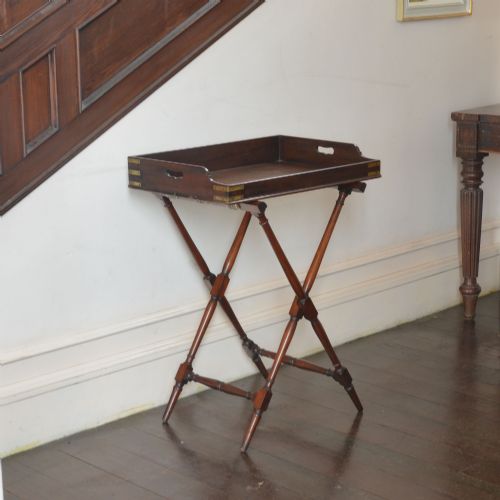
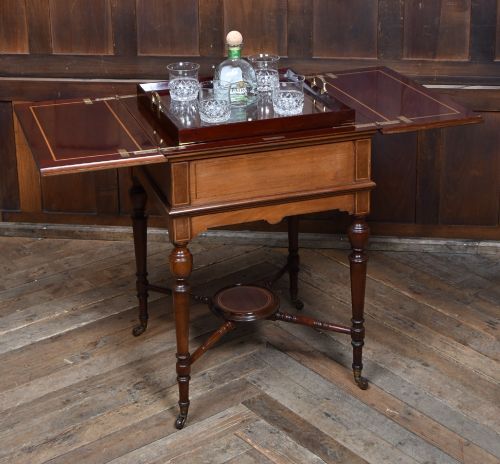

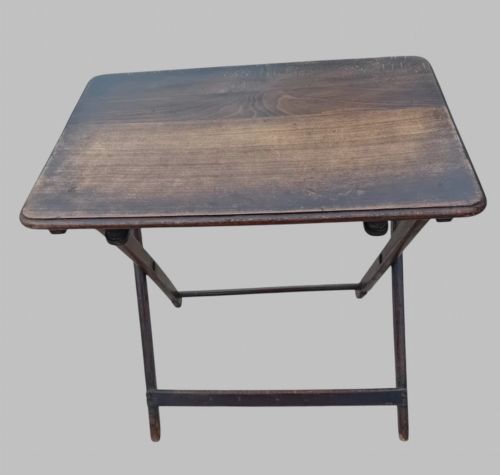

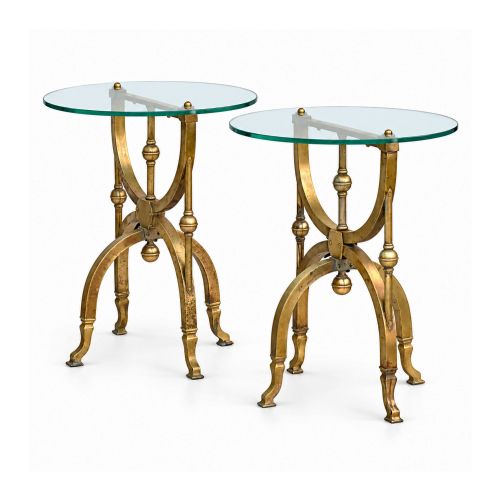

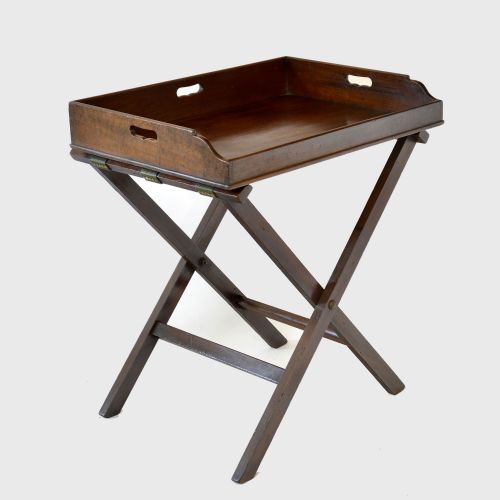
Folding Drinks Table
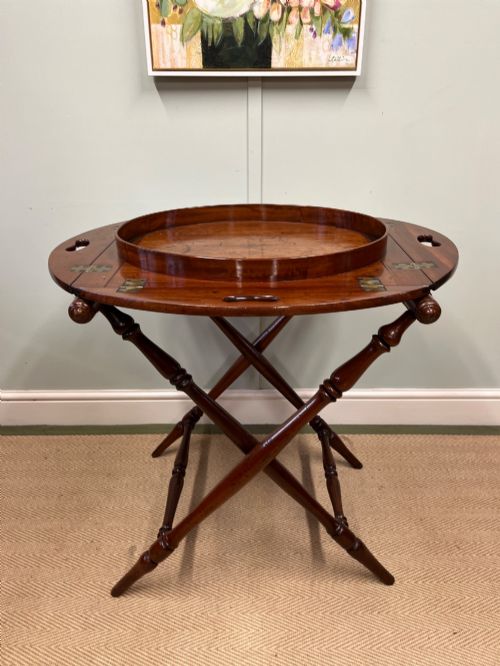
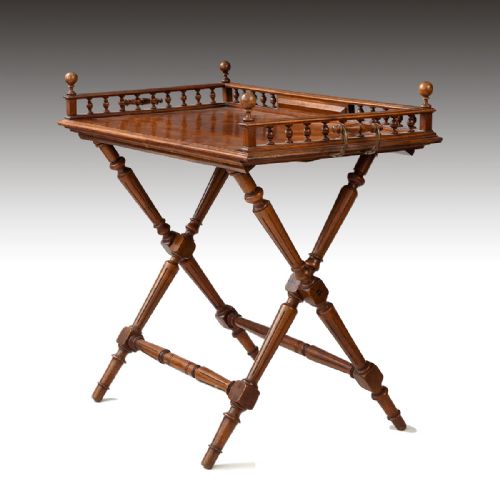
A folding drinks table serves as a portable surface for entertaining, combining a removable tray with a collapsible stand.
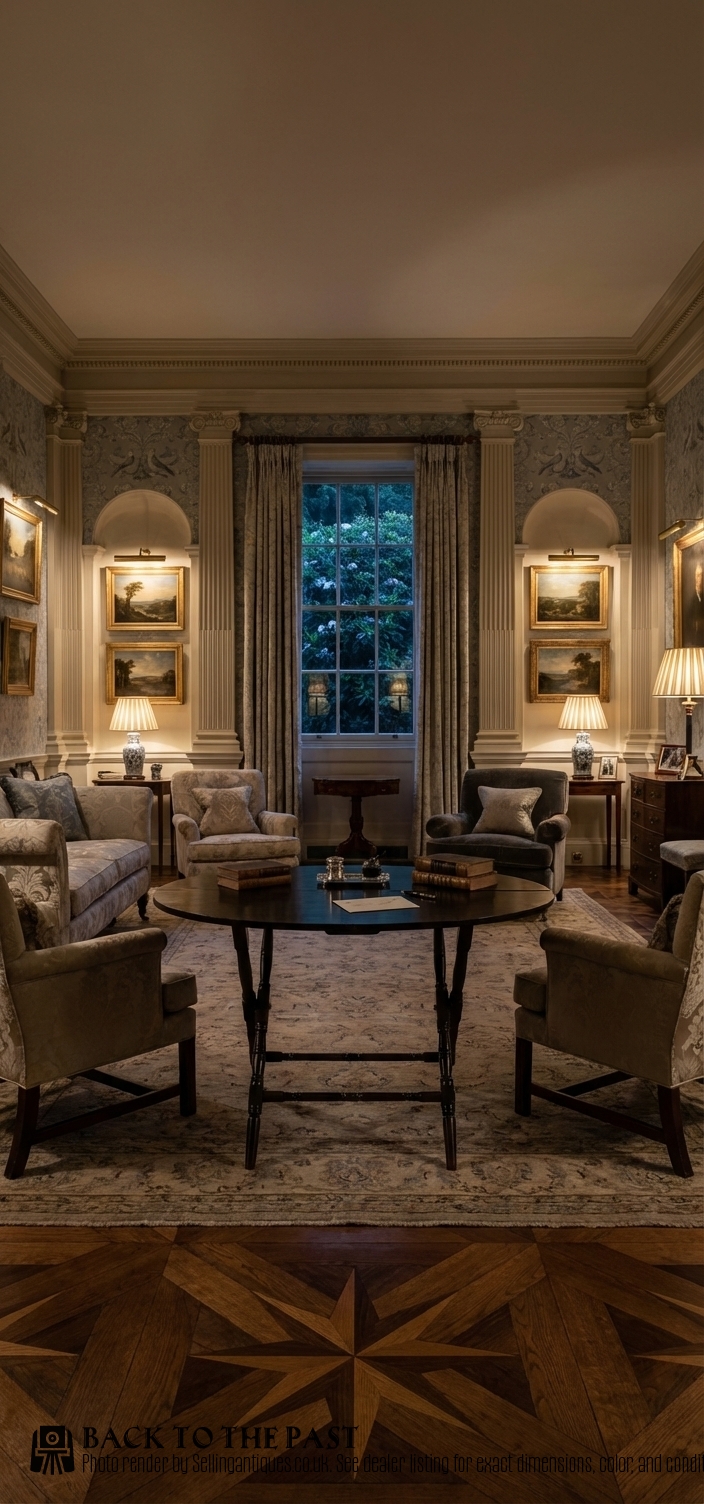
Folding Drinks Table
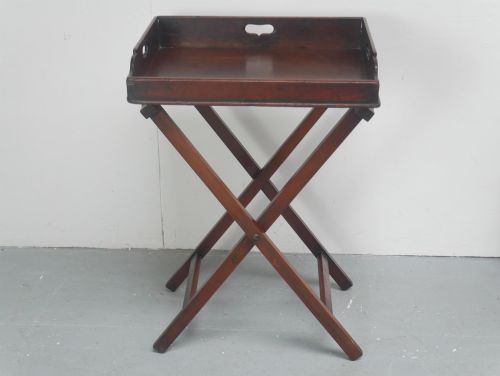
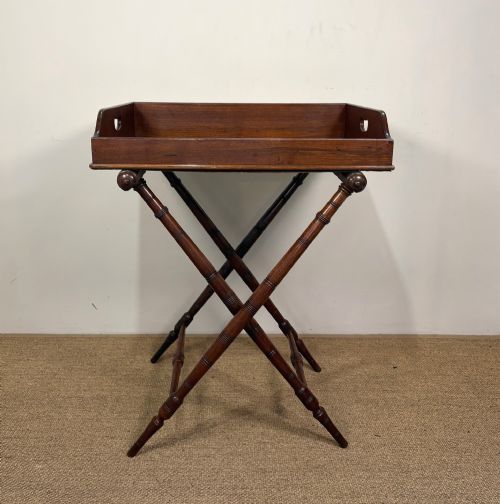
A folding drinks table offers a flexible surface for serving refreshments, typically taking the form of a removable tray resting upon a folding or collapsible stand. When searching for a folding drinks table, buyers encounter formats derived from centuries of domestic service, ranging from simple occasional tables to elaborate serving stands.
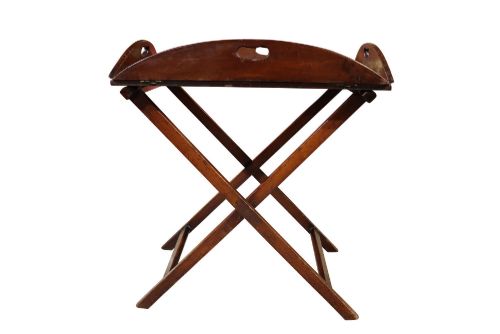
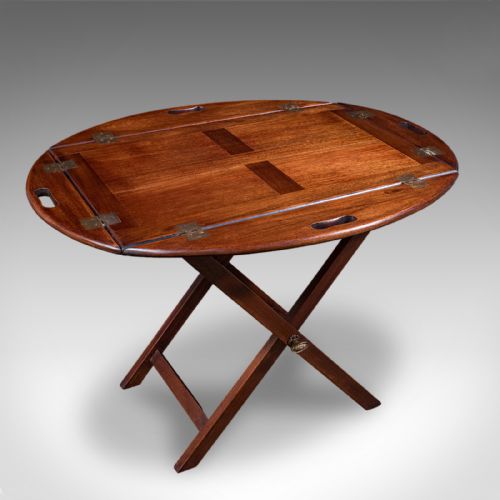
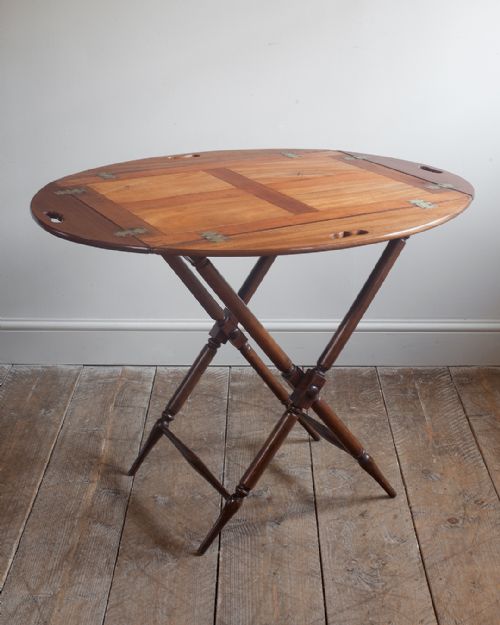
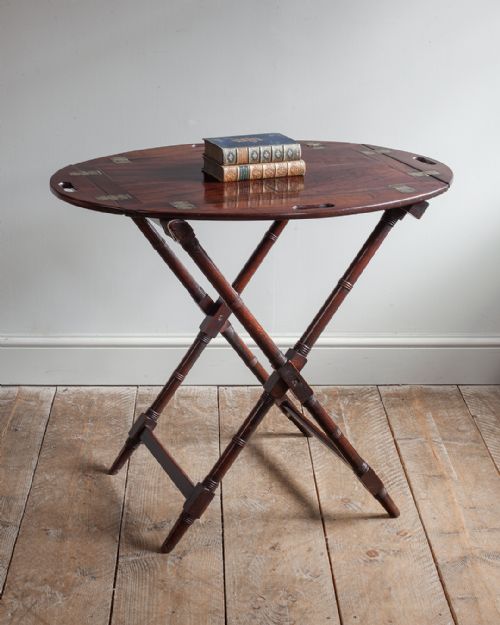
The versions met most frequently on this page include mahogany, oak, and walnut butler trays paired with folding wooden stands, alongside occasional tables from the Georgian, Victorian, and Edwardian periods. Forms such as oval trays, drop-flap serving stands, and campaign style tables dominate the selection, reflecting their original utility in large English households.
Object types appearing in the listings encompass tray tables, side tables, coffee tables, and tea trolleys. These pieces bridge the gap between portable serving equipment and permanent furniture, operating just as effectively today for modern hospitality as they did in past centuries.
Materials and Construction
Cabinet makers utilised dense hardwoods such as mahogany, oak, walnut, and rosewood to construct the trays and stands, ensuring the piece could support the weight of decanters and glassware. Selected timbers often display rich grain patterns, particularly in George III and Victorian examples where mahogany and Cuban mahogany predominate.
Stands were engineered with hinged mechanisms, cross-frames, or folding X-frame supports that allowed the entire unit to collapse flat for storage when not in use. Joinery techniques varied from simple pegged joints in earlier oak pieces to sophisticated folding hardware in later campaign and Edwardian iterations.
Folding Drinks Table Retail Price Guide 2026
Typical asking prices for folding drinks table among the pieces listed under this phrase on Sellingantiques today, from the lower quarter to the upper quarter. They describe what is for sale here now, not the wider market.
The inventory includes multiple design variations, encompassing standard butler trays on stands alongside occasional tables, tea trolleys, and campaign pieces.
Distinctions in Quality
Quality rests primarily in the selection of timber figures, the integrity of the original stand, and the subtlety of edge mouldings on the tray. Superior examples display figured mahogany or burl walnut, whilst simpler versions utilise beech, oak, or plain deal.
The presence of an original matching stand rather than a later replacement elevates a piece considerably. Finer items feature hand-carved details, shaped handles cut directly into the tray sides, and durable brass hinges that operate smoothly without binding.
The Folding Drinks Table Glossary
- Butler tray
- A portable wooden tray with panelled sides, often featuring hinged flaps that can be raised for serving or lowered for carrying. It forms the primary top component of many traditional folding drinks tables.
- Campaign style
- Furniture designed to dismantle or fold easily for military travel and field use. These pieces utilise brass corners, recessed handles, and collapsible stands for maximum portability.
- Drop-flap
- A hinged section of a table top or tray that lifts to extend the surface area or drops down when not in use. It allows a compact unit to convert into a larger serving space.
- Metamorphic
- Furniture engineered to transform from one form or function into another, such as a trolley converting into a serving table. This mechanism requires precise cabinet work.
- Cellarette
- A fitted cabinet or low box designed to hold bottles of wine and spirits securely. In Georgian dining rooms, these functioned alongside serving tables.
Folding Drinks Table: Frequently Asked Questions
How were folding drinks tables used?
Servants used these tables to transport glassware, decanters, and refreshments from the pantry to the drawing room or garden. The removable top allowed staff to clear drinks quickly without moving the entire structure.
In contemporary interiors, they function as flexible side tables or mobile bar units for entertaining guests. Their collapsible nature permits easy storage when extra floor space is required.
Are the trays detachable from the stands?
Most traditional examples feature a loose tray that simply rests upon the folding wooden stand without permanent fixings. This design originated to allow servants to carry the tray independently.
Certain later Edwardian and Art Deco variations integrate the folding mechanism directly into the frame or trolley structure. Buyers should examine individual listings to confirm whether the top lifts off completely.
How do I date a folding drinks table?
Dating relies upon timber selection, hardware, and stylistic traits associated with specific historical periods. Georgian and George III pieces typically exhibit straight-grained or figured mahogany with hand-cut dovetails, whilst Victorian examples often feature heavier carved oak or rosewood.
Edwardian and later 1910 pieces introduce lighter timbers like satinwood and beech, alongside factory-produced brass hinges. Comparing the construction methods against known period styles provides a reliable timeline.
How do I care for antique wood surfaces?
Maintain the timber by applying a quality beeswax polish periodically to nourish the grain and protect against moisture rings from glasses. Avoid placing wooden folding tables near direct heat sources or strong sunlight, which can dry out the old finish.
Use coasters on the tray surface to prevent condensation damage to antique polish. Gentle dusting with a dry lint-free cloth preserves the natural patina over time.