




Victorian Oak Campaign Furniture
Victorian oak campaign furniture is modular, brass-bound utility built for travel, offering robust storage and folding forms designed to move easily.
How they were made
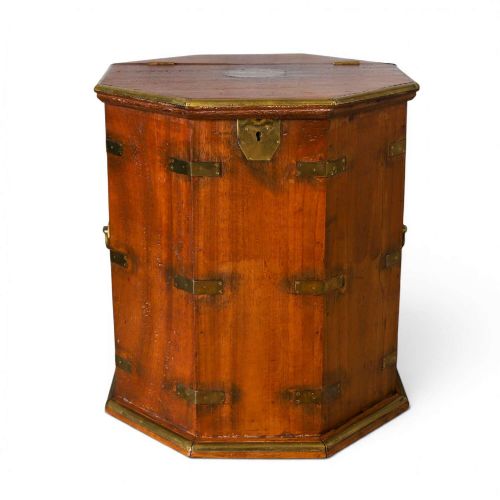
Makers utilised solid oak alongside secondary timbers like mahogany and teak to build durable carcasses capable of enduring rough transport. Metal reinforcement was essential, employing brass mounts, corners, and straps to protect edges and joints during transit.
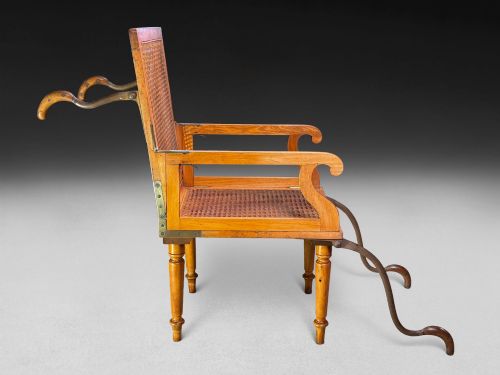
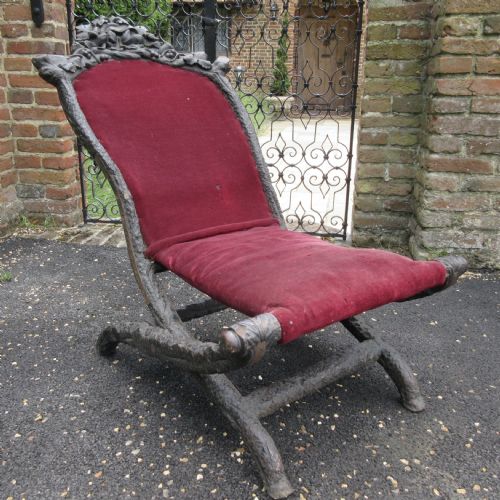
Construction methods focused on modular dismantling, featuring detachable legs, hinged lift-up tops, and folding mechanisms. Surfaces were often fitted with iron hardware, velvet upholstery, cane webbing, and carved details as seen in the Black Forest folding chairs.
What varies in quality
Quality in these pieces depends upon the precision of the modular engineering and the integrity of the original brass hardware and flush-fitting handles. Superior examples retain their original inscriptions, working locking mechanisms, and smooth dismantling actions.
The selection of timber grade also dictates quality, with figured pollard oak or dense standard oak providing a superior finish compared to plain utility stock. Carved detailing, such as that on folding chair frames, distinguishes standard camp gear from bespoke pieces.
Listings feature items dated from 1840 through the late Victorian period, constructed in oak with brass and iron mounts.
The Victorian Oak Campaign Furniture Glossary
- Campaign chest
- A modular chest of drawers built in two or more sections with recessed brass handles for stacking during transit. These units allowed officers to pack their belongings securely for military deployment.
- Writing slope
- A portable slant-topped desk that opens to reveal storage compartments for paper and ink. These slope boxes were essential field writing equipment for nineteenth-century travellers.
- Butlers tray
- A detachable wooden tray designed to sit upon a folding X-frame stand. This form allowed servants to serve meals and clear rooms quickly.
- Flush handle
- A metal pull inset directly into the wood surface so it does not project beyond the edge. This design prevents snagging and allows pieces to pack tightly against one another.
- Sporran chest
- A specialised compartmented chest designed for storing highland dress accessories and socks. These Scottish pieces feature internal dividers tailored to specific garments.
Victorian Oak Campaign Furniture: Frequently Asked Questions
What is campaign furniture?
Campaign furniture refers to portable household goods designed for military officers and colonial administrators on the move.
These pieces typically fold, dismantle, or feature carrying handles to facilitate transport by pack animal or wagon.
How do you date these pieces?
Dating relies on construction methods, timber choices, and style markers recorded across the nineteenth century. Exact dates often derive from inscribed brass plaques or documented provenance.
Hardware styles and patented folding mechanisms also help narrow down the period of manufacture.
Were these pieces used in battle?
They were designed for the rigours of military campaigns, expeditions, and colonial postings rather than active combat. Officers took them into the field to maintain comfortable living quarters.
Sturdy oak and brass reinforcement protected the contents during frequent relocations.
How do you maintain oak campaign surfaces?
Maintenance involves gentle cleaning and occasional waxing to preserve the finish of the oak and the polish of the brass mounts. Avoid placing them near excessive heat sources that could split the timber.
Keeping brass hardware clean maintains the contrast against the dark wood.