
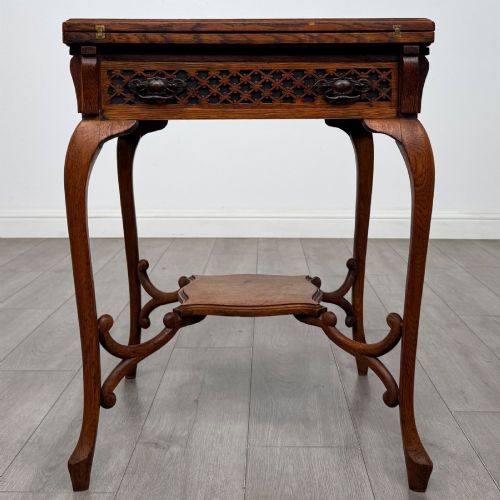


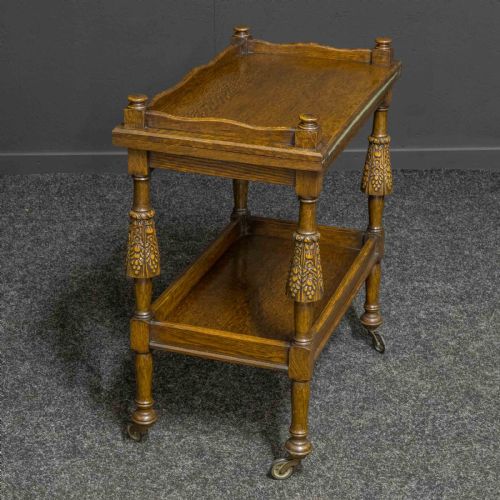


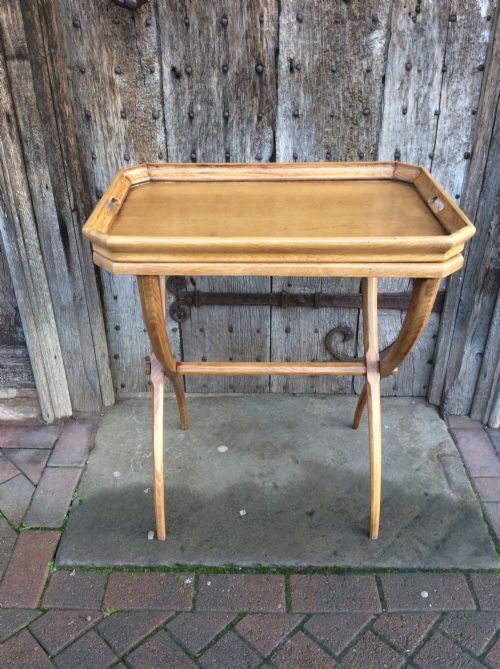


Folding Oak Tea Table
A folding oak tea table is a versatile surface combining practical timber construction with a mechanism for compact storage when not in use.
Folding Oak Tea Table
A folding oak tea table serves as a flexible surface designed for entertaining or daily use in domestic spaces. When searching for a folding oak tea table, buyers encounter formats ranging from Edwardian tea trolleys with folding tops to Victorian butler's trays on folding stands and George IV burr oak card tables.
The selections span multiple periods, including the Regency era, Victorian times, the Arts and Crafts movement, and the early twentieth century. Forms vary from simple occasional tables and gate-legged designs to multi-level tea trolleys and swivel occasional tables.
Most examples utilise solid timber or burr veneers, often incorporating hinges, dropleaves, or folding mechanisms to allow easy stowage. Buyers frequently find pieces exhibiting regional craftsmanship from the nineteenth and early twentieth centuries.
How they were made
Construction relies primarily on oak, supplemented by burr oak veneers, ebony stringing, and occasional elm or teak elements. Artisans utilised traditional joinery combined with functional metal, iron, and brass hinges, brackets, or castors to facilitate the folding and movement of the tables.
Surface treatments range from plain polished timber to carved hardwood details and contrasting ebony inlays. The integration of folding stands, drop leaves, and swivel tops demonstrates careful mechanical design suited to transforming everyday furniture for specific social occasions.
Some tables double as card tables with concealed folding tops, proving that Victorians took both their tea and their evening entertainment very seriously.
What varies in quality
Quality in these pieces is dictated by the selection of materials, such as figured burr oak versus plain timber, and the precision of the joinery. Superior examples show refined carving, clean lines, and well-fitted hinges that operate smoothly.
The complexity of the form also influences distinction, separating simple utility furniture from pieces featuring elaborate Arts and Crafts detailing or high-status Regency attribution.
William Trotter
The Folding Oak Tea Table Glossary
- Drop leaf
- A hinged table flap that can be raised to extend the surface or dropped when space is required. This mechanism allows the furniture to adapt to smaller rooms.
- Butler's tray
- A removable tray top resting upon a folding X-frame stand. It was traditionally used for serving refreshments and carrying items between rooms.
- Gate-legged table
- A table with hinged legs that swing out like a gate to support folding leaves. It provides a large surface area while folding down compactly.
- Burr oak
- Timber taken from a tree growth that produces intricate, swirled grain patterns. Cabinet makers utilised these veneers on prominent surfaces for decorative effect.
- Tea trolley
- A wheeled cart designed for serving tea, often featuring multiple tiers and folding leaves. These pieces became popular during the Edwardian period.
Folding Oak Tea Table: Frequently Asked Questions
How do I date a folding oak tea table?
Dating relies on identifying stylistic markers, construction methods, and materials associated with periods like the Regency era, Victorian times, or the Edwardian decades. Elements such as brass hardware, carved detailing, and specific tea trolley forms help narrow down the decade of production.
Comparing the timber grain, such as the use of burr oak or plain domestic oak, alongside the sophistication of any folding mechanism, provides further clues to the manufacturing era.
Were these tables used only for tea?
While many served as tea trolleys or butler's trays for refreshments, the broader category includes card tables, occasional tables, and coaching tables. Their flexible designs meant they adapted easily to writing, dining, or card games.
The inclusion of folding leaves and removable trays made them suitable for multi-purpose rooms where furniture needed to be cleared away quickly.
How do I maintain the oak finish?
Regular dusting with a dry cloth keeps the timber free from grit, while occasional applications of appropriate furniture wax preserve the sheen. Avoiding direct sunlight and excessive moisture prevents the oak and any veneers from drying out or warping.
Metal hinges and brass castors benefit from gentle cleaning to maintain their movement without disturbing the surrounding wood.
What is the difference between a butler's tray and a tea trolley?
A butler's tray consists of a portable tray with raised sides resting on a separate folding wooden stand, allowing the entire top to be lifted off. A tea trolley is typically a fixed wheeled cart featuring multiple tiers and sometimes folding leaves for mobility around the home.
Both items served the purpose of transporting food and drink, but the butler's tray prioritises removable utility while the trolley focuses on rolling tiers.