
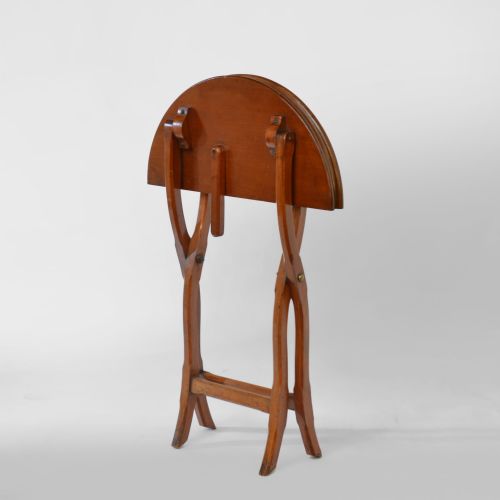


Folding Tilt Top Table
These folding tilt top table examples combine clever mechanisms with timber surfaces, offering practical space-saving utility for modern rooms.
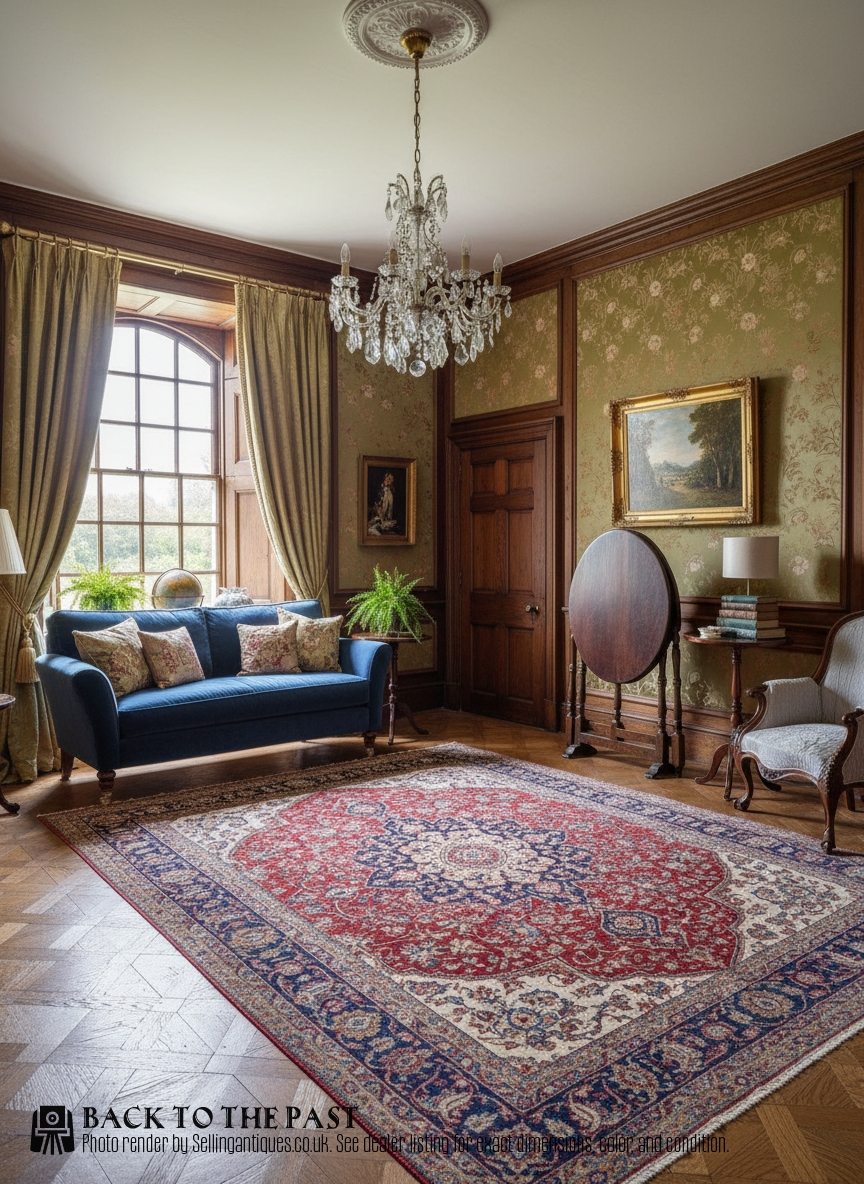
Folding Tilt Top Table
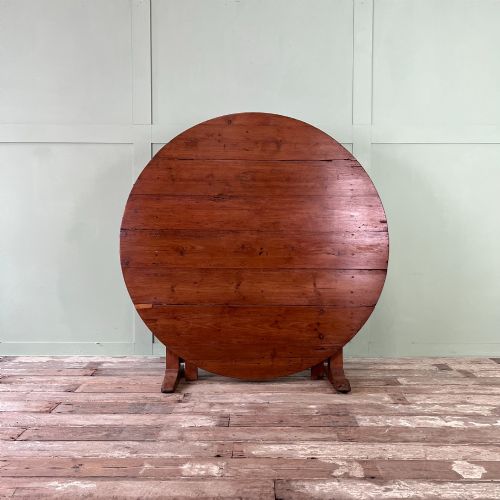
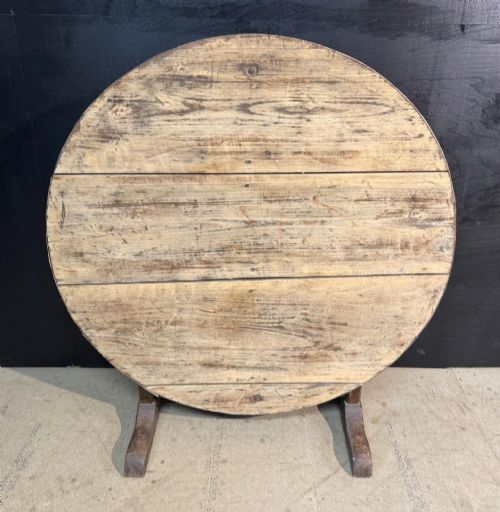
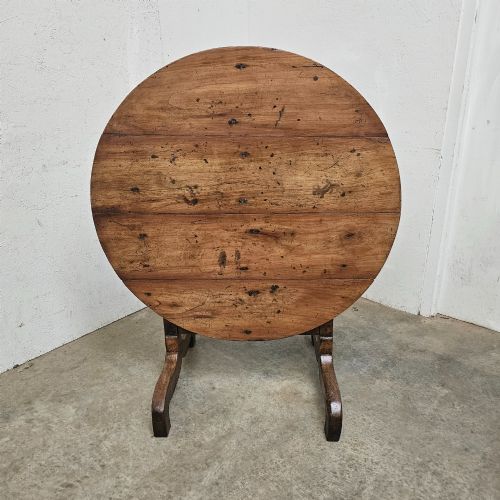
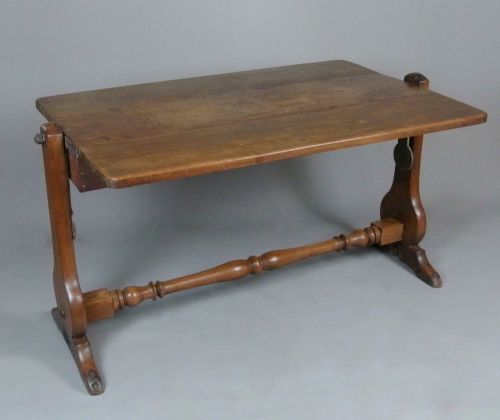
When you search for a folding tilt top table, you are looking at utilitarian furniture designed to fold flat or pivot upright for storage when not in use. The pieces seen here span centuries of design, ranging from formal Georgian examples to working French vineyard tables.
The most common forms on this page include French Vendange and vineyard tables alongside British mahogany and oak occasional or campaign items. These serve easily as dining tables, side tables, or occasional surfaces that tuck away against a wall.
Origins stretch across the nineteenth century into the twentieth century, bringing together diverse styles such as French Provincial, Victorian, and Edwardian. Each piece reflects the specific domestic or agricultural needs of its original makers.
How they were made
Construction relies heavily on timber selections like mahogany, oak, walnut, cherry, and fruitwood, often paired with iron and brass hardware for pivoting and folding mechanisms. Solid woods provide the necessary durability for items designed to be constantly moved and collapsed.
Figured walnut veneers appear on more decorative iterations, whilst simpler utilitarian versions utilise solid pine, oak, or cherry planks. Metal hinges, catches, and brackets allow the tops to tilt and the bases to fold without compromising structural stability.
One clever piece doubles as an embroidered fire screen that transforms into an occasional table.
What varies in quality
Quality shows in the smoothness and rigidity of the pivoting and folding mechanisms, separating simple utilitarian pieces from refined parlour furniture. Well-made examples maintain tight joints and stable upright positions without wobbling when locked.
The choice of timber and surface figuring also drives distinction, from plain pine and oak boards up to figured walnut veneer and solid mahogany. Finer joinery and careful matching of wood grains mark out pieces intended for formal reception rooms rather than working cellars.
The Folding Tilt Top Table Glossary
- Tilt top table
- A table with a hinged top that pivots from horizontal to vertical, allowing it to be stored compactly against a wall.
- Vendange table
- A French wine harvest table featuring a folding base and a round top, historically used during the grape picking season.
- Campaign table
- Portable furniture constructed with folding or demountable parts, originally utilised by military officers on active service.
- Figured walnut veneer
- A thin decorative slice of walnut wood with an ornate grain pattern, applied to a secondary timber base.
- Metamorphic
- Furniture designed to transform into another form or function, such as a fire screen that converts into an occasional table.
Folding Tilt Top Table: Frequently Asked Questions
How do I use a folding tilt top table?
Release the catch beneath the top to pivot the surface into a vertical position, then fold the base if it utilises a scissors or gateleg action. This allows the item to stand flat against a wall or tuck into a narrow alcove when floor space is needed.
In daily use, return the top to the horizontal position and secure the latch before placing items on the surface. Ensure the mechanism is fully locked to prevent accidental tipping during use.
Were these tables used outdoors?
French Vendange and vineyard tables were working pieces used in agricultural settings during grape harvests and wine tastings. Their folding design made them easy to transport between cellars, fields, and storage sheds.
Other varieties, such as mahogany tea tables and walnut occasional pieces, were strictly indoor furniture intended for formal drawing rooms and parlours. Check the timber and style to understand the original context of each piece.
How do I care for the timber surface?
Dust regularly with a soft, dry cloth and apply a quality beeswax periodically to nourish the wood grain. Avoid placing timber surfaces in direct sunlight or near heat sources to prevent warping and splitting.
Use coasters and placemats to protect polished wood from moisture and heat marks. Gentle handling of the folding and tilting hinges will preserve the original hardware.
How do I date a folding tilt top table?
Examine the construction methods, fastener types, and timber characteristics to establish an approximate period. Georgian and Victorian pieces often show hand-tool marks and specific joint configurations that differ from later twentieth-century production.
Compare the style against known design eras like Edwardian or French Provincial to narrow down the timeframe. Hardware such as brass catches and iron hinges also offers clues to the manufacturing date.