


Antique French Tilt Table
An antique french tilt table brings ingenious workspace and dining flexibility into a room, joining centuries of continental craft.
Antique French Tilt Table
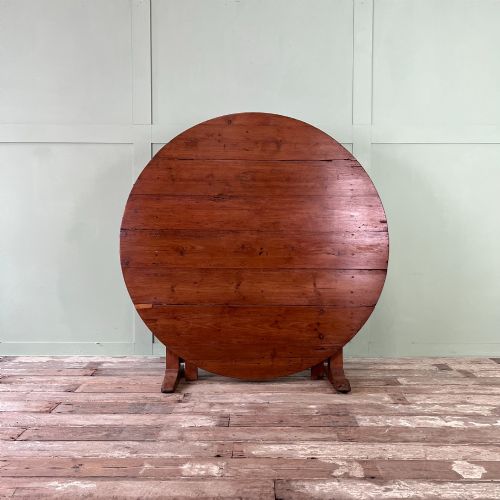
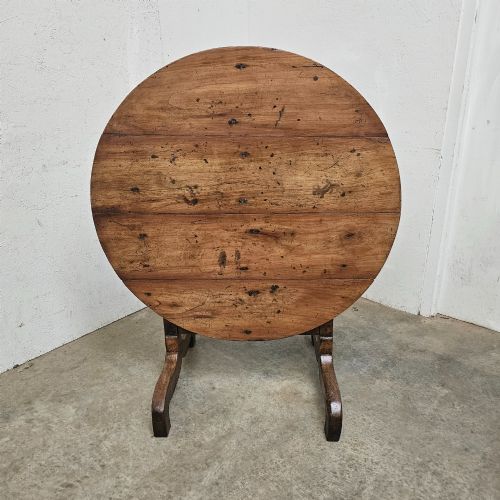
An antique french tilt table is a versatile surface engineered to pivot upright when not in service, saving precious floor space in domestic interiors. Buyers searching for an antique french tilt table encounter diverse forms, from robust wine-harvest designs to refined parlour pieces.
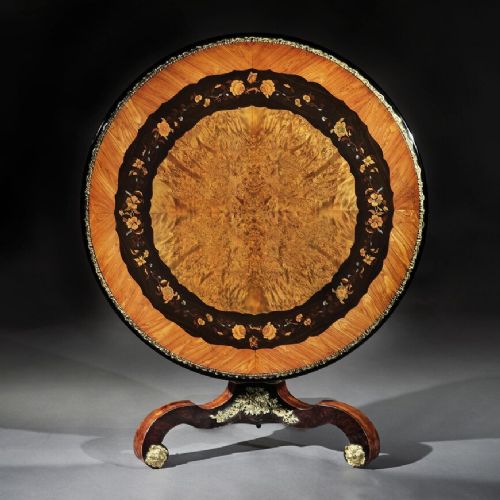
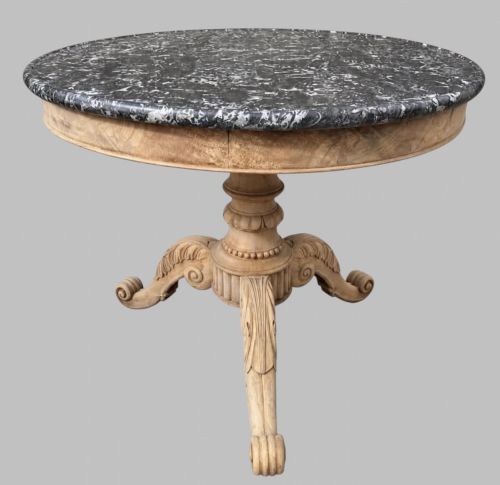
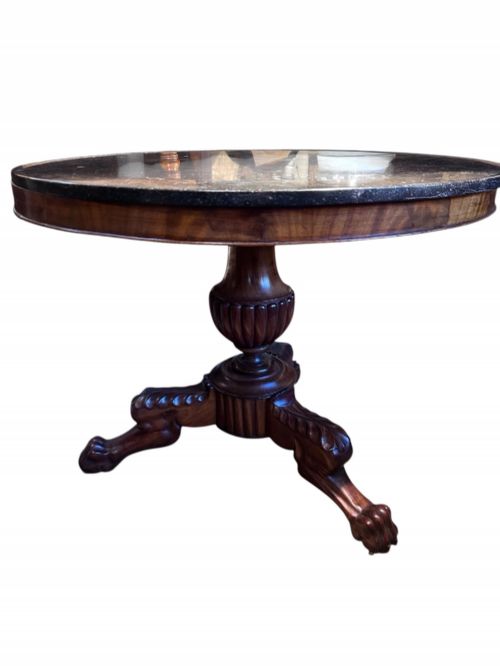
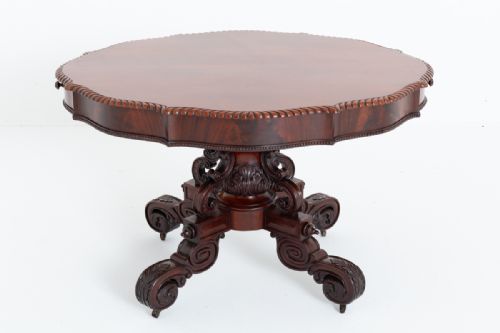
The selection here draws predominantly from the nineteenth century, capturing periods such as the Louis Philippe and French Rococo Revival eras. Pieces range from sturdy oak and cherry constructs intended for practical labour to elegant burr walnut and kingwood occasional tables.
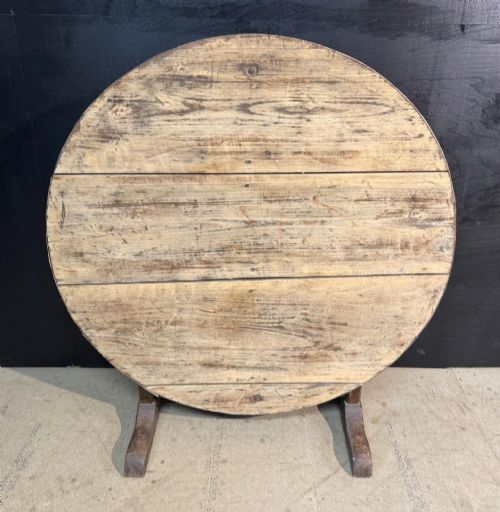
Regional farmhouse iterations like the Vendange or Vigneron wine-tasting tables sit alongside urban centre tables and folding variants. This mix reflects both humble agrarian utility and sophisticated city design across French provincial and classical idioms.
Materials and construction
Cabinetmakers utilised a rich palette of timbers, combining structural hardwoods like oak and cherry with decorative veneers such as mahogany, burr walnut, and kingwood. Selected pieces feature marquetry inlay and amboyna mounts that elevate the visual depth of the top.
Clever mechanical hinges and pivoting timber brackets allow the heavy tabletops to tilt securely on sturdy pedestals or folding leg frames. Brass fittings frequently reinforce these pivot points and folding mechanisms, ensuring durability through generations of daily use.
Vineyard hands relied on these folding tables for harvest meals before folding them flat to clear the barn.
Distinctions in quality
Quality rests upon the selection of timber and the precision of the pivoting mechanism, where tighter tolerances separate utilitarian workshop items from high-style salon pieces. The complexity of the surface treatment, from simple planked fruitwood to intricate kingwood marquetry, marks the maker's ambition.
Proportion and stability define the superior examples, ensuring that the tilt top rests level and rigid when lowered. Maker attribution, such as work associated with Gillows or Edward Holmes Baldock, introduces an additional tier of craftsmanship and documented heritage.
Edward Holmes Baldock·Gillows
The Antique French Tilt Table Glossary
- Gueridon
- A small French table, typically supported by a single central column or pedestal, originating in the seventeenth century. These versatile stands often served as torchieres or small occasional surfaces in salons.
- Vendange table
- A traditional French wine-harvest table featuring a folding or tilting top designed for easy storage during non-vintage months. They are commonly constructed from sturdy fruitwoods, oak, or cherry.
- Tilt top table
- A table equipped with a hinged mechanism allowing the surface to swivel into a vertical position. This clever engineering enabled the furniture to stand flat against a wall when floor space was required.
- Marquetry
- The art of applying decorative pieces of veneer to a structural structure to form intricate pictorial or geometric patterns. Makers utilised contrasting coloured woods to achieve rich textural variety.
- Louis Philippe
- A mid-nineteenth-century French style characterised by restrained classical proportions and rich mahogany or walnut veneers. Ornamentation is typically subtle, placing emphasis on the natural beauty of the timber.
Antique French Tilt Table: Frequently Asked Questions
How do you tilt the top?
The top pivots on a central hinge mechanism secured beneath the surface by wooden latches or metal catches. Releasing the catch allows the heavy timber top to swing smoothly into a vertical position.
This ingenious engineering lets the furniture stow flat against a wall when floor space is needed.
Where were these tables used?
Depending on their construction, these surfaces served various roles from provincial vineyards to refined Parisian salons. Simple oak and cherry variants functioned as hardworking utility tables in rural homes.
Meanwhile, highly decorated marquetry centre tables and kingwood occasional pieces graced formal drawing rooms and sitting areas.
How do I care for the wood?
Maintain the timber by keeping the surface away from direct heat sources and sudden humidity shifts that can affect old veneers. Regular dusting with a soft, dry cloth preserves the natural lustre of walnut, mahogany, and polish.
Avoid chemical polishes and use beeswax sparingly to nourish antique fruitwoods and decorative inlays.