

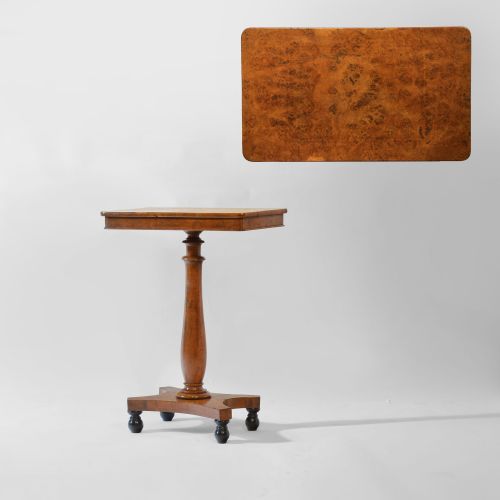
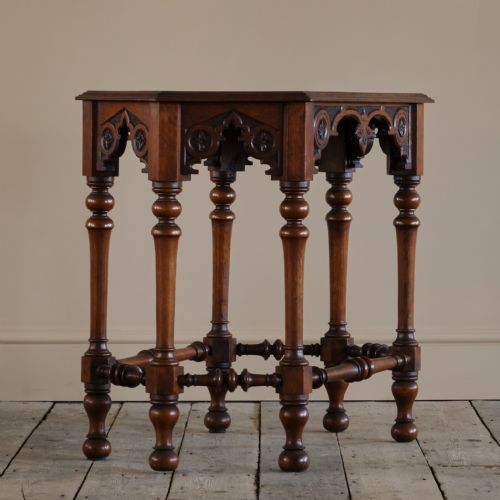
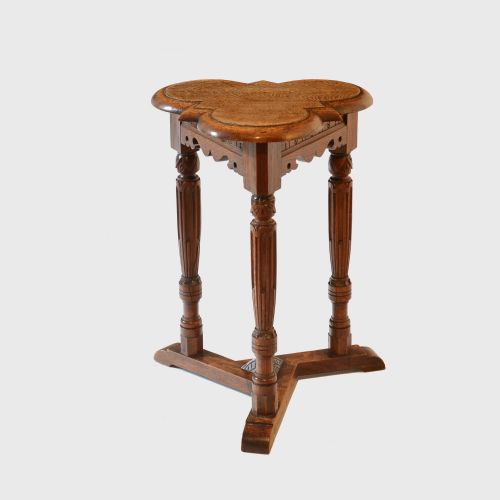
Victorian Oak Occasional Table
When you handle a victorian oak occasional table, you hold a piece designed for the shifting needs of nineteenth-century rooms.
Victorian Oak Occasional Table
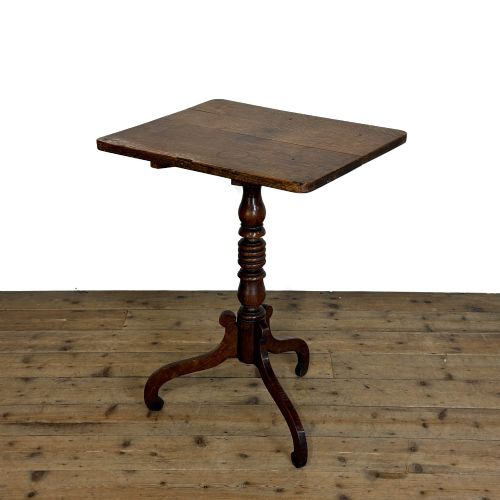
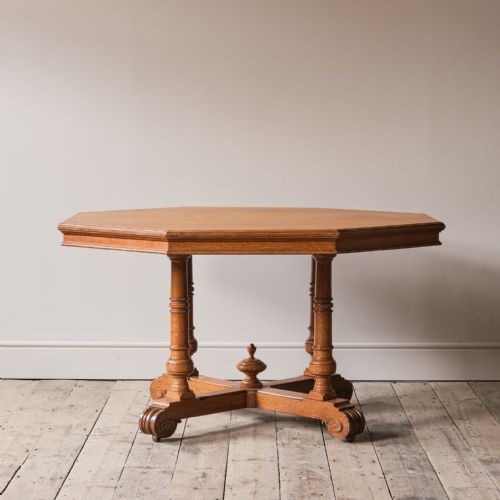
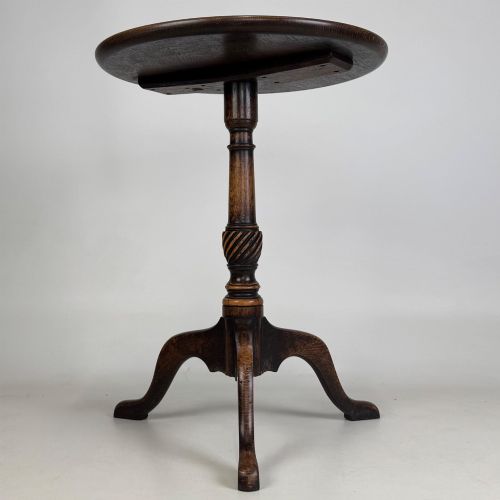
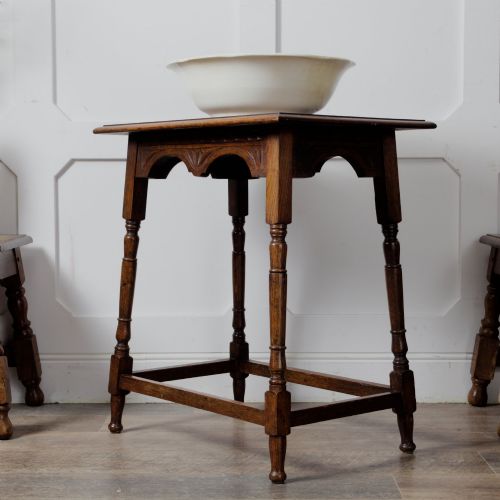
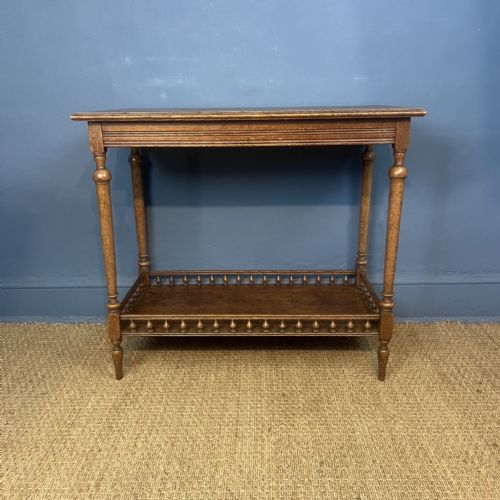
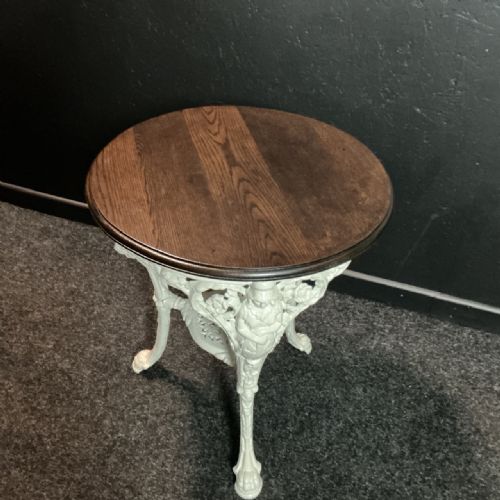
A victorian oak occasional table serves as a movable surface for lamps, books or drinks, appearing in various forms across sitting rooms and halls. The selections here range from simple tripod wine tables and cricket tables to octagonal centre tables and carved two-tier side pieces.
Most examples date from the middle to the late nineteenth century, reflecting the periods of revivalism and reform that favoured solid timber and visible grain. Buyers encounter standard four-legged side tables alongside gate-leg folding versions, butler trays on stands, and specialised tea or card tables.
How they were made
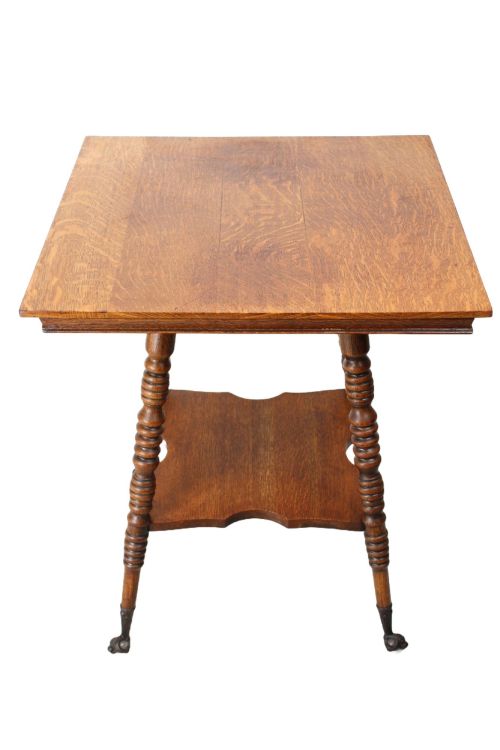
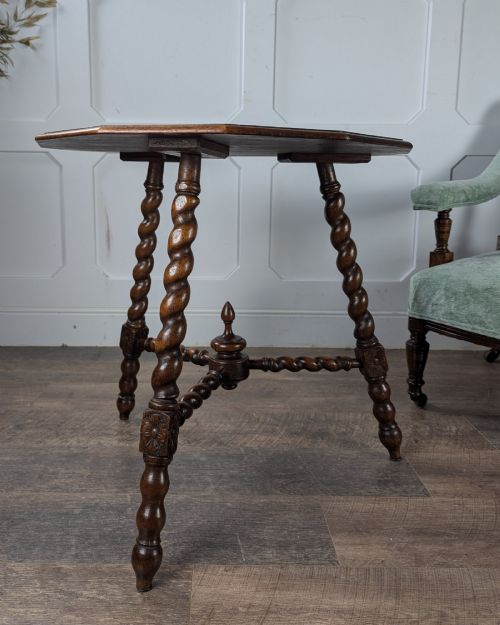
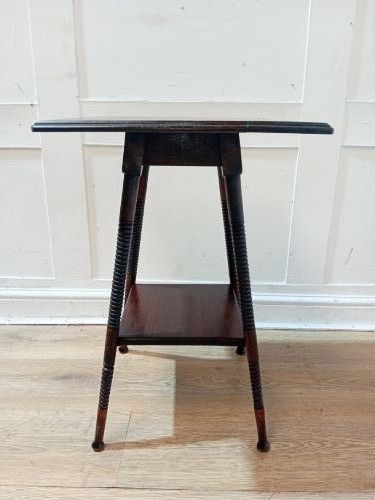
Makers utilised solid timber, frequently selecting quarter-sawn oak to display the characteristic medullary rays across the top. Decorative variations incorporate burr oak, pollard oak, or contrasting inlays of ebony, while structural supports often feature turned barley-twist legs, bobbin turnings, or sturdy pedestals.
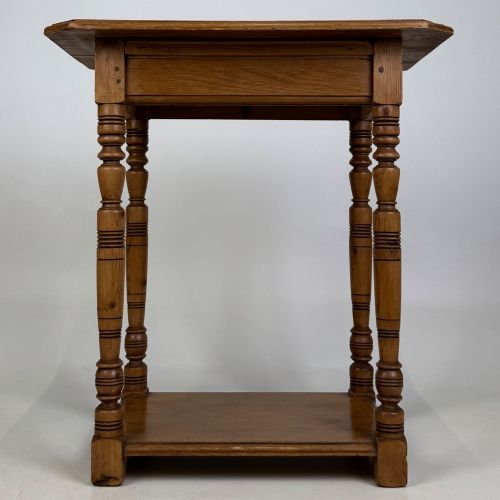
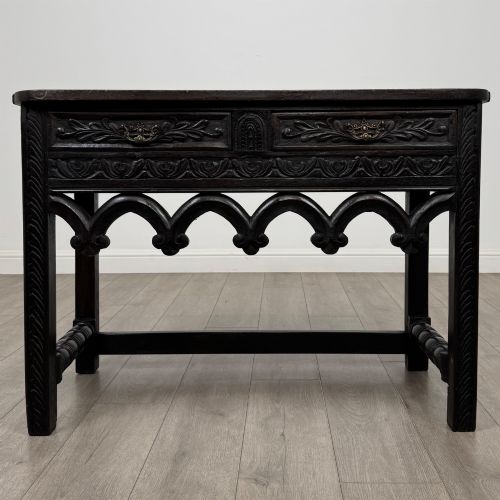
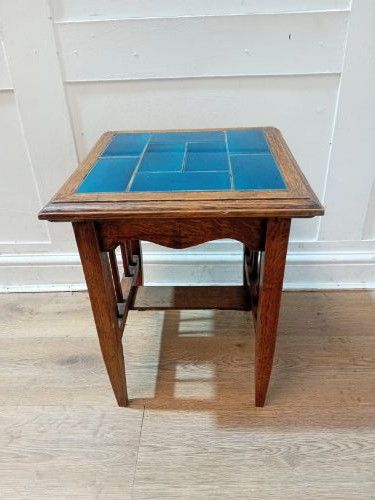
Joinery techniques rely on traditional mortise and tenon construction for stability, supplemented by turned components and carved ornamentation. Certain Arts and Crafts and Gothic Revival pieces display hand-carved leaf motifs, linenfold panels, or structural pegged joints rather than modern fasteners.
A zebra hide occasional table by Rowland Ward offers an unexpected taxidermy surface amongst the traditional timber designs.
What varies in quality
The distinction between standard utility items and superior examples lies in the selection of the timber and the depth of the carving. Tables utilising figured burr oak, pollard oak, or dense Golden Oak display greater natural movement and visual texture than plain timber versions.
Construction details further separate workshop output, visible in the weight of the turnings, the crispness of hand-carved Green Man or foliage motifs, and the integration of secondary woods. A well-proportioned frame with tight joints and original hardware represents the higher tier of nineteenth-century production.
Liberty of London·William Birch·Rowland Ward·Gillows
The Victorian Oak Occasional Table Glossary
- Occasional table
- A small, movable table designed for specific, intermittent use around a room rather than a fixed dining or writing position.
- Cricket table
- A small three-legged round table, typically constructed with solid timber and used near firesides or as a lamp stand.
- Tilt-top table
- A table featuring a mechanism that allows the top to hinge vertically into a flat position when not in use, saving valuable floor space.
- Barley-twist
- A decorative turning technique resembling a spiralling rope, frequently utilised on nineteenth-century table legs and upright supports.
- Pollard oak
- Timber taken from trees that have been pollarded, producing dense clusters of growth rings and highly figured patterns across the surface.
Victorian Oak Occasional Table: Frequently Asked Questions
Where did people put these tables?
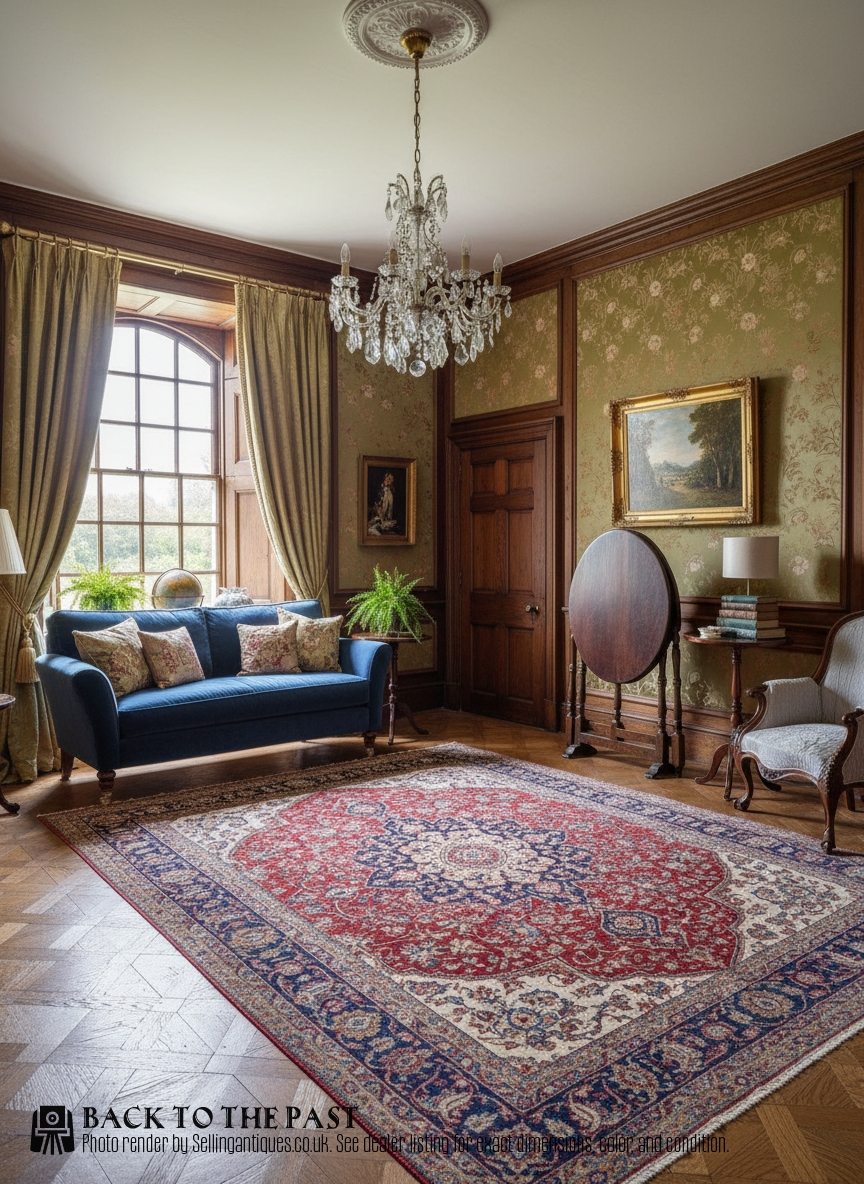
Nineteenth-century households placed these small surfaces beside armchairs, in hallways, or near windows to hold portable lighting, books, and tea wares. Their manageable proportions allowed servants or family members to shift them around rooms depending on the hour and activity.
Today, they function easily beside modern seating as lamp stands or display surfaces, fitting into corners that larger furniture cannot occupy.
How do I spot a tilt-top mechanism?
A tilt-top table utilises a wooden catch or brass latch underneath the surface, allowing the top to pivot upright against the central pillar. This clever engineering originally permitted the furniture to stand flat against a wall when the room needed to be cleared.
When examining a tilting mechanism, check that the pivot block and catch operate smoothly without excessive wobble in the central column.
What is the difference between a side table and a centre table?
A centre table is traditionally built to stand free in the middle of a room, finished with detail on all four sides and often featuring an octagonal or round top. Side tables are meant to sit flush against a wall or beside a piece of upholstered furniture.
Centre tables generally offer a larger surface area and heavier pedestal or four-legged bracing to support items from every angle.
How do I care for an oak surface?
Solid oak responds best to occasional applications of beeswax and a soft cloth to nourish the grain and protect against dry air. Avoid placing these pieces in direct sunlight or near modern heating vents to prevent the timber from splitting.
Using coasters and mats will protect the historic polish from moisture rings while preserving the patina built up over generations.