


Victorian Nursing Chair Pair
A victorian nursing chair pair brings low-slung comfort and rich timber frames to a bedroom or drawing room, offering an authentic period seating arrangement.
Victorian Nursing Chair Pair
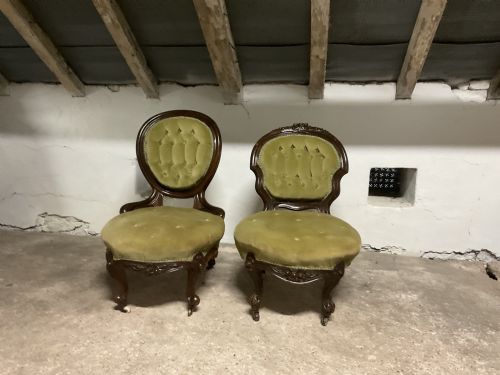
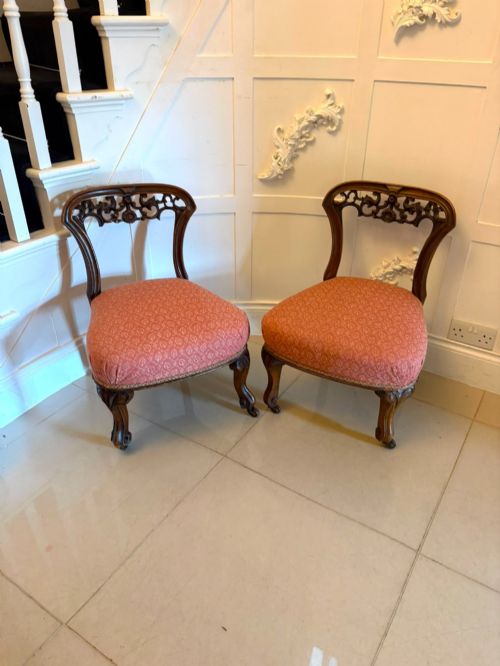
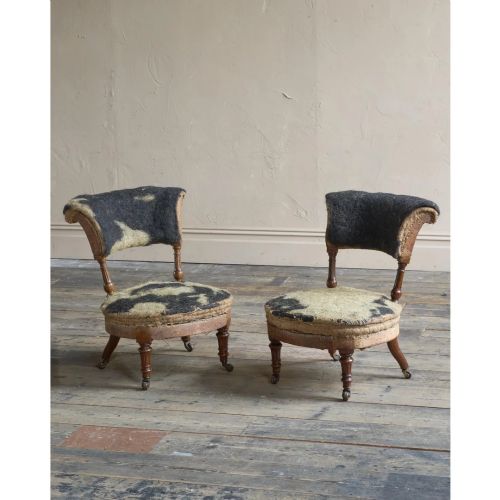
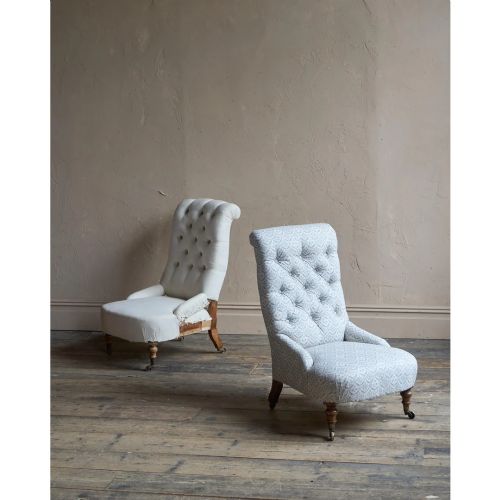
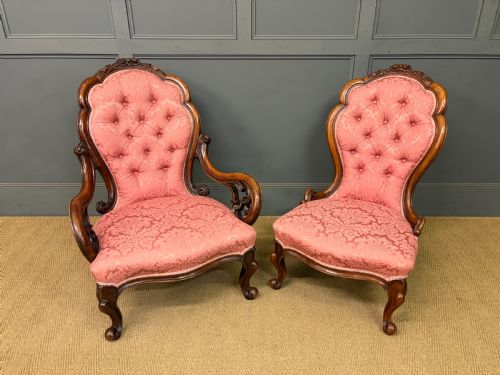
A victorian nursing chair pair consists of low-backed, generously upholstered seats designed for nineteenth-century domestic interiors. These low profiles allowed women to sit comfortably while tending to infants or dressing in private quarters.
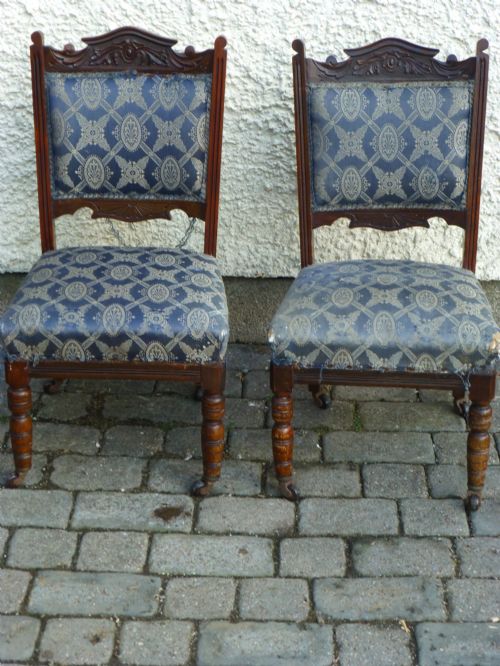
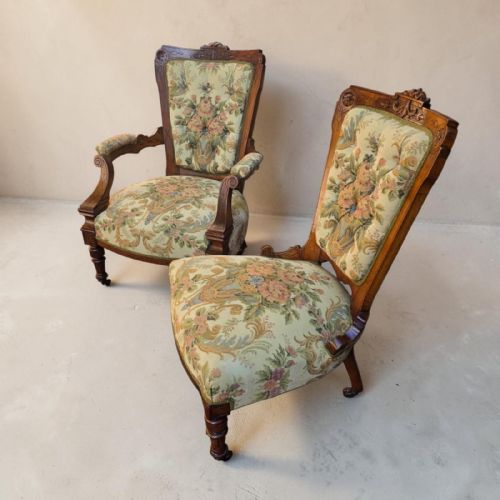
The selections on this page span the Victorian and Edwardian eras, encompassing walnut and mahogany frames alongside varied forms such as slipper chairs, salon chairs, and low fireside seats. Buyers encounter matched sets ranging from early Victorian carved rosewood to late nineteenth-century ebonised and cane-seated examples.
Many pairs arrive ready for fresh upholstery or feature newly recovered velvet and fabric finishes. The forms frequently incorporate brass castors on the front legs, reflecting the practical mobility required of bedroom furniture in large houses.
Materials and Construction
Frames are constructed primarily from dense hardwoods like walnut, mahogany, and occasional rosewood, shaped through steam bending and hand carving. These timbers provide the structural integrity required to support deep buttoning and sprung upholstery.
Metal components appear in the brass castors fitted to wooden legs and the internal steel coil springs that give the seats their resilience. Upholstery utilises traditional stuffing materials held beneath velvet, fabric, or cane panels.
Low seats allowed Victorian ladies to manage voluminous crinolines without tumbling.
Distinctions in Quality
The standard of a pair rests in the crispness of the timber carving and the balance of the proportions. Superior examples display deeply moulded walnut frames and harmonious symmetry between the paired seats.
Original details such as stamped brass castors and intact internal webbing elevate a piece above standard workshop production. The distinction lies in whether the frame retains its original structural joinery without excessive timber shrinkage or replacement parts.
Howard and Sons·Angerstein
The Victorian Nursing Chair Pair Glossary
- Button back
- An upholstery technique where depressions are formed in the padding by pulling twine tightly through the fabric and securing it with buttons. This creates a tufted surface that holds the filling firmly in place.
- Castor
- A small wheel mounted on a swivel attached to the base of furniture legs. They allowed heavy chairs to move easily across carpets during cleaning.
- Slipper chair
- An upholstered chair with low legs designed for bedrooms and dressing rooms. The low seat made it easier to put on shoes and garments.
- Prie dieu
- A devotional chair featuring a low seat and an upper rail designed for kneeling and prayer. These nineteenth-century pieces often used rosewood and elaborate turned woodwork.
- Ebonised
- Wood stained or painted black to imitate ebony. This finish gained popularity in late nineteenth-century decorative arts for a formal appearance.
Victorian Nursing Chair Pair: Frequently Asked Questions
How do I identify a matched pair?
A matched pair shares identical timber grain, turning details, frame dimensions, and upholstery profiles.
Maker marks or consistent wear patterns across both chairs further confirm they belonged together since manufacture.
Where should I place these chairs?
These pieces suit bedrooms, dressing rooms, or low-ceilinged drawing rooms where traditional scale matters.
Their compact height ensures they do not obstruct views or overwhelm smaller fireplace surrounds.
Are castors original to the chair?
Original castors typically match the metal finish and wear patterns of the surrounding wood legs.
Brass wheels and ceramic sockets from the nineteenth century indicate authenticity when secured firmly into the base.
What is the difference between salon and nursing chairs?
Salon chairs generally stand taller with upright backs intended for formal entertaining and drawing room seating.
Nursing chairs prioritize a lower seating plane and relaxed inclination for private domestic comfort.