




Victorian Newspaper Rack
A victorian newspaper rack is a domestic stand designed for sorting journals and papers, combining utility with decorative timber or metal work.
Victorian Newspaper Rack
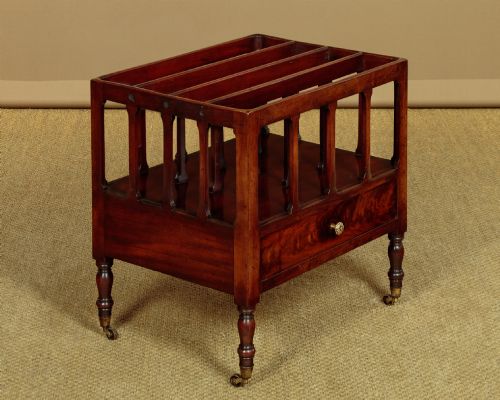
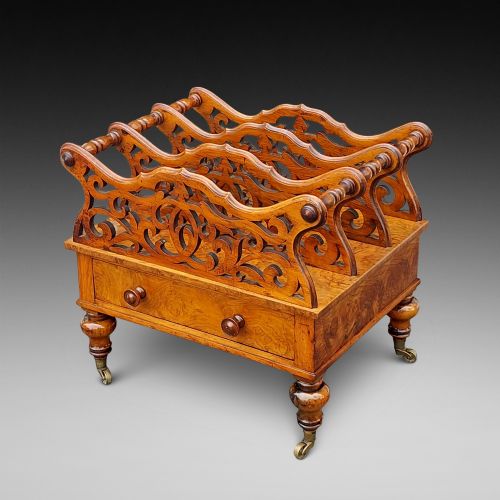
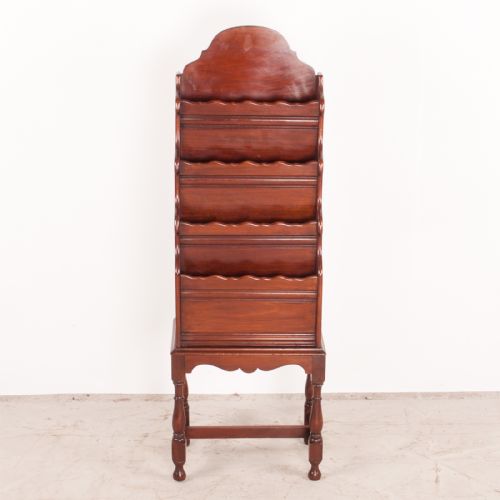
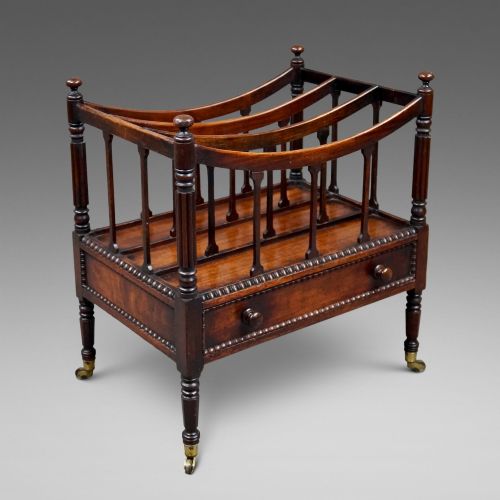
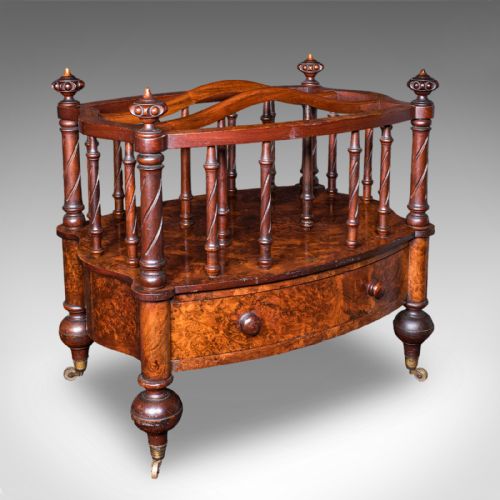
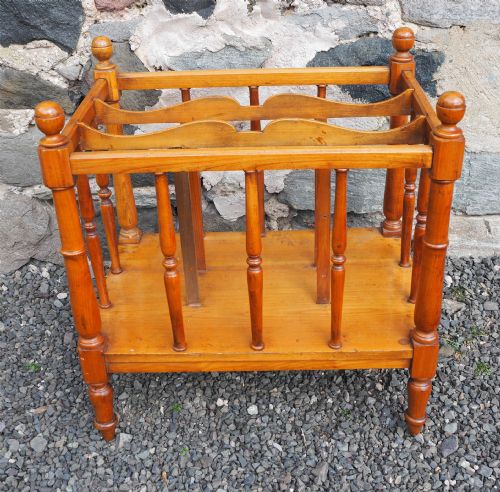
When you search for a victorian newspaper rack, you encounter a variety of forms including traditional canterburys, tiered stand designs, and wall-hanging pockets. The canterbury remains the most frequent form on this page, serving to hold newspapers, magazines, and music sheets.
The objects span multiple periods and revivals, with pieces appearing from the nineteenth century alongside Edwardian and Regency examples. Materials range from solid timbers to bamboo and metal frameworks.
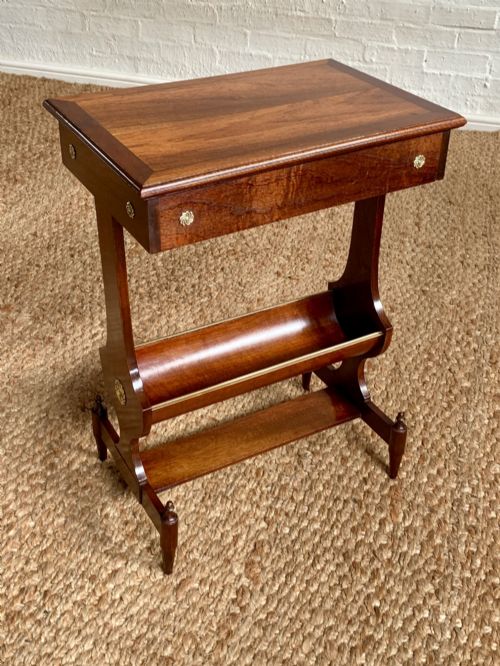
Many items function as multi-purpose furniture, combining magazine storage with drawers, side tables, or revolving stands. These hybrid forms demonstrate how nineteenth-century makers adapted the newspaper rack for daily household convenience.
Materials and construction
Timbers form the core of construction, with mahogany, walnut, burr walnut, and rosewood shaping the traditional pieces. Cabinetmakers utilised figured veneers and turned supports to articulate the divisions of each rack.
Listings feature brass, mahogany, walnut, rosewood, burr walnut, bamboo, and lacquer across nineteenth-century and Edwardian forms.
Markers of distinction
Quality rests in the selection of timbers and the crispness of turned or carved details. Figured burr walnut and richly grained rosewood elevate an example above plain timber versions.
Structural complexity and maker attribution separate standard items from finer works. Pieces incorporating drawers, multiple tiers, or combinations of brass and mahogany demonstrate advanced cabinetmaking.
Edwards and Roberts·Howard and Sons·Shoolbred
The Victorian Newspaper Rack Glossary
- Whatnot
- A piece of open shelving with multiple tiers used for display. In these listings, it frequently combines with a lower newspaper rack.
- Aesthetic Movement
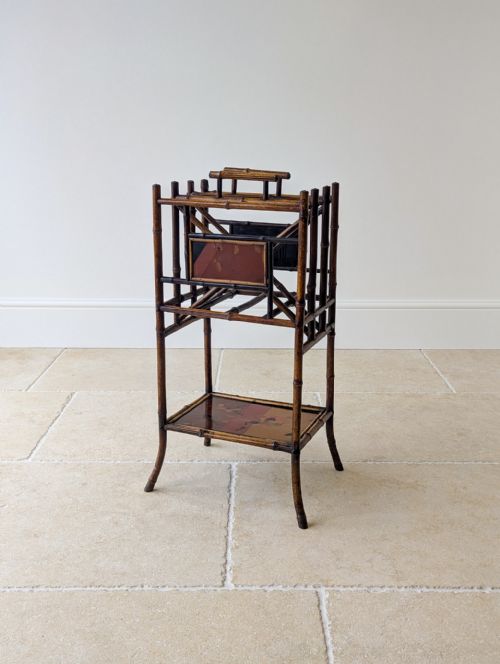
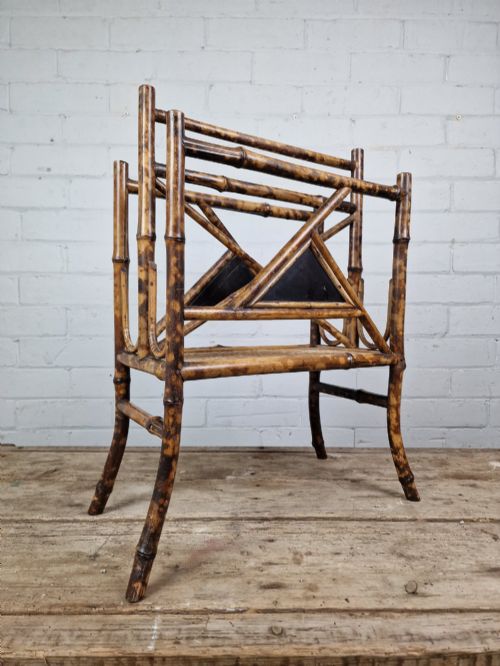
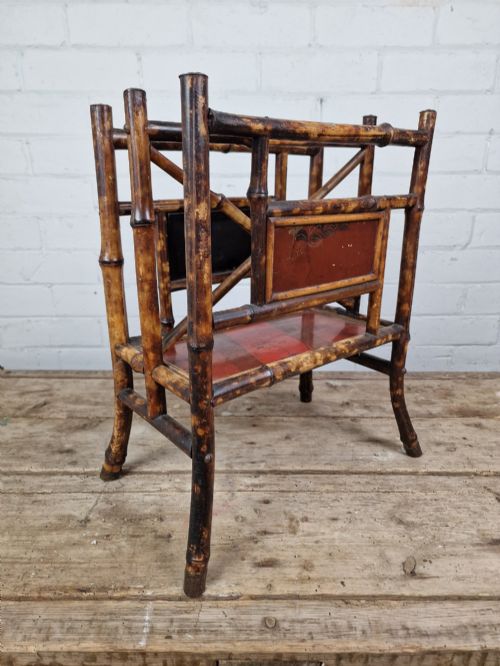
- A late nineteenth-century design style emphasising artistic value over moral or narrative purpose. Pieces from this movement often utilise bamboo, lacquer, and ebonised wood.
- Revolving stand
- A rack mounted on a central pivot allowing access from all sides. These metal and wood stands appear frequently in later nineteenth-century forms.
- Pierced scroll divisions
- Openwork wooden partitions shaped with curved scrolls. These form the individual compartments for papers within traditional canterburys.
Victorian Newspaper Rack: Frequently Asked Questions
What is a canterbury?
A canterbury is a low compartmentalised stand designed to hold sheet music, newspapers, and periodicals.
Cabinetmakers constructed these pieces primarily in mahogany and rosewood during the nineteenth century, often mounting them on castors for easy movement across carpets.
How do I identify an aesthetic period rack?
Aesthetic period pieces often utilise tiger bamboo, lacquered surfaces, and Japanese-inspired decoration.
These items reflect late nineteenth-century tastes that favoured asymmetrical designs and exotic materials over heavy classical revival timber.
Were these stands only used for newspapers?
Contemporary records and descriptions show these stands held music scores, letters, and magazines alongside daily newspapers.
Many examples combine multiple functions, featuring dedicated slots for periodicals alongside drawers for writing materials or flat surfaces for small objects.
What is the difference between a rack and a revolving stand?
A standard rack relies on fixed wooden divisions or wall-mounted pockets to hold items in place.
A revolving stand incorporates a central vertical axis that allows the entire tier of compartments to spin, enabling access from multiple seating positions.