



Victorian Needlepoint Panel
A victorian needlepoint panel brings nineteenth-century textile artistry into modern rooms through framed pictures, fire screens, and samplers.
Victorian Needlepoint Panel
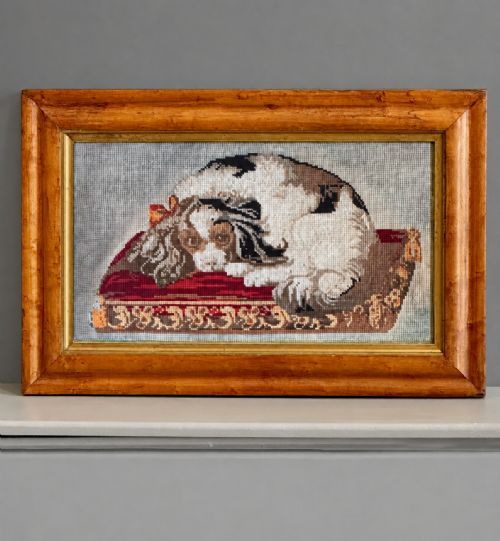
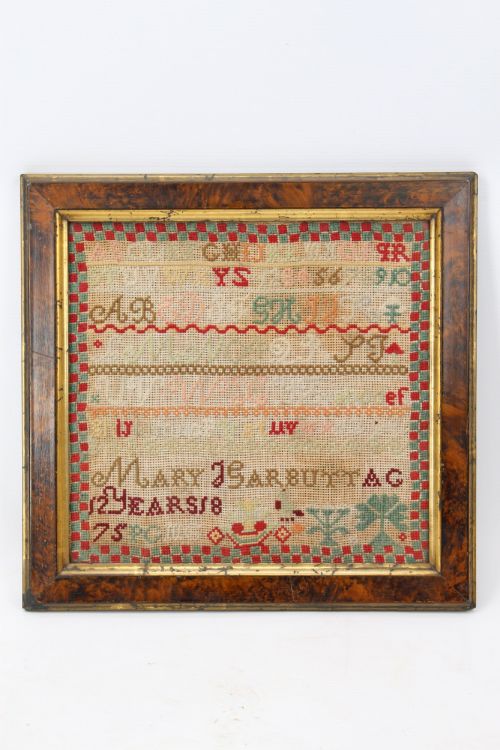
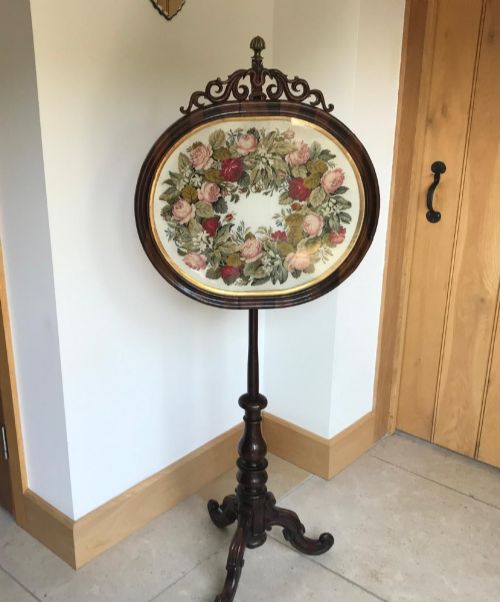
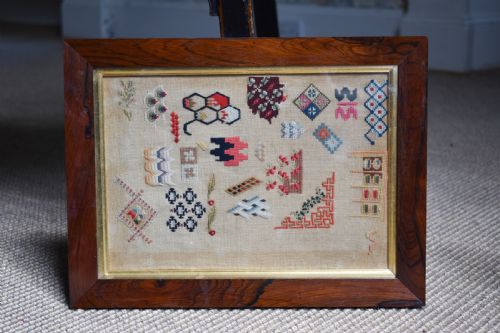
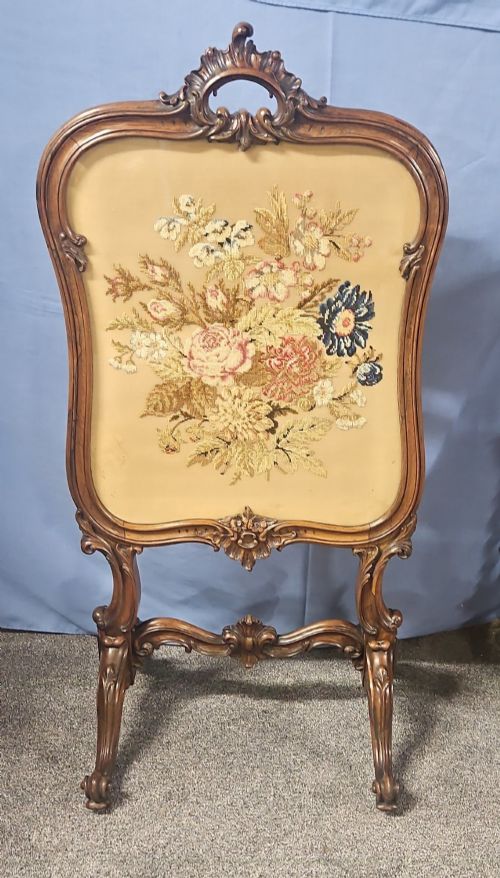
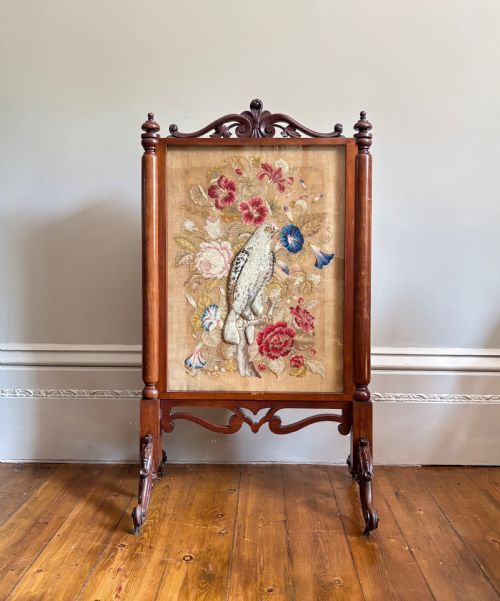
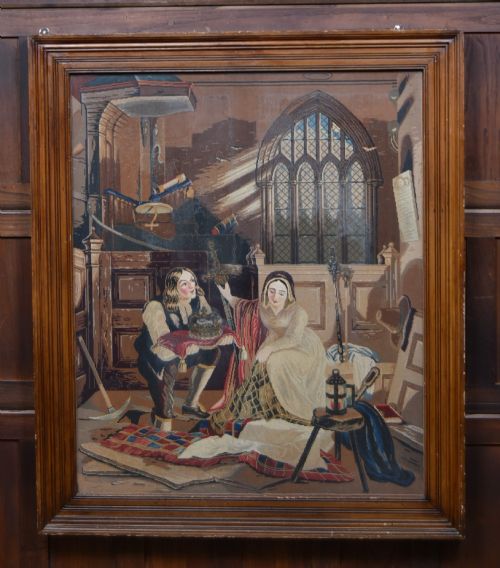
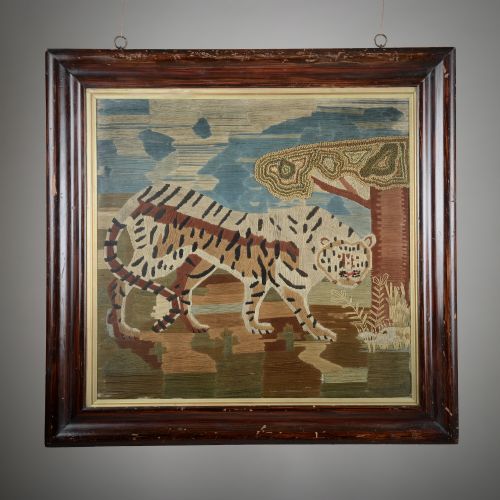
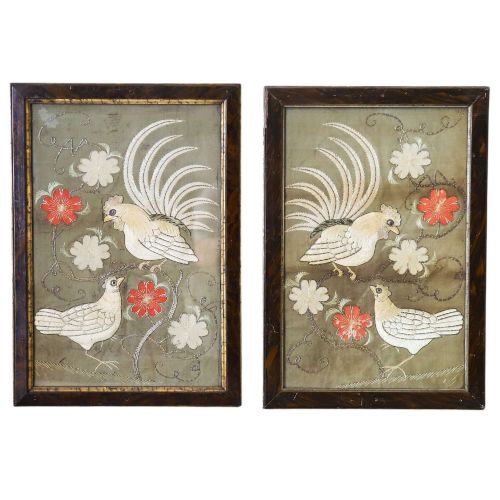
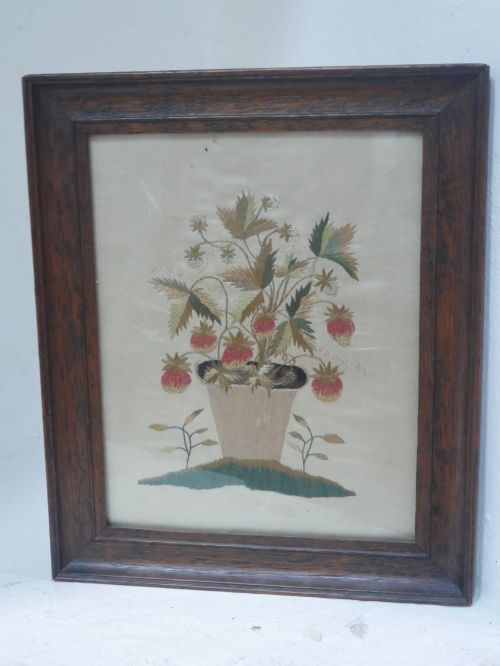
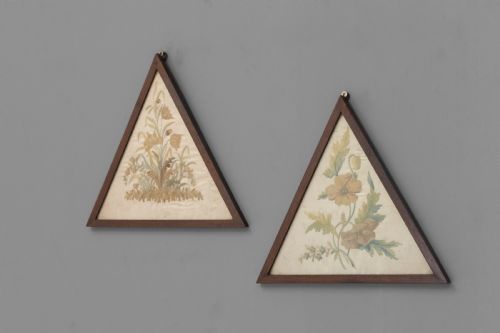
A victorian needlepoint panel encompasses framed textile pictures, samplers worked by young girls, and inset panels mounted within fire screens or room dividers. The most common survivals on this page are framed woolwork pictures and mounted screen inserts from the nineteenth century.
Makers utilised canvas, linen, and wool to create elaborate botanical studies, portraits, and narrative scenes styled in gothic revival or rococo tastes. These textiles served both decorative and domestic functions, protecting drawing-room inhabitants from hearth heat or adorning parlour walls.
Materials and construction
Needleworkers stitched wool, silk, and glass bead threads onto open-weave canvas or linen grounds, frequently employing Berlin wool work charts published during the period. Stitchers executed tent stitch, gros-point, or cross-stitch to build dense, colourful pictorial surfaces.
Carers mounted completed panels into rosewood, mahogany, walnut, or burr maple frames, often incorporating them into cheval screens, pole screens, or folding room dividers.
A solitary stitch error left by a young scholar in 1880 reminds us of a child working by candlelight.
Qualities that separate examples
Quality rests in the precision of the stitching and the sophistication of the colour shading across the wool or silk threads. Masterful shading gives depth to animal portraits and floral pots, whereas weaker examples rely on flat, unblended tones.
The integrity of the original wood frame and the tautness of the mounted canvas determine the overall survival state. Secondary woods like oak or rosewood that retain their original polish elevate the piece.
The Victorian Needlepoint Panel Glossary
- Berlin work
- A style of needlepoint popular in the nineteenth century that used charted patterns and brightly coloured wools. Stitchers followed these gridded paper guides to produce symmetrical floral and figural designs.
- Pole screen
- A freestanding fireplace screen featuring an adjustable vertical wooden shaft and a sliding panel. This mechanism allowed occupants to shield their faces from open hearth flames.
- Gros-point
- A coarse counted-thread embroidery stitch executed on canvas. It provided durability and rapid coverage for large ground areas on fire screens and wall panels.
- Sampler
- A piece of embroidery produced by a young scholar to demonstrate proficiency in various stitches and alphabets. These works frequently record the maker's age and date of completion.
- Cheval screen
- A floor-standing screen supported by two lateral feet and pivoted pivots. The pivoting wooden frame held a large embroidered needlework panel.
Victorian Needlepoint Panel: Frequently Asked Questions
How were fire screen panels used?
Occupants placed fire screens between their seating area and the open fireplace to block intense radiant heat. The adjustable panels protected delicate complexions and wax makeup from melting.
Over time, these functional pieces transitioned into purely decorative furnishings within nineteenth-century drawing rooms.
What subjects appear on these panels?
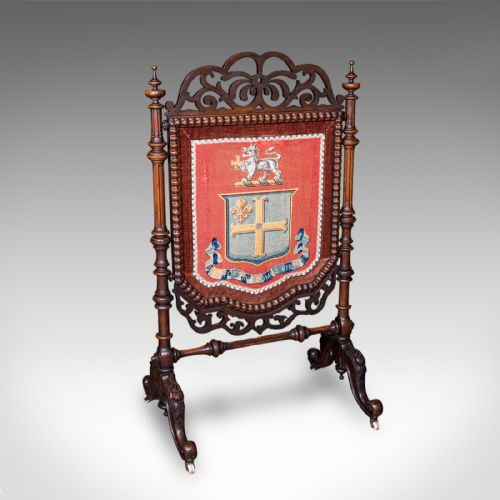
Needleworkers depicted a wide variety of subjects including domestic animals, literary characters, floral arrangements, and biblical scenes. Samplers typically recorded alphabets, numerals, and familial genealogies alongside the maker's age.
Landscape vistas and heraldic armorial bearings also feature frequently among surviving nineteenth-century works.
How do I date a needlework piece?
Dated samplers offer the most direct chronological evidence through stitched numbers recording the year of completion. Stylistic markers such as the presence of Berlin wool work charts or Victorian Gothic revival frames narrow the window further.
The choice of underlying wood, such as rosewood or burr maple, also aligns with specific decades within the nineteenth century.
Can framed panels be hung safely?
Framed needlework requires hanging away from direct sunlight to prevent the wool and silk threads from fading. Maintaining stable room humidity protects the fragile canvas ground and wooden frames from deterioration.
Professional backing materials help support the weight of the textile within the historic frame.